REVIEW · ROME
Chauffeured Private Tour of Rome
Book on Viator →Operated by AIM LIMO ROME · Bookable on Viator
Rome’s highlights, packed into one smooth day.
This private Rome sightseeing route is built for first-time orientation: you’re driven door-to-door, you skip the hardest parts of getting around, and you still walk to the major places like the Roman Forum and the Pantheon without feeling stuck on a bus schedule.
What I like most is how the day balances the “wow” stops with quick context. I love that you get a comfortable air-conditioned private vehicle for the in-between time, and I also like that you’re not limited to just postcard Rome—you’ll spend real time at places like St. Paul Outside the Walls and the Catacombs of San Callisto rather than treating everything as a quick photo stop.
One consideration: your driver is not a licensed tour guide, so explanations happen from inside the car, and the tour does not include an official guide at sites. Also, entrance tickets aren’t included, and dress rules apply for places of worship—so you’ll want to plan ahead.
In This Review
- Key highlights at a glance
- Why this private Rome route works on an 8-hour clock
- The chauffeurs role: helpful, but not a licensed guide
- Transport comfort: the unsung hero in Rome
- Foro Romano: where Rome’s power was concentrated
- Circus Maximus: a giant scale lesson in 10 minutes
- St. Paul Outside the Walls: a quiet classic you won’t skip
- Trevi Fountain: famous, yes, but you still need time to look
- The Pantheon: the classic Rome stop with zero wasted minutes
- Piazza Navona and the Stadium of Domitian’s footprint
- Vittoriano and Piazza del Campidoglio: modern Italy beside ancient Rome
- The Appian Way park drive: a different kind of Rome day
- Catacombs of San Callisto: where the day turns memorable
- Food and pace: you’ll want a plan
- Price and value at $427.96 per person
- Dress code and entry rules: save yourself the last-minute stress
- Who this tour suits best
- Should you book this chauffeured Rome tour?
- FAQ
- What’s the duration of the Chauffeured Private Tour of Rome?
- Is pickup and drop-off included?
- Is the tour only for small groups?
- Does the price include entrance tickets?
- Will I have a licensed tour guide?
- What language is the tour offered in?
- What’s the dress code?
- Can I cancel for a full refund?
Key highlights at a glance
- Private pickup and drop-off so you don’t waste your limited time wrangling transit
- Up to 8 people per booking, which keeps the pace calmer than typical group tours
- A route that mixes ancient Rome (Forum, Circus Maximus) with great churches (St. Paul Outside the Walls) and iconic fountains (Trevi)
- Enough time at major landmarks to actually look, not just stop and move on
- Appian Way country + Catacombs included in the same day, for a real “Rome beyond the center” feel
- You’ll be working with a driver who can offer solid guidance, even if they can’t do licensed “in-museum” commentary
Why this private Rome route works on an 8-hour clock
Rome looks simple on a map. In real life, it’s a puzzle of traffic, one-way streets, and hills—plus crowds that can swallow your time. This tour is designed to fight that problem with a private vehicle and a tight, sensible route.
The value isn’t just that it’s “private.” It’s that you’re buying time. You’re paying to have someone else handle the drive, the stops, and the sequencing, so you can focus on what you came for: seeing key monuments, getting context, and leaving with a clearer mental picture of where things sit in the city.
You can also read our reviews of more private tours in Rome



The chauffeurs role: helpful, but not a licensed guide
A big detail matters here: your English-speaking driver isn’t a licensed tour guide. That means they can explain attractions only from inside the vehicle. When you’re walking around, you may notice less “live lecture” style commentary than you’d get from an official guide.
That doesn’t mean you’ll be left clueless. In the best moments of the day, the driver becomes your on-the-ground planner—choosing good timing, steering you to efficient viewpoints, and helping the day run smoothly so you don’t feel rushed at the wrong times.
The reviews included names like Andrea, Andy, Daniele, Livio, Marco P, and Claudio, and a common theme is that these drivers tend to be punctual, friendly, and good at adjusting the day—especially if you’ve already seen some sights earlier.
Transport comfort: the unsung hero in Rome

Rome days can turn physical fast. Between walking, standing in lines (even when you’re not entering), and navigating sidewalks, the “travel time” can drain you.
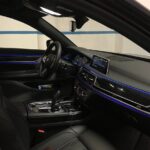
Here, the transport is an air-conditioned sedan/minivan, and the tour includes hotel pickup and drop-off (with pickup also available for Fiumicino airport and Civitavecchia Port). Even if you’re only at each stop for 10 to 20 minutes, that drive time becomes a break rather than a chore.
Group size is capped at 8 people, which helps. Smaller groups tend to mean less bumping around the same photo spots, and you’re more likely to get a driver who can adapt to your pace.
Foro Romano: where Rome’s power was concentrated
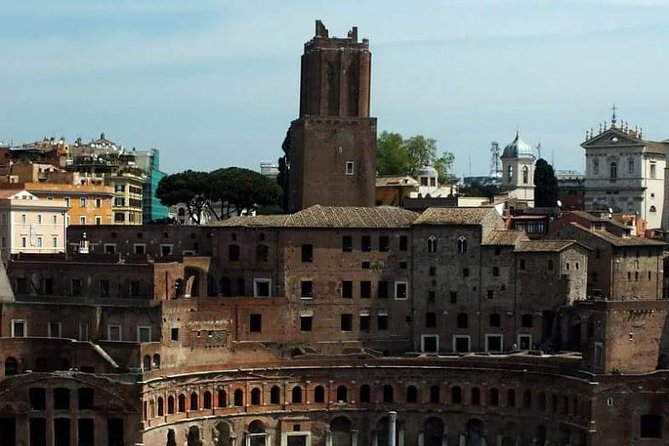
You start at the Foro Romano (Roman Forum) for about 15 minutes. This is the ancient government and public-life core—surrounded by ruins that once held civic buildings, market activity, and the spaces where Roman public life unfolded.
Why this stop is worth it even with a short time:
- It gives you the “center-of-everything” reference point for the rest of the day.
- Even brief walking time helps you connect later sights—like the Capitoline area—back to the Forum’s role in the city.
Drawback to expect: 15 minutes is not enough to read every inscription or explore deeply. Think of it as orientation plus a foundation. If you want longer, plan a separate Forum visit later with an official guide or audio setup.
Circus Maximus: a giant scale lesson in 10 minutes

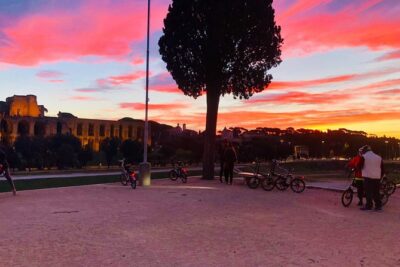
Next is Circo Massimo, about 10 minutes, and it’s free. Even if you don’t know the details, the sheer size is the lesson. This was the ancient chariot-racing stadium and a major entertainment venue, positioned between hills in a broad valley.
This quick stop is smart because it breaks up the day. You’re moving from dense ruins (Forum) to open space. That change helps you process what you’ve already seen.
Tip for your visit here: wear comfortable shoes. The terrain can be uneven in places, and you’ll likely move around a bit to find the best angles.






St. Paul Outside the Walls: a quiet classic you won’t skip
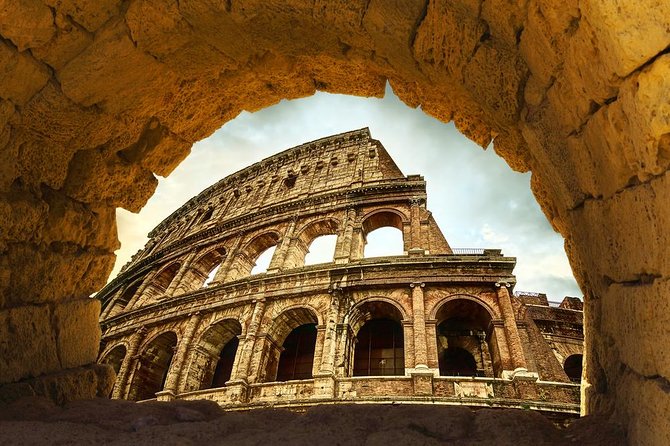
About 20 minutes at Basilica Papale di San Paolo fuori le Mura (also called St. Paul Outside the Walls). Admission here is listed as free.
This is one of those “major Rome basilicas” that gives balance. After ancient ruins and outdoor sites, you get a church stop that feels more reflective and less like a theme-park sprint.
Important: a dress code is required for places of worship—no shorts or sleeveless tops, and knees and shoulders must be covered. If you show up unprepared, you risk being refused entry, so keep that in mind for the whole day, not just this stop.
Trevi Fountain: famous, yes, but you still need time to look
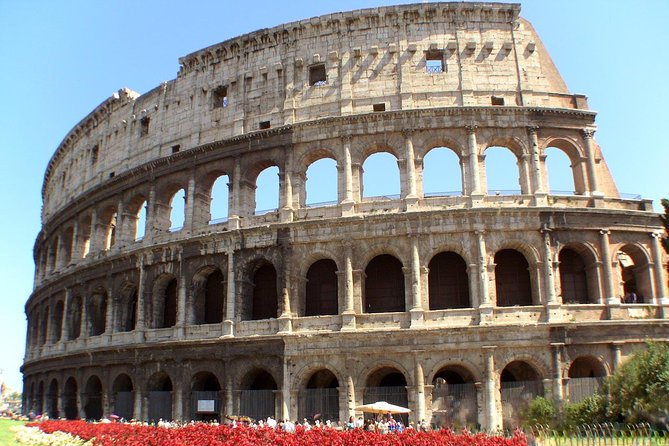
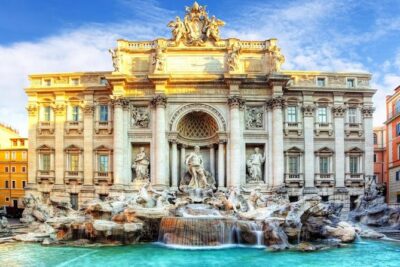
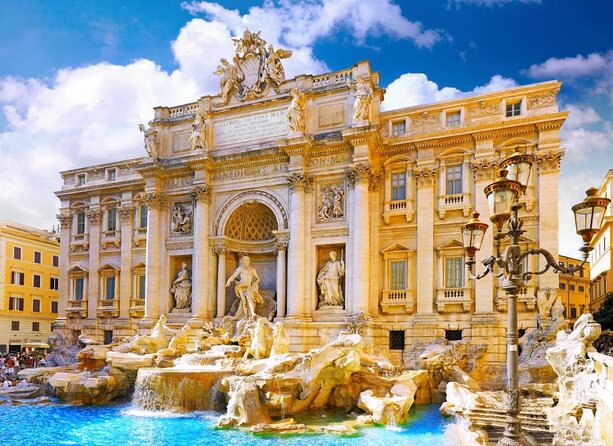
Then it’s Trevi Fountain for about 20 minutes. It’s free to view, and it’s one of the most famous fountains in the world—designed by Nicola Salvi and completed with work credited to Giuseppe Pannini and others.
Why this stop works in a private format:
- You can linger just long enough to enjoy the design details without turning it into an all-day crowd battle.
- You’ll have time to step back, find a workable angle, and actually take it in.
The key consideration is simple: Trevi gets busy. When that happens, prioritize your footing and pacing. If you feel yourself getting frustrated, move a few steps along and reset your view—Rome crowds usually mean you can still find a workable angle quickly.
The Pantheon: the classic Rome stop with zero wasted minutes
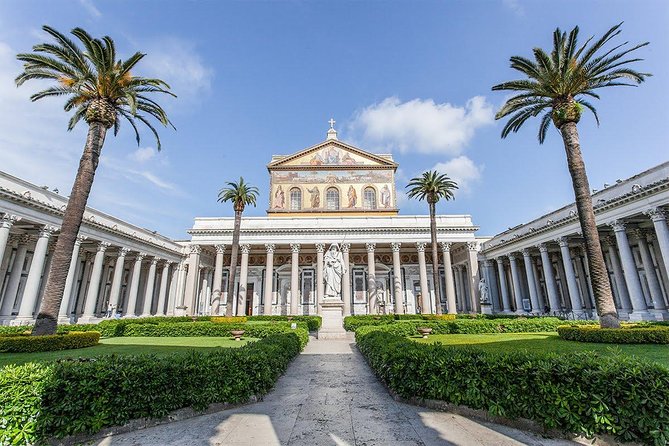
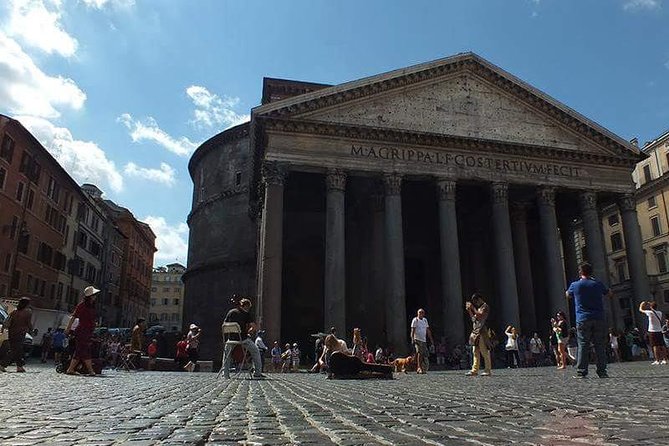
Next up is the Pantheon for about 20 minutes. Admission is listed as free, and it’s one of Rome’s best-known structures for a reason.
This building tells a story fast:
- It began as an earlier temple commissioned by Marcus Agrippa under Augustus.
- The current version was completed by Emperor Hadrian and likely dedicated around 126 AD.
What to expect in a short visit: you’ll see the structure’s most memorable feature without having to commit a full day. But if you want to go beyond the iconic view, consider returning on another day for a longer visit—especially if you enjoy architectural details.
Dress code reminder: the Pantheon is often treated as a religious site in practice, and the tour notes dress rules for selected museums and places of worship. Better to be safe.
Piazza Navona and the Stadium of Domitian’s footprint
You’ll spend around 15 minutes at Piazza Navona, described as connected to the ancient Stadium of Domitian (and the area sometimes referenced as the underground space beneath it). Admission is free.
Navona feels like theater. The square’s layout follows the ancient stadium shape, so you’re walking on a map of the past. Today it’s known for its lively atmosphere and street-life energy, but the key value in this stop is scale and form: you can see how Rome reused space, not just buildings.
A practical approach: if it’s crowded, don’t fight for the perfect photo spot. Use the time to orient yourself—standing back for a moment often tells you more than squeezing in close.
Vittoriano and Piazza del Campidoglio: modern Italy beside ancient Rome
Two stops add a different flavor—Italy’s unification-era monuments plus the ancient hill connection.
You’ll see the Vittorio Emanuele II Monument (Il Vittoriano / Altare della Patria) in the area between Piazza Venezia and the Capitoline Hill. Then you’ll head to Piazza del Campidoglio (Capitoline Hill) for about 10 minutes.
Why I like this pairing:
- Vittoriano adds a modern layer to the Rome story—Rome isn’t frozen in antiquity.
- Campidoglio sits between the Forum and the Campus Martius, so it helps you understand the city’s ancient geography.
Time reality: 10 minutes here is mainly about sightlines and orientation. It’s enough to “place” the hill in your mental Rome map, but it isn’t enough for a long museum-level experience.
The Appian Way park drive: a different kind of Rome day
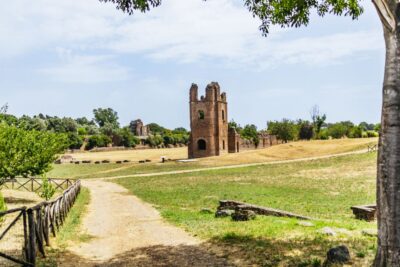
Then the tour heads to Parco Regionale dell’Appia Antica (the Appian Way / Via Appia) for about 10 minutes. Admission is listed as free.
Even a short stop changes the feel of your day. The Appian Way was one of the earliest and strategically important roads of the Roman Republic, connecting Rome to Brindisi in the southeast. Today it’s part park, part historical reminder—less about single monuments and more about the idea of Rome spreading its influence outward.
This is also a good emotional reset. After dense central sights, the Appian Way setting makes the day feel more open and grounded.
Catacombs of San Callisto: where the day turns memorable
Finally, you’ll spend about 45 minutes at the Catacombe di San Callisto (Catacombs of Callixtus), also known for the Crypt of the Popes (Cappella dei Papi) with tombs of popes from the 2nd to 4th centuries. Admission is not included.
This longer time slot is a clue: the catacombs are where you get something distinct from the “surface highlights.” It’s not just another view. It’s a different Rome atmosphere—one that makes the city feel older than your first impression.
Practical note: catacomb visits can involve stairs and dim spaces. Wear shoes you can walk in comfortably and bring patience for the flow of entry.
Food and pace: you’ll want a plan
Food and drinks are not included, and that matters on an 8-hour route. You’ll likely want to eat around one of the mid-day breaks rather than treating meals as an afterthought.
The good news: in the reviews, drivers like Daniele and Livio were praised for being accommodating about lunch timing and steering people toward solid places to eat. Still, don’t assume the tour will handle everything for you. Decide your meal window early so the day stays smooth.
Price and value at $427.96 per person
At $427.96 per person for an 8-hour private experience, the value depends on what you want to buy with your money.
You’re paying for:
- Door-to-door pickup and drop-off
- A private vehicle that keeps the day moving
- A route that covers major sights plus the Appian Way and catacombs
- An English-speaking driver who can guide and coordinate from the car
You’re not paying for:
- Entrance tickets (some stops explicitly note tickets not included)
- Official licensed guide commentary inside attractions
So who is it a great deal for? If you’re a small group, short on time, or you hate the mental load of planning transit and sequencing, it can be worth it fast. If you’re traveling solo and you don’t mind trains and buses, you might find cheaper options. But the “private time-savings” is real here.
Dress code and entry rules: save yourself the last-minute stress
For places of worship and selected museums, you need to cover knees and shoulders. That means:
- No shorts
- No sleeveless tops
If you’re traveling in warm weather, this is the kind of rule that catches people off guard. Bring a light layer you can throw on quickly. It’s the difference between walking in confidently and having to turn around.
Also, remember: entrance fees are not included, so plan for ticket spending on stops where charges apply.
Who this tour suits best
This is a strong fit if:
- You’re in Rome for a short time and want orientation fast
- You’re traveling with family and want a calmer pace (some drivers were praised for handling kids patiently)
- You’d rather pay for a private route than navigate logistics
- You want a blend of big icons and a few “less obvious” stops like the catacombs and St. Paul’s
It may feel less ideal if you want a full, licensed guide experience at every site. Because the driver is not a licensed tour guide, you’ll miss the kind of in-building narration some people expect.
Should you book this chauffeured Rome tour?
I’d book it if you want the simplest path to seeing the main monuments plus a meaningful extra: the catacombs and the Appian Way. The private vehicle plus pickup really helps when your time is limited, and the route is structured to keep you moving without turning Rome into a nonstop sprint.
I’d hesitate if you’re the type who needs deep, inside-the-sites explanations at every stop. In that case, you might prefer a tour that includes a licensed guide for the attractions, or plan to pair this day with one longer guided visit later.
FAQ
What’s the duration of the Chauffeured Private Tour of Rome?
The tour runs for approximately 8 hours.
Is pickup and drop-off included?
Yes. Hotel pickup and drop-off are included, and pickup is also available for Fiumicino airport and Civitavecchia Port.
Is the tour only for small groups?
It’s limited to a maximum of 8 people per booking.
Does the price include entrance tickets?
No. Entrance fees are not included for the museums and historical sites.
Will I have a licensed tour guide?
No. Your driver is English-speaking, but the driver is not a licensed tour guide, so explanations are limited to what can be shared from inside the vehicle.
What language is the tour offered in?
It’s offered in English.
What’s the dress code?
For places of worship and selected museums, knees and shoulders must be covered. Shorts and sleeveless tops are not allowed.
Can I cancel for a full refund?
Yes, you can cancel up to 24 hours in advance for a full refund.