REVIEW · ROME
Best of Colosseum Experience: Exclusive Tour in 40 Languages
Book on Viator →Operated by Veditalia · Bookable on Viator
Three Roman icons, one smooth tour. You get the Colosseum, Palatine Hill, and the Roman Forum in about three hours, with a licensed guide plus real-time AI translation in your earphones. I like that this format helps you get your bearings fast without bouncing between tickets, lines, and guidebooks. The trade-off is simple: it is a set route and pace, so if you love slow wandering, the timing may feel a bit firm.
The human side matters here. In the feedback I’ve seen, guides such as Theresa, Elizabeth, and Naomi get praised for being upbeat, patient, and good at keeping the tour moving even when weather turns sour.
One more practical point before you book: you’ll need to bring a passport or ID for Colosseum entry, and you should arrive about 15 minutes early at Piazza del Colosseo, 1a. Miss that window and you can lose the start of the tour.
In This Review
- Key things to know before you go
- Why this 3-stop route works for tight Rome days
- Entering the Colosseum: gladiator-size drama with a real guide
- Palatine Hill: imperial residences, legendary founders, and viewpoint payoff
- Roman Forum on the Via Sacra: politics and religion in street-level ruins
- Real-time AI translation in your earphones: fast enough to follow
- Group size, headsets, and the pace of 3 hours
- Price and ticket value: what $45.86 actually buys
- Who this tour suits best (and who should think twice)
- FAQ
- FAQ
- What is the duration of the tour?
- Which Rome attractions are included?
- Are admission tickets included?
- Do I need to bring ID for the Colosseum?
- Is there multilingual support during the tour?
- How big is the group?
- Where do I meet for the tour?
- Is food or drinks included?
- Should you book this Colosseum best-of tour?
Key things to know before you go
- Three top sites in one block of time: Colosseum, Palatine Hill, Roman Forum, all in one guided route
- Real-time AI translation: the guide speaks naturally, and translation hits your earphones within roughly 5 to 15 seconds
- Small group size: you’ll be in a group capped around 20 to 25, with audio headsets if the group is larger
- Tickets included: admission is built into the tour stops
- Mobile ticket: you use your phone rather than hunting for paper
- Pace is fixed: great for busy schedules, less ideal if you want long stays at each viewpoint
Why this 3-stop route works for tight Rome days
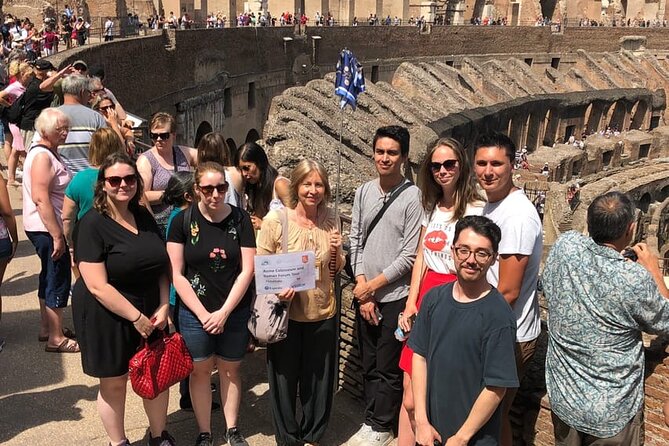
Rome rewards curiosity, but it also punishes a slow plan. This tour is designed for the traveler who wants three of the biggest Ancient Rome sights without spending your day piecing it all together. The structure is straightforward: you start at the Colosseum, move to Palatine Hill, then finish at the Roman Forum area. That’s a logical walk in ancient terms too, since the Forum sits between the hills that dominated Rome’s political and ceremonial life.
I also like the value angle. The price is $45.86 per person, and admission tickets are included for each of the three stops. You’re not paying extra just to enter the major sites, so your money goes toward a guide and interpretation—usually the part that makes ruins feel like a story instead of a pile of stone.
The tour is listed at about 3 hours. That is enough time to connect the dots, but not enough time to treat each site like a half-day expedition. If you’re the type who likes to stop for photos, read every plaque, and linger for the perfect light, you may feel rushed. If you want a smart overview with context and then time afterward to explore on your own, this timing can be exactly right.
You can also read our reviews of more tours and experiences in Rome.



Entering the Colosseum: gladiator-size drama with a real guide
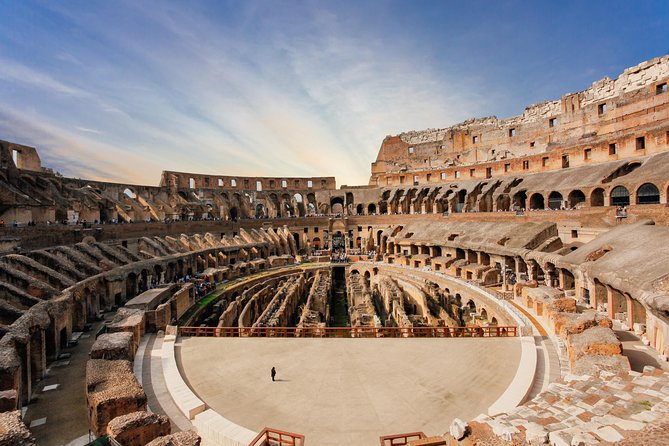
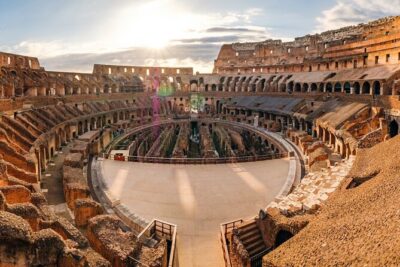
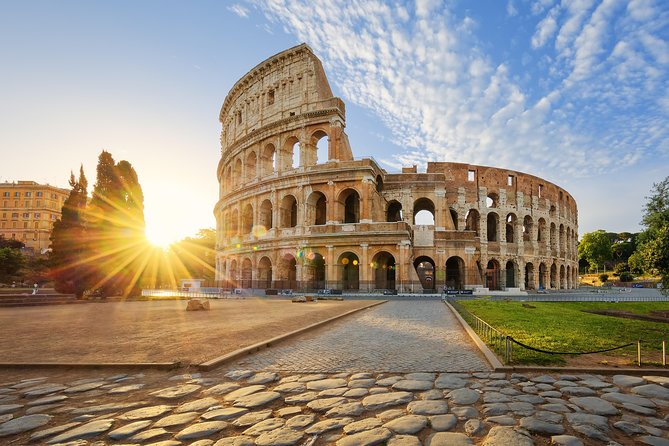
The Colosseum is the kind of site that makes you immediately understand scale. It is the largest amphitheater ever built in ancient times, and it officially opened around 80 AD under Emperor Titus. This is where gladiators fought and where public spectacles pulled in massive crowds—up to around 80,000 people.
What you get on this tour is not just entry. You get narration that helps you connect the structure to what happened there. The Colosseum is elliptical, made of stone and concrete, and despite centuries of earthquakes and looting, it remains a major symbol of Roman building skill. A good guide can make those facts click into something visual: where people gathered, why the arena mattered, and how public entertainment shaped Roman culture.
The Colosseum stop is about one hour. That is workable because the site is huge and you can burn time quickly, especially around crowded photo spots and entry points. I’d treat this hour as the on-ramp: you’ll learn the key ideas, then you can decide if you want to return for more exploring after the tour.
Two things to keep in mind. First, you must bring passport or ID for access. Second, arrive at least 15 minutes early. Colosseum entry can be unforgiving, and missing the group departure means you might not get a do-over.
Palatine Hill: imperial residences, legendary founders, and viewpoint payoff
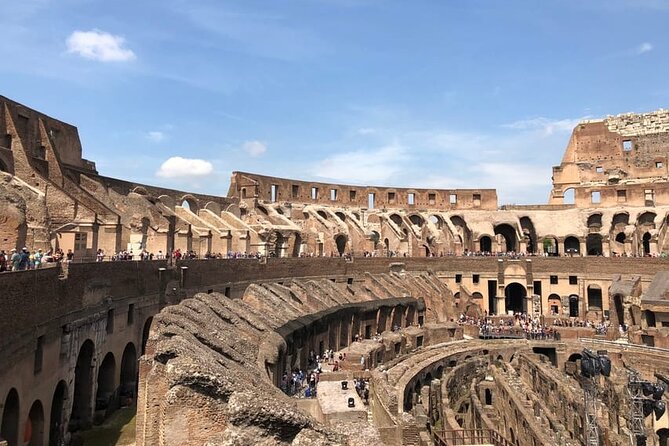
Palatine Hill sits right at the heart of Rome’s origin story. It is one of the seven hills and legend puts Romulus and Remus here. You also find the remains of imperial palaces, including the lavish residence linked to Emperor Augustus. If you’ve ever looked at photos of the Forum area and wondered where the power lived above the politics, this is the answer.
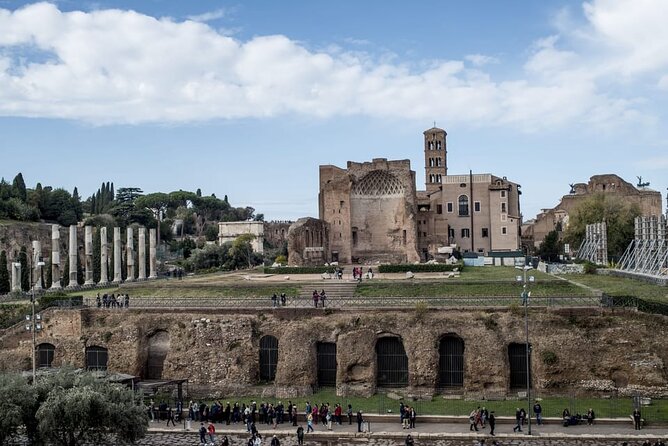
On this stop, you get around one hour in an area that mixes mythology, empire, and sweeping views. You can explore ruins of temples and gardens, plus you get viewpoints over the Roman Forum and the Colosseum—useful because the Roman Forum can look confusing until you have height and angles in your head.
What makes Palatine Hill especially valuable on a guided tour is interpretation. The ruins are fragmentary by nature, so it’s easy to think you’re just looking at scattered walls. With a guide, you’re nudged toward what mattered: the role of palaces, why gardens and temple areas were meaningful, and how this hill helped define imperial presence over the civic center.
The stop length is also smart. Palatine can be slower to understand than it looks, so one hour is often the sweet spot: long enough to grasp the themes, short enough to keep your whole day from collapsing.
Roman Forum on the Via Sacra: politics and religion in street-level ruins
If the Colosseum is entertainment and Palatine Hill is power, the Roman Forum is governance in stone. This was the heart of ancient Rome—where politics, religion, and public life happened. It contains remains of major structures used across centuries, with buildings tied to the Senate House area, temples, and the Rostra, where speakers addressed crowds.
The Roman Forum flourished from the Republic era through the Empire. That span is the key to understanding why the area feels layered. One moment you’re thinking civic leadership, and the next you’re picturing religious activity and public rituals—often the same space used for different purposes depending on the era.
This tour gives you about one hour at the Forum. You’ll walk along the classic narrative route with context, which helps you understand the Via Sacra aspect too, since the Forum sits alongside it as a central ceremonial route. Even if you don’t read every plaque, you’ll leave with a framework for what you just saw: who spoke here, what institutions stood there, and why it mattered.
A practical warning: the Roman Forum area can feel like information overload if you go in cold. This is exactly why the guided interpretation is valuable. Without it, you can spend time staring at ruins and still feel like you learned nothing. With it, the stones start behaving like a map.
Real-time AI translation in your earphones: fast enough to follow
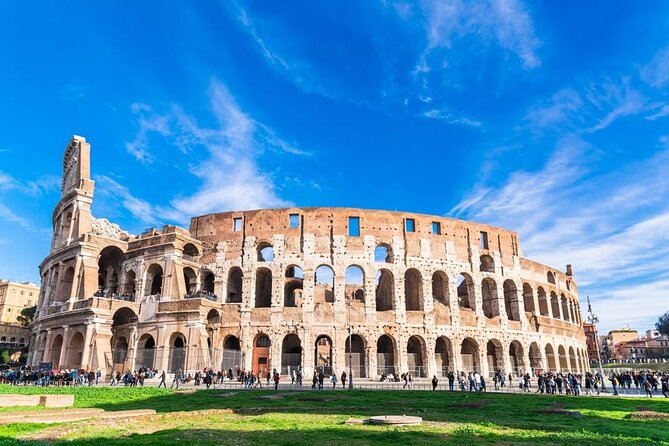
The headline feature here is the smartphone-based AI translation system. Here’s what that means in practice. Your guide speaks in their native language, and the narration is translated and delivered to your earphones within about 5 to 15 seconds. The system is described as having high accuracy across multiple languages, in the range of 90% to 100%.
For international groups, that changes the whole experience. Instead of relying on a one-language explanation that excludes part of the group, you get a translation flow that keeps you connected. If you’ve ever felt stuck reading captions while everyone else is mentally elsewhere, this is the fix.
Audio is handled smartly too. If your group is more than 6 people, audio headsets are provided. That matters because Colosseum and Forum spaces can be loud and echo-y, and you shouldn’t have to compete with the surroundings.
There’s also a practical rhythm: you rent the device (only if you choose the option), enjoy the tour, and return it at the end. No complicated setup needed in the description—just follow the instructions on arrival.






Group size, headsets, and the pace of 3 hours
This is built as a small-group tour, with a maximum around 25 people. Smaller groups usually mean less waiting and more chances to ask questions. The tour also includes a legally licensed guide, and the feedback I’ve seen often highlights guide enthusiasm and a patient style—especially in tough weather.
Pace is the one variable you should plan for. You’re covering three big sites in about three hours, which is fast by historical-site standards. Expect a guided walk with stops that help you understand what you’re seeing, not a deep, hour-by-hour self-paced exploration.
Headsets help if there are more people, and a group size around the low twenties usually keeps the experience from feeling like a cattle-line. If you prefer a relaxed pace and you want long photo sessions at each viewpoint, you might need to add personal time after the tour ends back at the meeting point.
Price and ticket value: what $45.86 actually buys
On paper, $45.86 per person for a Rome “best-of” Colosseum–Forum–Palatine tour can look like a normal add-on. The value depends on what’s included. In this case, admission tickets are included for each of the three stops, so you’re paying for entry plus guiding.
That changes the math. Many tours either (1) charge extra for timed entry and then leave you with only basic narration, or (2) charge for a guide but ask you to pay for tickets separately. Here, you’re getting the ticket component bundled, which makes it easier to compare apples to apples if you’re pricing competing options.
You’ll also have a mobile ticket, which is convenient. And if you select the AI translation option, the guide’s explanation is meant to reach you in multiple languages with that 5 to 15 second delay.
Food and drinks are not included, so plan accordingly. I suggest you eat before you go, or at least have a snack ready for after. Ruins tours run long on your feet, and no one enjoys touring when they’re hungry.
Who this tour suits best (and who should think twice)
This tour is a strong fit if you:
- Want a guided overview of the Colosseum, Palatine Hill, and the Roman Forum without spending your day managing logistics
- Prefer small-group pacing over large crowds
- Need language support and would rather listen than squint at signs
- Appreciate context: why these ruins matter, not just what they are
It may not be the best fit if you:
- Want a lot of free time to linger at each viewpoint and read everything at your own speed
- Are the type who would rather build a day around one site, then wander slowly with no schedule
The sweet spot is travelers with packed Rome days who still want quality interpretation. If that’s you, this tour is a practical way to get the big picture quickly—and then decide what deserves your extra time afterward.
FAQ
FAQ
What is the duration of the tour?
The tour lasts about 3 hours.
Which Rome attractions are included?
The tour covers the Colosseum, Palatine Hill, and the Roman Forum.
Are admission tickets included?
Yes. Admission tickets are included for each stop.
Do I need to bring ID for the Colosseum?
Yes. You must bring a passport or ID for access to the Colosseum.
Is there multilingual support during the tour?
Yes. The option includes a smartphone with AI real-time multilingual translation, delivered to earphones within about 5 to 15 seconds after the guide speaks.
How big is the group?
The tour has a maximum of about 25 travelers, and it’s described as smaller groups of up to 20/25 people.
Where do I meet for the tour?
The meeting point is at Colosseum, Piazza del Colosseo, 1a, 00184 Roma RM, Italy.
Is food or drinks included?
No. Food and drinks are not included.
Should you book this Colosseum best-of tour?
If you want three of Rome’s headline ancient sites covered in one go, this is a solid choice. The combination of included admission, a small-group licensed guide, and AI translation support makes it easier to understand the story even if you don’t share the same language.
Book it if your priority is efficiency plus context. Skip it if you want a slow, totally open-ended exploration day—because at around three hours total, you’ll be moving with the schedule.