REVIEW · ROME
Colosseum Arena Floor, Roman Forum & Palatine Hill Tour
Book on Viator →Operated by Crown Tours · Bookable on Viator
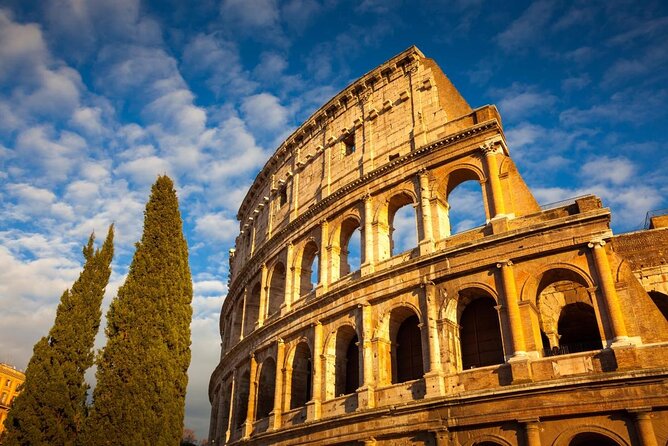
The Colosseum hits different from inside. I love that this tour gets you onto the Colosseum arena floor for that gladiator-gate moment, and I also like the clarity boost from headsets during a super-busy site. One consideration: the experience runs about 2–3 hours, and on hot months it stretches to 2.5 hours, so bring water shoes (okay, just comfortable shoes) and plan your pace.
The itinerary is built for big-picture context: the Colosseum first, then the Roman Forum and Palatine Hill to explain who was in charge and why it all mattered. My main caution is simple: like most guided Rome tours, the flow depends a lot on the guide’s pacing, so if you’re sensitive to long stops, you’ll want to come in ready to move at a guide’s tempo.
In This Review
- Key things I’d zero in on
- From Via della Polveriera to the Gladiator Gate
- Entering the Colosseum Arena Floor (Gladiators Gate access)
- Roman Forum: the stage for power (and public life)
- Palatine Hill: legends, origins, and the imperial vibe
- Guides, headsets, and small-group momentum
- Price and value: what you’re really paying for
- What to expect on the ground (walking, timing, and comfort)
- Who this tour suits best
- Should you book the Colosseum Arena Floor, Roman Forum & Palatine Hill tour?
Key things I’d zero in on
- Restricted arena floor access so you’re not just looking at the Colosseum from the outside
- Official guided storytelling that ties ruins to real events, legends, and power struggles
- Headsets to keep the commentary clear even when the Colosseum crowd noise is loud
- A tight, timed routing: Colosseum (about 1 hour), Forum (about 45 minutes), Palatine Hill (about 45 minutes)
- Small-group cap (max 24), which usually makes questions and navigation easier
- ID and name checks built into the process, so you’ll avoid entry headaches
From Via della Polveriera to the Gladiator Gate
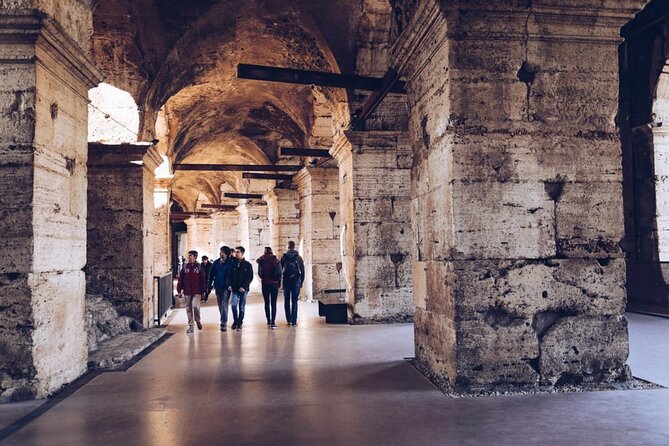
This tour starts in a practical spot: Via della Polveriera 13, near public transport. You’ll also need to show up at the office at Via della Polveriera 8 to join, so arrive with a little buffer. The end point is at the Colosseum area (Piazza del Colosseo 1), which means you finish where you’ll want to be anyway—right in the Rome landmarks zone.
I like this setup because you’re not dragged around the city. It’s focused, and the walking is concentrated where it counts. You’ll also want to keep an eye on the rules from the start: you must bring a valid passport or ID that matches the name used for booking, and full names must be provided up front for ticketing.
You can also read our reviews of more tours and experiences in Rome.



Entering the Colosseum Arena Floor (Gladiators Gate access)
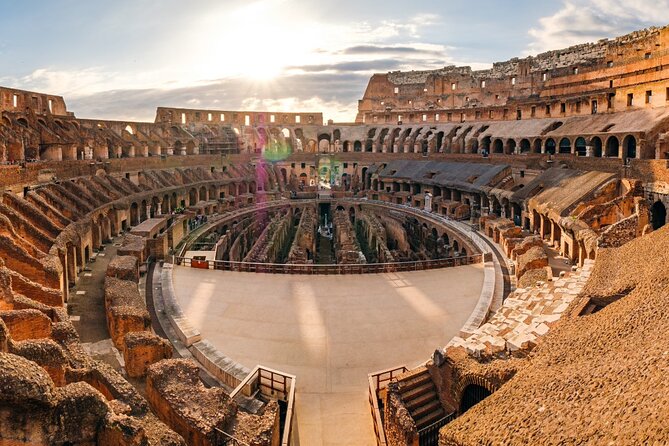
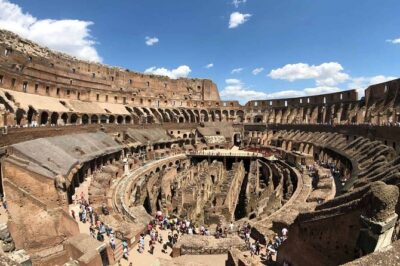
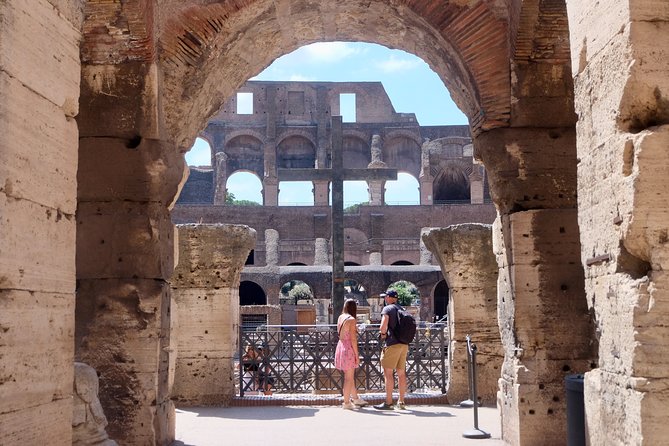
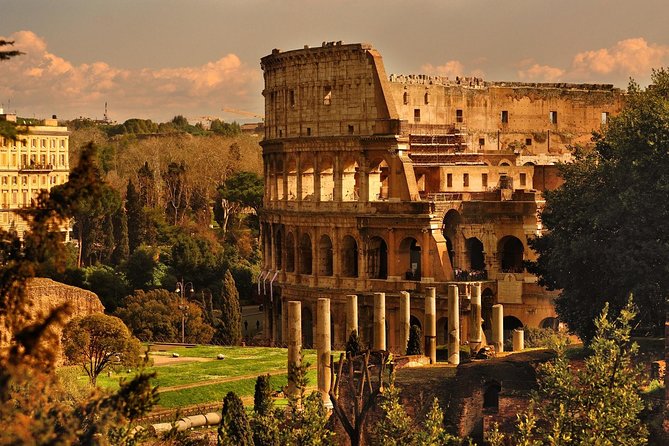
Stop 1 is the Colosseum, with about 1 hour there. The highlight is access through the Gladiators’ gate concept and the chance to visit the archaeological area at ground level—plus exclusive access to the arena floor. That’s a very different experience than standing behind railings and trying to imagine the chaos.
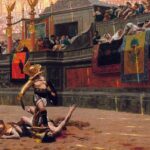
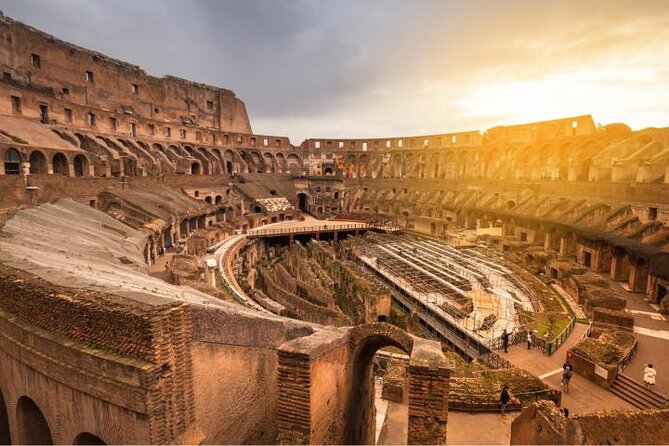
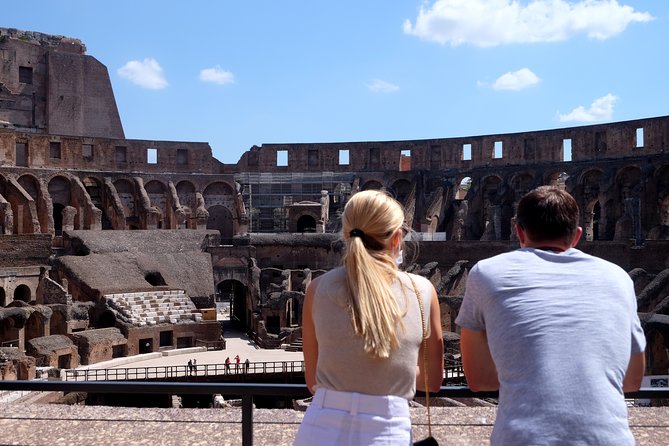
Here’s what makes that arena access genuinely valuable for your visit: the Colosseum is one of those places where context changes everything. From the floor, you can better understand scale—how narrow the passages feel, how the seating rises, and why crowd control and sound mattered so much. Your guide’s job is to turn that space into a story: gladiator fights, public spectacles, and the broader battles of Roman politics that helped shape how these events were staged.
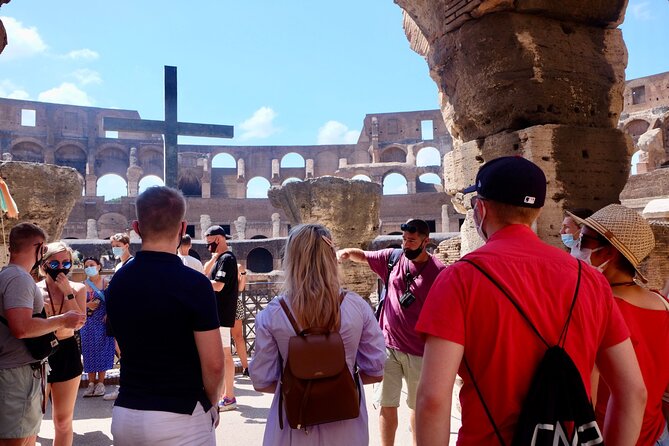
This is also where the headsets earn their keep. The Colosseum can be packed, and without audio help, you end up reading plaques or relying on guessing. With headsets, you can keep your eyes on the ruins while the guide explains what you’re looking at.
One more detail I’d flag: the tour’s internal order can vary based on how access is arranged at the Colosseum. So don’t assume your exact timing will match the same route every day—just know that Colosseum is first on the standard flow, and arena access is part of it.
Roman Forum: the stage for power (and public life)
Next comes the Roman Forum for about 45 minutes. This is the heart-of-Ancient-Rome stop, the place where public and social life happened—and where political power turned into a long-running contest. I like that the Forum segment isn’t treated like a quick photo stop. You get enough time to understand the difference between the Forum as a marketplace and the Forum as a political battleground.
Your guide’s explanations matter here because the Forum can look like a pile of stone unless someone puts the pieces into a timeline. The Forum shifted over time from a commercial center into something tied to power struggles, wars, and the messaging power of artworks and public buildings in the Republican Age.
Practical note: some people find the Forum portion more time-consuming than they expected because it’s information-heavy. If you’re traveling with a group that gets restless, it helps to remember why it’s scheduled: Forum + Palatine Hill are what make the Colosseum feel less like a standalone monument and more like part of a working Roman world.
Palatine Hill: legends, origins, and the imperial vibe
Stop 3 is Palatine Hill, also about 45 minutes. This is where you get the origins thread—legend included—and then you see the sites connected to the imperial age. Palatine Hill is tied to the idea of Rome’s beginnings, and it’s also the kind of place where rulers would have wanted to be seen.
I like Palatine Hill as a finish because it shifts your brain. After the Forum’s political pressure and the Colosseum’s spectacle, Palatine gives you the broader story: how legend and authority overlap, and how the “center” of Rome kept moving in meaning.
Expect ruins, viewpoints, and a guided narrative that links places to stories you’ve heard elsewhere. You’re not there to memorize; you’re there to connect dots so your self-guided time later (if you do any) feels easier.
Guides, headsets, and small-group momentum
This tour caps at 24 travelers, and that matters more than it sounds. A larger group can turn the Forum into a bottleneck and the Colosseum into a slow shuffle. With a smaller group size, you’re more likely to keep moving with less waiting and more time listening.
The guide quality is the make-or-break element. The strongest praise in the feedback I see repeatedly is about guides who bring Roman life to life with stories, legends, and visuals. Some guides mentioned by name include Laura, Lara, Marco, Mary, Valerio, JC, Nadiya, Daniele V, and Sarah. A few specific tactics show up in those compliments: clear pacing, humor, answering questions, and sometimes even showing pictures or drawings of what the sites would have looked like.
If you love photo stops and don’t want to feel like you’re sprinting between viewpoints, this tour is set up to support that. Guides also tend to help you navigate the chaos of the Colosseum so you don’t waste your time trying to figure out the route.
Audio equipment is included, and that’s crucial on a busy day. When your guide can be heard clearly, you spend less energy straining and more energy looking.






Price and value: what you’re really paying for
The price is $95.53 per person, for a 2–3 hour guided experience in English. That number can feel steep until you see what’s built into it.
The included ticket details are a big part of the value: the Colosseum reservation fee (valued at €2) and the Colosseum entrance ticket with arena access (valued at €24) are specifically included. After that, the remaining cost covers the guide services, headsets, booking fees, and other tour amenities. The tour also notes that the arena floor archaeological access fee is €22 for adults, with a €2 booking fee, and children under 18 may have free admission for that portion.
So here’s my practical way to think about the math: if you’re only buying general entry and walking on your own, you’ll still see the Colosseum. But you’ll likely miss the “why” behind what you’re looking at, and you may not get the same access experience. If you want both interpretation and restricted arena floor time, the guide-led format plus included arena access is where your money goes.
What to expect on the ground (walking, timing, and comfort)
This is a moderate-physical-fitness kind of tour. You’ll wear comfortable shoes, because you’re combining multiple ancient sites in one session. The pacing is designed to be relaxed and enjoyable, but it’s still a lot to cover in a single morning or afternoon.
Timing details:
- Colosseum: about 1 hour
- Roman Forum: about 45 minutes
- Palatine Hill: about 45 minutes
- Total: about 2–3 hours (about 2.5 hours in July and August due to heat)
If you travel in summer, plan your day around the heat. The tour itself warns that duration shifts to 2.5 hours in July and August, so bring water and use shade breaks when you can. (Also check the weather in Rome—sun can turn a “short stop” into a “why did I wear these shoes” moment.)
Also watch the entry rules. It’s forbidden inside the Colosseum to bring glass, sharp objects, alcohol, and spray. If you’re packing a bag, keep it simple.
Finally, don’t ignore the ID/name requirement. Your booking name has to match your passport or ID, and you’ll need to ensure your voucher includes full traveler names. Skipping that step is how you end up stuck outside.
Who this tour suits best
This is a strong pick if:
- You want the Colosseum plus Forum and Palatine Hill in one guided block
- You care about understanding what you’re seeing, not just checking boxes
- You like the idea of seeing the Colosseum from the arena floor, not only from the seats
- You prefer headsets so you’re not fighting crowds for audio
It may be less ideal if:
- You’re extremely sensitive to long stretches of guided talking
- You only came for the Colosseum and would rather spend your Forum time on your own
- You hate any itinerary where the guide might hold longer at specific points (some people do mention pacing differences)
If you’re a first-timer in Rome, this tour is especially useful because it builds context fast. It also tends to work well for families on a first pass when you want a structured overview without having to research every stone.
Should you book the Colosseum Arena Floor, Roman Forum & Palatine Hill tour?
I’d book this tour if arena-floor access and guided context are on your must-do list. The included headset setup, the small-group cap, and the fact that you get all three major sites in one session make it a practical value play, not just a “fancy add-on.”
I’d think twice if you already know the Roman Forum well and you’d rather keep your day flexible around the Colosseum only. And if you get annoyed by talking-heavy ruins tours, you’ll want to come with a mindset of short explanations that connect the dots as you move.
If your ideal Rome day is: arrive, get oriented fast, skip confusion, and leave feeling like the ruins make sense—this is a solid choice.