REVIEW · ROME
Trevi Fountain Underground Aqueduct and Spanish Steps Tour
Book on Viator →Operated by Live Virtual Guide · Bookable on Viator
Roman water runs under your feet. This Trevi Fountain Underground Aqueduct and Spanish Steps Tour connects the postcard Rome of the Spanish Steps and Trevi Fountain to what most people miss: the ancient water system beneath the city. I love the small-group pace and the way your guide ties today’s Rome to the aqueducts that kept it alive.
You’ll also get a clear sense of how the city layers over time, from the street level you see to the underground spaces you rarely get to enter. One thing to consider: expect moments of standing while your guide explains the stories, so it’s not a nonstop “walk-and-snap” experience.
In This Review
- Key Things You’ll Notice on This Tour
- Why This Tour Works in a Tight Rome Itinerary
- Spanish Steps: More Than a Beautiful Staircase
- Colonna Dell’Immacolata and Piazza di Spagna’s Local Traditions
- Acquedotto Vergine: Seeing the Aqueduct in the Real City
- Rinascente Roma Tritone: Ruins Inside a Department Store
- Trevi Fountain: Legends, Plus the Water Logic
- Vicus Caprarius: Walking Underground Through the City of Water
- The Best Part: Guides Who Actually Make It Fun
- Price and Value: What You’re Really Paying For
- Who This Tour Suits (and Who Might Want Another Option)
- Should You Book This Trevi Fountain Underground Aqueduct and Spanish Steps Tour?
- FAQ
- What is the duration of the tour?
- How much does the tour cost?
- What language is the tour offered in?
- How big is the group?
- Is admission included for the stops?
- Can I get a refund if my plans change?
Key Things You’ll Notice on This Tour
- Small-group rhythm keeps it relaxed, and you’re not getting shoved along in a crowd
- Aqueduct storytelling turns Trevi and the Spanish Steps into a single connected theme
- Underground access at Vicus Caprarius shows the “city of water” in a way photos never can
- Mix of outdoors and interiors means it works well even when the weather is doing its thing
- A modern Rome angle: you’ll see ruins tucked into places you already walk past, like a department store
Why This Tour Works in a Tight Rome Itinerary
This is a fast, focused way to see Rome’s most famous viewpoints and still feel like you learned something real. With an approx. 2-hour length, you can slot it into a packed day without turning the rest of your itinerary into a scramble.
The tour also avoids the usual “one site, one photo, move on” pattern. Instead, the theme stays consistent: water—where it came from, where it went, and how Rome’s present-day shape grew around its ancient plumbing.
You can also read our reviews of more tours and experiences in Rome.



Spanish Steps: More Than a Beautiful Staircase
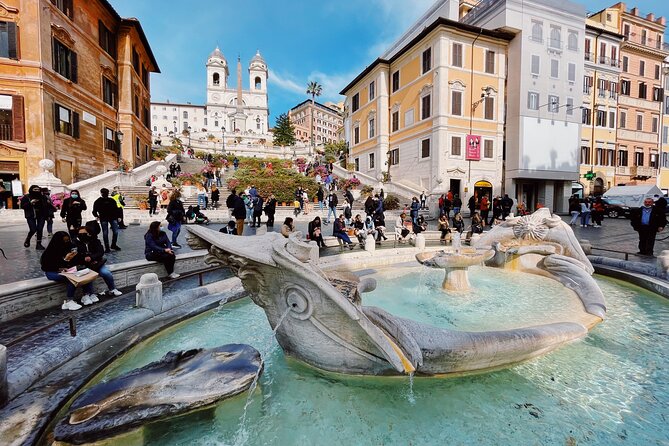
You start at the Spanish Steps area, where Piazza di Spagna is still the stage for Rome’s glamorous side—yet the story goes back much farther. You’ll get context for what the square and its surroundings were tied to in Roman times, and how it became the landmark we recognize today.
One of the best parts here is the naming myth. The Spanish Steps aren’t Spanish in the way the name sounds, and your guide explains the reason the label stuck. Even if you’ve seen the steps in photos a hundred times, this is the kind of correction that makes the place feel new again.
Then you pivot to the fountain that begins the water story. La Barcaccia connects directly to an ancient Roman aqueduct that has been feeding it for over 2,000 years, and that’s where the tour’s “follow the water” thread really starts. This is where the whole experience clicks: the sightseeing stops being separate facts and becomes one system.
Practical note: the meeting point is near public transportation, which helps when you’re mixing this with other sights in central Rome.
Colonna Dell’Immacolata and Piazza di Spagna’s Local Traditions
From the steps, you move to the Colonna Dell’Immacolata, linked to local traditions around Christmas time. This stop is short, but it’s a nice reminder that Rome’s history isn’t only ancient.
What I like about adding a moment like this is that it widens the lens. You’re not only looking at ruins; you’re seeing how modern neighborhood traditions sit next to major tourist landmarks.
Acquedotto Vergine: Seeing the Aqueduct in the Real City
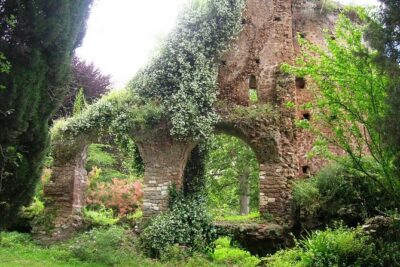
Next comes Acquedotto Vergine, where you start spotting parts of the aqueduct visible overground. That shift is important. Many Rome tours focus on ruins as ruins—detached from daily life. Here, you can see the infrastructure as part of the city’s ongoing fabric.
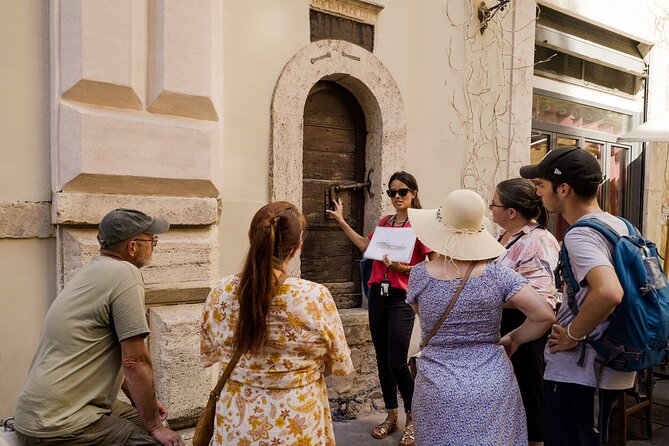
There’s also a mysterious door right next to the aqueduct mentioned on the route. Even when the stop is brief, it adds a sense of discovery—like you’re catching the edge of a working system rather than visiting a dead monument.
This is a good point in the tour to pause and look around at street-level details. The aqueduct doesn’t sit behind a fence in a theme-park bubble; it’s simply there, woven into the neighborhood.
Rinascente Roma Tritone: Ruins Inside a Department Store
One of the most satisfying surprises in this itinerary is the stop at Rinascente Roma Tritone. Yes, it’s a department store. No, you’re not shopping—at least not as the main event.
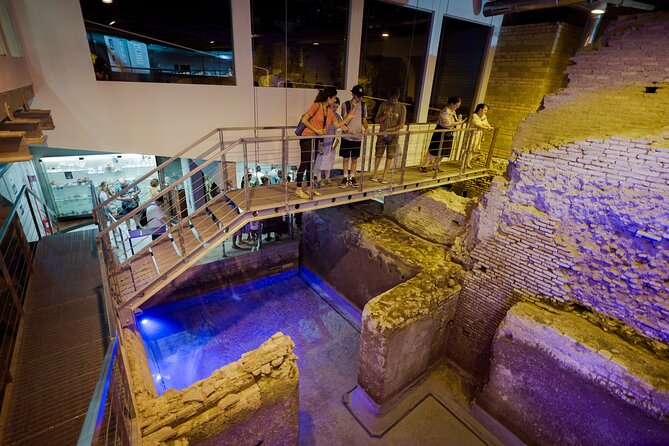
You learn how modern Rome is literally built on top of the ancient one. And this stop gives you a concrete example: underground in this mall area, you can see the ruins of the only ancient Roman aqueduct still functioning today.
This moment can be a little mind-bending in the best way. You’re standing in a place you could easily treat as purely modern, yet the ancient engineering is still in the story. For me, that’s one of the strongest “value per minute” parts of the tour.
If you’re the type who likes history that lives in plain sight, this stop is why the itinerary works.



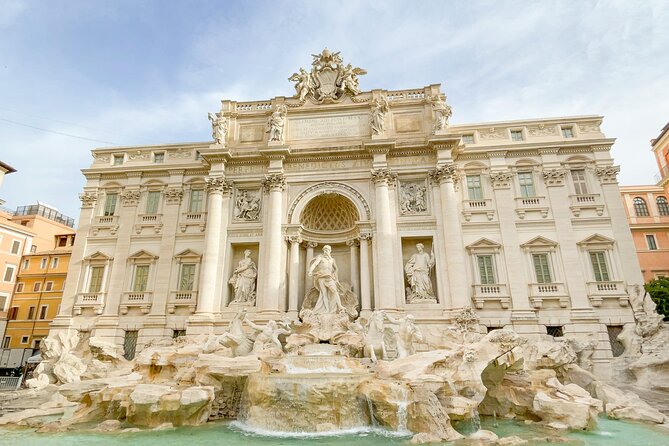
Trevi Fountain: Legends, Plus the Water Logic
When you arrive at Trevi Fountain, it’s exactly what you expect—one of the most photographed spots in Rome. But the tour doesn’t let it stay a backdrop.
You get the significance of Trevi from ancient Roman times through today, including legends that have grown around the fountain. The stories matter here because they connect the fountain to Roman belief systems and later cultural traditions.
Then the tour makes sure you don’t just admire the surface. With the water theme carried forward, Trevi becomes a starting point, not an ending point. You’ll understand where the fountain’s water comes from and why that origin was worth protecting for centuries.
Tip for your experience: if you want the best photos, treat Trevi as a “watch first, shoot second” moment. Listen to the explanation, then look again at the fountain with new context.
Vicus Caprarius: Walking Underground Through the City of Water
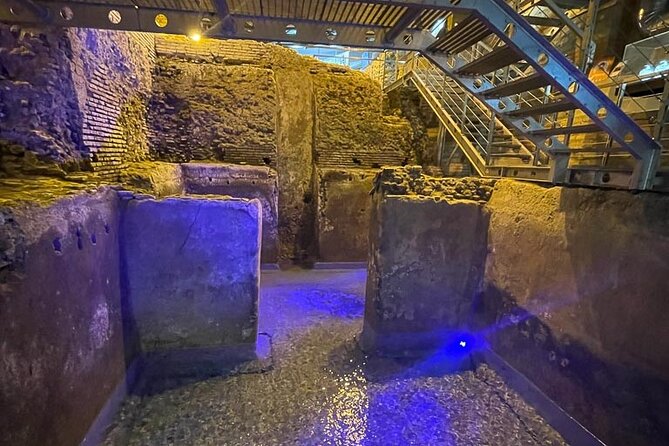
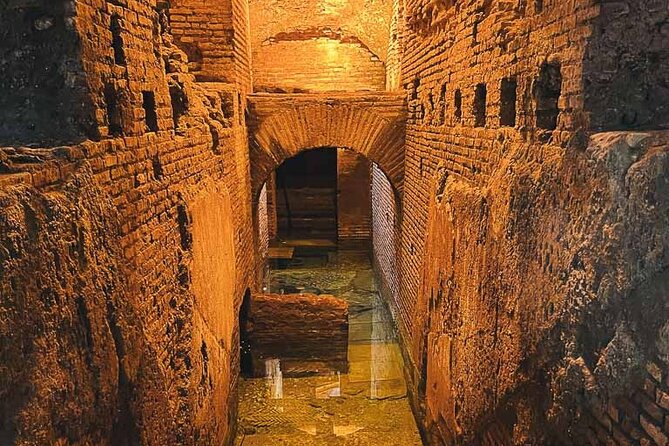
This is the highlight if you came for something real and out of the usual route. The tour leads you to Vicus Caprarius – the City of Water, where you learn where the water for Trevi comes from.
You walk underground to explore an ancient water tank of the aqueduct built in 19 BC. That’s the part most tours skip. Instead of just pointing at famous ruins, this gives you a physical sense of depth—how far down water storage and infrastructure ran.
The description of the site as layered like a lasagna fits perfectly. You’re looking at stacked building and home layers—evidence of how people lived above and around this system through centuries. The effect is practical, too: it shows you why Rome’s ruins feel tangled, and why the city’s history is hard to separate into neat time periods.
Time here is about 30 minutes, and that’s long enough to absorb what you’re seeing without rushing. Admission for this stop is included, which adds value because this is the part you’re most likely to think, I’m glad I paid for this.
The Best Part: Guides Who Actually Make It Fun
This tour rises or falls on the guide, and the standout pattern here is engagement. People have praised guides like Sabrina, Federica/Frederica, and Riccardo for being passionate, fluent in English, and good at keeping the pacing lively.
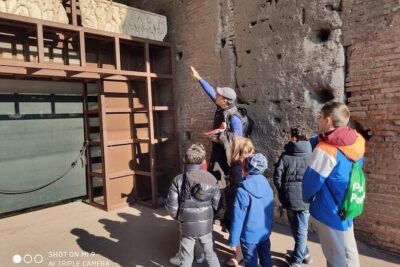
You’ll want to pay attention to how your guide links each location. When they connect the dots between Spanish Steps, aqueduct traces, Trevi, and Vicus Caprarius, the tour feels like a single story rather than separate stops.
If you prefer a more conversational style (with jokes and human details), this is the format that tends to work well. And if you’re hoping for a silent museum vibe, you may find it more animated than you’d like—based on the fact that some explanations can lead to longer standing periods.
Price and Value: What You’re Really Paying For
At $62.75 per person for about 2 hours, this sits in the middle of what you’ll typically pay for guided Rome experiences. The value comes from two places.
First, several stops include free admission tickets, which keeps the overall cost grounded. Second, the big-ticket experience is the underground section at Vicus Caprarius, where you get access to the ancient water tank and the “layers of the city” feeling you can’t recreate on your own from the street.
In other words, you’re paying not only for a guide, but for a guided way to access a specific underground component tied to how Trevi actually worked.
Who This Tour Suits (and Who Might Want Another Option)
This tour is a strong fit if you:
- Want history that links famous Rome sights to the infrastructure underneath
- Like small-group travel (max 12 travelers), where you can hear the guide and move at a relaxed pace
- Prefer a route that includes both outdoor landmarks and underground spaces
It may be less ideal if you:
- Want nonstop movement and minimal standing time
- Prefer purely visual sightseeing without much explanation
In general, the tour is described as suitable for most travelers, and it involves easy walking with a few steps, so you’ll likely be comfortable as long as you’re used to city walking.
Should You Book This Trevi Fountain Underground Aqueduct and Spanish Steps Tour?
If your Rome goal is to understand why the city looks the way it does—and how it kept functioning for thousands of years—this is a great booking. The combination of Spanish Steps + Trevi + aqueduct infrastructure + Vicus Caprarius underground access is exactly the kind of “surface plus system” experience that makes a trip feel richer.
Also, the pricing makes sense if you’re specifically interested in seeing the underground water tank tied to 19 BC and learning how the water story connects all these places.
If you’re unsure, decide based on your tolerance for guided explanation. If you like hearing the why behind the what, you’ll likely love it. If you want mostly walking and photos, you might find some standing time a little slow.
FAQ
What is the duration of the tour?
The tour lasts about 2 hours.
How much does the tour cost?
The price is $62.75 per person.
What language is the tour offered in?
The tour is offered in English.
How big is the group?
This tour has a maximum of 12 travelers, keeping it small-group.
Is admission included for the stops?
Admission is free for the listed stops, and Vicus Caprarius – the City of Water includes admission.
Can I get a refund if my plans change?
Yes. You can get a full refund with free cancellation if you cancel up to 24 hours before the experience starts.