REVIEW · ROME
Tour Squares of Rome and Vatican
Book on Viator →Operated by RomaTourGratis · Bookable on Viator
Rome and Vatican squares in one focused walk. You get the big visual beats of Imperial Rome and the Papal era back to back, with stops built around the Pantheon and iconic fountains. I especially like how it strings monuments and artwork themes together, so you leave with clearer links between the eras rather than a pile of photos.
Two things I like a lot: the route is designed around major landmarks you can actually see up close, and the small maximum group size makes the experience feel manageable. One caution: the tour price and ticket situation can get confusing if you book through third-party sites, so I recommend confirming exactly what your mobile ticket covers before the meeting time.
You start near Fontana del Tritone and finish at St. Peter’s Square, after the Vatican portion. The pace is built for short, meaningful stops, and the day can feel like a highlight reel (with some moments that are quick by design). If you want hours inside museums or a deep lecture style tour, this may not match your pace preference.
In This Review
- Key highlights that make this tour worth your time
- From Fontana del Tritone to St. Peter’s Square: how the route flows
- Pantheon and Imperial Rome stops that set the stage
- Castel Sant’Angelo to Renaissance-Baroque Rome: Michelangelo and Bernini focus
- Trevi, Triton, Four Rivers, Neptune, and Moro: fountains as outdoor masterpieces
- Piazza Navona and the shift toward St. Peter’s Square
- Vatican Museums portion and the St. Peter’s Square finish
- Small group size, mobile ticket, and the kind of pace you should expect
- Price and value: what $17.44 gets you (and what to confirm)
- A booking caution worth taking seriously
- Who should book this tour, and who might want something else
- Should you book Squares of Rome and Vatican?
- FAQ
- Where does the tour start and end?
- How much does the tour cost?
- How long is the tour?
- What ticket type is used?
- Is the group size limited?
- What are the main sights included?
- Does it include anything special on Sundays?
- Is free cancellation available?
- Are service animals allowed?
Key highlights that make this tour worth your time
- Pantheon entry included in the Imperial Rome sequence
- Castel Sant’Angelo and the ruins of the Domitian Flavio Stadium area
- Michelangelo and Bernini era focus during the shift to Papal Rome
- Iconic fountains on one walk: Trevi, Triton, Four Rivers, Neptune, and Moro at Piazza Navona
- Ends at St. Peter’s Square after the Vatican Museums portion
- Sunday Angelus option for those joining on Sundays
From Fontana del Tritone to St. Peter’s Square: how the route flows
This tour has a clear start and finish, which matters in Rome and Vatican City. You meet at Fontana del Tritone in Piazza Barberini, then you keep moving through the city’s famous squares and monument areas until you end at St. Peter’s Square.
That structure is more than just convenience. When you walk from fountain to fountain and monument to monument, your brain starts to map the city. You also get a practical “orientation day” vibe: you learn where things sit relative to each other, and you can return later for longer stays at your favorites.
One thing to keep in mind is the time range listed for the experience. The tour segments can be short to quite short, so treat this as a guided sampler rather than a long, slow, museum-style visit.
You can also read our reviews of more tours and experiences in Rome.



Pantheon and Imperial Rome stops that set the stage
The tour’s Imperial Rome portion centers on the Pantheon with an included entry moment. The Pantheon is the type of landmark where, once you step inside, everything starts to make sense fast. You’ll see why Rome’s engineering and design became a template for later architecture.
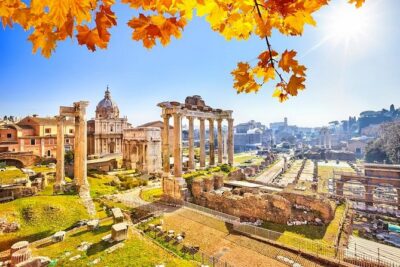
From there, the walk continues into the broader Imperial theme, including the ruins of the Domitian Flavio Stadium area. Even when you’re looking at ruins rather than restored halls, you get a feel for how the Romans used space for public life—especially entertainment and gathering.
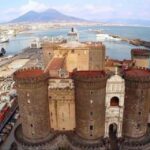
Another key stop in this section is Castel San Angelo. You’ll see how this landmark links different chapters of Rome. It also helps you understand why so many later stories and power centers gravitate around major monuments like this.
Practical tip: plan to go at walking pace. This style of tour works best when you’re okay with brief stops, quick photo moments, and staying flexible if crowds affect how fast you move.
Castel Sant’Angelo to Renaissance-Baroque Rome: Michelangelo and Bernini focus
After the Imperial segment, the tour shifts into the Papal golden time and the Renaissance-Baroque world. The emphasis here is on famous artists—specifically Michelangelo Buonarroti and Gian Lorenzo Bernini—and how their influence shows up in the city’s visual language.
I like this part because it stops you from treating “art” as something separate from “city walking.” You see how papal Rome built identity through dramatic forms, statues, and ornament-heavy public works. Even if you’re not an art scholar, the names give you hooks that make later self-guided sightseeing easier.
The route also uses fountains as a kind of bridge between eras. That matters because in Rome, some of the most “book learning” moments land outside, not inside galleries. So your best understanding of the transition comes from looking at what’s right in front of you.
Consideration: because this tour is built around famous stops, you can expect some crowding around the big icons. That doesn’t make the tour less worthwhile; it just means you’ll do your best work by arriving with the right expectations—quick looks, good angles, and moving on when the group needs to.
Trevi, Triton, Four Rivers, Neptune, and Moro: fountains as outdoor masterpieces
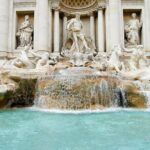
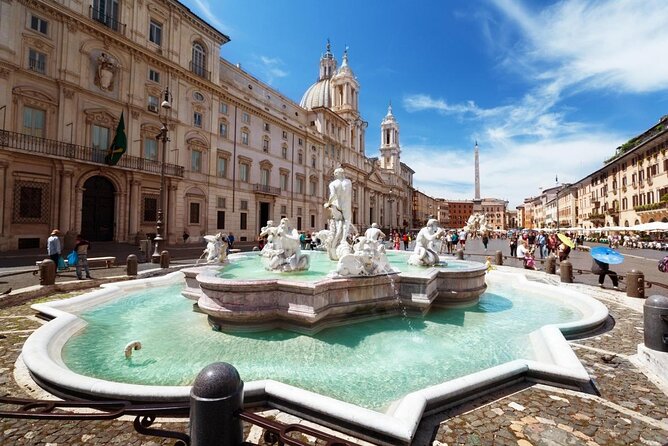
If you like the way Rome uses water and stone as public art, you’ll enjoy this fountain sequence. The tour highlights multiple named fountains, including the Trevi Fountain, the Source of the Triton, the Source of the Four Rivers, the Source of Neptune, and the Source of Moro at Piazza Navona.
What I find useful about hitting several fountains back to back is pattern recognition. You start seeing how each fountain communicates something different—through symbolism, sculptural style, and the way the space is framed. Even a short stop becomes more meaningful when you compare it to the others immediately after.
Starting at Fontana del Tritone also gives you a built-in warm-up. It’s a strong way to begin because the fountain is already a recognizable landmark, and it helps you get your bearings before the day gets bigger and more crowded.
For photos, I’d keep your strategy simple:
- If you want wide shots, be ready for brief windows.
- If you want details, slow your pace a bit and focus on the sculptural elements while your guide moves you to the next view.
This tour doesn’t pitch the fountains as background scenery. It treats them as the centerpiece attractions they are, which is exactly what you want from a squares-focused itinerary.
Piazza Navona and the shift toward St. Peter’s Square
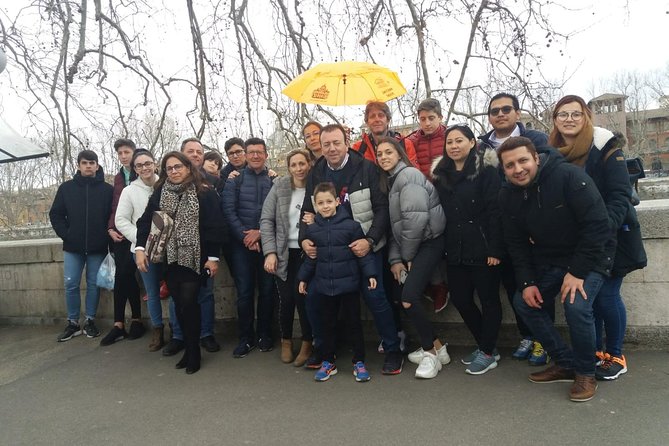
The walk includes the Piazza Navona area through the fountain stop featuring the Source of Moro. Piazza Navona works well for a guided visit because the plaza itself gives you an instant sense of scale and street-life layout, even in a guided format.
As the tour continues, it gradually points you toward the Vatican area. That shift can feel like a mood change—less open square energy and more “monument gravity.” The tour frames this with the emphasis on Catholicism as you head into the final highlights.
When you reach the Vatican end of the route, you’re also transitioning from outdoor art and fountains to sacred landmarks and museum spaces. That makes the day feel complete: Rome’s storytelling ends where the Vatican takes over.



Vatican Museums portion and the St. Peter’s Square finish
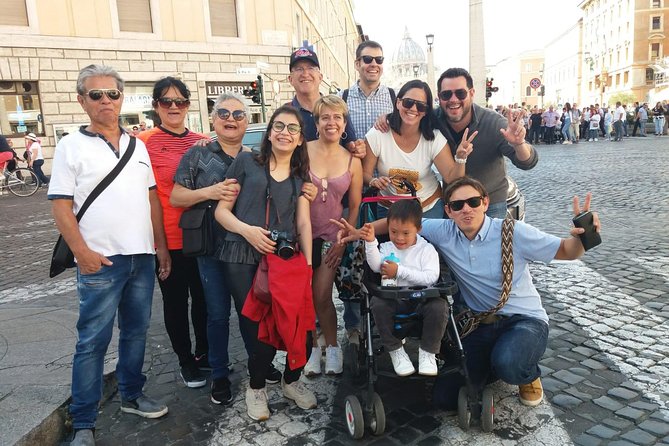
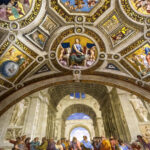
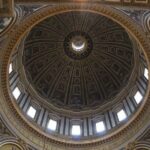
This tour reaches the Vatican portion and then finishes with a stop at St. Peter’s Square. You’ll leave the Vatican Museums area as part of the wrap-up, and the final moment is positioned around St. Peter’s area themes tied to Catholicism.
Ending at St. Peter’s Square is smart for a first visit because it’s the kind of place you remember. You can look back on the day’s landmarks and tie them into one overall sense of place: Rome as empire and Rome as faith center.
On Sundays, there’s an added bonus: the tour notes ending with a papal blessing in the Angelus. If you’re traveling on a Sunday and you’d like that experience, build in patience and crowd tolerance. Even if the exact flow changes day to day, the intent is clear—this is meant to end with a live Vatican moment rather than only a photo stop.
Small group size, mobile ticket, and the kind of pace you should expect
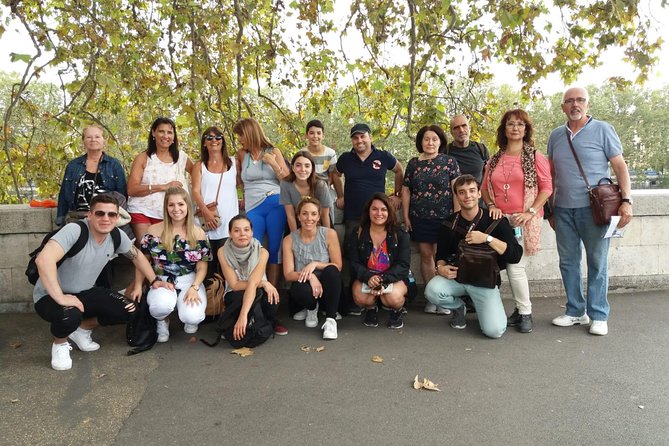
The experience is capped at a maximum of 30 travelers. In practice, that size is a sweet spot for a walking tour: large enough that you have energy, small enough that the guide can keep everyone generally together.
The tour also uses a mobile ticket. That tends to be easier in Rome, where paper tickets can get lost in bags and pockets. If your phone battery is weak, bring a portable charger. I’ve learned the hard way that nothing slows a tour like scrambling for power at a meeting point.
Duration can range from about 2 to 45 minutes (approx.). That doesn’t mean the tour is always that short, but it does signal that some stops may be brief. Plan your mindset accordingly. Think of it as guided direction: enough time to see the key things, and then you have the option to return on your own if something grabs you.
Price and value: what $17.44 gets you (and what to confirm)
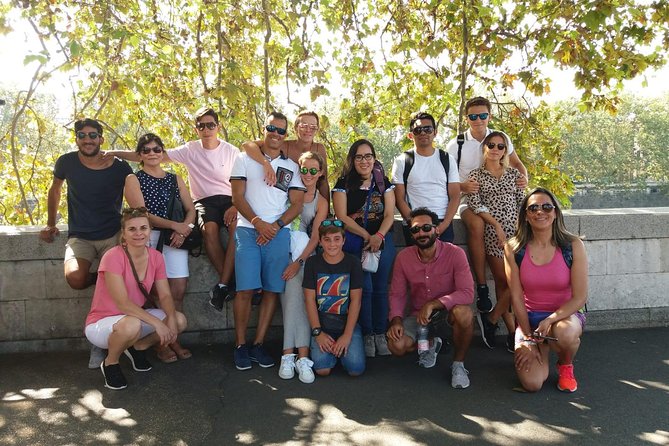
At $17.44 per person, this is priced low for a tour that references multiple major landmarks across Rome and into the Vatican area. That kind of value usually comes from a tight route and quick stops rather than long guided time inside buildings.
The tour description also notes an admission ticket free segment for the Centro Storico stop. At the same time, it says you will enter the Pantheon during the experience. The safest way to get value from this price is to confirm how admission works for the specific stops on your date, especially the Pantheon entry moment.
One more value reality: low price + famous stops = higher chance of crowd delays. That’s not a deal breaker, but it’s why this works best as a highlight route. If you’re hoping for a slow, relaxed, long-explanation day, you might feel rushed.
A booking caution worth taking seriously
There is at least one reported issue tied to ticket handling when booking through third-party platforms. The core problem wasn’t the sights—it was confusion about whether a ticket had been paid when the group met. Before you go, I’d verify two things:
- what your mobile ticket actually covers,
- and who collects tickets for Pantheon or any other included entry points.
This kind of check takes a few minutes and can save you stress on the day.
Who should book this tour, and who might want something else
This tour fits best if you want a fast way to understand Rome and the Vatican without juggling multiple separate tickets and guides. It also suits you if you like connecting themes—Imperial Rome into papal Rome, with Michelangelo and Bernini names used as anchors.
You’ll likely enjoy it if:
- it’s your first trip and you need orientation fast,
- you like seeing major sights even when the stop time is limited,
- you want a walking day with iconic outdoor art, especially fountains.
You might want a different format if:
- you want long time inside major sites beyond what a highlight walk provides,
- you dislike crowds and short stops,
- you’re looking for a deep museum day with extended guided time.
Also, the tour notes that most people can participate and that service animals are allowed, which helps for planning. It’s still a walking-focused experience, so bring comfortable shoes and a flexible schedule.
Should you book Squares of Rome and Vatican?
I’d book it if you’re aiming for a one-day best-of route that mixes Pantheon, major monument areas, and the fountain circuit, then finishes in St. Peter’s Square. The price feels fair for the range of landmark names, and the end on St. Peter’s Square gives you a strong, memorable finish.
I’d be cautious if you want guaranteed, long time inside museums or you’re very sensitive to crowd timing. Also, if you’re booking through a third-party seller, do your homework on exactly what your mobile ticket covers before you meet the group.
If you’re the type who loves a guided “map in motion,” this tour is a practical way to get your bearings and make your later independent sightseeing smarter.
FAQ
Where does the tour start and end?
It starts at Fontana del Tritone in Piazza Barberini and ends at St. Peter’s Square in Vatican City.
How much does the tour cost?
The price is listed as $17.44 per person.
How long is the tour?
The listed duration is approximately 2 to 45 minutes (with timing that can vary by stop).
What ticket type is used?
You receive a mobile ticket.
Is the group size limited?
Yes. The tour has a maximum of 30 travelers.
What are the main sights included?
Key stops include the Pantheon, the ruins of the Domitian Flavio Stadium area, Castel San Angelo, major fountains such as Trevi and those at Piazza Navona, and the Vatican Museums portion before finishing at St. Peter’s Square.
Does it include anything special on Sundays?
On Sundays, the tour notes ending with a papal blessing in the Angelus.
Is free cancellation available?
Yes. You can cancel for a full refund up to 24 hours in advance of the experience start time.
Are service animals allowed?
Yes, service animals are allowed.