REVIEW · ROME
Tour of Rome in Golf Cart: Squares and Fountains of Rome
Book on Viator →Operated by Luxurbe · Bookable on Viator
Rome, minus the walking, is here. This golf cart tour strings together classic Roman squares and fountains with quick, guided stops, so you get the “why” behind the postcard scenes without spending your whole day in transit. I love the way the route keeps moving while still letting you hop off for a closer look at major monuments.
I also like the small-group feel (up to 15 people) because it makes the guide’s pacing feel human. If you’re the type who asks questions, a driver-guide can keep things friendly instead of turning the day into a race.
One thing to consider: you’re working with short stop times, and hearing can be tricky from the back of the cart if the group is spread out. Build your expectations around quick peeks plus photos, not lingering like a full walking tour.
In This Review
- Quick takeaways before you ride
- Via dei Condotti: the practical place to start and end
- Golf cart logistics: what the ride is really like
- Pantheon: the dome and oculus stop that actually feels worth it
- Jewish Ghetto: close-up Rome with stories you don’t get on autopilot
- Campo de’ Fiori: a market square with an easy switch in mood
- Piazza Navona: Baroque drama with Fontana dei Quattro Fiumi
- Trevi Fountain: one of the most famous scenes, handled the right way
- Piazza Venezia and Ancient City: mixing Rome’s layers at the pivot point
- Via Sistina and Trinità dei Monti: charming streets when you want a break from the icons
- Guides and the small-group feel: why names keep coming up
- Price and value: is $83.87 worth it?
- Who this tour is best for
- Should you book this Rome golf cart tour?
- FAQ
- Is the tour duration about 3 hours?
- Where do I meet the tour?
- Does the tour include hotel pickup?
- Is Pantheon admission included?
- Is the rest of the sightseeing admission-free?
- Is there bottled water included?
- What language is the tour offered in?
- How big is the group?
- Can I cancel and get a full refund?
- Is a mobile ticket used?
Quick takeaways before you ride
- Golf cart transport keeps you comfortable while you cover a lot of ground fast
- Via dei Condotti start and end gives you an easy landmark meeting point right in the center of things
- Pantheon stop includes a dome-and-oculus moment, but admission is not included
- Jewish Ghetto + Campo de’ Fiori add everyday Rome alongside the big-name sights
- Piazza Navona and Trevi Fountain deliver two of the most famous fountain-and-square scenes in the city
- Licensed guide as driver means less hassle and more storytelling in the same ride
Via dei Condotti: the practical place to start and end
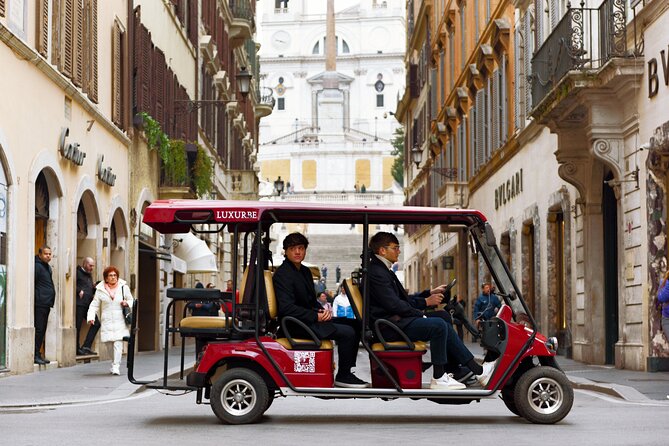
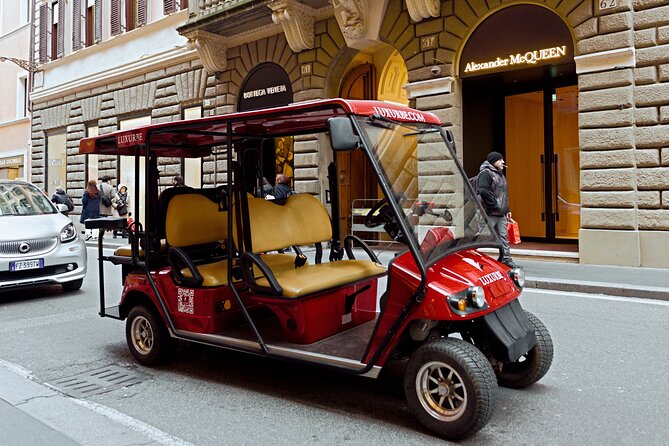
The tour begins on Via dei Condotti 61, right on Rome’s luxury shopping strip. That matters more than it sounds: when you start in a well-known area, the rest of the day feels simpler, and you’re not hunting for a meeting point in side streets.
The pickup setup is also clear. You’re meant to wait at the building entrance—there’s no Luxurbe storefront sign you have to find. Your driver should be easy to recognize, and if you booked a custom pickup, the driver contacts you shortly before arrival. The tour runs on a mobile ticket, so you can keep it all in your phone and move on quickly.
For me, this is a big win if you’re arriving in Rome with limited time. You can drop in, get your bearings fast, and still cover multiple iconic stops without turning the day into a logistics project.
You can also read our reviews of more tours and experiences in Rome.



Golf cart logistics: what the ride is really like
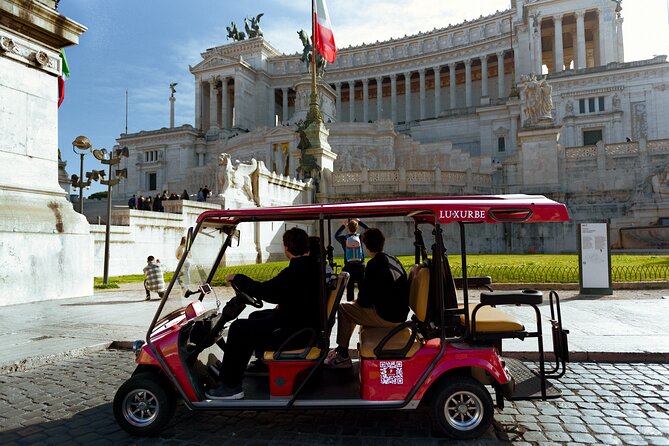
This is a 3-hour experience with golf cart transportation and a licensed guide who also drives. That’s a smart combination. It cuts down on switching cars or meeting another guide halfway through, and it keeps the day’s rhythm consistent.
There’s also an interactive reading material component. That’s useful when you only have about 20 minutes at each stop, because you’re not just seeing the sights—you’re following along with context while you’re there.
Small groups help too. With a maximum of 15 travelers, the guide can manage movement at stops better than with larger crowds. Still, remember the trade-off: you can’t expect long, detailed museum-style time at every location.
Pantheon: the dome and oculus stop that actually feels worth it
The Pantheon is the standout “ancient engineering” anchor of the route. You get about 20 minutes here, and while you don’t have admission included, the stop is designed for a first real look at what makes this building so famous: the dome and the oculus.
If you’re thinking, Will 20 minutes be enough? My honest take is yes—for this style of tour. You’re not trying to do a deep study. You’re trying to see the big features, take photos where possible, and walk away with the story the guide gives you.
You’ll want to plan around the admission point. Because Pantheon tickets aren’t included, you should budget for that separately and keep your schedule realistic. If you prefer a stop where you can enter without extra steps, this is the one moment where you’ll need to be organized.
Jewish Ghetto: close-up Rome with stories you don’t get on autopilot
After Pantheon, the route heads toward the Jewish Ghetto area near the Tiber. This stop is about history and lived space: established in 1555 as a confined area for Roman Jews, the neighborhood still carries a sense of older streets with narrow cobblestones, historic synagogues, and nearby Jewish museums and eateries.
You get 20 minutes here, and the most practical value is that you’re not just passing through. The guide frames what you’re looking at, so the streets feel like more than background to photo ops.
Also, one helpful detail: the stop time is free, and the information centers you toward what matters—like the Great Synagogue and the Jewish Museum—so if you want to return later on your own, you’ll know where to aim.
One caution: access and timing around historic areas can be unpredictable in Rome. So if you have your heart set on entering specific buildings, I’d treat this as a guided overview stop and keep your own follow-up plan flexible.
Campo de’ Fiori: a market square with an easy switch in mood
Campo de’ Fiori is one of those places that shows you how Rome changes throughout the day. During the day it functions as a market square, and the energy shifts as cafes and social life take over.
This stop also helps balance the tour. After older monuments and historic quarters, you get something more current and human-scale: the square atmosphere, nearby cafes, and the statue of Giordano Bruno as a visual focal point.
You’ll have about 20 minutes, and it’s enough for a quick look, photos, and soaking up the “everyday Rome” feeling. It’s also a strong stop if you’re traveling with someone who wants variety, not just monuments.






Piazza Navona: Baroque drama with Fontana dei Quattro Fiumi
Then comes Piazza Navona, famous for Baroque elegance and one of the city’s most recognized fountain settings: Fontana dei Quattro Fiumi. You get about 20 minutes, and that timing is ideal for a square like this—long enough to understand why it’s a centerpiece, short enough that you won’t feel trapped in one spot.
This is also where the guide’s role matters. With so much to see in a single space, a driver-guide can point out what to focus on so you don’t spend your whole visit looking for where to start.
If you’re sensitive to walking, Piazza Navona works well on a cart route because you can arrive, pause, and regroup with minimal fuss. It’s a good place to pause for photos even if you’re not planning to sit at a cafe for long.
Trevi Fountain: one of the most famous scenes, handled the right way
The tour’s fountain moment is Trevi Fountain, delivered as a short stop built around the big visual payoff. You’re there for about 20 minutes, and the guide connects what you see with the myth-and-monument side of the story—Neptune’s chariot and the surrounding sculptures are part of what makes the fountain unforgettable.
Trevi is one of those places where timing and crowd levels can change fast. The cart approach helps because you’re arriving as part of a route and not spending time stuck trying to get there. Still, 20 minutes means you’ll want to have your priorities straight: get your photos first, then let the guide fill in the context.
A small practical note: since this tour does not include bottled water, plan to bring your own. Fountain and square days can run hot, and it’s one less thing to juggle once you’re out in the city.
Piazza Venezia and Ancient City: mixing Rome’s layers at the pivot point
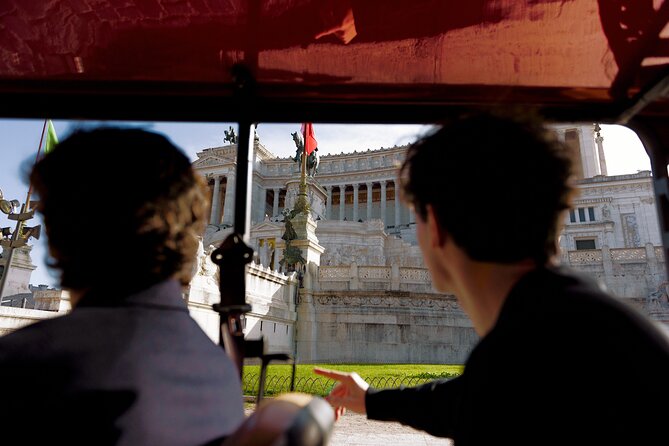
At Piazza Venezia, you’ll see Altare della Patria and the larger Vittoriano monument presence. This stop acts like a pivot: it’s where the tour connects ancient-feeling Rome with Italy’s modern symbolic center.
The guide gives you the “big picture” so the square doesn’t feel like just a dramatic backdrop. You also pass by Palazzo Venezia nearby, which helps you understand why this spot functions as a hub—visually and geographically.
Again, you’re working with a roughly 20-minute timeframe, so treat it as an orientation and storytelling stop. It’s a good moment for photos that show scale, and it helps stitch the day together so the next streets feel connected rather than random.
Via Sistina and Trinità dei Monti: charming streets when you want a break from the icons
Not every stop is built around a single monument. The tour also spends time on Via Sistina, a street with historic buildings, boutiques, and cafes, connecting Piazza Trinità dei Monti and Piazza Barberini. The point here is variety: shopping streets and strolling space give you a calmer rhythm after Trevi and Navona intensity.
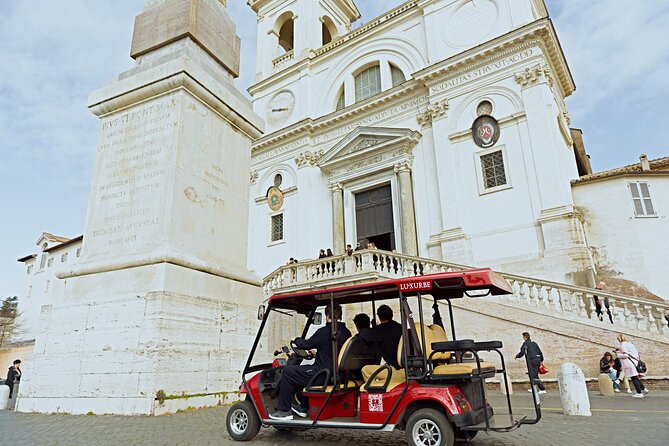
The tour also includes Trinità dei Monti, giving you a chance to see that area without turning it into a long walking detour. This pairing can be especially good if you like Rome as a city you experience between the headlines.
The most useful part is the guide’s framing. Instead of you wondering why this street matters, you get a sense of how it links back to the Spanish Steps and other nearby landmark zones.
Guides and the small-group feel: why names keep coming up
The guide is also the driver, and that role combination shows in how the day feels. When the guide leans into storytelling, the cart ride doesn’t feel like a quick bus ride with random stops. It feels like a moving briefing, and that can be a lifesaver if you’re only in Rome for a short stay.
You may be paired with different driver-guides (names like Jimmy, Paolo, Otto, Matteo, Maximo, Tony, Fabrizio Dolci, Dennis, Francesco, and Jordan show up in the range of experiences people have described). The common thread is usually the same: personable pacing, willingness to answer questions, and help with making the stops meaningful.
Still, keep one practical caution in mind. Hearing can depend on where you’re sitting. If you want the best audio, try to choose a spot closer to the front rather than settling in at the far end of the cart.
Price and value: is $83.87 worth it?
At $83.87 per person for about 3 hours, you’re paying for speed, comfort, and a guided overview that covers multiple major areas in one go. You’re not paying for entry fees everywhere, because at least Pantheon admission is not included.
So the value question depends on what you want from Rome that day:
- If you’re short on time and want a fast intro across squares, fountains, and classic neighborhoods, this price can feel fair.
- If you want long indoor stops, museums, and extended walking time, you may prefer other formats where you control the pace and time on-site.
For me, the key value is that the tour is built for getting your bearings. Starting on Via dei Condotti and touching major squares means you’ll leave with a mental map you can use the next day for deeper exploration.
Who this tour is best for
This tour tends to fit best when you want “Rome highlights” without the stamina tax.
It’s a good match if:
- you have limited time and want to see multiple famous stops in one stretch
- you’d rather ride and hop off than manage long distances on foot
- you like a guide who explains what you’re seeing while you travel between spots
- you’re traveling with someone who benefits from less walking (the cart format helps)
It may be less ideal if:
- you need lots of entry time and slow wandering at every monument
- you’re very strict about the exact order of stops or specific entrances
- you dislike short visits because the tour is designed around quick peeks
Also, note that start times vary, and pickup upgrades are available. If your schedule is tight, picking an earlier start can help you keep the day smoother.
Should you book this Rome golf cart tour?
If you want an efficient Rome overview and you like the idea of short, guided stops, I’d say yes, book it—especially if you’re the type who gets value from context and photo stops.
I would hesitate only if you’re expecting museum-level time at every stop or if you’re planning around entrances that require perfect timing. In that case, treat the tour as your guided sampler, then plan any deeper visits on your own afterward.
FAQ
Is the tour duration about 3 hours?
Yes. The tour is listed at approximately 3 hours, with travel time built into the schedule.
Where do I meet the tour?
The meeting point is Via dei Condotti, 61, 00187 Roma RM, Italy. You wait at the building entrance.
Does the tour include hotel pickup?
Pickup is offered, and there’s an option to upgrade for hotel pickup.
Is Pantheon admission included?
No. The Pantheon admission ticket is not included in the tour.
Is the rest of the sightseeing admission-free?
The other listed stops show admission as free in the provided information (for example, the Jewish Ghetto, Campo de’ Fiori, Piazza Navona, Trevi Fountain, Piazza Venezia/Ancient City, Via Sistina, and Trinità dei Monti).
Is there bottled water included?
No. Bottled water is not included.
What language is the tour offered in?
The tour is offered in English.
How big is the group?
The tour has a maximum of 15 travelers.
Can I cancel and get a full refund?
Yes. Free cancellation is offered up to 24 hours in advance for a full refund.
Is a mobile ticket used?
Yes. The tour uses a mobile ticket.