REVIEW · ROME
Tour of Colosseum & Roman Forum with Dutch Guide
Book on GetYourGuide →Operated by gids in rome · Bookable on GetYourGuide
Ancient Rome comes into focus fast. This Colosseum & Roman Forum tour in Dutch pairs an official city guide with skip-the-line tickets, so you spend less time stuck at entrances and more time understanding what you’re actually seeing. The route also gives you the bigger picture of how daily life, politics, and spectacle all overlapped in the same part of town.
You’ll get a guided walk through the Roman Forum (including key landmarks like the Curia and the Via Sacra) and then move on to Palatine Hill for the viewpoint over the ruins. Finally, the tour lands at the Colosseum with a guide who connects the stones to gladiators, lion fights, sea battles, and public punishments.
One consideration: this tour does not include access to the underground/arena floor, so you’ll be seeing the main levels and structure from ground level rather than going below or onto the performance space.
In This Review
- Key highlights to look for
- Why a Dutch Guide Makes the Colosseum and Forum Click
- Meeting at Angelino ai Fori and Starting in the Right Place
- Roman Forum: From the Curia to the Via Sacra
- Palatine Hill: The View That Puts the Forum in Context
- Colosseum: Stories of Gladiators, Fights, and Punishments
- What You Don’t Get: No Arena Floor or Underground Access
- Headsets, Pace, and How the Guide Keeps Things Understandable
- Practical Tips So You Enjoy Every Stop
- Who This Tour Fits Best
- Should You Book This Colosseum & Roman Forum Dutch Tour?
- FAQ
- How long is the Colosseum & Roman Forum tour with a Dutch guide?
- What language is the guided tour offered in?
- Where does the tour start and end?
- Does the tour include skip-the-line tickets?
- What stops are included in the itinerary?
- Is access to the underground or arena floor included?
- Are headsets provided during the tour?
- What should I bring with me?
- Are pets or smoking allowed?
- Is this tour available on the first Sunday of the month?
Key highlights to look for

- Skip-the-line tickets to keep your time focused where it matters
- Dutch-only guidance by an official city guide, with stories you can follow clearly
- Roman Forum + Via Sacra stops that show how the city’s power worked
- Palatine Hill visit timed for sweeping views over the Forum area
- Colosseum visit focused on major spectacle themes, not just walls
Why a Dutch Guide Makes the Colosseum and Forum Click
Let’s be honest: the Colosseum and Roman Forum can feel like piles of stone if you don’t have a guide translating the meaning. I love the way this tour is built around Dutch explanations that keep the facts connected—so the Curia, Julius Caesar’s last resting place, and the Via Sacra aren’t random names on a map.
Also, the tour is designed for real understanding, not just sightseeing. You’re not rushing past highlights; you’re moving stop to stop with a narrative flow that helps you picture how these places worked in the Roman world.
A practical plus: the group uses headsets for larger groups (7+), which matters when you’re in crowded areas where normal voices get swallowed fast. Even if you’re close to the front, headsets usually make the whole experience easier on your ears and your patience.
You can also read our reviews of more guided tours in Rome



Meeting at Angelino ai Fori and Starting in the Right Place
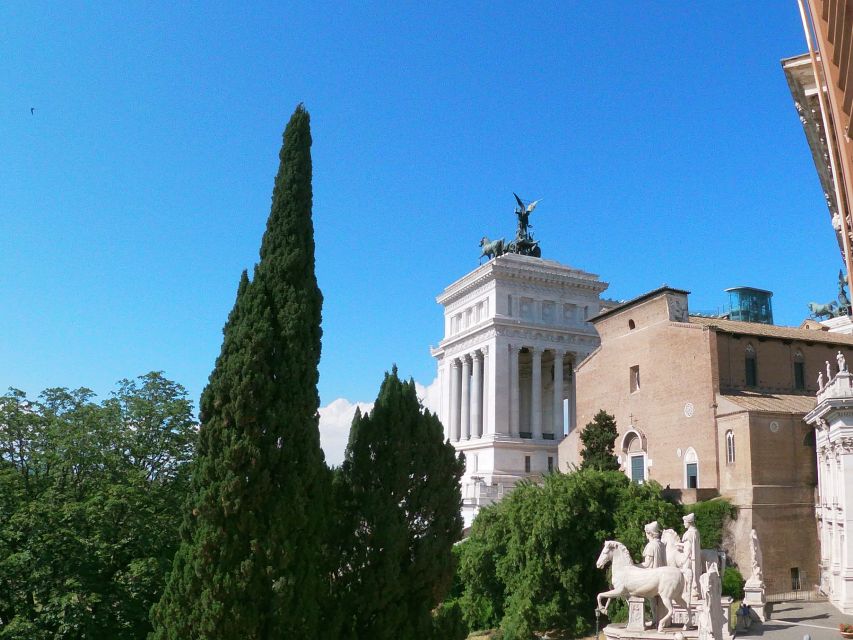
The tour starts and ends at Restaurant Angelino ai Fori, Largo Corrado Ricci 43, right in the core area for ancient Rome. That’s a smart setup because you’re already near the Forum and Colosseum zone, so the day doesn’t waste time with long transfers.
Before you go, plan for walking on uneven ancient surfaces and old stone paths. Comfortable shoes are non-negotiable, and I strongly recommend sunglasses and a sun hat—Rome can be bright, and you’ll be outside for most of the experience.
One more small tip: bring a camera, but also bring a mindset. This tour is at its best when you watch how the guide points out relationships between sites—what lines up visually, what changed, and what still looks surprisingly intact.
Roman Forum: From the Curia to the Via Sacra
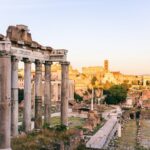
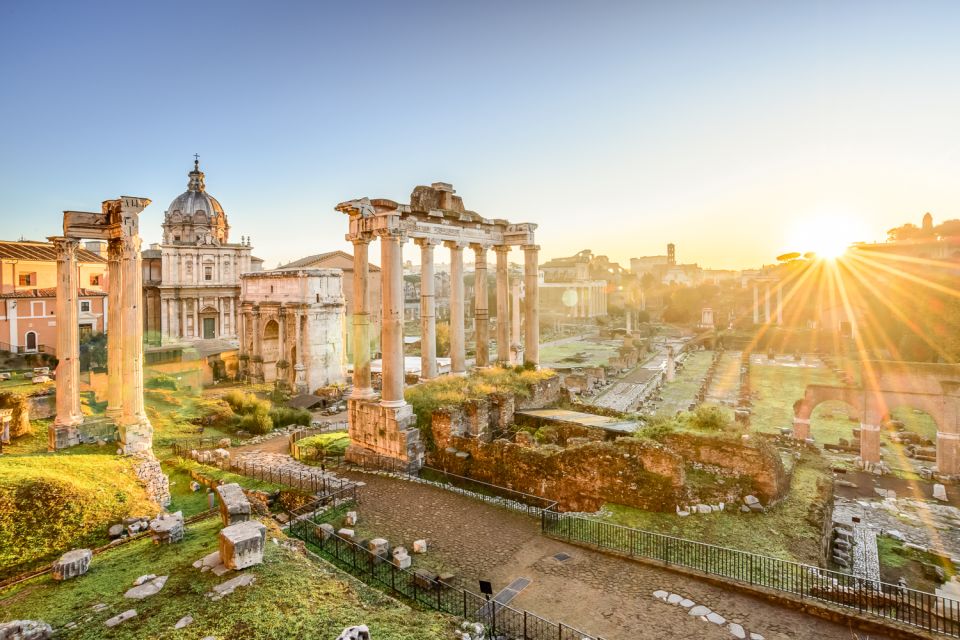
Your visit begins with a Roman Forum stop (70 minutes), and the pace feels right for a classic highlights route. You’ll start by looking at the Curia or Senate, then continue to meaningful anchors like the last resting place of Julius Caesar.
Here’s why that early structure matters: the Forum wasn’t just scenery. It was a power hub where politics, religion, and public life mixed. When you understand that, everything you see afterward makes more sense—especially the transitions from one landmark to the next.
You’ll also walk along the Via Sacra, the famous Roman road where you can still see cart tracks. That’s the kind of detail that turns history from abstract to physical. You’re not only learning what the road was used for; you’re seeing the wear that suggests constant use.
Palatine Hill: The View That Puts the Forum in Context
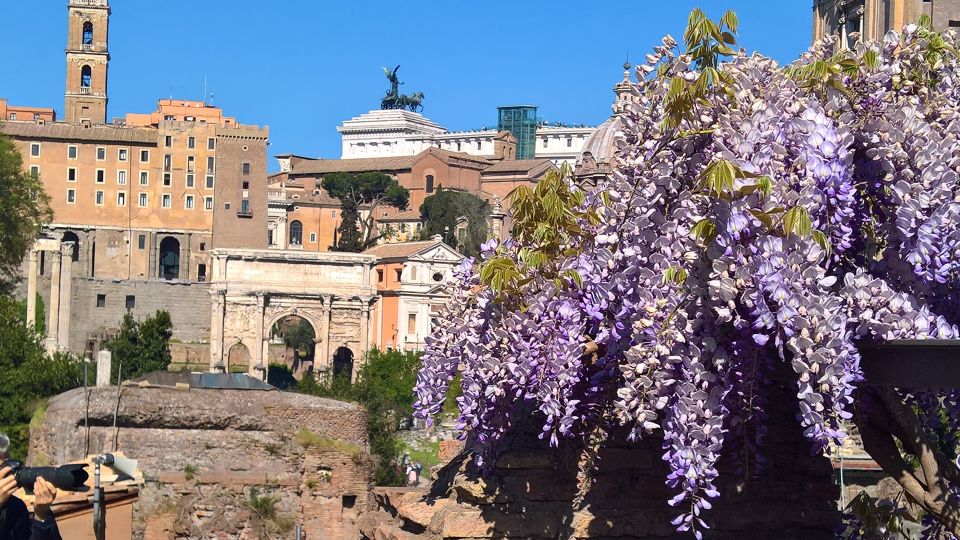
Next comes Palatine Hill (35 minutes), and this stop works because it gives you perspective. You’re not just walking inside the Forum’s ruins; you’re gaining a higher vantage point that helps you understand how the Forum area sits within the wider landscape of ancient Rome.
This is where the tour’s ordering pays off. By the time you reach Palatine Hill, you’ve already visited key Forum landmarks, so the view becomes a map you can interpret. Without that sequence, you might just look out and think, “Nice,” instead of recognizing the relationships between spaces.
If you like photos, this is one of your best chances. The viewpoint is also the moment you’ll likely notice how much of the area still carries traces of organized layout, even after centuries of change.
Colosseum: Stories of Gladiators, Fights, and Punishments
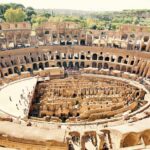
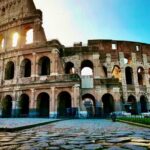
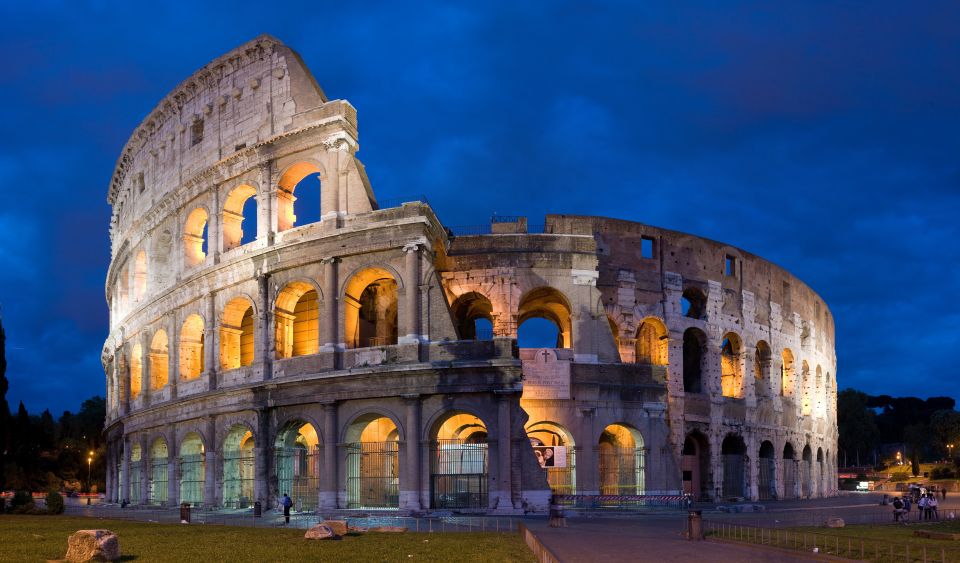
Your final major stop is the Colosseum visit (1 hour). This is the part most people come for, but the value here is the way your guide connects the building to the events that made it famous.
Expect explanation around major spectacle themes such as gladiators, lion fights, sea battles, and executions. You’re not just hearing names; you’re getting context for why the Romans staged these events, how audiences experienced them, and what the Colosseum’s design was built to do.
Also, the tour includes skip-the-line tickets, which is a real time saver at a site this popular. Less time queuing means more time listening, looking, and asking your own brain questions like: Why is this passage here? How did spectators move? What’s the story behind that section?
The biggest payoff at the Colosseum is learning to see the structure as a machine for public entertainment—stone, geometry, and crowd flow all working together.



What You Don’t Get: No Arena Floor or Underground Access
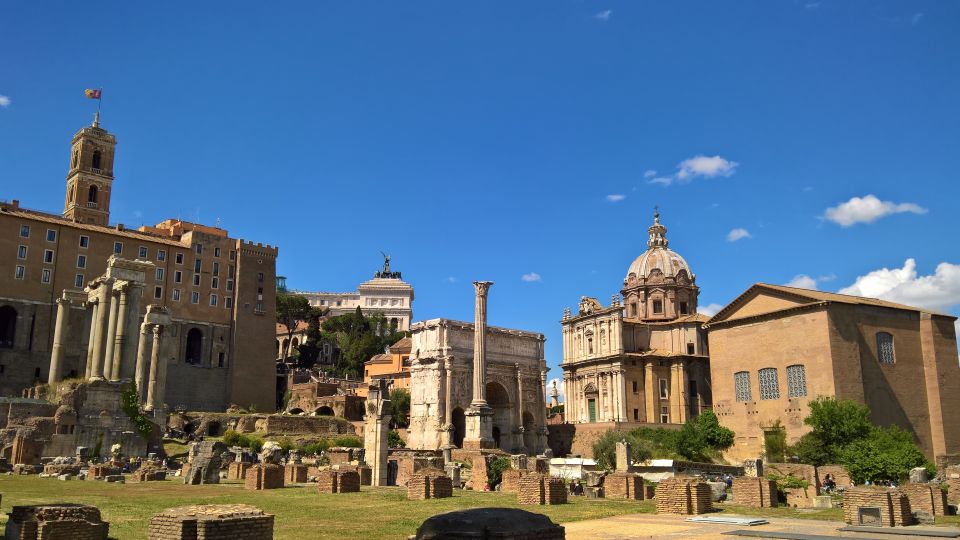
This tour does not include access to the underground or arena floor. That’s the one tradeoff you should know up front.
If you’re the kind of visitor who wants the full behind-the-scenes access—platforms, lower levels, and the most dramatic angles—then you might feel limited. But if your priority is understanding the main site through a guided story route, you’ll still cover the essential highlights of the Colosseum and Forum area.
Think of it like this: you’re paying for clarity and time efficiency, not for extra spaces inside restricted levels.
Headsets, Pace, and How the Guide Keeps Things Understandable
The tour uses headsets for groups of 7+, which can make a big difference on crowded days. It’s also a quiet quality-of-life detail: you can focus on the explanations without constantly trying to hear over other groups.
Language matters, too. This is a Dutch tour, and that’s a huge advantage if you’d rather not piece together history from fragments in English. The guide’s explanations are the whole point—so if you speak Dutch comfortably, you’ll get more out of the same stops than you would on a generic audio tour.
From the feel of the experience, the strongest moments are the detailed story connections—like tying the Via Sacra’s physical clues to what life looked like on the move, or using Colosseum events to explain why the building looks the way it does.
And yes, some guides can be particularly clear. One guide name you may see in feedback is Irene, praised for top-level explanation and “fijne weetjes” (nice useful facts). Even if your guide isn’t Irene, the format aims for that same straightforward, helpful teaching style.
Practical Tips So You Enjoy Every Stop
This tour is very doable, but it pays to show up prepared.
Wear comfortable shoes and expect uneven stone. Bring sunglasses and a sun hat, especially in warmer months. Bring your camera, but keep room for a slower look—some moments deserve it.
Keep essentials simple: this experience doesn’t allow pets, and you also can’t bring luggage or large bags. If you’re traveling light, you’ll feel freer. If you’re traveling with a bigger bag, plan to leave it somewhere secure before you arrive.
If you’re visiting with kids, note the mention of bringing passport or ID for children.
Who This Tour Fits Best
This is a great fit if you want:
- Dutch-language guidance (instead of mixing languages)
- A classic “best of” route without wasting time at entrances thanks to skip-the-line tickets
- A story-driven approach to landmarks like Julius Caesar’s associated site, the Via Sacra, and the Colosseum’s spectacle themes
It may not be ideal if you:
- Need mobility-access support, since it’s noted as not suitable for people with mobility impairments
- Want underground/arena floor access, since those areas aren’t included
If you’re a first-timer to this part of Rome, you’ll get grounded quickly. If you’ve been once before, this format can still help because it focuses on explanation and connections, not just photos.
Should You Book This Colosseum & Roman Forum Dutch Tour?
I think you should book it if your priority is understanding and efficient time use. For $118.95 per person over about 3 hours, you’re paying for three things that matter at these sites: skip-the-line entry, a Dutch official city guide, and headsets for larger groups. That combo often beats the “self-walk and hope” approach, especially when the Forum feels confusing without context.
Skip booking if your dream day includes the arena floor or underground areas. In that case, you’ll want a different type of tour built around deeper access.
If you do book: come with comfortable shoes, expect a real walking route, and let the guide’s stories connect the dots. That’s where this tour earns its strong rating.
FAQ
How long is the Colosseum & Roman Forum tour with a Dutch guide?
The tour lasts about 3 hours.
What language is the guided tour offered in?
The tour is in Dutch.
Where does the tour start and end?
It starts and ends at Restaurant Angelino ai Fori, Largo Corrado Ricci 43, Rome.
Does the tour include skip-the-line tickets?
Yes, skip-the-line tickets are included.
What stops are included in the itinerary?
You visit the Roman Forum, Palatine Hill, and then the Colosseum.
Is access to the underground or arena floor included?
No. Underground and arena floor access is not included.
Are headsets provided during the tour?
Headsets are provided for groups of 7 persons or more.
What should I bring with me?
Bring comfortable shoes, sunglasses, a sun hat, a camera, and a passport or ID card for children.
Are pets or smoking allowed?
Pets are not allowed, and smoking is not allowed.
Is this tour available on the first Sunday of the month?
No tour runs on the first Sunday of the month.