REVIEW · ROME
Top 10 Attraction of Rome – Small group Tour
Book on Viator →Operated by World City Tour · Bookable on Viator
Rome at night, in one tidy walk. In two hours, you’ll get a guided sweep of Rome’s big-ticket sights on foot, starting near the Spanish Steps and ending at the Colosseum area. It’s timed for evenings (starts at 8:00 pm), and the group stays small enough to keep things friendly and easy to follow.
I like two things a lot. First, the guide (Vijay) stays on top of your questions and uses his tablet to show how the ruins looked in their prime. Second, the tour includes Italian gelato, so you’re not sightseeing on empty.
One thing to plan for: it’s lots of walking with outside-only views for major stops, including the Pantheon and the Colosseum. If you’re hoping to actually enter those sites, you’ll need separate tickets and time.
In This Review
- Key highlights that make this tour worth it
- An 8:00 pm Rome walking tour: why the timing actually helps
- Babington’s Tea Room meetup: start point and how to find your group
- Spanish Steps and Piazza di Spagna: 138 steps and the power of a viewpoint
- Trevi Fountain: coin toss, then gelato energy
- Tempio di Adriano and Pantheon outside: seeing what survived
- Largo Argentina: four temples, one complicated story
- Piazza Venezia to the Imperial Forums: politics written in stone
- Colosseum exterior stop: use it as a preview, not a finale
- Price and value: why $34 can work well for a fast Rome intro
- Who should book this small group Rome walk
- Practical tips: shoes, pace, and weather
- Should you book the Top 10 Attraction of Rome walking tour?
- FAQ
- How long is the tour?
- What time does the tour start?
- Is the group small?
- What’s included in the price?
- Do we enter the Colosseum?
- Are tickets included for the Pantheon?
- Where does the tour start and end?
- Do I need to print anything since it’s a mobile ticket?
- What if the weather is bad?
Key highlights that make this tour worth it
- Max 10 travelers keeps the pace manageable and the route easier to navigate
- Outside views of the Pantheon and Colosseum still help you spot what matters
- Vijay’s tablet diagrams make ruins easier to understand, fast
- Gelato included helps you keep up during a compact 2-hour route
- Mobile ticket means you’re not fumbling for paperwork
- Evening timing can mean nicer walking weather and less harsh daytime sun
An 8:00 pm Rome walking tour: why the timing actually helps
This tour starts at 8:00 pm, which changes the vibe in a useful way. You’re not spending the whole evening in long, hot lines, and the streets feel more like Rome should: lived in, not staged.
Because you’re covering a “top 10” style route, the pacing matters. You’ll get frequent short stops where the guide gives context, then you move on before the crowds fully take over your photos.
The result: a tight introduction to Rome that helps you understand what you’re seeing during the rest of your stay.
You can also read our reviews of more tours and experiences in Rome.



Babington’s Tea Room meetup: start point and how to find your group
You meet at Babington’s Tea Room, Piazza di Spagna 23. That puts you right where the story begins: the Spanish Steps area, with lots of landmarks within an easy walk.
The tour note says you’re near public transportation, which is a big deal in Rome. It means you can arrive without turning your evening into an all-day logistics puzzle.
You’ll start close to Stop 1, so once you’re checked in, you’re basically already on sightseeing mode.
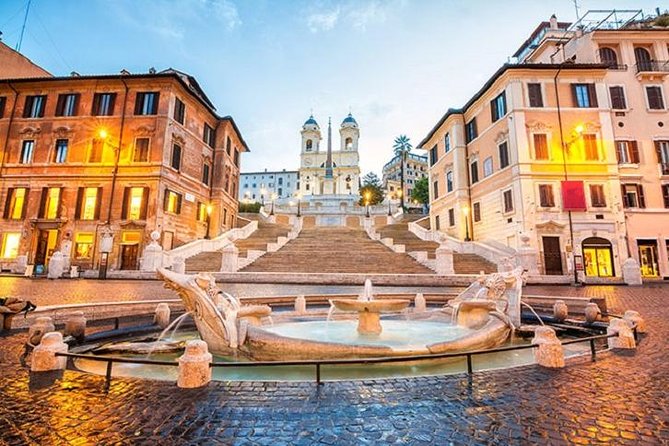
Spanish Steps and Piazza di Spagna: 138 steps and the power of a viewpoint
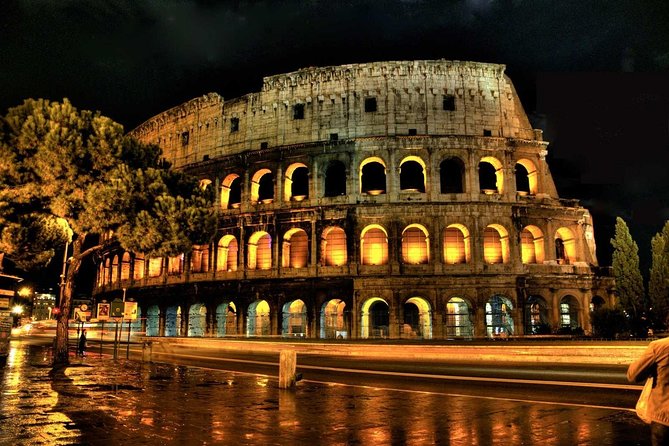
The Spanish Steps are made of 138 irregular steps, with curves, straight runs, and built-in terraces that create different angles as you move. You’re not just looking at a stairway; you’re getting a feel for how Rome’s viewpoints work.
Piazza di Spagna is also more than a pretty square. It became a key commercial and hotel area by the 15th century, influenced by the presence of representatives from Spain and France.
This is a smart early stop because it sets you up for everything else: you start with an iconic scene, then the tour starts connecting the dots between architecture, politics, and daily life.
Trevi Fountain: coin toss, then gelato energy
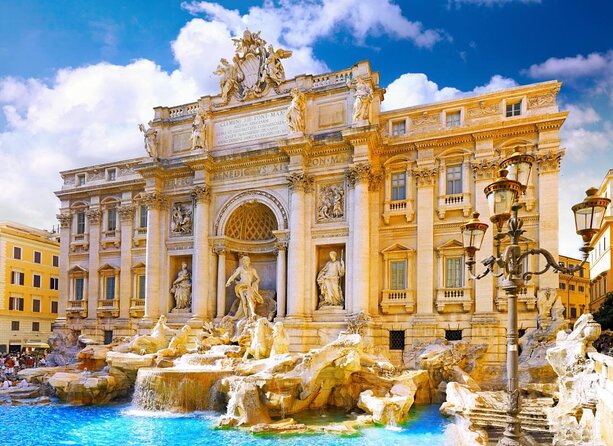
Trevi Fountain is the classic wish moment: millions visit to toss a coin and make a wish. At night, it feels more dramatic and more photogenic, and you’ll have enough time to look, listen, and take in the scale.
The tour also includes gelato—cone or cup. That’s not a throwaway extra. It’s a practical way to keep your legs and patience working during a compact, stop-and-go route.
After Trevi, you’ll feel the difference between Rome as a postcard and Rome as a place you can actually walk through.
Tempio di Adriano and Pantheon outside: seeing what survived
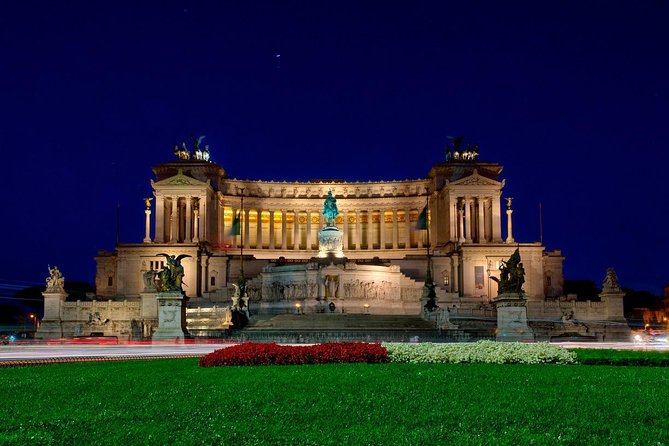
From Trevi, the route shifts from the flashy to the fascinatingly structural.
Tempio di Adriano (Temple of Hadrian) honors the emperor Hadrian, and after his death he was deified by his successor Antoninus Pius. The remains were later incorporated into a 17th-century building erected by Carlo Fontana, which is a great example of how Rome reuses older layers instead of erasing them.
Then you reach the Pantheon area. You won’t enter, but the tour stop is still valuable because the Pantheon is one of the best-preserved ancient Roman buildings. Even from the outside, you can understand why it’s such a benchmark for Roman architecture.
This is where Vijay’s tablet-style explanations really pay off. When you can picture what you’re looking at, you stop seeing a random old building and start seeing a designed system.



Largo Argentina: four temples, one complicated story
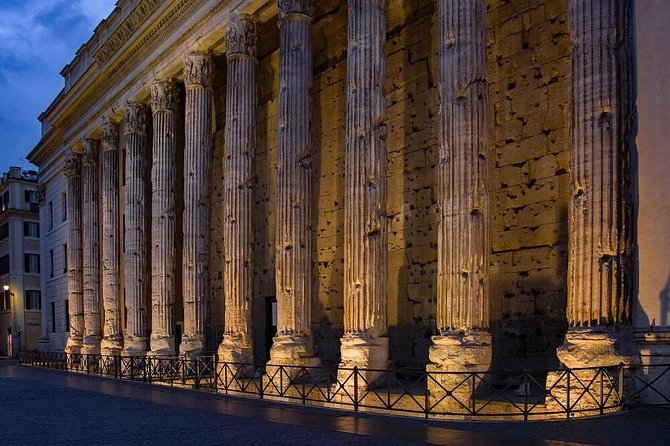
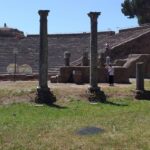
Largo Argentina is an archaeology square with remains of four Republican-age temples. The key detail is that you’ll see them identified with the first four letters of the alphabet, because their exact identification isn’t fully certain.
So instead of one clean, single answer, you get something more honest: archaeology is real life detective work. The guide’s narration makes the place easier to read on the ground, not just in a photo.
It’s also a nice pacing break. After the big-name stops, Largo Argentina feels like you’ve stepped into a quieter pocket of Roman time.
Piazza Venezia to the Imperial Forums: politics written in stone
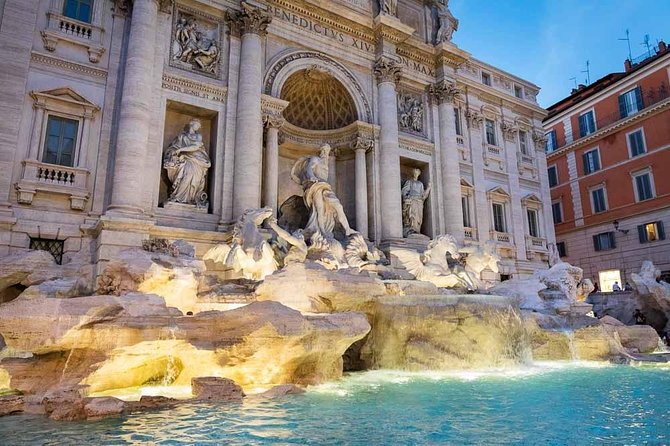
Next you move into the area around Piazza Venezia. You’ll walk through Via dei Fori Imperiali and take photos in front of the Altare della Patria at Venezia Square.
From there, you hit two major Roman-time layers.
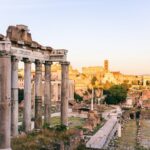
First is the Forum of Augustus, inaugurated in 2 B.C. It sits in a special architectural complex between the Capitol and the Quirinal, part of the Archaeological Area of the Imperial Forum. This stop is short, but it gives you a sense of how emperors wanted Rome to look and feel like order.
Then you get Via dei Fori Imperiali again in context: the Imperial Forum is a monumental complex made up of buildings and squares. It’s tied to roughly 150 years of construction, between 46 B.C. and 113 A.D., and it served as the center of political activity.
If Rome feels confusing, this is one of the best segments to understand why. You start to recognize the idea that Roman power wasn’t just governing; it was designing space.
Colosseum exterior stop: use it as a preview, not a finale
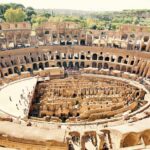
The tour ends at the Colosseum area (Piazza del Colosseo 1). And here’s the key point: you do not enter the Colosseum. Admission is not included.
Still, this stop works as a preview. Seeing the Colosseum from the outside helps you orient your brain for a future visit where you might want to go inside with tickets.
Also, the tour is set up so you’re not stuck in one location all night. You’re getting the big sights connected into one understandable route, so when you return later, you’re not starting from zero.
Price and value: why $34 can work well for a fast Rome intro
At $34, you’re paying for a short, guided walk that hits major landmarks in a realistic timeframe. The tour includes a professional guide and gelato, and it uses a mobile ticket, which is often a smoother setup than dealing with paper in busy areas.
The outside-only approach is part of the value equation. You’re not buying admission costs for the Pantheon or Colosseum, so your money goes toward guidance and route efficiency instead of entrance fees and line time.
If you want a long, ticket-heavy day at ancient sites, this isn’t built for that. But if you want an organized first look at Rome’s headline locations, this is good value for the effort you put in.
Who should book this small group Rome walk
This tour makes the most sense if you’re:
- Visiting Rome for the first time and want a fast orientation route
- Comfortable walking and handling short photo stops
- Interested in the stories behind monuments, not just the monuments
- Want a small group pace (maximum 10 travelers) so you can actually ask questions
It’s also a smart fit for people who feel nervous about a big city. With a guide leading the way and giving clear context, the route feels less overwhelming and more structured.
Practical tips: shoes, pace, and weather
Wear comfortable shoes. The route is packed with frequent walking segments, and multiple stops are time-boxed, so you’ll want your feet to cooperate.
The tour also notes it requires good weather. If conditions are poor, the experience may be canceled and you’ll be offered a different date or a full refund, so check forecasts the day of.
And keep your expectations realistic: you’ll see a lot, but you won’t linger long at each site.
Should you book the Top 10 Attraction of Rome walking tour?
Book it if you want a guided, small-group way to get oriented quickly—Spanish Steps to Trevi, then ancient landmarks like the Pantheon and Forum of Augustus, ending at the Colosseum area. The mix of big icons plus less-expected stops like Largo Argentina gives your Rome photos more variety than a simple “only the obvious” route.
Skip it (or pair it with other plans) if you specifically want to enter major sites like the Colosseum or spend long stretches inside museums. This tour is designed as an outside preview with strong storytelling, not as an all-access ticket day.
If you do book, plan your next steps right after the tour. Use what you learn to decide which site you want to revisit at depth with tickets later.
FAQ
How long is the tour?
The tour runs for about 2 hours.
What time does the tour start?
It starts at 8:00 pm.
Is the group small?
Yes. The maximum group size is 10 travelers.
What’s included in the price?
The tour includes a professional guide and gelato. Tickets for Colosseum entry are not included.
Do we enter the Colosseum?
No. You do not enter the Colosseum, and admission is not included.
Are tickets included for the Pantheon?
No. The Pantheon stop is outside, and admission is not included.
Where does the tour start and end?
It starts at Babington’s Tea Room, Piazza di Spagna 23, and ends at the Colosseum area, Piazza del Colosseo 1.
Do I need to print anything since it’s a mobile ticket?
No. The tour uses a mobile ticket.
What if the weather is bad?
The experience requires good weather. If it’s canceled due to poor weather, you’ll be offered a different date or a full refund.