REVIEW · ROME
Tiber Island and Ghetto
Book on GetYourGuide →Operated by P.M.K. Leisure S.R.L · Bookable on GetYourGuide
Roman history feels close here.
This tour is interesting because it threads two overlooked parts of Rome into one story: Tiber Island ancient healing sites and the Jewish Ghetto with its synagogue and museum. I especially like the island landmarks and the way the guide connects streets to real lives. One drawback to consider: the route includes narrow, uneven cobblestone lanes, so you’ll want comfortable walking shoes.
If you care about hearing history clearly, the setup helps. In past groups led by Paula, the explanation style is friendly and detailed, and the use of headsets makes it easier to follow the guide without craning your neck.
In This Review
- Key things you’ll notice on this tour
- Entering Rome Through Tiber Island’s Healing Past
- The Meeting Point by the Obelisk: Get Your Bearings Fast
- Tiber Island Walk: Basilica of Saint Bartholomew and Ponte Fabricio
- Basilica of Saint Bartholomew
- Ponte Fabricio, the Bridge of the Four Heads
- Portico d’Ottavia: Where Ancient and Neighborhood Stories Meet
- The Jewish Ghetto Walk: Narrow Streets, Big Stories
- Inside the Great Synagogue of Rome and the Jewish Museum
- Great Synagogue of Rome
- Jewish Museum
- Kosher Food Stop: Taste the Culture, Not Just the Sights
- Timing and Pace: What 3 Hours Really Means
- Price of $67.97: Is It Worth It?
- Who Should Book This Tour (and Who Might Skip)
- Should You Book Tiber Island and Ghetto?
- FAQ
- How long is the Tiber Island and Ghetto walking tour?
- Where is the meeting point?
- What are the main stops on the tour?
- Is the tour available in English?
- Is the tour wheelchair accessible?
- What is the cancellation policy and can I pay later?
Key things you’ll notice on this tour
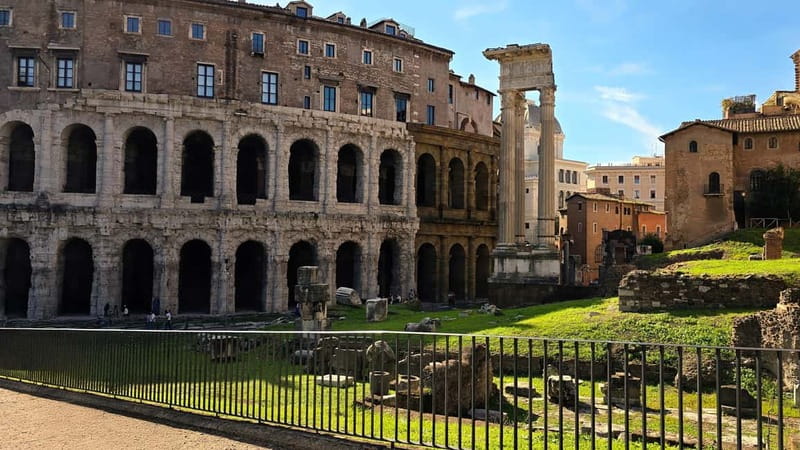
- Tiber Island’s Roman-era healing reputation and the practical way you see it on foot
- Basilica of Saint Bartholomew and the famous Ponte Fabricio, also called the Bridge of the Four Heads
- Portico d’Ottavia as a hinge point between ancient Rome and later neighborhood life
- A guided walk through the Jewish Ghetto and a visit to the Great Synagogue of Rome
- Time at the Jewish Museum to connect the neighborhood to objects and documents
- A stop for kosher bakery or restaurant flavors as part of the cultural story
Entering Rome Through Tiber Island’s Healing Past
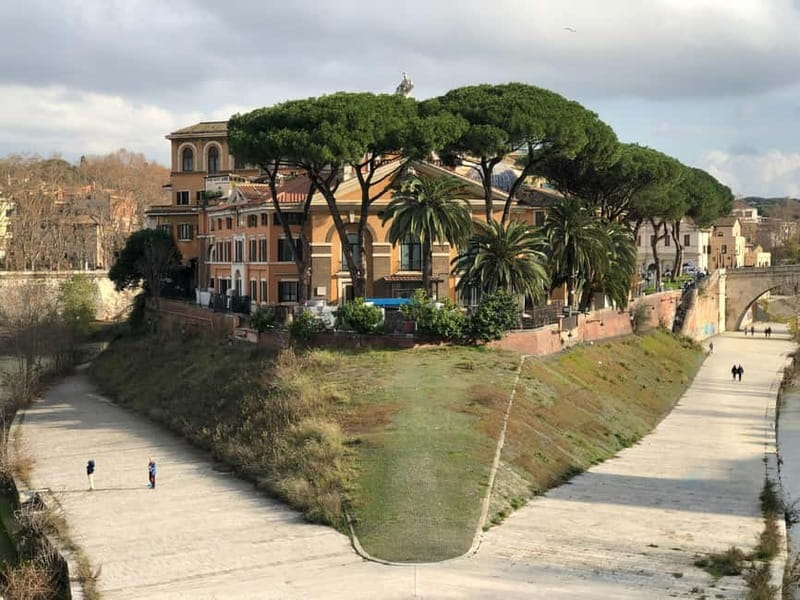
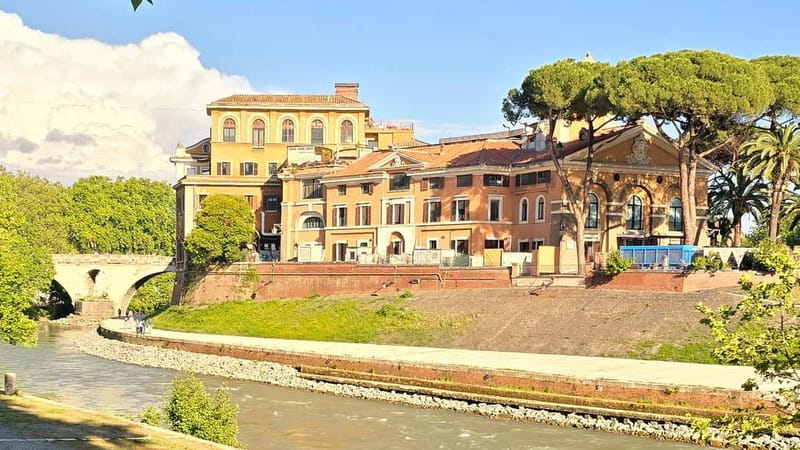
Rome loves grand ruins, but this experience starts in a different key. Tiber Island (Isola Tiberina) sits in the middle of the river, and it has a long reputation going back to Roman times—especially as a place linked to healing temples and hospitals. You’re not just looking at scenery. You’re walking through a setting that Rome repeatedly used for care, refuge, and ritual.
The island also gives you a neat mental reset. By the time you step onto it, you’re no longer measuring Rome in Colosseum distance or Vatican time. Instead, you’re measuring it in river rhythms and small, specific architecture.
You can also read our reviews of more tours and experiences in Rome.


The Meeting Point by the Obelisk: Get Your Bearings Fast
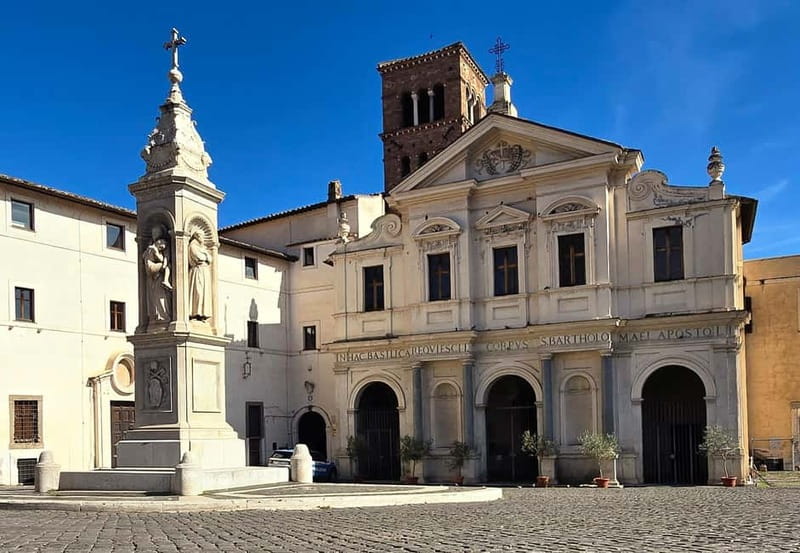
You meet at Piazza S. Bartolomeo All’Isola, 22. The tour starts on the island, in front of the church where an obelisk is located, and your guide will be there with a sign. This is one of those details that makes the whole tour smoother, because you’re not searching across a maze of streets.
Once you’re there, the rest is simple: you begin on the island, move outward to the neighborhood, and you finish back at the same meeting point. That round-trip format matters when you’ve got limited time in Rome. It also helps you avoid the usual stress of figuring out what line of buses or metros to catch at the end.
Tiber Island Walk: Basilica of Saint Bartholomew and Ponte Fabricio
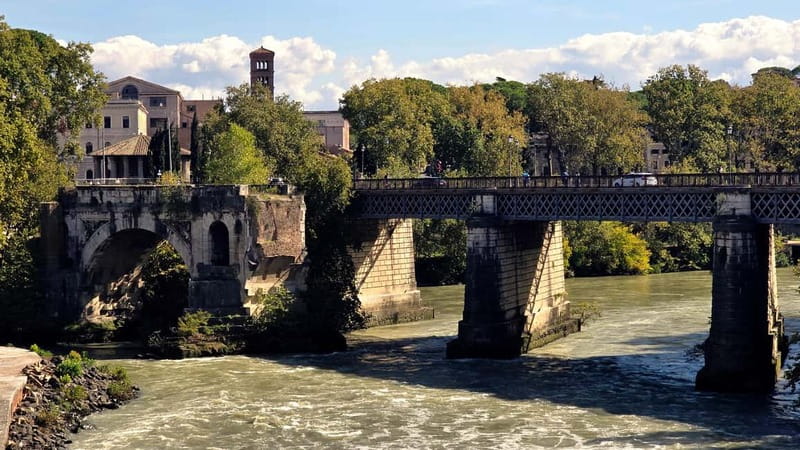
The heart of the first stretch is a guided walk on Tiber Island. The itinerary focuses on a couple of anchors that help you understand why this island has mattered for so long.
Basilica of Saint Bartholomew
You’ll see the Basilica of Saint Bartholomew, one of the island’s defining buildings. Even if you don’t consider yourself a church person, this stop is useful because it shows how layers of history stack in Rome. Roman-era purpose shifts over time, but the location keeps its pull.
Ponte Fabricio, the Bridge of the Four Heads
Next comes Ponte Fabricio, known as the Bridge of the Four Heads. It’s not just a postcard bridge. It’s also a reminder that Rome’s river crossings helped connect the city’s neighborhoods long before modern streets existed.
When you view it during a guided walk, you get something you can miss if you just wander: context. The guide’s job here is to connect what you see to why the island and the surrounding areas grew and changed.
Practical tip: take a moment when you’re on the bridge area to slow down and look back over the river. This tour moves fast enough that you’ll want at least one short pause for perspective.

Portico d’Ottavia: Where Ancient and Neighborhood Stories Meet
After the island section, you head toward Portico d’Ottavia. This is a key stop because it helps you zoom out from one island into a wider neighborhood story.
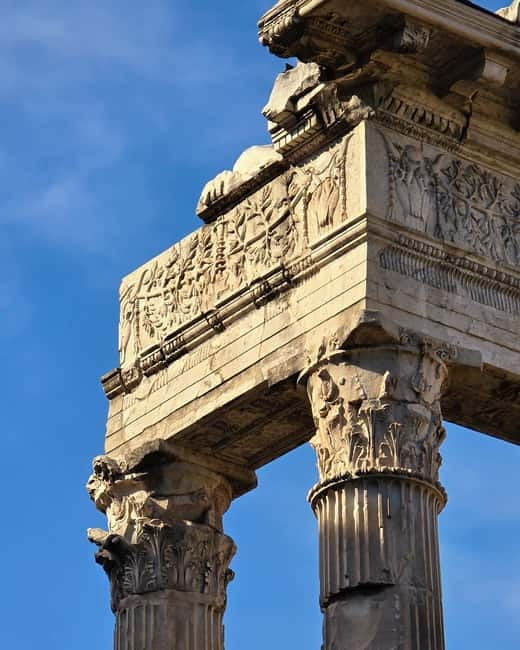
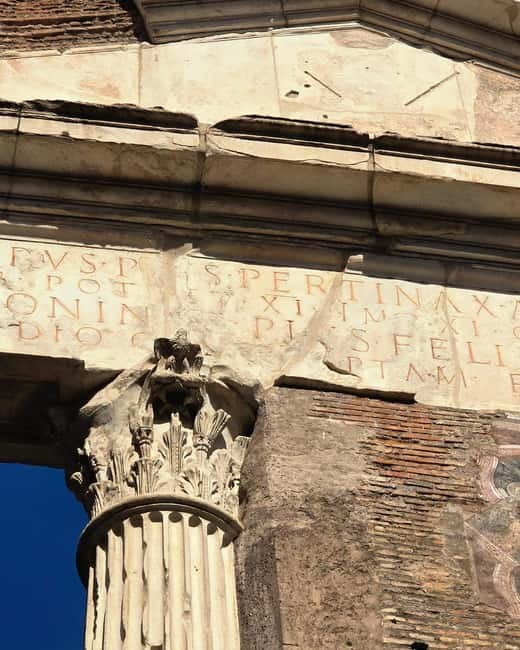
The Portico d’Ottavia is described as an ancient Roman structure, and what makes it valuable on this tour is the way the guide uses it as a bridge between eras. You’re essentially being taught to read the neighborhood like a timeline: what started as Roman-built space later became a lived-in district, shaped by community life and changing rules.
You’ll also hear how the area transformed from a confined space into a more active cultural center, with an art scene and boutique shops. Even if shopping isn’t your thing, that detail matters. It explains why parts of the ghetto today feel different from the idea of a historical enclosure.
The Jewish Ghetto Walk: Narrow Streets, Big Stories
Crossing into the Jewish Ghetto (Ghetto Ebraico) is where the tour really changes gears. This isn’t the kind of neighborhood stop that stays on the surface. The guide’s focus is the history of one of the oldest Jewish communities in the world, and how the community endured, adapted, and contributed culturally over centuries.
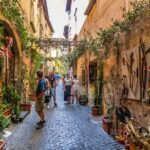
The route is through narrow, cobblestone streets and small alleys. That layout forces you to slow down. It also makes it easier to feel how neighborhood life worked when streets were tight and local movement mattered.
One reason I think this walk is so compelling: it’s not just about the past as a museum concept. The tour frames the neighborhood as a place of lived resilience—then ties that to what you can still see today, including major religious and cultural landmarks.
Inside the Great Synagogue of Rome and the Jewish Museum

This tour gives you two big institutions that anchor the neighborhood story in physical place and real artifacts.
Great Synagogue of Rome
You’ll visit the Great Synagogue of Rome, described as a breathtaking architectural masterpiece. The point of including the synagogue on a walking tour is practical as much as emotional. Streets can tell you a lot, but an interior like this helps you understand the community’s identity and architectural presence in the city.
Jewish Museum
Then comes the Jewish Museum, presented as a treasure trove of artifacts, manuscripts, and artworks that explain Jewish life in Rome over centuries. This is where the story becomes tangible. You stop repeating the same facts and start seeing how history is preserved—through objects, documents, and creative works.
If you’re the type who likes to connect context to things you can point at, this is the strongest part of the whole itinerary. It gives your walking notes somewhere to land.
Kosher Food Stop: Taste the Culture, Not Just the Sights
The tour includes a stop at a traditional kosher bakery or restaurant for food from the Jewish Ghetto. This matters for two reasons.
First, food is often the most memorable way to understand everyday life in any community. You can read about traditions, but eating something tied to local recipes helps the story stick.
Second, the tour frames the stop as more than a snack. It’s connected to dishes passed down through generations. Even if you don’t have room for a full meal, the tasting stop is built into the route for a reason: it keeps the tour from becoming only architecture and dates.
Tip: if you’re picky, consider planning around it. The stop is part of the cultural experience, and the choices may be limited compared with Rome’s bigger, more general menus.
Timing and Pace: What 3 Hours Really Means
The duration is 3 hours. That’s a sweet spot for Rome because you get meaningful ground covered without burning a whole day. Still, this is a walking tour with real street surfaces and neighborhood turns, so plan your day around it.
A few factors make the time work:
- You’re guided with headsets, which helps you keep pace without losing the plot.
- The itinerary clusters major themes—river island landmarks, then neighborhood history, then synagogue and museum—so you’re not bouncing randomly.
On one earlier group, there were just two people with Paula, and that smaller setting seems to support the kind of close, personal explanations you’d hope for. Not every group will be that small, but it’s a nice reminder that the guide style can make the tour feel tailored.
Also note: the tour is wheelchair accessible. That’s important if you rely on accessibility supports. Still, you should expect that cobblestones and tight lanes can slow movement, even when access is technically possible.
Price of $67.97: Is It Worth It?
The price is $67.97 per person for about 3 hours. For Rome, that’s not bargain-basement pricing, but it also isn’t inflated for a full guided experience.
Here’s why it can feel like good value:
- You get a live English guide.
- You get headsets (huge on city walks).
- The itinerary includes multiple major elements: Tiber Island, a Portico d’Ottavia stop, the Jewish Ghetto area, plus visits related to the Great Synagogue of Rome and the Jewish Museum.
- There’s also the kosher food stop, which adds cultural value rather than treating food as a random add-on.
Where value can vary for you is how you personally feel about museums and synagogue architecture. If those are highlights for you, the price starts to make more sense quickly. If you prefer only outdoor viewpoints, you might feel the tour is heavier on guided cultural sites than you expected.
Who Should Book This Tour (and Who Might Skip)
I’d book this if you want:
- A Rome walk that goes beyond the headline sights
- A guided connection between streets, buildings, and community history
- Museum and synagogue time, not just photo stops
- A cultural food moment tied to the neighborhood
You might consider a different option if you strongly prefer purely outdoor sightseeing and short stops, because this includes longer guided segments and indoor visits.
This tour is also a solid choice if you dislike being swept along by crowds. One thing that tends to help here is that you’re spending time away from the most overloaded tourist circuits, focusing instead on a neighborhood with strong local identity.
Should You Book Tiber Island and Ghetto?
Yes—if your idea of a great Rome day includes reading the city like a story, not just collecting landmarks.
This tour earns a spot on your list because it connects three things that usually get separated: ancient river geography (Tiber Island), a historically constrained neighborhood (the Jewish Ghetto), and lasting cultural institutions (synagogue and museum). Add in the kosher food stop, and you get a Rome experience that’s both educational and practical.
If you want history with context you can feel in your feet—this is the walk.
FAQ
How long is the Tiber Island and Ghetto walking tour?
The tour lasts 3 hours.
Where is the meeting point?
You meet at Piazza S. Bartolomeo All’Isola, 22, on the Tiber Island in front of the church where the obelisk is located. The guide will be there with a sign.
What are the main stops on the tour?
The tour includes Tiber Island, a stop at Portico d’Ottavia, the Jewish Ghetto, and visits that include the Great Synagogue of Rome and the Jewish Museum. It also includes a stop for kosher cuisine.
Is the tour available in English?
Yes. The tour is conducted in English, and you also get English audio guidance along with headsets.
Is the tour wheelchair accessible?
Yes, the tour is listed as wheelchair accessible.
What is the cancellation policy and can I pay later?
There is free cancellation up to 24 hours in advance for a full refund, and you can reserve now and pay later.