REVIEW · ROME
The Marvels of Rome: A Journey through Time and Landmarks
Book on Viator →Operated by RomAbout Tours · Bookable on Viator
Rome’s best classics, in one tight walk. This 2 to 3 hour route strings together Rome’s most recognizable landmarks with just enough context to make them click, plus a guide who helps you time your stops in busy moments. I like the way the tour keeps the pace gentle but focused, and you can move through major sights without feeling lost.
I especially love two things: the guided storytelling that turns each square and monument into something you can actually picture, and the photo-aware timing. In past trips, guides like Camilla, Estefania, and Marianne were praised for steering people to good spots even when it was crowded, while keeping the mood fun and clear.
One possible drawback: this is a highlights walk, so you only get a short window at each stop. If you hate crowds or want long pauses for lingering, the popularity of these spots can feel like a tradeoff.
In This Review
- Key things to know before you go
- A Tight Rome Route: From Piazza del Popolo to Piazza Navona
- Starting at Santa Maria del Popolo: Your Orientation Moment
- People’s Square: Architecture and Open-Air Perspective in 20 Minutes
- Spanish Steps: Quick Visual Impact and a Practical Sense of the Area
- Trevi Fountain: The Coin Tradition and Crowd-Timed Viewing
- The Pantheon in 30 Minutes: What Makes the Dome So Special
- Piazza Navona: Bernini’s Fountains and Baroque Square Life
- Guide Impact and Small-Group Energy: What You’re Really Paying For
- Value Check: Free Entry Stops Mean You Spend Time Wisely
- Who This Tour Fits Best (and Who Should Skip It)
- Should You Book This Rome Walk?
- FAQ
- How long is The Marvels of Rome tour?
- Is the tour offered in English?
- What is included regarding tickets?
- Where does the tour start and end?
- Do I need a paper ticket?
- What is the maximum group size?
- What if the weather is poor?
- Is free cancellation allowed?
Key things to know before you go
- Five famous landmarks in one short route (about 2–3 hours total)
- Free admission at every scheduled stop, so your money goes toward the guide and pacing
- English-speaking guide plus a mobile ticket for easy check-in
- Maximum group size of 20, which helps the guide manage timing and questions
- Photo-minded guidance when it’s busy, a repeat theme in guide feedback
- Ends in Piazza Navona, where Bernini’s fountains are the final big payoff
A Tight Rome Route: From Piazza del Popolo to Piazza Navona
This tour works because it gives you a clean backbone for your first—or even your second—trip to Rome. You start near Santa Maria del Popolo on Piazza del Popolo, then follow a line of sights that most people only ever hit one by one. Here, you get the “oh right, that’s why it’s famous” moment at each place, while still keeping the day realistic.
The schedule is built around short visits: about 20 minutes at most stops, and 30 minutes for the Pantheon. That structure matters. It keeps you moving through the most crowded parts of central Rome during a manageable time window, without turning your afternoon into a half-day mission.
You also end in Piazza Navona, which is a smart closer. It’s the kind of square where you can step off the tour and still feel like you’re in the middle of the city’s energy. If you want to keep going afterward, the ending point is a strong springboard.
You can also read our reviews of more tours and experiences in Rome.



Starting at Santa Maria del Popolo: Your Orientation Moment
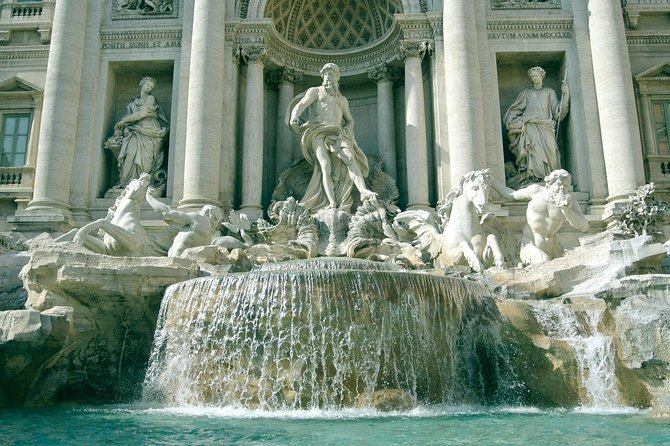
You meet at Basilica Parrocchiale di Santa Maria del Popolo, Piazza del Popolo, 12 (00187). Even before you reach the next viewpoint, this start location helps you settle into the right part of Rome fast. You’re not beginning in a random alley. You’re starting in a major plaza area, with an obvious sense of direction.
This matters more than it sounds. Rome’s center can feel like a maze if you’re not sure what you’re aiming at. A structured start gives you bearings, so later, when you’re walking between landmarks, you understand how the sights connect.
Expect a moderate walking level. The tour isn’t described as difficult, but it does require moderate physical fitness. That means bring shoes you can walk in for the full stretch between stops. You’ll also likely be standing and looking around most of the time, not just taking photos and moving on.
People’s Square: Architecture and Open-Air Perspective in 20 Minutes
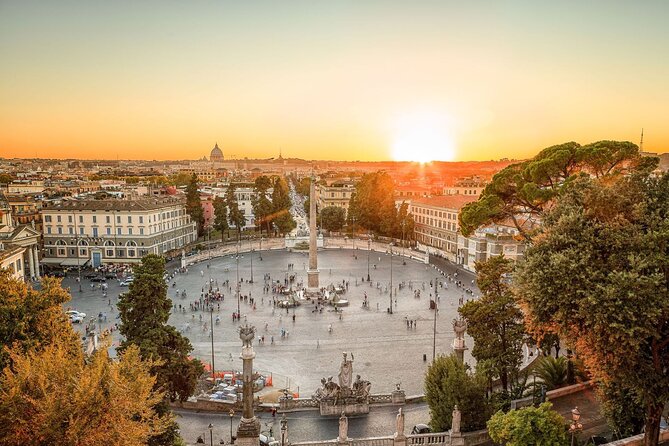
Your first stop is People’s Square, with about 20 minutes here. The payoff is simple: you get to absorb the architecture and the feel of the area without being rushed out the moment you arrive.
Why 20 minutes works: it’s enough time to take in the overall shape of the space and the relationship between the buildings and the square. It’s also long enough for your guide to point out what you should notice, so you don’t just see a “pretty place,” you see a place with meaning.
The main consideration is crowd flow. Squares like this often get busy, and you’ll be sharing space with other visitors. That’s exactly where the tour’s small-group size (up to 20) can help. The guide can adjust the line you take through the area, which makes your time feel more productive.
Spanish Steps: Quick Visual Impact and a Practical Sense of the Area
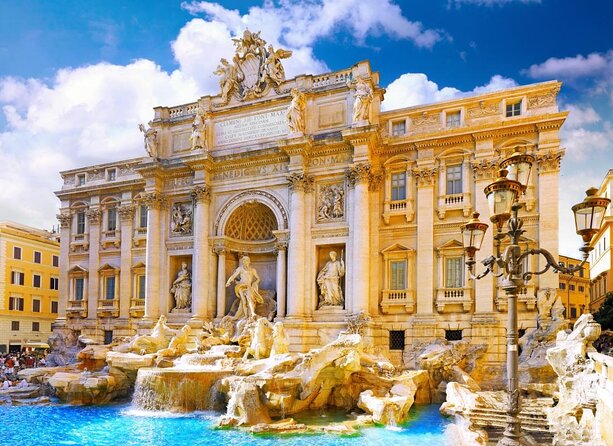
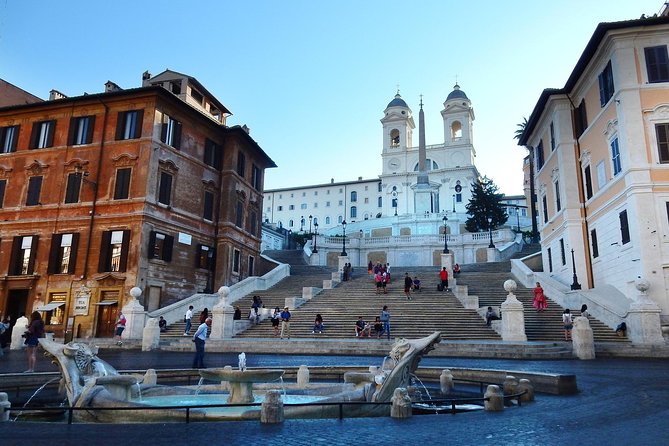
Next up, you’ll reach the Spanish Steps for another 20-minute stop. This is one of those locations where the setting does half the work. The wide staircase, the surrounding streets, and the layers of people create instant atmosphere.
The tour’s value here is in the “what you’re looking at” part. You’re not just climbing stairs for photos. You get the background that helps you read the place as a destination, not a backdrop. Around this area, details matter: the viewpoints, the way people gather, and how the space funnels visitors along specific lines.
A drawback to keep in mind: the Spanish Steps are popular, so you may need to work with the flow rather than expecting easy, quiet moments. The good news is that the tour is timed for short visits, so you can enjoy the main sights without it turning into a long wait.
Trevi Fountain: The Coin Tradition and Crowd-Timed Viewing
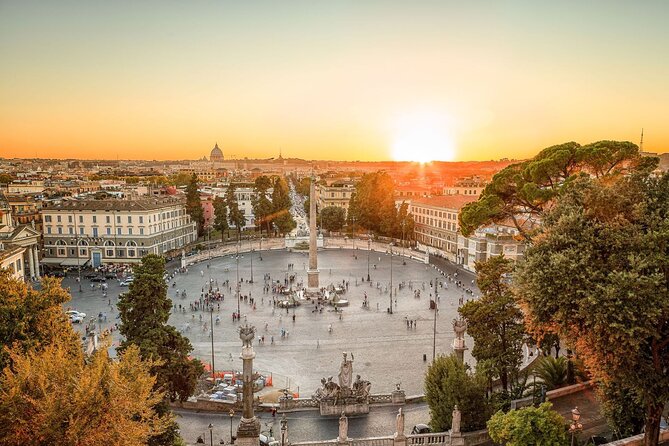
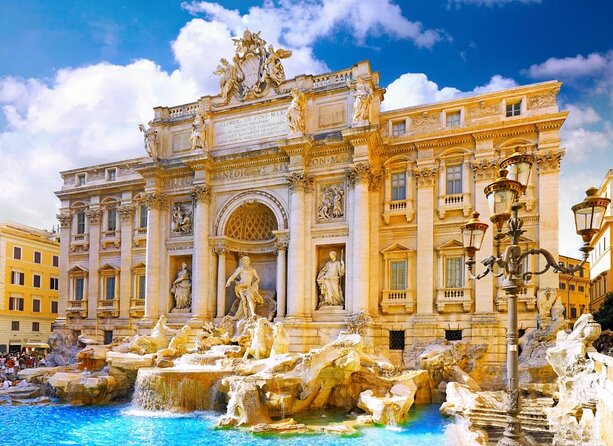
Trevi Fountain is your third stop, with another 20 minutes. The highlight here is the classic tradition: toss a coin into the water and join a centuries-old ritual people associate with returning to Rome. Even if you don’t care about the superstition, it’s still a fun moment because it’s built into what everyone is doing around you.
Where this stop becomes more than a photo op is in timing. Trevi gets crowded. The guide’s job is to help you find a good angle and keep the group moving without losing the fun part of the experience. Past guide feedback specifically called out working hard to get people into good photo spots even when it was busy.
Practical tip: treat Trevi as a short mission. Decide what you want first (the fountain view, then your coin toss moment, then a few photos from a different angle), and keep it moving. The tour gives you enough time to do that once, not enough time to repeat it for long stretches.





The Pantheon in 30 Minutes: What Makes the Dome So Special
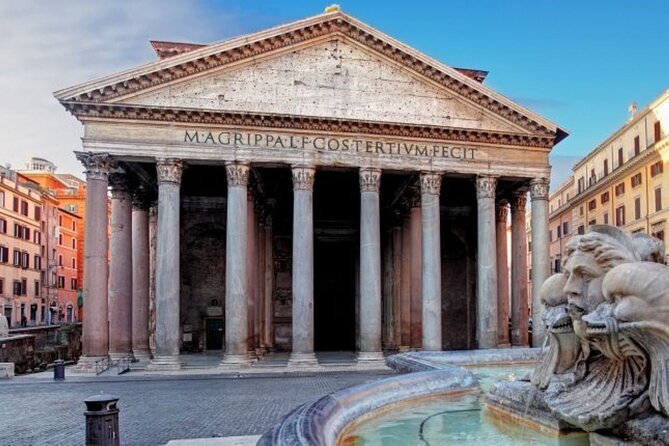
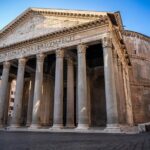
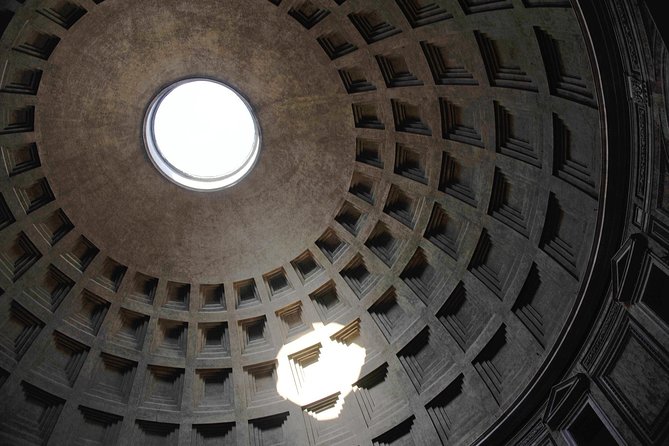
Your longest stop is the Pantheon at about 30 minutes. This is where the tour becomes especially useful for first-time visitors, because the Pantheon’s wow factor isn’t just about big size—it’s about what the space does. The dome is the signature, but the building is also a lesson in ancient Roman design.
In a 30-minute window, you can do more than glance. With a guide, you can focus your attention on the few key elements that make the Pantheon feel different from other landmarks. Think of it as learning to look: the dome shape, the overall interior scale, and the architectural logic that people came to appreciate for centuries.
The main consideration is that this is still Rome, which means it’s a public, popular site. You should expect some busy conditions. If you’re sensitive to crowding, the guide’s group-management becomes a real benefit, helping you spend your time actually seeing instead of getting stuck waiting.
Piazza Navona: Bernini’s Fountains and Baroque Square Life
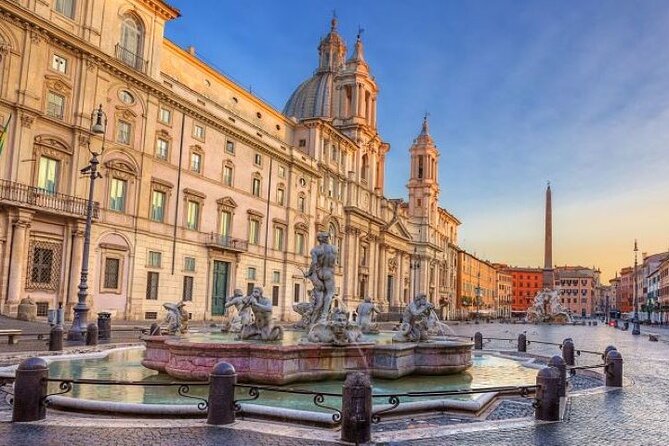
You finish at Piazza Navona, with Bernini’s fountains front and center. This is a strong ending because it lets you shift from “tour mode” to “linger mode” if you want. The square layout gives you natural sightlines, and it’s easy to keep enjoying after the tour wraps.
The tour gives you about 20 minutes here, which is enough to take in the Baroque architecture and understand why the square became such a famous stage for street-life. Piazza Navona also works for different travel styles. If you like people-watching, you’ll get plenty of that. If you like architecture, the building shapes and fountain focus help you keep your attention.
Since this is the final stop, your best move is to plan a bit of extra time afterward if you enjoy wandering. The tour ends right where it makes sense to keep going, rather than dropping you far from everything.
Guide Impact and Small-Group Energy: What You’re Really Paying For
This tour caps at 20 travelers. That size isn’t a throwaway detail. It tends to make a noticeable difference in a walking tour with multiple stops. In practice, it means you can ask questions, and the guide can adjust pacing when the crowd situation changes.
The reviews highlight three guide names: Camilla, Estefania, and Marianne. Across those mentions, the common thread is that guides were entertaining and helped guests find good spots for photos even when places were crowded. That combination matters because landmarks like Trevi Fountain and the Spanish Steps are where a bad timing choice can ruin your photos and your mood.
Also, a smaller group makes it easier to absorb explanations without feeling like you’re being rushed through. Your tour experience is basically built on the balance between “look at this” and “here’s what to notice.” When a guide nails that rhythm, the whole route feels smoother.
Value Check: Free Entry Stops Mean You Spend Time Wisely
You don’t just get a list of famous places. You get a structure where the scheduled stops are marked as admission ticket free. That’s a big value point because it shifts the purpose of what you pay for.
Instead of spending money on entrances, you’re paying for:
- a guide who gives context at each site,
- a route that keeps distances and timing manageable,
- and help navigating busy spots so you actually get to enjoy what you came for.
Even the duration supports this value. With 2 to 3 hours, you’re not committing half a day. You can pair this with other plans the same afternoon or use it as a starting point to build a sightseeing plan around what you liked most.
Who This Tour Fits Best (and Who Should Skip It)
This tour fits best if you want the “Rome classics” list, but in a way that feels organized and explainable. If you like short, focused stops, and you’d rather see more highlights than deeply study one monument, this is a good match.
It’s also a smart choice for travelers who want help with pacing and photo timing. The reviews point to guides working hard to place people for pictures, which is exactly what you want at Trevi and the steps.
You might want to think twice if you:
- strongly dislike crowds,
- need lots of quiet time to linger,
- or expect a slow, museum-like pace.
Because you’re visiting multiple popular landmarks, this is a walk built for momentum. Moderate physical fitness is all that’s required, but it is still a walking route.
Should You Book This Rome Walk?
I’d book it if you want a guided highlights route that covers the most famous central landmarks in a tight time window. The free entry at each scheduled stop makes it feel efficient, and the guide-centered experience is the real strength, especially if you care about getting good photos when places get busy.
Skip it only if you know you want longer stays at a single sight or you feel uncomfortable in crowded public spaces. For most people, this tour is a practical way to get oriented, learn what matters fast, and end in Piazza Navona where you can keep your Rome day going.
FAQ
How long is The Marvels of Rome tour?
It runs about 2 to 3 hours.
Is the tour offered in English?
Yes, it is offered in English.
What is included regarding tickets?
The tour notes admission ticket free for the scheduled stops.
Where does the tour start and end?
It starts at Basilica Parrocchiale di Santa Maria del Popolo, Piazza del Popolo, 12, 00187 Roma RM, Italy, and ends at Piazza Navona, 00186 Roma RM, Italy.
Do I need a paper ticket?
No. The tour uses a mobile ticket.
What is the maximum group size?
The tour has a maximum of 20 travelers.
What if the weather is poor?
This experience requires good weather. If it’s canceled due to poor weather, you’ll be offered a different date or a full refund.
Is free cancellation allowed?
Yes. You can cancel up to 24 hours in advance for a full refund, and cancellations within 24 hours are not refunded.