REVIEW · ROME
The last day of Julius Caesar: from the glory to the Ides of March
Book on Viator →Operated by Maria Tours · Bookable on Viator
You can still feel the turning point in Rome’s stonework. This private walking tour follows Julius Caesar’s final day on the streets and ruins tied to the Ides of March in 44 BC, ending at the spot associated with his assassination. I like that it doesn’t just point at ruins; it connects them to the actual sequence of events, with clear, focused explanations.
Two big wins for me: you get included admission to the Palatine Hill and Roman Forum, and the private format keeps the pacing personal instead of forcing you to elbow through crowds. One drawback to consider is that it’s a walking tour with multiple stops in a compact area, so you’ll want comfortable shoes and a bit of stamina for about 2 hours 30 minutes.
In This Review
- Key highlights worth showing up for
- The Ides of March told in the right order
- Palatine Hill: where the last dinner would have happened
- The Roman Forum route: walking from Caesar’s world to Largo Argentina
- The Temple of the Deified Julius (Tempio del Divo Giulio)
- Curia Julia: the Senate House and the feeling of disruption
- Forum of Caesar: celebrating glory while the city turns
- Largo Argentina: where the stabbing is believed to have happened
- What you actually get for the price (and why it can be worth it)
- Who this tour suits best (and who might want a different plan)
- Tour logistics that affect your day
- Final verdict: should you book this Caesar walk?
- FAQ
- How long is the tour?
- Is this a private tour?
- What time options are available?
- Which admission tickets are included?
- Does the tour include the Colosseum?
- What are the main stops on the walk?
- Where do you meet and where does it end?
- How far in advance is it typically booked?
- What happens if I need to cancel?
Key highlights worth showing up for
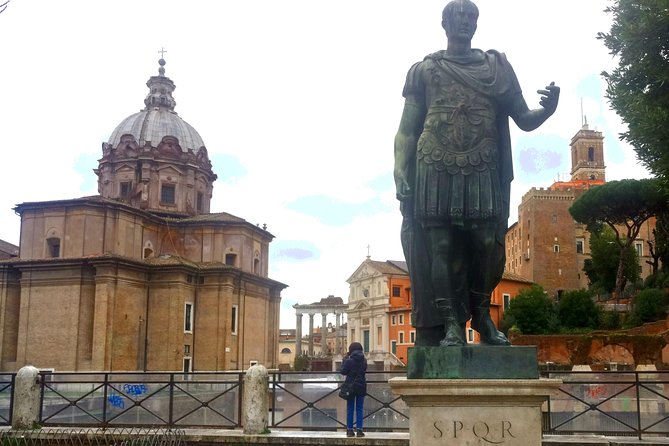
- A Caesar timeline you can walk: you trace March 15 from Caesar’s residence area toward the assassination zone
- Included entry tickets: Palatine Hill and Roman Forum admissions are part of the price
- Meaningful stops, not random ruins: Temple of Caesar, Curia Julia, Forum of Caesar, and Largo Argentina
- A private guide for better questions: you can ask follow-ups as you stand in front of the evidence
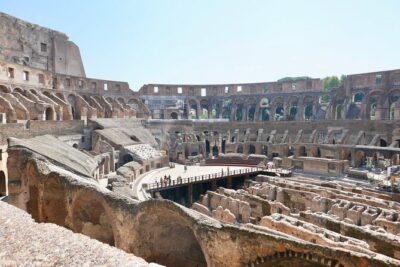
- No Colosseum detour: the focus stays tight on the Ides of March story
The Ides of March told in the right order
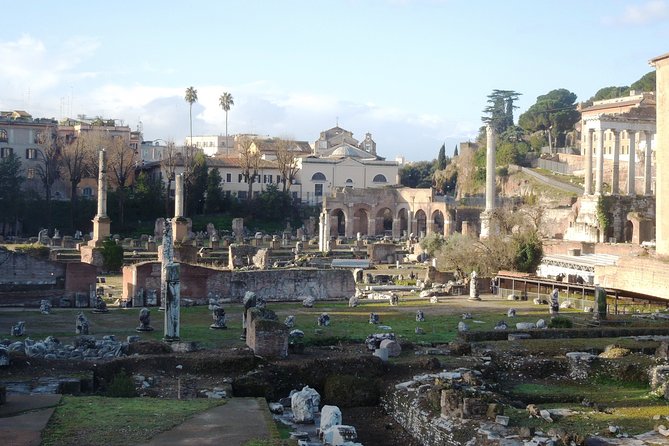
This tour is built around a simple idea: if you want to understand the murder of Julius Caesar, you need the route—not just the headline. You start at Palatine Hill, then work your way through the Roman Forum area, and you finish at Largo di Torre Argentina, where the assassination is believed to have happened.
What makes it work so well is the way the story stays tied to place. Instead of bouncing across the city, you move through sites that connect to Caesar’s daily world, the Senate, and the moments right before and during the attack.
And yes, you can choose either a morning or an afternoon option to fit your pace and energy level. That flexibility matters in Rome, where a too-tight schedule can make even great tours feel rushed.
You can also read our reviews of more tours and experiences in Rome.

Palatine Hill: where the last dinner would have happened
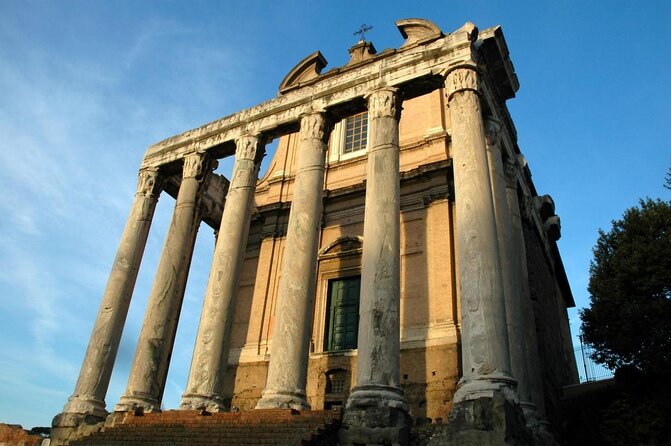
You begin at Palatine Hill at Via di S. Gregorio, 30. The stop focuses on the noble-residence zone, and it’s tied to what happened the day before the assassination—Caesar having his last dinner at a friend’s home in this area.
This is the part of the tour that helps you understand power as lived experience. Here, Caesar isn’t just a famous name in a textbook. He’s placed into a neighborhood of status and influence—exactly the kind of setting where politics could feel personal and dangerous.
You’ll also get to enjoy the fact that Palatine Hill’s setting naturally encourages slow looking. The ruins feel layered, and with a guide interpreting them, you start to connect what you see with what the Ides of March meant for someone at the center of Roman life.
Practical note: this is one of the stops where your attention will matter most. Try to pause and look around between explanations, not just listen.
The Roman Forum route: walking from Caesar’s world to Largo Argentina
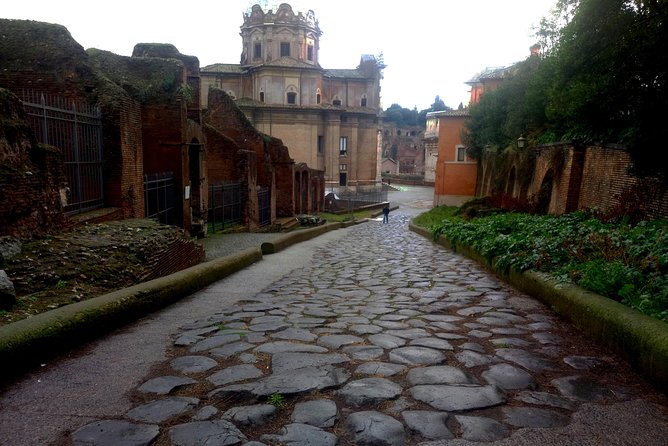
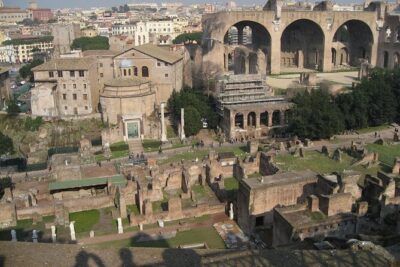
Next you head to the Foro Romano, where your guide retraces the route linked to the 15th of March. The idea is to follow the movement that starts at Caesar’s house area, references the Domus Publica in the Roman Forum, and then moves toward Largo Argentina—the place associated with the stabbing.
This is the tour’s narrative spine. The Roman Forum isn’t a single stop here; it’s a “route stop,” meaning your guide uses the area to rebuild the day step-by-step. That helps a lot if you’ve ever felt lost in Rome’s scale. You get a path, not just a pile of monuments.
The tour also includes Temple of Caesar and other linked sites nearby, so the Forum stop doesn’t feel like dead time. It builds momentum toward the end, and you’ll start noticing how often political life and public space overlap in these areas.
One consideration: the Roman Forum can feel like it’s all “big” and “everywhere at once.” The private guide helps keep it on track, but you’ll still want to mentally “stay on script.” If you wander visually too far from the guide’s route, you might miss the sequence.
The Temple of the Deified Julius (Tempio del Divo Giulio)
After the Forum area, you visit Tempio del Divo Giulio, the temple dedicated to Julius Caesar after his death. The important detail is the meaning: Caesar was deified, and the site represents how Rome processed his death by turning him into something more than a mortal leader.
This stop is short, but it’s a smart one. It gives you the “after” of the Ides of March, not just the “during.” In other words, the story doesn’t end with violence—it moves into how the city reframed power afterward.
If you’re the type who likes connecting cause and effect, this is one of the moments that clicks. You’re standing where the transformation from man to symbol would have been communicated through architecture and ritual space.
Curia Julia: the Senate House and the feeling of disruption
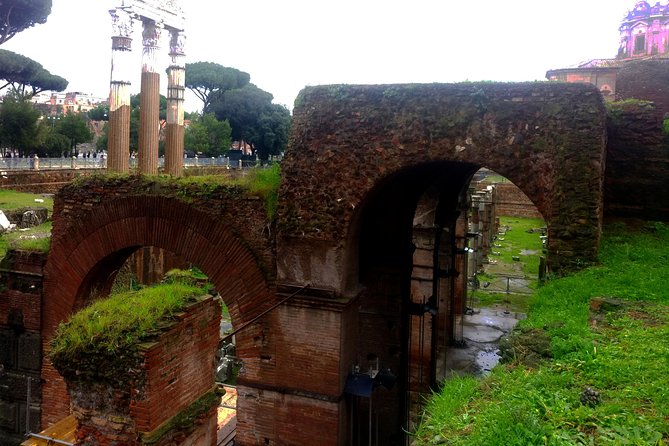
Then you reach Curia Julia, the Senate House area tied to the Ides of March. The tour notes that during this time, it was under restoration following Caesar’s will, and it was replaced by a secondary Senate meeting place near the Pompey theatre.
This is a subtle but powerful context point. Even without getting lost in extra details, you can sense why the Ides of March felt unstable. If the official space is being rebuilt, and decision-making shifts to a secondary location, the physical environment itself is part of the story.
Your guide helps you connect that logistical disruption to what it meant on that day. Rome’s politics weren’t abstract here; they had rooms, doorways, and routes.
This stop is brief, so don’t treat it like a “quick photo moment.” Use the time to understand the replacement setup—because it explains why Largo Argentina mattered so much.
Forum of Caesar: celebrating glory while the city turns
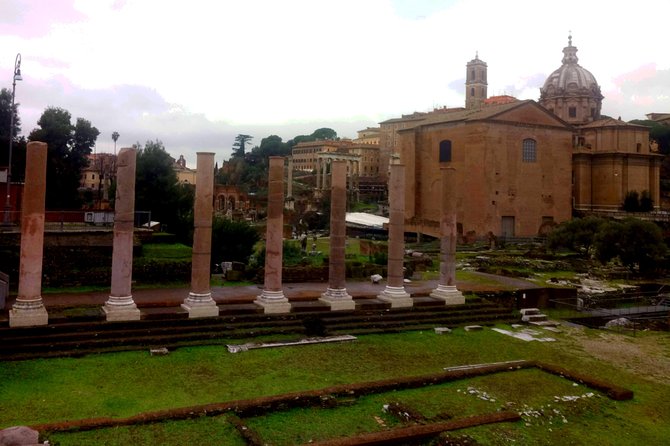
Next comes the Forum of Caesar. The tour frames it as the first of the Imperial Forums, built to extend the former Roman Forum area and also to celebrate Julius Caesar’s glory.
This is where you start to see the bigger picture. Caesar’s influence wasn’t only carried in speeches or ceremonies. It was built into Rome’s layout. A forum is public messaging in stone, and that’s exactly what you’re looking at here.
I like how this stop anchors the emotional contradiction of the day. You’re near a space built to honor Caesar, yet you’re still walking toward the point where he was fatally attacked. That contrast gives the ending real weight.
If you’re short on time in Rome, this tour is a good choice because it threads that contrast together instead of making you bounce between unrelated “Caesar sights” across the city.
Largo Argentina: where the stabbing is believed to have happened
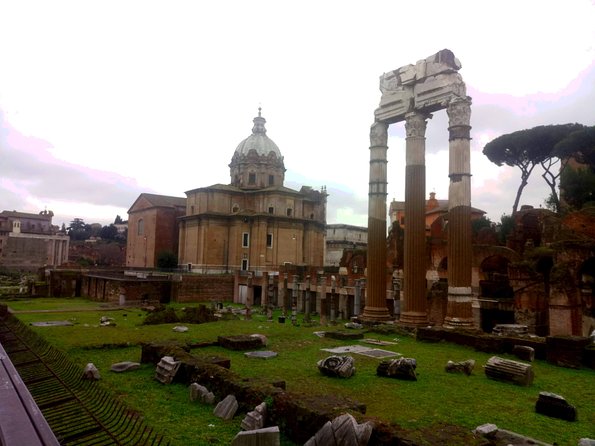
The final stop is Area Sacra di Largo Argentina, centered on the sacred area with four Republican-era temples. Behind the area stood the Pompey theatre, and the tour explains that Senators temporarily met there when the Curia Julia Senate House was under restoration.
This is also where your guide points out the spot where Caesar is supposed to have been stabbed. The key value here is guided positioning: rather than guessing, you get a guided explanation that helps you understand why this area is associated with the assassination.
This is the moment where the tour feels most serious. Even if you already know the Ides of March story, standing in this space makes it feel less like a page in a book and more like a lived event.
If you want to get the most out of the ending, arrive mentally ready to slow down. The most important part isn’t taking a wide panorama. It’s listening for the small directional cues your guide gives you about where it happened within the setting.
What you actually get for the price (and why it can be worth it)
The price is $218.79 per person for this private experience, with group discounts. It runs about 2 hours 30 minutes and includes admission tickets to Palatine Hill and the Roman Forum.
On the surface, it’s not a budget tour. But the value logic is simple: you’re paying for a private guide who keeps the sequence of events tight, and you’re also paying for site access that can add up. If you’ve ever done Rome “on your own,” you know how quickly it turns into guessing—especially around the Ides of March locations, where meaning depends on context and route.
The private format also matters. Because the tour is about a specific day, it benefits from a guide who can answer your questions as you go and adjust pacing when you want to linger.
One more practical note: the tour is booked on average 18 days in advance, so if you want a specific time window, don’t wait until the last week.
Who this tour suits best (and who might want a different plan)
This is ideal for you if you:
- want the Caesar story in order, connected to place
- like walking through Rome’s major political-religious zones without getting sidetracked by other attractions
- appreciate a guide who can connect politics, architecture, and “what happened next”
It might be less ideal if you:
- only want broad highlights across Rome (since this experience is tightly focused on Caesar and the Ides of March)
- hate walking and prefer shorter museum-only options
- want the Colosseum experience in the same outing (this tour does not include it)
If you’re pairing this with other Roman classics, think of it as the “story tour.” It gives you a framework you can carry into the rest of your trip.
Tour logistics that affect your day
You start at Via di S. Gregorio, 30, 00186 Roma RM and end at Largo di Torre Argentina, 00186 Roma RM. That end location is a nice bonus because it’s right where the assassination area is tied in, so you finish at the emotional climax rather than walking away from it.
The tour is near public transportation, and it’s designed so that most travelers can participate. Since it’s a private activity, only your group joins you, which usually keeps things smoother and quieter than shared group tours.
You’ll also want to plan for weather and sun. The stops are outdoors and spaced across the central historic zones, so bring water and dress for Rome’s mood that day.
Final verdict: should you book this Caesar walk?
Yes—if you want the Ides of March story with direction and meaning. The biggest reason to book is that it’s not just a list of ruins. It’s a guided sequence tied to Caesar’s last day, with included entry to Palatine Hill and the Roman Forum and a private setup that makes the explanations feel personal.
Skip it only if your heart is set on other headline sights, because this tour keeps its focus on Caesar and the assassination area. If that’s your kind of Rome, this one gives you a powerful arc—from the glory of Caesar’s world to the day that changed everything—in a length of time that won’t eat your whole schedule.
FAQ
How long is the tour?
It lasts about 2 hours 30 minutes.
Is this a private tour?
Yes. It’s a private walking tour/activity, so only your group will participate.
What time options are available?
You can choose from a morning or afternoon tour.
Which admission tickets are included?
Admission tickets to Palatine Hill and the Roman Forum are included.
Does the tour include the Colosseum?
No. A visit to the Colosseum is not included.
What are the main stops on the walk?
The tour includes Palatine Hill, the Roman Forum area, Tempio del Divo Giulio, Curia Julia, the Forum of Caesar, and Area Sacra di Largo Argentina.
Where do you meet and where does it end?
It starts at Via di S. Gregorio, 30, 00186 Roma RM and ends at Largo di Torre Argentina, 00186 Roma RM.
How far in advance is it typically booked?
On average, it’s booked about 18 days in advance.
What happens if I need to cancel?
It’s non-refundable and cannot be changed for any reason, so the amount paid will not be refunded if you cancel or request an amendment.