REVIEW · ROME
The Best of Rome (Driver Only/Self Touring)
Book on Viator →Operated by Rome Chauffeur · Bookable on Viator
One Rome day, zero long walks. This private driver-only route is built for comfort and speed, with stops placed right by major sights so you spend your minutes looking instead of walking. I like the private Mercedes setup with an English-speaking chauffeur and bottled water, which helps a lot on a big 8.5-hour itinerary.
One important catch: your driver is not a licensed walking guide, so you’ll self-tour away from the vehicle. That means you won’t get a guided narration throughout the monuments, and you’ll need to manage your time and re-meet up efficiently.
In This Review
- Key things to know before you go
- How the driver-only setup works (and why it can still be great)
- Piazza del Campidoglio: the quick-view payoff on Capitoline Hill
- The Pantheon in 15 minutes: oculus light, royal tombs, and practical timing
- Spanish Steps: how to use 15 minutes for maximum people-watching
- Trevi Fountain: the coin-throwing ritual and the reality of crowds
- Piazza Navona: what you should actually focus on
- San Paolo Fuori le Mura: a longer, quieter feel at the end of the day
- Price and value: what you’re really paying for at about $983 per group
- The real pros: comfort, short walks, and drivers who keep things smooth
- Plan your self-touring like a pro (so 8.5 hours doesn’t feel rushed)
- Who should book this Best of Rome driver-only day
- Should you book this Rome driver-only tour?
- FAQ
- Is entry to the sites included?
- How many people can be in a group?
- How long is the tour?
- Does the tour include a tour guide who walks with you?
- Will I have to walk between attractions?
- Are pickup and mobile tickets included?
- Is lunch included?
- What’s included in the price besides the car?
- Are the major stops free besides the Pantheon?
- Can I bring a service animal?
Key things to know before you go
- Driver stays with the car, so plan your self-tour time tightly
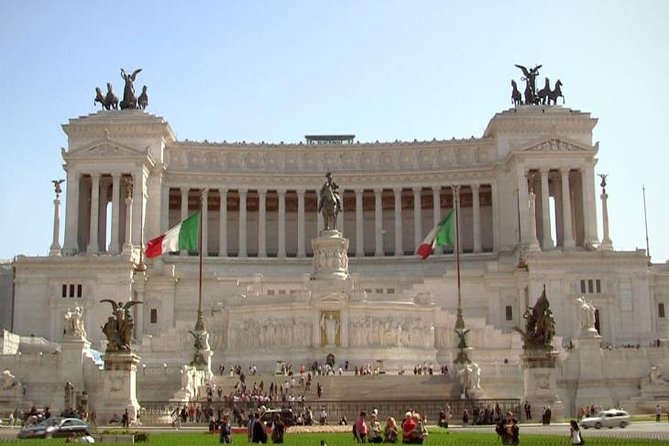
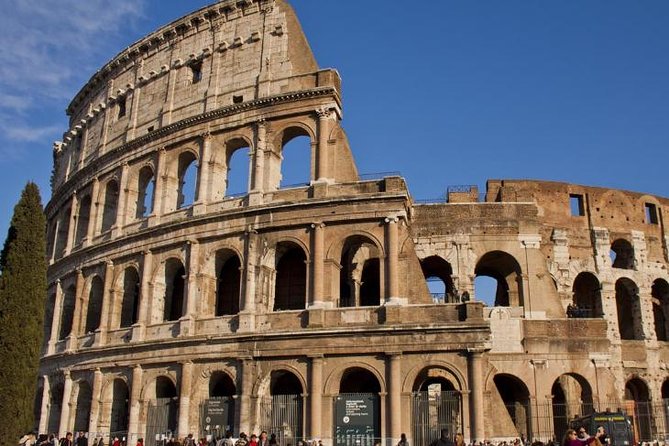
- Capitoline Hill gives a classic skyline view toward the Forum, Palatine Hill, and the Colosseum
- Pantheon is fast but packed, with the oculus light and historic tombs
- Spanish Steps + Fontana della Barcaccia pairing is a top people-watching combo
- San Paolo Fuori le Mura is a calmer, longer stop after the busy squares
How the driver-only setup works (and why it can still be great)
This is a private Rome tour with a chauffeur, not a licensed guide who walks with you. Italian rules restrict drivers from accompanying you on foot to sightsee away from the vehicle, so your driver stays with the car while you explore on your own.
That changes the feel of the day in a practical way. You get the convenience of being dropped off close to each stop, but the “story” of the sites is mostly what you bring with you (or what you notice on the spot). If you like to move at your own pace—or you’re happy reading signs and looking closely—this can work very well.
The best way to make it smooth is simple: decide what matters most at each location before you arrive, and don’t try to do everything at once. Also, set a clear mental plan for where you’ll rejoin your driver (and when). One of the recurring praise points from real-world experiences like this is that the chauffeur style can be careful and easygoing—some drivers have names like Michael, Michele, Vincenzo, and Franco in past bookings—so you’ll want to use that same calm to keep your timing clean.
You can also read our reviews of more tours and experiences in Rome

Piazza del Campidoglio: the quick-view payoff on Capitoline Hill
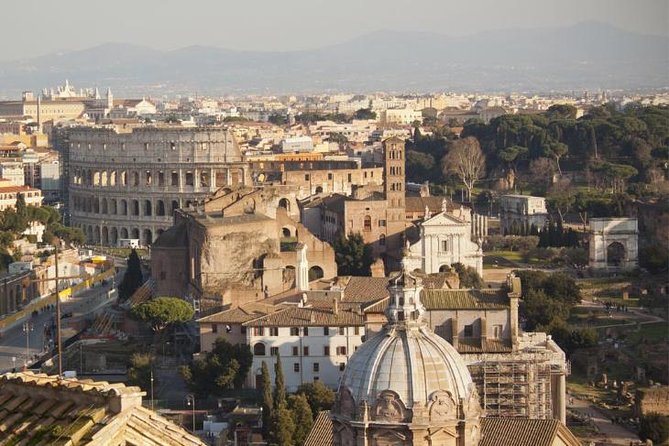
Your day starts with one of Rome’s most satisfying “wow” moments: the view from the Capitoline Hill area at Piazza del Campidoglio. In about 25 minutes, you get a postcard-style look toward the Roman Forum, Palatine Hill, and the Colosseum in the distance.
This stop is popular for a reason: you’re seeing multiple ancient landmarks at once from an elevated angle, which is great when your time is limited. The view is also ideal for photos because it gives you depth—buildings and ruins layering into the horizon instead of being all flat in front of you.
Because this is a quick stop, I’d treat it like a target: arrive, find your best angle, take your pictures, and then do a short scan of what you’re looking at. Since the stop lists no admission ticket needed, you can spend the full time just soaking in the sight and getting oriented for the rest of the day.
The Pantheon in 15 minutes: oculus light, royal tombs, and practical timing
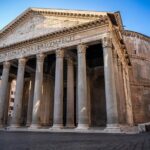
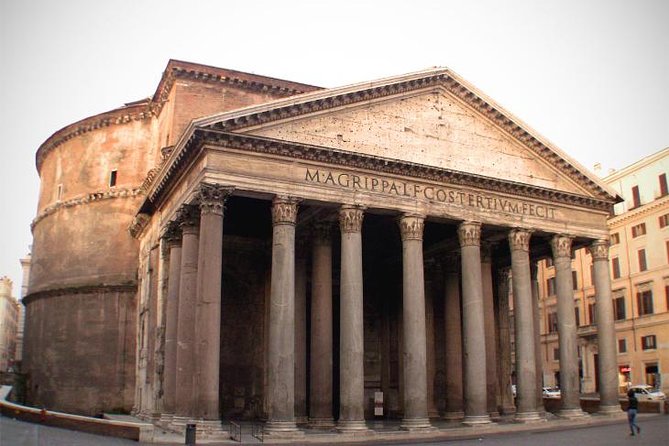
Next up is the Pantheon, one of the oldest and best-preserved ancient monuments in Rome. Built in 126 AD, it has been in continuous use and later became a church dedicated to Saint Mary and the Martyrs.
You can get a lot done in 15 minutes if you know what to look for. The Pantheon’s most distinctive feature is the oculus—the open circle at the dome’s center that brings light (and ventilation). When it rains, the water drains through a system below the floor, which is one of those fascinating “how did they think of that?” details that makes the building feel even more alive.
Inside, you’ll also find notable burials, including kings Vittorio Emanuele II and Umberto I, Queen Margherita, and the artist Raphael. The tour format here is self-directed, so if you want history without rushing, focus on two or three things: the dome and oculus, the interior space, and the tombs.
Admission is not included for this stop. Also, there’s a heads-up that the Pantheon might start charging admission in the future, so don’t assume the cost will stay the same. Build a little flexibility into your day, even if you’re only budgeting time—not just money.
Spanish Steps: how to use 15 minutes for maximum people-watching
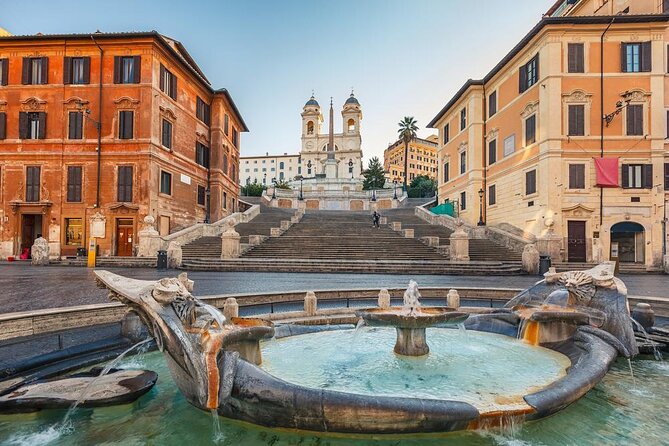
The Spanish Steps stop is timed at about 15 minutes, which is enough for two different strategies. You can climb the 18th-century stairs toward the French church of Trinità dei Monti, or you can stay lower and people-watch like the locals do—watching the flow of visitors and the rhythm of the square.
Either way, pay attention to the Fontana della Barcaccia at the base of the steps. It’s tied to Bernini’s father and is described as having a name that translates to something like old and ugly boat—yet it’s still a beautiful fountain to see in person. In a short visit, fountains like this are your “anchor point.” Take a few minutes here, grab a couple of photos from a comfortable spot, and don’t try to sprint to every angle.
One practical note: because you’re self-touring, you’ll want to move efficiently. Decide quickly whether you’re doing the stairs or staying put, and then commit—15 minutes disappears fast when you start wandering.
Trevi Fountain: the coin-throwing ritual and the reality of crowds
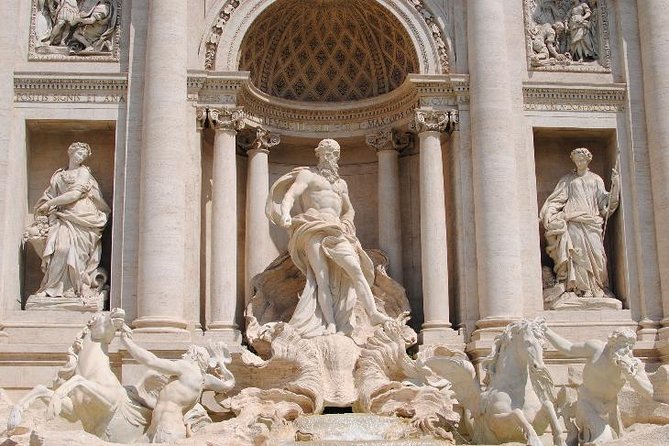
Next is the famous Fontana di Trevi. The tour description connects it to famous films like La Dolce Vita and Three Coins in a Fountain, which is helpful context because you’ll recognize it instantly in real life.
The classic ritual is part of the experience: people crowd around the fountain to throw a coin over their shoulder and wish for a return visit to Rome. It’s corny in the best way, and it’s also a useful “game” if you’re trying to enjoy the moment even while the crowd swirls around you.
This stop is only about 15 minutes, and that matters. You won’t have “wandering time” here. Go straight to the main view, take your photo, make your wish if that’s your thing, then step away before the crowd compresses you into slow motion. The good news: admission is listed as free for this stop, so you’re paying with time, not entry fees.
After Trevi, the plan moves to lunch time, but lunch isn’t included. That means you’ll likely want to eat near the route you’re already in—don’t over-plan a long detour when you’ve got a tight day.





Piazza Navona: what you should actually focus on
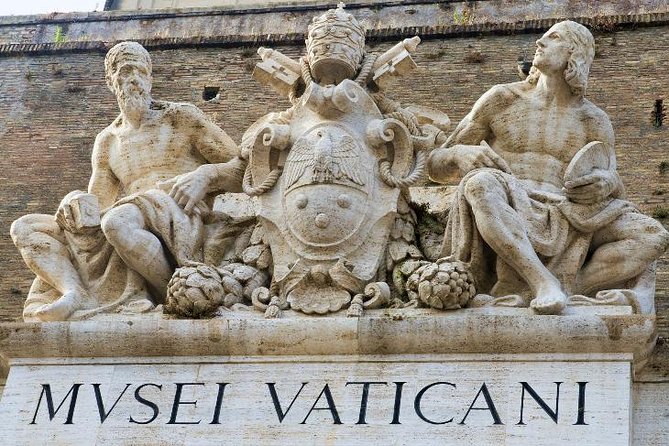
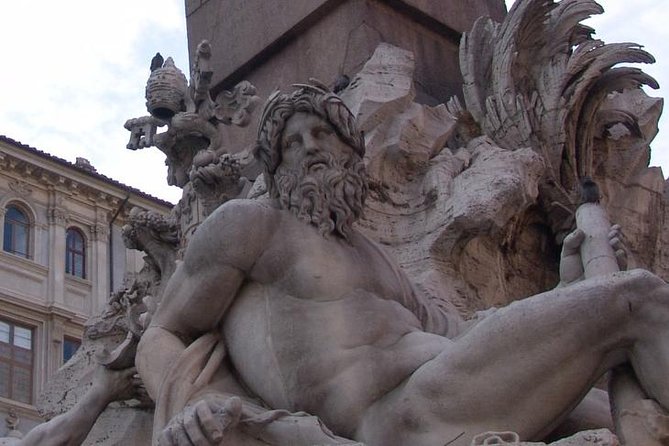
Piazza Navona is one of Rome’s signature squares where art, architecture, and street life all mix together. The setting is Baroque, with lively cafes and market stalls, and it’s the kind of place where you can either stand still and watch or walk a perimeter and catch the sights as you go.
In a 15-minute stop, focus on the big visual hits:
- Bernini’s Fountain of the Four Rivers
- Sant’Agnese in Agone church
The square also has street performers and local artists, plus cobblestone lanes that make even a short walk feel like part of the show. The itinerary points out gelato-style strolling too, which is practical if you can find a spot that keeps you close to your pick-up point.
Because this is a self-touring stop, choose a simple loop: identify the fountain you want most, look at the church facade area, and then return to the pickup location without getting pulled into side streets. When you have a driver waiting, smooth movement beats slow wandering.
San Paolo Fuori le Mura: a longer, quieter feel at the end of the day
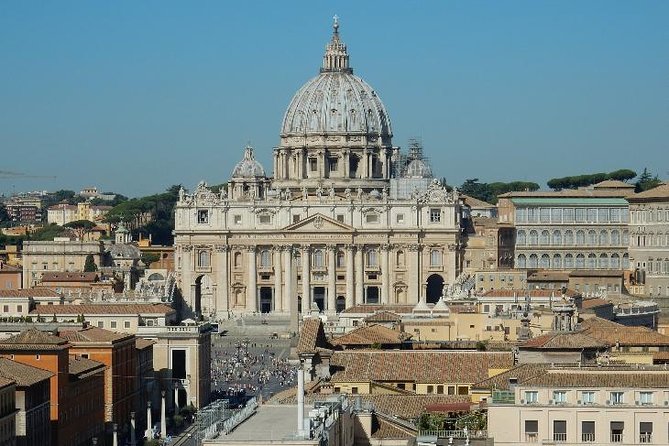
Your last major stop is Basilica Papale San Paolo Fuori le Mura. This is a different kind of Rome moment than the busy squares, and that’s the point. The basilica is described as serene, with a grand interior and a peaceful atmosphere that invites you to take your time.
You’ll spend about 30 minutes here, which is a big deal because the itinerary is much tighter at the earlier stops. Inside, you’re meant to notice mosaics, intricate details, and the sense of sacred ground tied to centuries of pilgrimage.
This stop being free of admission (per the provided stop details) helps too. After a day of crowds and photo lines, it’s a chance to slow down and actually look at one place for long enough to feel it. If you want a good ending to the day—something that doesn’t require sprinting—this basilica is the best candidate on the list.
Price and value: what you’re really paying for at about $983 per group
The price is $982.97 per group, up to 3 people, for roughly 8 hours 30 minutes. That sounds steep until you break down what’s included.
You get:
- a private Mercedes Benz vehicle
- air-conditioned comfort
- an English-speaking professional chauffeur
- bottled water
What you do not get:
- entry tickets to sites
- lunch
- a tour guide who walks with you
So the value comes from two things: time savings and convenience. Being driven close to each stop reduces the “lost time” of transit and long walks. For many visitors, that alone makes the day easier—especially if you’re juggling stamina, small kids, or simply want to maximize sightseeing without wearing yourself out.
The price also becomes more reasonable when shared among up to three people. If you’re traveling as a pair, it can still feel fair compared to piecing together taxis and hiring separate help for navigation. If you’re solo, it may feel pricier, but the private car can be the tradeoff for not having to navigate a day of Rome logistics on your own.
The one wildcard is site costs. Pantheon entry is not included, and you’ll need to budget for whichever sites require tickets that day. Your best move is to check what you’re paying before you commit to any last-minute surprises.
The real pros: comfort, short walks, and drivers who keep things smooth
The strongest praise for experiences like this tends to focus on how the day runs, not just what it covers. Multiple driver names show up in past bookings—Michael, Michele, Vincenzo, and Franco—and the consistent themes are helpful.
First, chauffeurs make a big difference in pace. People like the idea that the car drops them close to each venue, which means less dragging around and more time looking. Second, the English quality is part of the comfort factor. You may still self-tour, but clear communication helps you feel oriented and safe.
There’s also a nice practical bonus that sometimes shows up: one driver recommended a restaurant and even called out a specific dish—cacio e pepe—that got a great response. That doesn’t mean lunch is included, but it’s a reminder that a good chauffeur can act like a calm local filter for what’s nearby and worth your attention.
Plan your self-touring like a pro (so 8.5 hours doesn’t feel rushed)
Because this is driver-only, you’ll want to work with the structure instead of fighting it. Short stops mean you should decide what success looks like at each location.
Here’s the simple approach I recommend:
- Pick 1 must-do at each stop (a view, a monument feature, a fountain, a church interior focus).
- Move with purpose as soon as you park, instead of browsing first.
- Rejoin your driver with a buffer, not on the exact minute.
Also, remember that your driver will wait with the vehicle while you self-tour away from it. That’s where the day can feel either smooth or stressful—depending on whether you keep your plan realistic.
If you’re someone who enjoys learning on the spot, this format can feel freeing. If you want deep guided storytelling throughout, you’ll probably prefer a walking guide option instead.
Who should book this Best of Rome driver-only day
This is a strong fit if you want:
- a one-day highlight sweep of major Rome icons
- less walking between sites thanks to curbside car drops
- English-speaking help for driving and timing
- a private group setup for up to three people
It’s also a good match for visitors who are comfortable exploring on their own and who don’t need a guide to walk alongside them for every interpretation moment. If you’re a solo parent or traveling as one adult who wants the day to feel organized and low-stress, the private-car format can help a lot.
Where it’s not the best match is when you want continuous, on-foot guiding inside every monument. Since the driver can’t accompany you on foot, you’ll be doing the sightseeing work yourself.
Should you book this Rome driver-only tour?
I’d book it if your top priority is comfort plus efficient access to the big names—Capitoline views, Pantheon, Spanish Steps, Trevi, Piazza Navona, and San Paolo Fuori le Mura—without the hassle of coordinating transit across town. The curbside drop-off concept is genuinely valuable in Rome, where walking time can quietly wreck a day.
I wouldn’t book it if you’re hoping for a full guided experience with a licensed guide walking with you and explaining everything as you go. This format can still be fantastic, but it rewards planning and personal curiosity.
FAQ
Is entry to the sites included?
No. Entry tickets are not included. The Pantheon is specifically listed as admission not included, while the other listed stops are marked as free.
How many people can be in a group?
The price is for a group of up to 3 people.
How long is the tour?
It runs for about 8 hours 30 minutes.
Does the tour include a tour guide who walks with you?
No. It’s driver-only. The English-speaking chauffeur is not a licensed tour guide, and Italian law means the driver must stay with the vehicle while you self-tour away from it.
Will I have to walk between attractions?
You’ll have some walking at each stop, but the vehicle is intended to get you right in front of each venue to reduce long walking distances.
Are pickup and mobile tickets included?
Pickup is offered, and the tour uses a mobile ticket.
Is lunch included?
No. Lunch is not included.
What’s included in the price besides the car?
You get a private air-conditioned Mercedes vehicle, an English-speaking professional chauffeur, and bottled water.
Are the major stops free besides the Pantheon?
According to the stop details, Piazza del Campidoglio, Spanish Steps, Fontana di Trevi, Piazza Navona, and Basilica Papale San Paolo Fuori le Mura are listed as free. Pantheon is listed as not included.
Can I bring a service animal?
Yes, service animals are allowed.