REVIEW · ROME
The ancient aqueducts of Rome
Book on Viator →Operated by Underground Rome · Bookable on Viator
Rome’s water power is still in the stones.
In the Parco degli Acquedotti (part of Parco Archeologico dell’Appia Antica), you get a focused walk through major Roman aqueduct remains—and you also see how later centuries repaired, reused, and extended this same water system. I love that the tour stays small and personal, and you’re not stuck in the typical city crowds.
What I like most is the stop-by-stop water timeline: from a 144 BC aqueduct that later got reused, to a later structure connected to Pope Sixtus V where you can spot water still doing its job. I also like the setting: a huge natural park edge where locals cycle, jog, and stroll, so you feel Rome without the constant roar of sightseeing.
The only drawback is simple: it’s a walking tour. You’ll want good shoes and you’ll appreciate it more if you’re comfortable on uneven park paths and doing a solid amount of walking for roughly two hours.
In This Review
- Key things to know before you go
- Why Rome’s aqueducts feel different from the usual ruins
- Getting there fast: where you meet and where you end
- Parco degli Acquedotti: the park that makes the aqueducts easy to see
- Stop-by-stop water timeline: from 144 BC to Pope Sixtus V
- The 144 BC aqueduct and the reuse pattern
- Sixtus V, Pope Felice, and arches recycled from Marcio
- The aqueduct with the healthiest water and the “Water Giant” arches
- Claudius and the Anio vetus: the highest of the 11
- The guide style: what you get from small-group, English-led archaeology
- Who this tour fits best (and who should think twice)
- Practical tips for the smoothest visit
- Should you book this Roman aqueduct walk?
- FAQ
- How long is the Ancient Aqueducts of Rome tour?
- Where do we meet and where does the tour end?
- What do I need to bring?
- Is the tour in English?
- What’s the group size?
- What is the cancellation policy?
Key things to know before you go
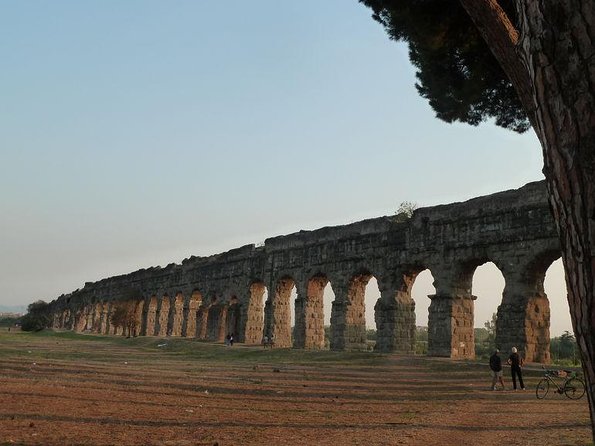
- Seven aqueducts in one compact park area: rare scale and variety in a few hectares
- A living water story: one later aqueduct section still leaks, showing water movement in real time
- Big “height” engineering moments: arches reach up to about 30 meters in some stretches
- Roman reuse is the theme: later builders reused arches and even older infrastructure
- Small group size: capped at 10 travelers, which helps with questions and slower pacing
- English-guided, archaeology-minded approach: expect detailed explanations and practical context
Why Rome’s aqueducts feel different from the usual ruins
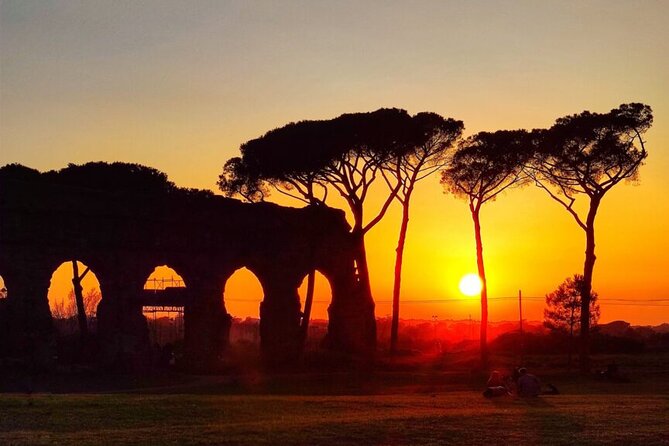
Most Roman ruins make you think about emperors, battles, or monuments. This one pushes your brain onto a more useful track: water. If you want to understand how Rome functioned day after day, you have to understand where the water came from and how it traveled.
Here, the aqueducts aren’t just “old architecture.” They’re proof of systems—gravity-fed design, careful routes, and maintenance over centuries. The best part is how visible that process is. In one park walk you can connect the ancient build, the later reuse, and the continued effect of water engineering that survived long after the original builders were gone.
And because the site sits in an active park, the experience feels human-sized. You’re not only looking upward at stone arches; you’re also watching how modern Romans use the same green space around them.
You can also read our reviews of more tours and experiences in Rome.



Getting there fast: where you meet and where you end
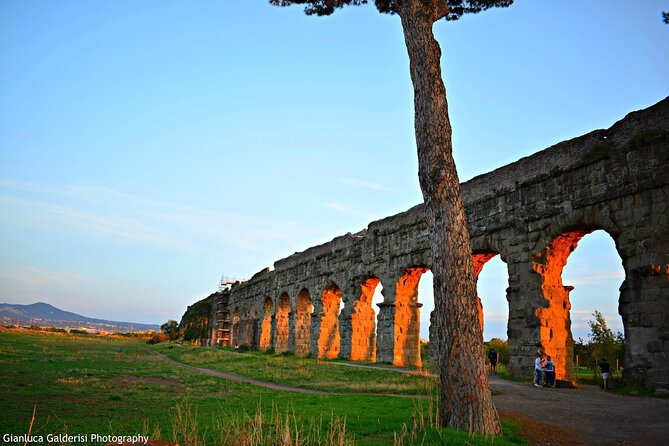
You’ll start near Giulio Agricola (00174 Rome). The tour meeting point is at the metro stop area, and you’re told there will be a short snack with the group after a quick refresh-stop feel.
You’ll finish near Lucio Sestio (00174 Rome). The practical win here is that this isn’t a maze of transfers or a long scramble across multiple neighborhoods. It’s set up for a straightforward metro approach, which matters because you’re going to walk once you arrive.
One more practical note: you’ll get a mobile ticket, and the tour is offered in English. So if you’re trying to keep logistics simple during your trip, this one fits well.
Parco degli Acquedotti: the park that makes the aqueducts easy to see
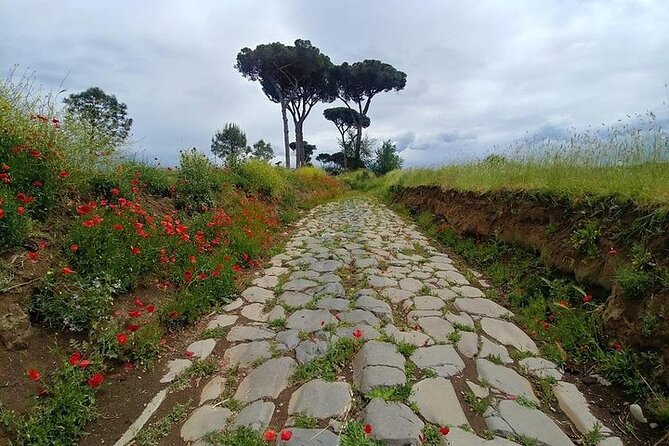
The real draw is that the aqueducts sit in a dedicated park devoted to them. The site is known for passing seven aqueducts across an area of only a few hectares. That’s a big deal. Elsewhere in Rome, aqueduct remains can be scattered and hard to line up into one satisfying “story walk.” Here, you get the sequence.
The park also changes your rhythm. You’re walking through a place used by locals—cycling, jogging, and relaxing. That means the tour isn’t just history; it’s atmosphere. You’ll likely feel a quieter Rome version, away from the busiest core streets, while still being close enough to connect easily with the rest of your trip.
What to expect while you’re walking:
- A mix of open views and tighter spots where stonework and water channels become the focus
- Enough space to slow down and actually read the structure in front of you
- A pace that feels manageable for most visitors, but still active enough that comfortable shoes are non-negotiable
Stop-by-stop water timeline: from 144 BC to Pope Sixtus V
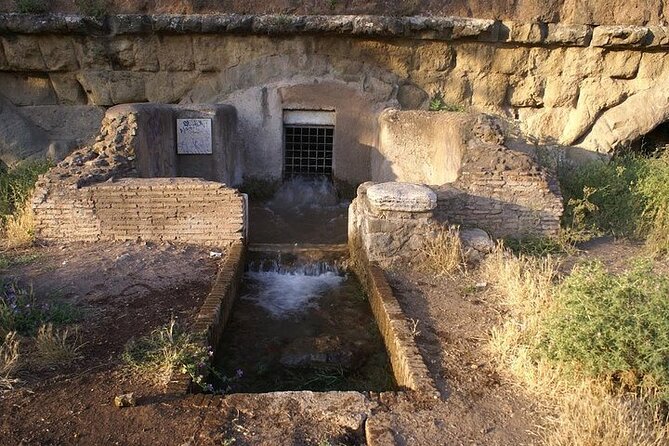
This tour is built like a timeline you can walk through. Each aqueduct stop isn’t just a “look at this.” The explanations connect the engineering choices to what came next.
The 144 BC aqueduct and the reuse pattern
One stop focuses on an aqueduct built in 144 BC. The key detail: it was partially used until relatively recently because it was reused by the Felice aqueduct. That single fact tells you a lot about how Rome treated infrastructure: the city didn’t start from scratch every time. It adapted.
For you, this is helpful because it changes how you read the stones. Instead of asking only what ancient Romans built, you also start noticing what later Romans kept, modified, and carried forward.






Sixtus V, Pope Felice, and arches recycled from Marcio
Another highlight is the aqueduct connected to Sixtus V (often associated with Pope Felice). This part was built in the 1500s, and the crucial detail is reuse again: builders used the arches of the Marcio.
Then comes the detail that makes this tour feel alive. The underground part of this aqueduct still works, and you can see water leaking from the canal. Standing near a system that still moves water turns the history into something physical. It’s not only “what happened.” It’s “what continues.”
If you’re the type who enjoys seeing how old systems remain functional in surprising ways, this is the moment.
The aqueduct with the healthiest water and the “Water Giant” arches
You’ll also see an aqueduct described for supplying especially healthy water, and you’ll learn how its height allowed it to serve the entire city of Rome.
This is where the scale hits. Some stretches have arches reaching up to around 30 meters, which makes it easy to understand why people called it a kind of giant. You’re looking at height not for drama, but for distribution—getting water to flow where it needed to go.
If you’re a photo person, you’ll get great angles. If you’re not, you’ll still appreciate the engineering logic.
Claudius and the Anio vetus: the highest of the 11
The tour’s last major engineering story centers on the Anio vetus aqueduct, built by Emperor Claudius along with the Claudian aqueduct. The detail that matters here: it was the highest in absolute of Rome’s 11 aqueducts that supplied the city.
That sounds like trivia until you see it as an engineering requirement. Height affects gravity flow, pressure, and reach. By learning that this aqueduct was the highest, you understand why its design would have shaped how Rome received water across districts.
At the end of the walk, you’ll also likely stop at a water fountain point tied to the tour experience—another way of linking the ancient system to modern drinking water culture.
The guide style: what you get from small-group, English-led archaeology
With a maximum of 10 travelers, you’re not just a body in the background. You can ask questions and you’re more likely to get clear answers and extra context on the spots that catch your attention.
From what I’ve seen highlighted in how these tours are run, the guides lean into real archaeological focus. Names you may encounter in English-led experiences include Joseph, Alex, Ricardo/Riccardo, Giuseppe/Guiseppe, Liviana, and Mauricio/Maurizio. The big theme is the same: they bring energy, they explain construction details, and they connect engineering to daily life and Roman decision-making.
What that looks like on the ground:
- Explanations that mix history with practical structure
- Teaching tools like charts and photos (so you can follow the route in your head, not just in your eyes)
- An ability to answer questions patiently, even when you ask for extra detail
- Helpful side discoveries, like pointing out plant/tree types in the park
- Sometimes a quick look at nearby traces of the Latin road, described as the second oldest road in Rome, plus discussion of Roman materials reused later
One practical bonus from the guide approach: it makes the quiet park feel like a classroom without turning it into a lecture. You’ll still feel like you’re walking through space, not sitting in a museum.
Who this tour fits best (and who should think twice)
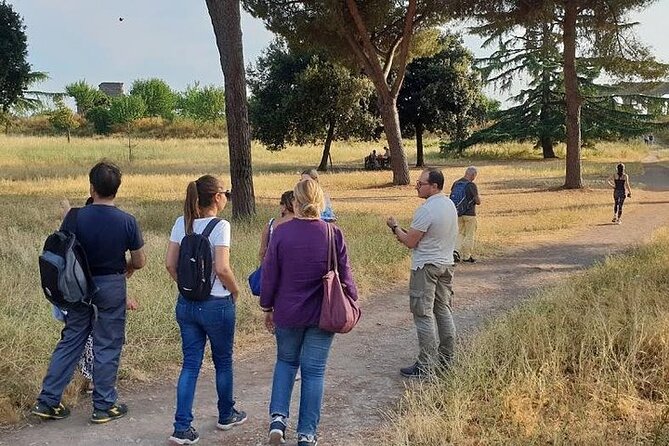
This works best if you like:
- Roman engineering and how cities actually worked
- Photos with meaning (arches, channels, height, water flow)
- Less-crowded experiences in Rome’s outer green spaces
- A walk that includes stories, not just dates
It’s also a good family-friendly option in the sense that the park is open and active. There’s room to move, and kids typically enjoy the run-around nature of a big park setting.
Who might think twice:
- If you hate walking tours, even moderate ones, this may feel long for your preferences. Two hours is short on paper, but it’s still time on your feet.
- If you need nonstop indoor comfort or you strongly dislike park paths, plan differently.
Practical tips for the smoothest visit
A few things will make this tour easier and more enjoyable:
- Wear good walking shoes. Sandals are a bad idea on uneven outdoor paths.
- Bring a weather plan. The experience requires good weather, so if Rome is acting up, you may be rescheduled.
- Expect a calm pace with stops. The value here comes from time spent understanding what you’re seeing.
- If you’re sensitive to sun, consider timing your day with shade breaks in mind since it’s an outdoor park walk.
One more value signal: it’s booked about 57 days in advance on average. That tells me the timing works well for people planning trips and that the tour isn’t always available last-minute.
Should you book this Roman aqueduct walk?
I think you should book it if you’re the type of traveler who wants Rome to make sense, not just impress you. This tour gives you a rare combination: major aqueduct engineering, centuries of reuse, and a park setting that’s actually used by modern people.
It’s also good value for the quality of guidance. The price is $96.38 per person for about two hours, and because the group is capped at 10, you’re paying for an experience where your questions matter and the explanations connect each aqueduct stop into one clear water story.
If your Rome plan is only the biggest-ticket monuments, this will feel like a breath of air. If your Rome plan includes learning how the city functioned—this is one of the best ways to do it without spending half your day on transit.
FAQ
How long is the Ancient Aqueducts of Rome tour?
The tour runs for about 2 hours.
Where do we meet and where does the tour end?
You start at Giulio Agricola (00174 Rome) and finish at Lucio Sestio (00174 Rome). The meeting is at the metro stop area, after a short snack with the group.
What do I need to bring?
Wear comfortable shoes. The tour involves walking in a park.
Is the tour in English?
Yes, the tour is offered in English.
What’s the group size?
The tour has a maximum of 10 travelers.
What is the cancellation policy?
You can cancel for a full refund up to 24 hours in advance. If you cancel less than 24 hours before the start time, the amount paid is not refunded. The experience requires good weather, and if it’s canceled due to poor weather, you’ll be offered a different date or a full refund.