REVIEW · ROME
Small group: Capitoline Museums
Book on Viator →Operated by Rome Tour · Bookable on Viator
The She-Wolf greets you in the first minute. This small-group visit to the Capitoline Museums is built for close-up art and quick context, from ancient Roman sculpture to big-name painting. You walk with a guide who puts each masterpiece in a story you can actually follow.
What I love most is how you get intimate with the famous statues, like the She-Wolf and the Dying Galata, without feeling like you’re speed-walking a checklist. Second, the pacing fits a short trip: about 2 hours, with a group capped at 15, so you can ask questions and keep moving at a sane speed.
One drawback to plan for: on holidays like New Year’s Eve, museum hours can be limited and the tour can feel a bit rushed. And if you’re not paying attention at the start, it can take a moment to spot the guide at Piazza Venezia.
In This Review
- Key things that make this tour worth your time
- Why the Capitoline Museums feel like a different kind of Rome
- Meeting at Piazza Venezia and finding the right start point
- The 2-hour game plan: what you’ll see (and what you won’t)
- Capitoline Square: the outside pieces that set the tone
- Colossal statue of Constantine I
- The spinaio
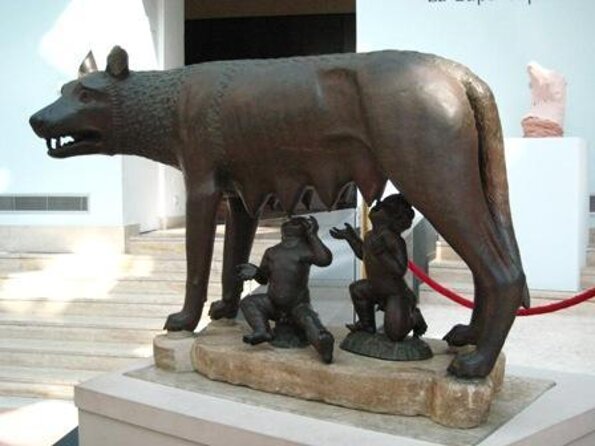
- Capitoline She-Wolf
- Statue of Marcus Aurelius
- Inside Musei Capitolini: sculpture highlights you can’t really fake
- Medusa (Bernini)
- Capitoline Hercules
- Romulus and Remus
- Good luck
- Capitoline Venus
- Dying Galata
- How famous paintings fit into a museum built for power and myth
- Small group (max 15): the real quality upgrade
- Price and value for $173.64 per person
- Timing notes: when it can feel rushed
- Who should book this Capitoline Museums small-group tour
- Should you book this tour?
- FAQ
- How long is the Capitoline Museums small-group tour?
- Where does the tour start and end?
- What is the price per person?
- What’s the maximum group size?
- What’s included in the tour price?
- What is not included?
- Which artworks and highlights will I see?
- Can most people participate in this tour?
- When will I get confirmation after booking?
- Is it refundable or changeable?
Key things that make this tour worth your time
- Close-up ancient sculpture including the Capitoline She-Wolf and Dying Galata
- Bernini’s Medusa plus major Roman figures like Marcus Aurelius and colossal Constantine I
- Real painting highlights with works by Caravaggio, Titian, Rubens, Tintoretto, and more
- Small group (max 15) for a steadier pace and more guide time per person
- A tight 2-hour format that focuses on the collection’s best-known anchors
Why the Capitoline Museums feel like a different kind of Rome
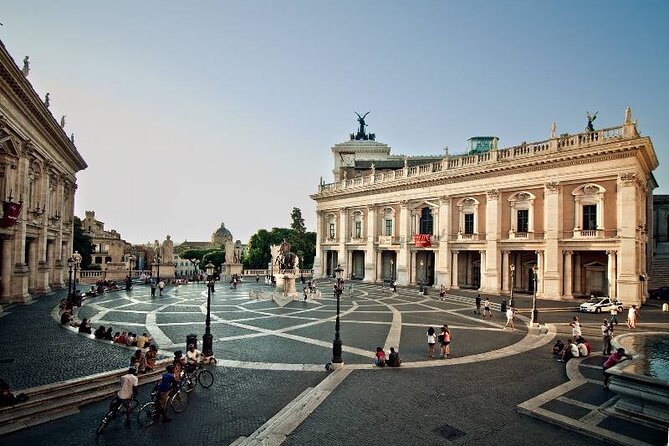
Rome has plenty of museums. The Capitoline Museums are special because they’re among the oldest public art collections in the world, so you’re not just looking at objects. You’re seeing a tradition of display, collecting, and civic pride that goes way back.
I like tours that connect the art to the place it came from. Here, you get that sense early, starting around the Capitoline area and moving into the Musei Capitolini galleries. The guide’s job is to help you read what you’re seeing: why a statue matters, why a painting was worth collecting, and how power shows up in both.
You can also read our reviews of more museum experiences in Rome


Meeting at Piazza Venezia and finding the right start point
The tour starts and ends at Piazza Venezia. That’s convenient because you can get there easily from the center, and you don’t have to worry about a far-off drop-off. It’s also a smart time saver: you keep your day simple.
Do one thing to make your life easier: arrive early enough to get oriented in the square. One guest had a rough moment at the beginning trying to find the guide, then everything ran smoothly. If you’re the kind of person who likes to check details twice, you’ll enjoy this tour more.
The 2-hour game plan: what you’ll see (and what you won’t)
This is a focused, highlights-first route. Expect to spend roughly 2 hours inside and around the main collection points, seeing the big anchors that people come for: iconic sculptures and a selection of major paintings.
That means you should not expect a slow stroll through every room. It’s a great fit if this is your first visit or if you don’t want to spend half a day stuck in museum mode. If you’re the type who can happily spend 3–4 hours in one gallery, you may want a longer museum day later. But for most people, this strikes a sweet balance between seeing the musts and still enjoying Rome outside the museum.
Capitoline Square: the outside pieces that set the tone
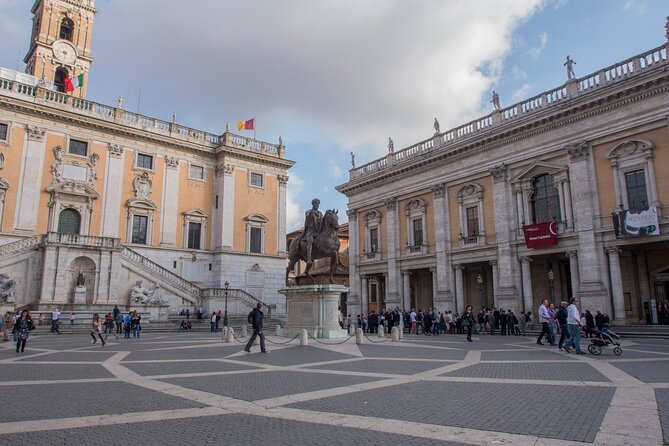
The experience kicks off at the Capitoline square area, where you meet several major “outside anchors” that make the museum feel grounded in real Roman space.
Colossal statue of Constantine I
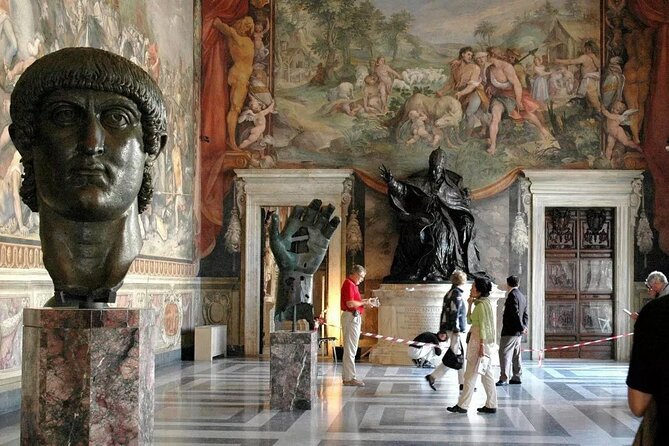
You’ll encounter the colossal presence of Constantine I. Colossal scale in Rome is a message. Standing near a figure like this, you get why emperors cared so much about art: it wasn’t decoration; it was authority you could walk up to.

The spinaio
Next comes the Spinaio, an ancient marble figure. Even without technical details in your head, you can feel the workmanship. It’s the kind of sculpture that reminds you why Roman statues were copied for centuries.
Capitoline She-Wolf
Then comes the star: the Capitoline She-Wolf. This is the one most people come for, and for good reason. It’s not just famous; it’s emotionally direct. You see the texture, the composition, and the symbolism that helped this story survive long enough to become a global icon.
Statue of Marcus Aurelius
You’ll also see the Statue of Marcus Aurelius. This is a great counterpoint to the She-Wolf. Together, they show two sides of Roman messaging: mythic origins on one hand, and moral authority on the other.
Inside Musei Capitolini: sculpture highlights you can’t really fake
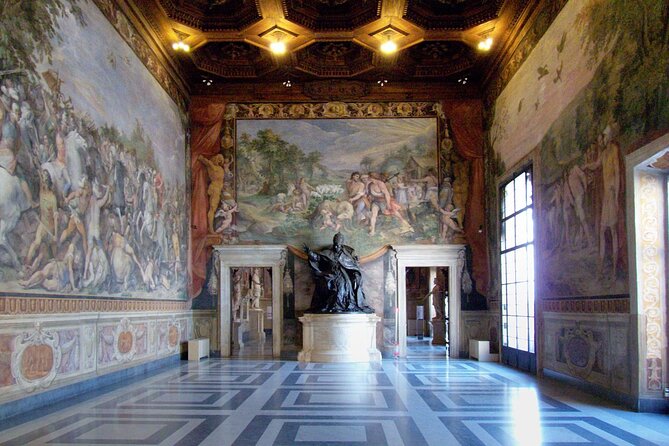
Once inside Musei Capitolini, the tour leans hard into sculpture, because the collection is strongest when you can compare styles, eras, and meanings in a compact time window.
Medusa (Bernini)
You’ll look at Medusa (Bernini). This isn’t a background statue. It’s dramatic, theatrical, and instantly readable. The guide’s job here is key: you’ll get help connecting the myth to why it was such a popular subject later on, and how Baroque artists used emotion like a spotlight.
Capitoline Hercules
Next is Capitoline Hercules. Hercules in Rome isn’t just a strong man image. It’s a story about endurance and power, and it shows how Greek mythology got translated into Roman ideals. If you’ve been staring at the same city all day, Hercules gives you a clean visual break.
Romulus and Remus
You’ll also see Romulus and Remus. Placing them near the She-Wolf makes the whole origin story feel logical, not random. It’s easier to remember the names and symbolism when you see the family together in sequence.
Good luck
The route includes a figure or work labeled Good luck. I like that the tour doesn’t only chase the super-famous pieces. Even the less predictable stops can make the museum feel like a living collection, not just a photo-op circuit.
Capitoline Venus
Then you’ll get to Capitoline Venus. Venus changes the mood again. Where earlier pieces hit myth, power, and drama, Venus brings beauty, ideal form, and the long cultural habit of turning desire into art you can study for hours.
Dying Galata
Finally, you’ll see Dying Galata. This is one of the most memorable works in the collection because it’s emotionally loud even in marble. You get that sense of motion and struggle, and the guide can explain what makes this type of sculpture so captivating to later artists and collectors.
How famous paintings fit into a museum built for power and myth
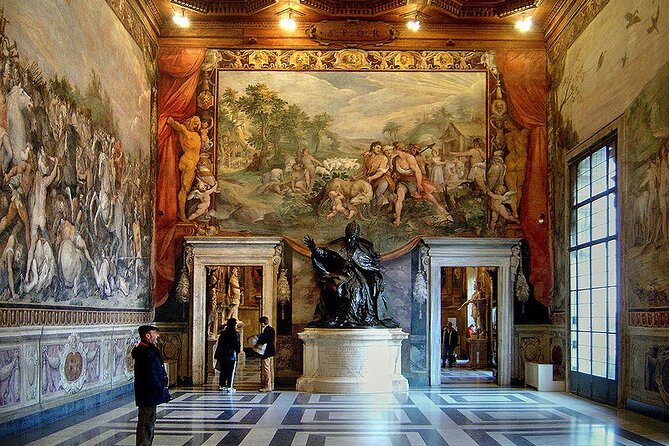
The tour isn’t only ancient sculpture. The overview promises major works by Caravaggio, Titian, Rubens, Tintoretto, and more, and that matters because it shows the Capitoline Museums weren’t stuck in the ancient past.
When you’re inside a sculpture-heavy route, painting can feel like a switch in gear. But that’s the point. The museum brings together different eras in one place, so you can see the continuity of themes: mythology, religion, authority, and the art market’s hunger for greatness.
I appreciate when a guide explains not just what a painting shows, but why someone chose it, collected it, and displayed it publicly. One write-up specifically praised a guide who added historical and political context, and that kind of framing is what turns famous names into something you understand rather than just admire.
Small group (max 15): the real quality upgrade
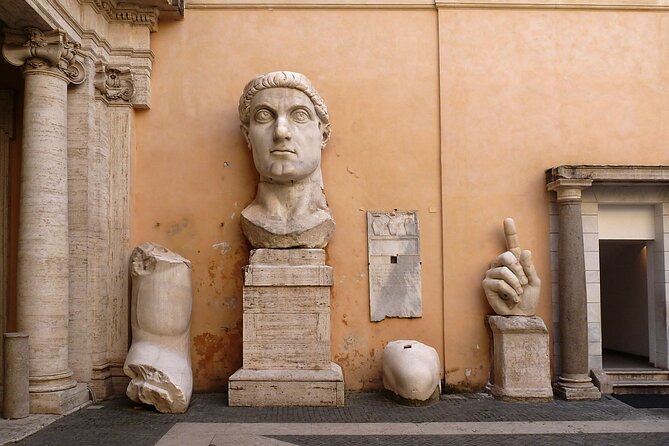
A group capped at 15 is what makes this tour feel workable. In bigger groups, you spend half your time trying to stay with the herd. Here, you can usually hear the guide and get your bearings without turning every room into a sprint.
This also helps with the flow of questions. If you’re the kind of person who wonders why a statue looks a certain way, or how artists tell stories with bodies and expressions, the small size makes it more likely you’ll get an actual answer.
Price and value for $173.64 per person
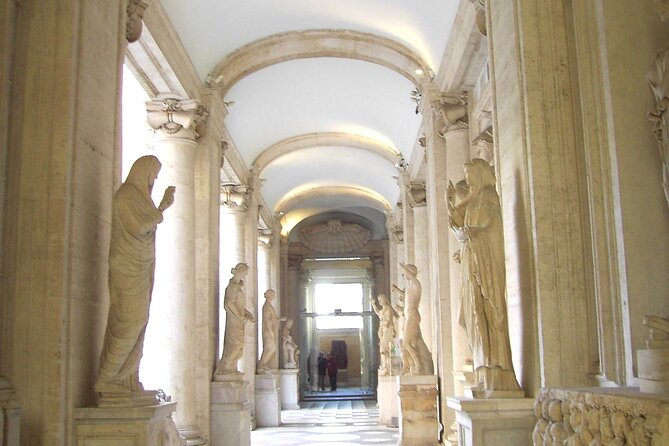
At $173.64 per person, you’re paying for more than entry into a famous building. The tour includes entrance tickets, a guided tour, and tax. It does not include transportation or tips.
For me, the value comes from two things:
1) you save time by having tickets handled, and
2) you get a curated route that hits the collection’s headline sculptures and painting names in about two hours.
If you’re paying for self-guided entry only, you can do it. But you’ll also spend more time trying to choose what matters. This tour trades a chunk of money for a cleaner experience, especially if you don’t want to research each piece before you arrive.
Timing notes: when it can feel rushed
This tour is short on purpose, and that’s usually a benefit. The catch is simple: if museum hours shrink, the tour can feel like it’s moving faster than ideal.
One experience highlighted the New Year’s Eve timing issue, where limited hours made everything feel rushed. That’s not the guide’s fault. It’s just how holiday schedules work in Rome. If your travel dates include big holidays, build in a little flexibility and accept that you might not absorb every detail the way you would on a normal day.
Who should book this Capitoline Museums small-group tour
This one is a strong match if you:
- want major Roman sculpture icons in a short window
- like having artwork explained with context, not just names
- prefer small groups so you can hear and ask questions
It’s also a good fit if you’re staying central and like walking Rome in clean, manageable chunks. Starting at Piazza Venezia helps you stay anchored, and the end point brings you back to where you started.
If you’re aiming for a slow, room-by-room museum day, you might feel slightly compressed. But that’s exactly what this tour is designed to avoid: getting stuck choosing your own path among too many options.
Should you book this tour?
I’d book it if you want the Capitoline Museums’ best-known anchors without turning your day into a logistics puzzle. The included entrance and the guided, small-group structure do real work for your time. You’ll see heavyweight sculpture like the She-Wolf and Dying Galata, plus you’ll get your share of major painting names.
Skip or reconsider only if you know you’ll be especially sensitive to rushed timing (holiday dates) or you dislike tours that hit highlights faster than you’d like. Otherwise, this is one of those Rome experiences where you leave with a short list of artworks you truly understand, not just photos you took.
FAQ
How long is the Capitoline Museums small-group tour?
It lasts about 2 hours.
Where does the tour start and end?
It starts at Piazza Venezia, Roma RM, Italy and ends back at the same meeting point.
What is the price per person?
The price is $173.64 per person.
What’s the maximum group size?
The tour has a maximum of 15 travelers.
What’s included in the tour price?
Entrance tickets, a guided tour, and tax are included.
What is not included?
Transportation and tips are not included.
Which artworks and highlights will I see?
You’ll see highlights such as the Capitoline She-Wolf, Dying Galata, Medusa (Bernini), Capitoline Venus, plus other major works like Marcus Aurelius and major statues and figures in the collection. The tour also includes masterpieces by artists like Caravaggio, Titian, Rubens, Tintoretto, and more.
Can most people participate in this tour?
Most travelers can participate.
When will I get confirmation after booking?
Confirmation is received at the time of booking unless booked within 2 days of travel. In that case, confirmation is received within 48 hours, subject to availability.
Is it refundable or changeable?
This experience is non-refundable and cannot be changed for any reason.