REVIEW · ROME
Rome’s Dark Side Ghosts and Legends Tour
Book on Viator →Operated by Dark Side City Tours · Bookable on Viator
Rome has a second city after sunset. This night ghost walk threads through the historic center with chilling legends and real historical anchors, from Campo de’ Fiori onward. I especially like how the stories stay grounded in place, with guides such as Arielle and Ben bringing the characters to life in English.
Two things I’d put at the top: the small group size (max 15) keeps it conversational, and the route tackles Rome’s “dark side” without feeling like pure shock value. You also get that classic Roman-night bonus: cooler temperatures and fewer daytime crowds around the main sights.
One watch-out: the walk includes cobblestone streets and a lot of standing. If you have mobility limits or stamina concerns, plan for a slower pace even though the tour is about 2 hours.
In This Review
- Key highlights at a glance
- A 2-hour Rome ghost walk that trades crowds for atmosphere
- Price and what you actually get for $24.19
- The group size is the secret sauce
- Start at Campo de’ Fiori: your night shifts into legend mode
- Stop-by-stop: what each place adds to the story
- Campo de’ Fiori: the opener
- Piazza Farnese: a renaissance palace with uncommon stories
- Vicolo delle Grotte: the 18th-century magician
- Ponte Sisto: the haunting bridge story
- Via Giulia: monks with a macabre task
- Via di Monserrato: prison history and a notorious pope
- Via dei Banchi Vecchi: a gelato story with poison on the menu
- Via del Banco di Santo Spirito: the executioner’s house
- Castel Sant’Angelo: from tomb to executions
- What the guides do well: storytelling with bite and humor
- Is it spooky, scary, or just fun?
- What to wear and how to pace yourself
- Who this tour is best for
- Quick fairness check: potential drawbacks
- Should you book Rome’s Dark Side Ghosts and Legends Tour?
- FAQ
- How long is the Rome’s Dark Side Ghosts and Legends Tour?
- What time does the tour start?
- Where does the tour start and end?
- Is the tour offered in English?
- How big is the group?
- Is a mobile ticket included?
- Is food included in the tour price?
- Do I need to bring cash or pay for anything at stops?
- Is the tour suitable for most travelers?
- Are service animals allowed?
- Can sign language interpreters be provided?
Key highlights at a glance
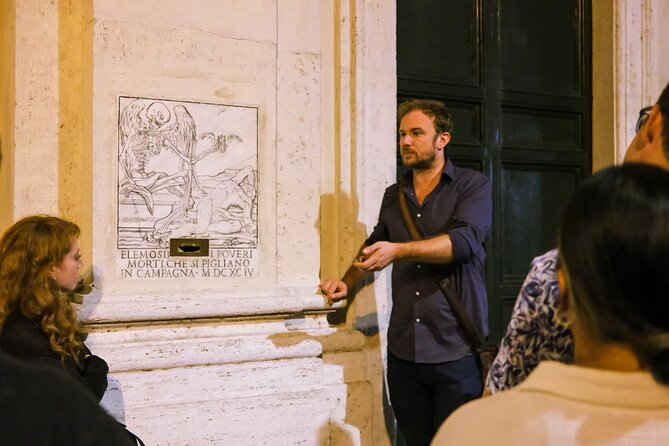
- Maximum 15 people for a more personal, question-friendly experience
- English mobile ticket and an 8:00 pm start from Campo de’ Fiori
- Executioners, popes, and prisons as the backbone of the stories
- 18th-century magician and a haunting tale tied to Vicolo delle Grotte
- Castel Sant’Angelo end stop with its shift from imperial tomb to execution site
- Night walking value: less heat, quieter streets, and eerie atmosphere on demand
A 2-hour Rome ghost walk that trades crowds for atmosphere
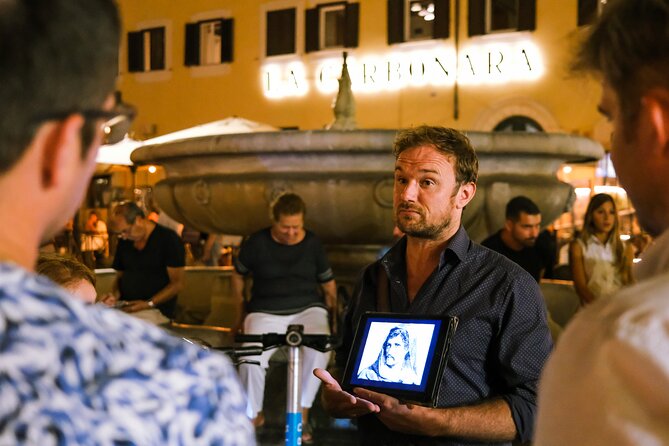
If your Rome trip has been heavy on monuments by day, this is a smart pivot. You’re not touring museums. You’re walking the city as it really feels at night—dim streets, narrow alleys, and a guide who treats legends like local lore instead of campfire entertainment.
The timing matters. Starting at 8:00 pm, you’re past the hottest part of the day, and the historic center tends to feel more human once tour buses thin out. That matters because the experience is built on small moments: a turn into a side street, a pause near a doorway, and a story that sounds different when you’re standing in the exact spot.
And yes, it’s billed as “ghosts and legends,” but it’s also a history-oriented stroll. The mix is why the tour earns such strong marks—people leave feeling like they learned names, places, and timelines, not just spooky vibes.
You can also read our reviews of more tours and experiences in Rome.



Price and what you actually get for $24.19
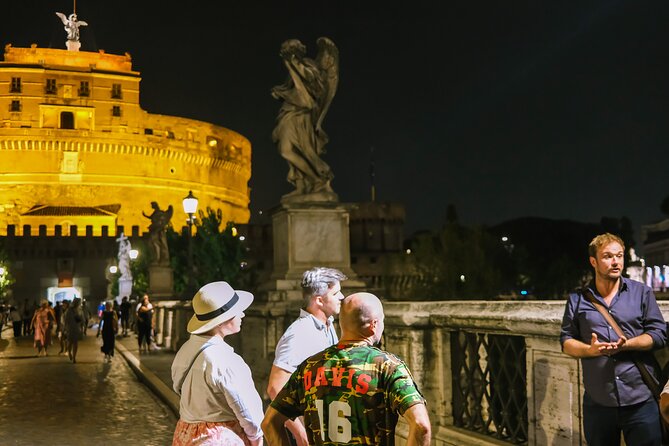
At $24.19 per person for about 2 hours, you’re paying for three things: a guide, a curated walking route, and storytelling performance. It’s also booked fairly early on average (around 29 days in advance), which is usually a hint that the “small-group at night” format draws repeat business.
Here’s the practical value: for the price of a single midrange meal, you get a guided route through areas you might skip on your own. You’re also seeing more than the usual headline sights because the stories point you toward side streets and lesser-visited corners.
Food is where expectations need to stay realistic. The tour highlights mention a gelato stop, but food and drink aren’t listed as included. Plan to buy snacks if you want them, or treat it as a chance to get your gelato where the story begins.
The group size is the secret sauce
Max 15 travelers changes the whole tone. With a larger group, ghost tours can become a shuffle—follow the guide, hear only half, move on. Here, the pace works better for listening closely, and your guide can adjust if someone has a question about the era or the character.
This also makes the tour feel safer and more coordinated at night. That matters in Rome, where streets can look peaceful and then suddenly get narrow. You’ll move as a unit, and the guide is leading you stop to stop with clear direction.
Start at Campo de’ Fiori: your night shifts into legend mode
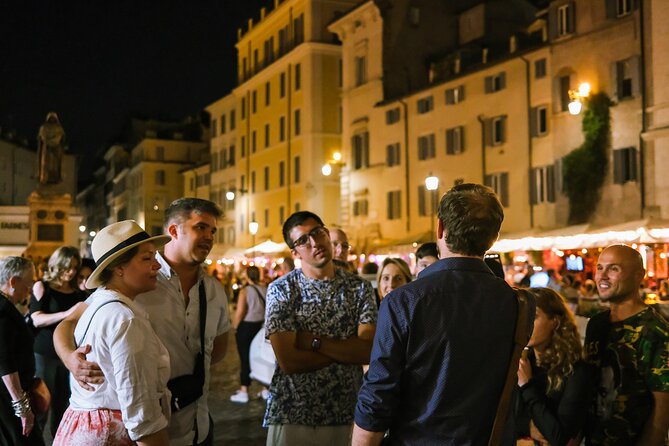
The meeting point is Campo de’ Fiori (00186 Roma RM), and you start at 8:00 pm. If you’ve only known this square as a daytime stop, this is your first reminder that Rome has multiple atmospheres.
Your guide meets you here and kicks off immediately—so don’t show up ten minutes late and expect to catch up. The beginning story is designed to set the theme: Rome isn’t just marble and arches. It has a paper trail of fear, power, punishment, and rumor.
From the first minutes, I like the pacing idea: you’re not thrown into ten stops with no rhythm. You’re guided into the night step-by-step, and the tour keeps giving you a reason to care about where you’re standing.
Stop-by-stop: what each place adds to the story
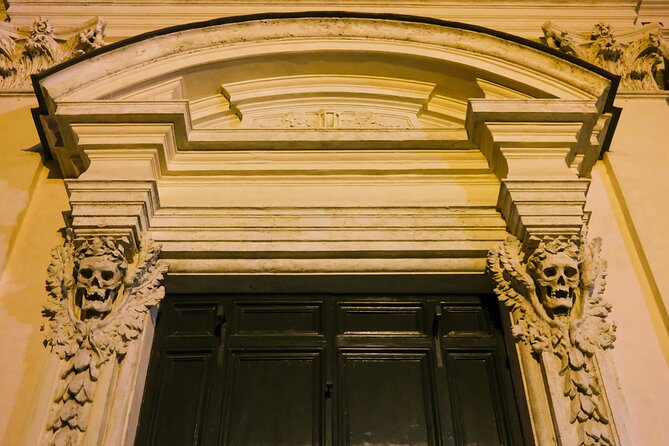
The route is built around specific themes: magic and mystery, women and power, religious orders, prisons, executioners, and the grim evolution of Castel Sant’Angelo.



Campo de’ Fiori: the opener
You begin with the first tale right in the square. This works well because the square is a natural gathering point and a familiar landmark. Once you’re oriented, you’re ready for the darker lanes that follow.
Piazza Farnese: a renaissance palace with uncommon stories
Next is Piazza Farnese, where you’ll hear about the palace and the surrounding area. What makes this stop feel different is the tone: you’re not only getting architecture. You’re getting the kind of “who mattered and why” detail that usually gets left out of standard walking tours.
Vicolo delle Grotte: the 18th-century magician
Then comes Vicolo delle Grotte, a backstreet setting that’s perfect for a story about an 18th-century magician said to haunt the area. This is where the tour earns its name. The streets feel old, and the guide’s performance style makes the legend sound like local memory rather than a random scary anecdote.
Ponte Sisto: the haunting bridge story
At Ponte Sisto, you get the tale of a woman who ruled Rome, her rise to power, and why the bridge is said to connect to haunting memories. If you like your Rome stories to include complicated figures—not just kings and emperors—this is one of the most satisfying stops.
Via Giulia: monks with a macabre task
On Via Giulia, the guide brings up a mysterious order of monks and the macabre role tied to them. This stop leans harder into the “dark” side of Roman mythmaking. It’s also a reminder that religion in Rome didn’t just live in churches. It also lived in institutions, rituals, and enforcement.
Via di Monserrato: prison history and a notorious pope
At Via di Monserrato, you’ll hear about one of Rome’s worst prisons, plus history involving a notorious pope and his family. This is one of the heavier moments in the route—not because the guide turns it into grim theater, but because the details connect institutions to real human suffering.
If you want a tour that handles dark material without getting sloppy or sensational, this is the kind of stop that signals the guide’s approach.
Via dei Banchi Vecchi: a gelato story with poison on the menu
Next is Via dei Banchi Vecchi, where you’ll see the modern gelato shop that used to be a very different business—linked to prolific poisoners. This is a clever tonal shift. You go from prisons and punishments to a street you can easily recognize in daylight, which makes the contrast hit harder.
Just remember: food isn’t listed as included. Treat the gelato stop as part of the story, and buy if you’d like.
Via del Banco di Santo Spirito: the executioner’s house
Then you’re at Via del Banco di Santo Spirito, connected to Rome’s most famous executioner and the place tied to him. This stop brings the “justice and punishment” theme into a personal, street-level setting. Instead of abstract history, you’re watching how rumor attaches itself to real addresses.
Castel Sant’Angelo: from tomb to executions
You finish at Castel Sant’Angelo (also known as St. Angelo Bridge / Ponte Sant’Angelo on the end point info), and this last segment is what makes the whole walk “click.”
You’ll learn its origins as an Emperor’s tomb, then hear how it became tied to executions. The guide also shares a tragic tale set right here. It’s a strong ending because Castel Sant’Angelo is easy to picture at the end of the night, and it gives the tour a final historical frame.
What the guides do well: storytelling with bite and humor
The guides are central to why this tour performs so well. Names you might meet include Arielle, Ben, Ivana, Ben, and others mentioned in the same enthusiastic spirit. The consistent theme: sharp storytelling with a dark-humor edge, but still focused on facts and locations.
That’s a balancing act. Some tours go too silly, and some go too grim. This one aims for “entertaining but grounded,” so you leave with stories you remember and facts you can repeat without sounding like you’re reciting a scary movie.
It also helps that the format is designed for listening. You’re not being handed a script of dates. You’re standing in the city while the guide explains why the legends stuck.
Is it spooky, scary, or just fun?
It’s not a horror attraction. The tone is more like: eerie stories with dark edges, delivered in a way that stays watchable and safe-feeling.
Even so, “Entertainment and Chills” is the vibe for a reason. If you’re sensitive to grim topics—prisons, executions, and notoriety—this tour will likely lean into that. It may not be for someone who wants only light, feel-good sightseeing at night.
On the flip side, if you like legends that come with a dose of wit and real-world context, you’ll probably find it a fun way to understand how Rome remembers its own past.
What to wear and how to pace yourself
You’ll be walking at night on uneven surfaces. That’s not optional.
I’d plan for:
- Comfy shoes with grip for cobblestones
- A light layer for evenings (Rome nights can feel cooler than you expect)
- A “stand and listen” mindset, since this isn’t a sit-down tour
If you tend to get tired from sightseeing, save this for a day when you’re not already running on fumes. One of the most useful bits of advice: don’t stack a long daytime history tour right before this unless you’re sure you’ve still got energy for a second stretch of walking.
Who this tour is best for
I think this works best if you want:
- A night activity that feels different from daytime Rome
- A walking tour with stories tied to specific places
- Humor mixed with darker themes, not pure scare tactics
- An easy way to see more of central Rome than the same handful of big sights
It’s also a good match for solo travelers or couples who like small-group interactions. Because it’s only up to 15 people, you’re less likely to feel like you’re in a moving crowd.
Quick fairness check: potential drawbacks
Even a great ghost tour has limits. The main ones here are about your body, not the content:
- Expect a lot of standing and uneven steps on cobbles
- The “dark legends” theme includes prisons and execution history
- Food isn’t included, so don’t plan on this replacing dinner unless you’re okay grabbing something before or after
If you want an accessible, low-impact experience, you’ll need to think carefully. The tour is described as suitable for most travelers, but cobblestones still matter. If you’re unsure, consider trying a daytime alternative first, then come back for the night story only if you feel steady.
Should you book Rome’s Dark Side Ghosts and Legends Tour?
Book it if you want a 2-hour night that’s story-driven, small-group, and focused on the people history textbooks often gloss over—magicians, notorious figures, executioners, and the dark turn in Rome’s institutional life.
Don’t book it if you want a low-walking, comfortable seated experience, or if you don’t want to hear about prisons and executions after dark.
If you’re on the fence, here’s my practical nudge: this tour is best when you can slow down. Rome isn’t a place you race. If you’re ready to walk, listen, and let the city feel a little strange, this one is worth the time.
FAQ
How long is the Rome’s Dark Side Ghosts and Legends Tour?
It lasts about 2 hours.
What time does the tour start?
The start time is 8:00 pm.
Where does the tour start and end?
It starts at Campo de’ Fiori (00186 Roma RM) and ends at St. Angelo Bridge / Ponte Sant’Angelo (00186 Roma RM).
Is the tour offered in English?
Yes, it’s offered in English.
How big is the group?
The maximum group size is 15 travelers.
Is a mobile ticket included?
Yes, you’ll receive a mobile ticket.
Is food included in the tour price?
Food and drink are not included. A cafe break is offered, and there’s a gelato stop as part of the experience.
Do I need to bring cash or pay for anything at stops?
Since food and drink are not included, you may need to pay for anything you choose to buy during breaks or the gelato stop.
Is the tour suitable for most travelers?
The information states that most travelers can participate.
Are service animals allowed?
Yes, service animals are allowed.
Can sign language interpreters be provided?
They can often be provided if you tell the provider in advance.
If you tell me your travel dates and what kind of stories you enjoy most (more legends vs. more prison/execution history), I can help you decide if 8:00 pm is the right slot for your schedule.