REVIEW · WELCOME TO ROME HERITAGE MUSEUM
Rome: Welcome To Rome Immersive Multimedia Show
Book on GetYourGuide →Operated by Welcome To Rome - Multimedia Show · Bookable on GetYourGuide
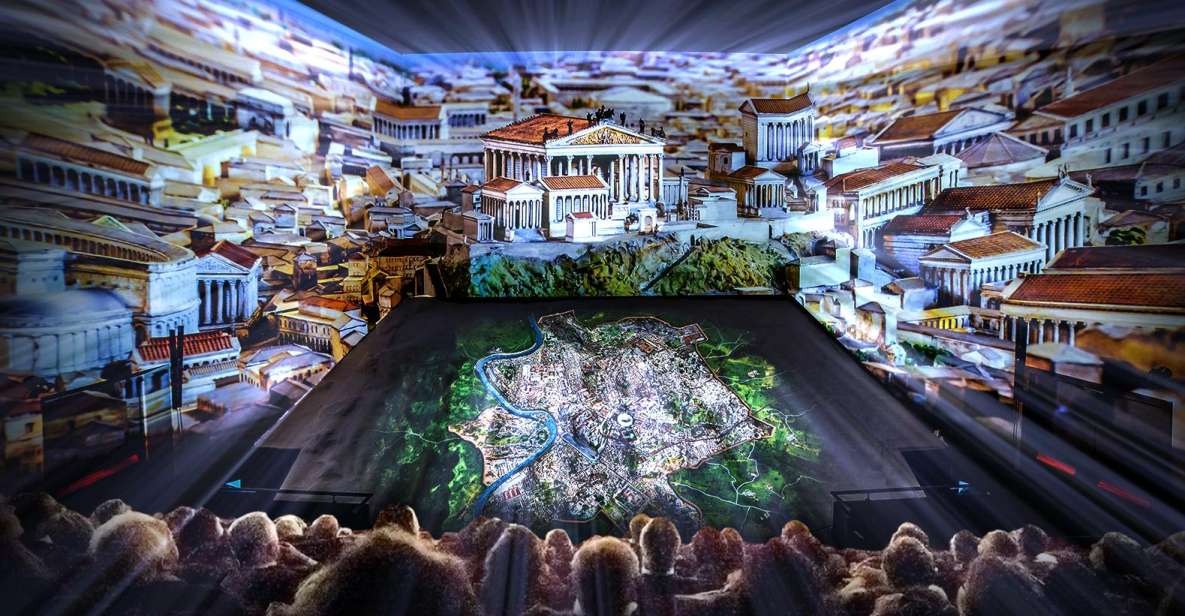
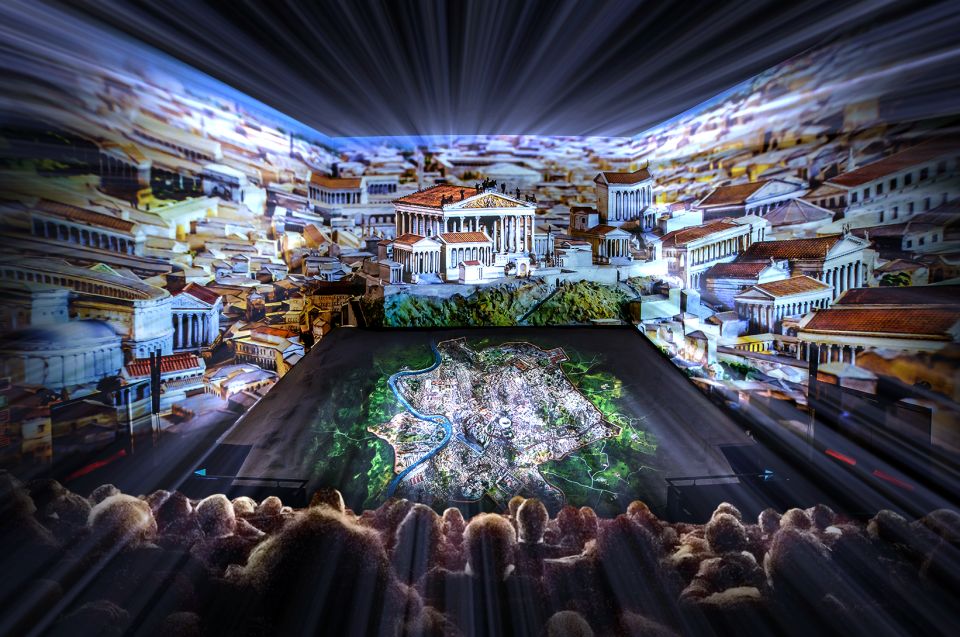
Rome made simple in 27 minutes. The Rome Welcome To Rome multimedia show turns 2700 years of the Eternal City into a timed visual story, with walls and ceilings acting like a movie screen. I especially like the on-the-floor city model that lights up as Rome changes through the ages, and I like how it connects what you’ll see outside later. One drawback to plan for: it’s a sit-down production with some standing/walking inside, so if you need frequent seating, you may want to pace yourself.
This is one of those activities that doesn’t replace the real sites. It helps you decode them fast, which matters in a city where ruins and renovations overlap in confusing ways.
In This Review
- Key things to know before you go
- Welcome To Rome Multimedia Show: a fast way to understand the city
- Inside Ex-Cinema Augustus, steps from Piazza Navona
- 27 minutes of Rome on walls, ceilings, and a glowing floor model
- The 4 interactive models: forums and monuments you’ll recognize later
- Audio guide in 9 languages: how to make it actually useful
- When to schedule it: before big sites or after a few hours outside
- Price and value: does $21 make sense?
- Practical tips: timing, pacing, and avoiding unnecessary wandering
- Who should book this show (and who may not need it)
- Should you book Welcome To Rome? My take
- FAQ
- Where is Welcome To Rome located?
- How long is the main show?
- Can I start the experience at any time during opening hours?
- What languages are available for the audio guide?
- What’s included with the ticket?
- Is the venue wheelchair accessible?
Key things to know before you go
- 27-minute timeline that covers Rome’s development from ancient times through later layers
- Multi-projection that brings walls, ceilings, and a ground city model into the same story
- 4 interactive models focusing on the Imperial Forum, Augustus Forum, Mausoleum of Adrian, and San Peter Basilica
- Audio guides in 9 languages so you can follow the narration at your own pace
- You can enter anytime during opening hours, since the show runs continuously
Welcome To Rome Multimedia Show: a fast way to understand the city
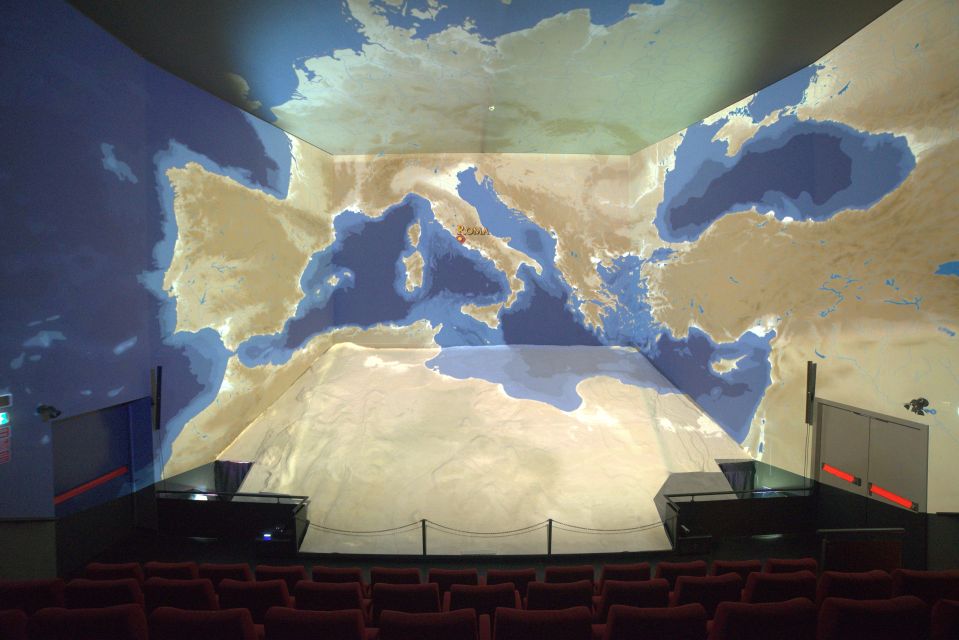
If you only have a short window in Rome, this show is a smart “context first” move. The production isn’t trying to do everything; it tries to give you the big timeline and the layout logic behind what you’ll see on the street.
The format works because it’s visual and chronological. You watch Rome evolve, then you walk through the same places later with a clearer mental map of how those monuments fit together.
I also like that it’s not overly long. The main story runs about 27 minutes, and most people tend to add on time for the interactive model stations afterward, so you can treat it like a focused one-hour stop.
Inside Ex-Cinema Augustus, steps from Piazza Navona
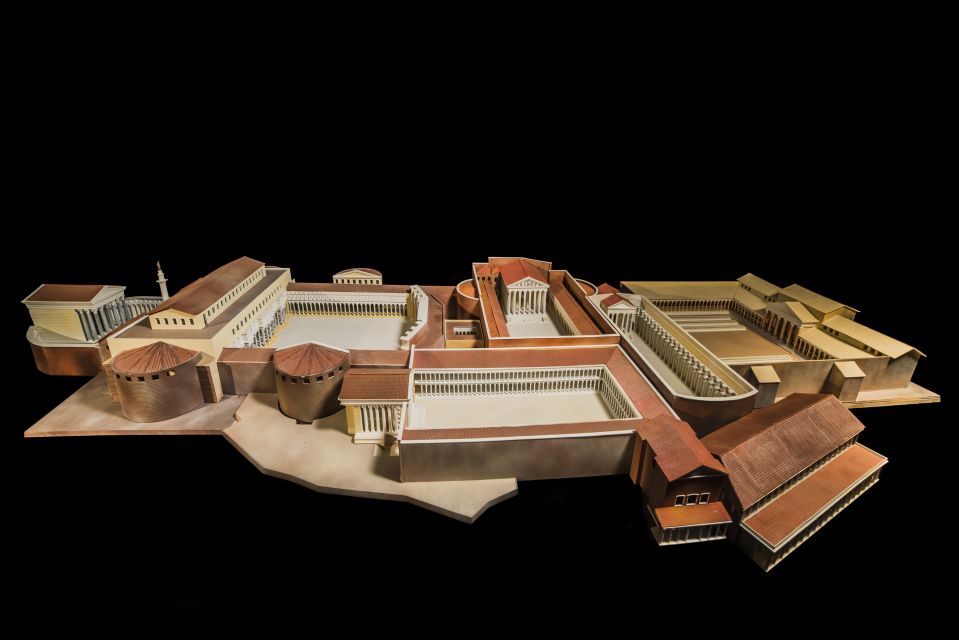
The show takes place in the former Cinema Augustus on Corso Vittorio Emanuele II, 203, a few hundred meters from Piazza Navona. In practice, that location is great because it puts you close to the central sightseeing loop, without requiring a long transit time.
You’re also indoors, which makes this a strong option when the sun gets intense or your feet are tired. Rome is wonderful, but it can also be a stamina game, and this is a good pause that still feels like Rome.
The venue is set up so the projection and exhibits are accessible for people who use wheelchairs, according to the activity info. If you have mobility needs, it’s worth knowing this isn’t a “tour-only-from-the-ramp” situation.
27 minutes of Rome on walls, ceilings, and a glowing floor model
The star of the show is the multi-projection setup. As the narration plays, walls and ceilings come alive, and the story is paired with a large model on the ground that lights up to show Rome’s evolution over the centuries.
What I found clever is how the production uses motion and perspective. You don’t just get static images; the show gives the illusion of flying over Rome through different eras, moving within monuments, palaces, churches, and squares. That “how it looked then” effect matters, because so many Roman sites today are fragments, and your brain needs a bridge to picture the full buildings.
The show’s timeline is built around 2700 years told in 27 minutes. That’s ambitious, but the pacing keeps it digestible. The result is that key ideas like layers of history and how imperial Rome transformed into later city life become clearer without needing a textbook.
One practical note: the narration and visuals are doing most of the heavy lifting. If you’re prone to distractions, plan to sit where you can see the projections clearly, then lean into the story rather than trying to multitask.
The 4 interactive models: forums and monuments you’ll recognize later
After the main projection, you can explore 4 large interactive models. This is where the experience becomes more hands-on, and it’s also where the show earns its keep for future walks.
Here are the model stops included:
- Imperial Forum
- Augustus Forum
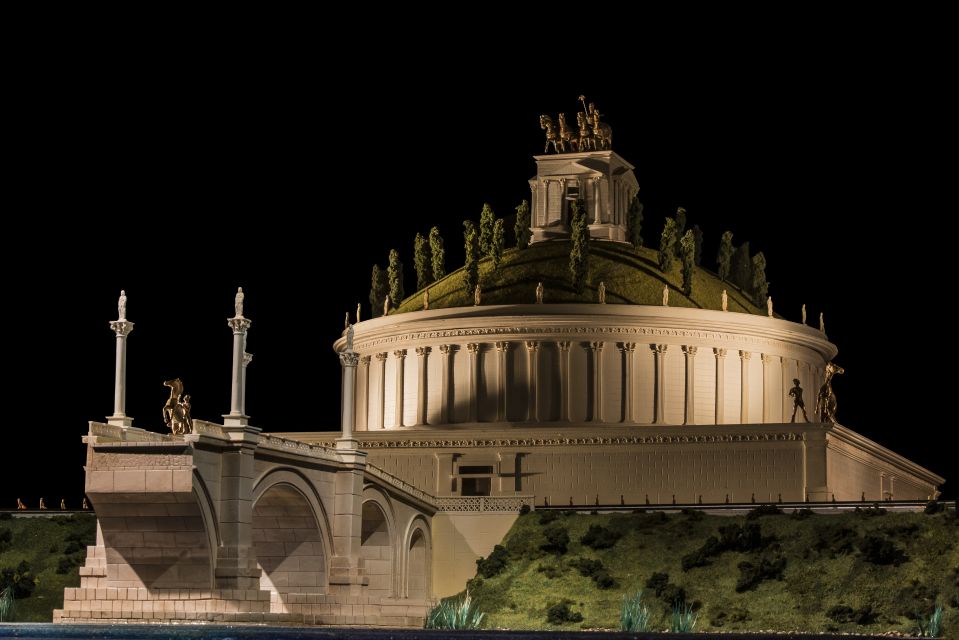
- Mausoleum of Adrian
- San Peter Basilica
The models let you “zoom in” with the show’s help, so you can connect the names you’ll hear on guided tours and in self-guided route maps to something you can actually visualize. Even if you never memorize dates, you can remember shapes, relationships, and the overall scale.
I also like that these aren’t random highlights. They’re the kinds of places that show how Rome kept rebuilding itself, reusing space, and reshaping identity from one era into the next. If you’re going to the Colosseum/Forum area and also spending time in the Vatican zone, these models give you a common thread.
Audio guide in 9 languages: how to make it actually useful
You get an audio guide included, with narration available in Italian, English, Spanish, French, German, Russian, Chinese, Croatian, and Japanese. That’s a wide set, and it means you can choose the language that lets the story land without you fighting subtitles on a screen.
My advice: don’t treat the audio guide as optional background. Use it as your steering wheel. When the show shifts eras, the narration helps you track what you’re looking at, especially when Roman history compresses time fast.
This also helps families. Kids often follow visuals better when the narration is clear, and audio guides let everyone tune in at a comfortable volume and pace.
When to schedule it: before big sites or after a few hours outside
You can do Welcome To Rome at many points in your Rome trip, and the experience supports both styles.
If you go early, you’ll have a timeline and a mental map before you hit the major ruins and monuments. That makes later visits easier because you recognize what’s being referenced and why it matters. Multiple people find it useful as a first-day stop because the show lays down the order of events quickly.
If you go after you’ve already walked a bit, the show can “snap the pieces into place.” When you’ve seen forums, monuments, or neighborhoods already, the projections become more meaningful because your brain has real-world anchors.
Either way, I’d aim to book it when you still have energy to appreciate it. It’s short, but it’s concentrated, and you’ll get more out of it if you’re not rushing on empty.
Price and value: does $21 make sense?
At $21 per person, this isn’t a bargain-basement add-on, and I get why people compare it to other indoor attractions. Some viewers even felt the price was on the high side relative to an ideal one-hour museum rate.
Still, the value is in what you’re buying: a timed, city-scale explanation of 2700 years plus a guided tour through 4 major model stations. You’re not just paying for a movie; you’re paying for interpretation. In a city where time is limited and distances can be annoying, that clarity can save you from feeling lost.
Think of it like this: if you’re spending several hours sightseeing around the forums and other major sites, you’ll likely get more out of those days after doing this. If you’re the type who already knows Roman history well and only wants raw site time, you might feel the price more sharply. If you want context without hunting for it all day, it’s more likely to feel fair.
Practical tips: timing, pacing, and avoiding unnecessary wandering
The show runs continuously during opening hours, and you can start your visit at any time during that window. That flexibility is useful if your day in Rome gets thrown off by crowds, weather, or train/metro delays.
Just note this timing detail: the last show starts 1 hour before closing time. If you arrive late, you might miss the final scheduled run, so check what time you’re walking in.
Inside, the experience is designed for an easy flow: projection first, then model exploration. Still, one helpful tip from people who’ve been there is to follow the wayfinding so you don’t wander between areas. If you’re short on time, commit to the projection portion and then move directly to the four model stations in order.
On comfort: one review mentioned that chairs aren’t available in every area. If you need to sit often, plan on pacing yourself and don’t assume you’ll have a seat everywhere you pass through.
Who should book this show (and who may not need it)
This is a good fit if you:
- Want an easy “big picture” Roman timeline without booking multiple tours
- Are visiting major landmarks near Piazza Navona and want context for what you’ll later see
- Have limited time and want a short indoor activity that still feels connected to the city
- Are traveling with kids and want visuals that keep attention without turning it into a lecture
You might skip it if:
- You already have a deep background in Roman history and don’t feel you need the timeline framing
- You prefer only outdoor, real-site time and dislike any theater-style format
- You’re very sensitive to standing/walking within indoor exhibit areas and need frequent seating options
Should you book Welcome To Rome? My take
If you’re even a little unsure where Rome’s layers fit together, I’d book it. The combination of a short 27-minute projection story plus interactive models of major landmarks is a practical use of time, especially on days when you want a break from the sun.
If you’re already an expert and you only want photo time at ruins, you might treat it as optional. But for most first-timers, or anyone who wants Rome to “make sense” faster, this is one of the few activities that genuinely helps your later sightseeing click.
FAQ
Where is Welcome To Rome located?
The entrance is on Corso Vittorio Emanuele II, 203, in Rome, a few hundred meters from Piazza Navona.
How long is the main show?
The story told through the projections runs for about 27 minutes.
Can I start the experience at any time during opening hours?
Yes. The show runs continuously, so you can start at any point during opening hours. The last show starts 1 hour before closing time.
What languages are available for the audio guide?
The audio guide is available in Italian, English, Spanish, French, German, Russian, Chinese, Croatian, and Japanese.
What’s included with the ticket?
Your ticket includes entrance to the Welcome To Rome multimedia show and access to the audio guide.
Is the venue wheelchair accessible?
Yes. The show and the exhibits are accessible for people with disabilities, and it’s listed as wheelchair accessible.