REVIEW · ROME
Rome: Trajan Markets Experience with Multimedia Video
Book on GetYourGuide →Operated by TOURISTATION · Bookable on GetYourGuide
Trajan Markets feel like a time machine with good sound and good structure, and the setting alone is worth your ticket. I like the semi-circle layout that makes the space feel purposeful, and I like how the Fori Imperiali Museum follows that trade theme with artifacts and amphorae from ancient cultures. One thing to keep in mind: you’re responsible for doing most of the exploring on your own with an app, so if you want a live guide walking you through every interpretation, this may feel a bit less guided than you expect.
You’ll start with a short 25-minute multimedia video on Ancient Rome, then use a downloadable city app for audio at 170+ points. After that, you’ll move through the archaeological complex that once functioned like the Empire’s commercial hub, including areas connected to multiple fora and trading stops.
If you enjoy architecture, everyday commerce, and layers of Roman life instead of only big-name sights, this is an efficient, good-value way to spend a day in Rome.
In This Review
- Key Things to Know Before You Go
- Trajan Markets and Fori Imperiali: What You’ll See in One Day
- The 25-Minute Ancient Rome Video That Sets the Stage
- Using the Interactive App Audioguide (170+ Points)
- Trajan Markets: Rome’s Imperial-Era Shopping Mall
- Forums and Trading Meeting Points: Caesar, Augustus, Nerva, and Templum Pacis
- A 17th-Century Cistern: Why This Site Isn’t Only Roman
- Fori Imperiali Museum: Artifacts, Amphorae, and Everyday Trade
- Price and Value: Is $37 a Good Deal?
- Meeting Point and First-5-Minute Success Tips
- Practical Rules and What to Bring (So You Don’t Get Stuck)
- Who This Experience Is Best For
- Should You Book This Trajan Markets and Fori Imperiali Experience?
- FAQ
- How long is the Trajan Markets and Fori Imperiali experience?
- What’s the starting video and how long is it?
- Do I need to download an app for this experience?
- What entrances are included?
- What should I bring?
- Is food included?
- Is there a guided tour?
- Where do I meet?
- Is the experience wheelchair accessible?
Key Things to Know Before You Go
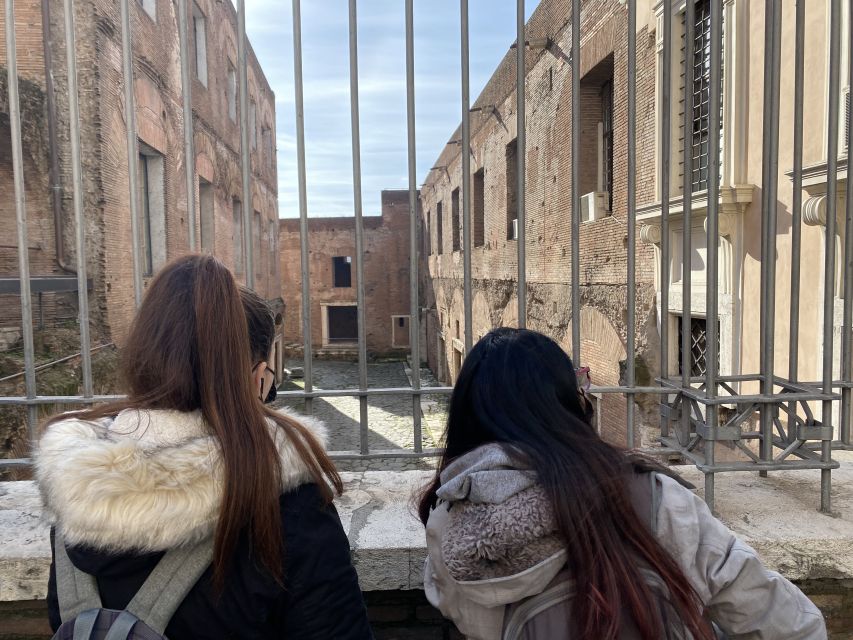
- Semi-circular architecture: the Trajan Markets shape helps you understand how the Romans built for crowds and commerce.
- 25-minute video warm-up: it sets context fast, so the stones don’t feel random.
- 170-point app audio: you can listen as you walk, rather than relying on a fixed group tour pace.
- Trade-focused stops: you’ll encounter references tied to Caesar’s Forum, Augustus’ Forum, Nerva’s Forum, and Templum Pacis.
- Everyday objects in the museum: amphorae and artifacts from different civilizations make the site feel lived-in.
- Plan for ticket-office friction: one review noted ticket printing took a while, so arrive early if you can.
Trajan Markets and Fori Imperiali: What You’ll See in One Day
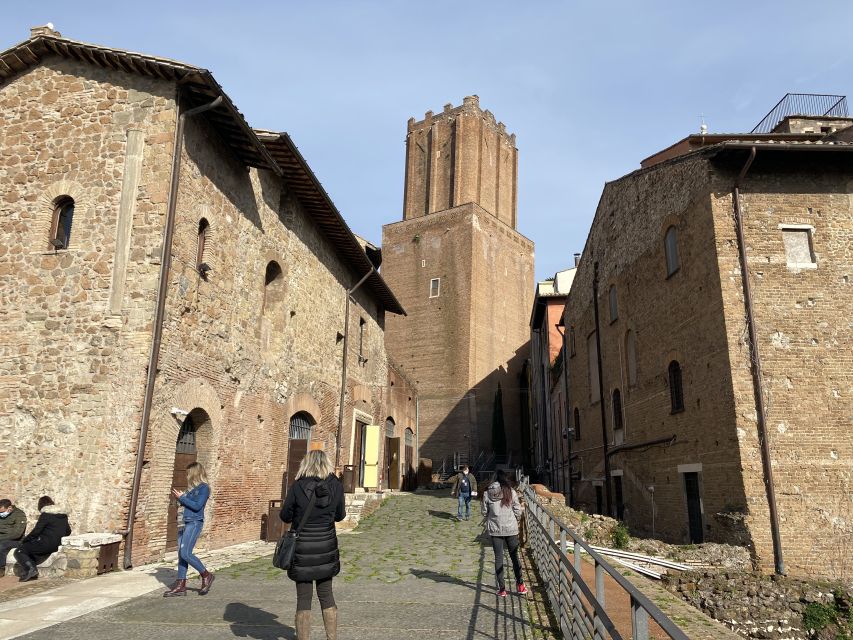
This experience is built around one idea: Rome wasn’t only temples and emperors. It also ran like a city marketplace, with organized spaces for shopping, meeting, and moving goods. The Trajan Markets sit on that exact story, and the Fori Imperiali Museum adds the “what were people using?” side of the equation.
In practice, you’ll spend your time moving through the Trajan Markets archaeological complex, then stepping into the Fori Imperiali Museum for a calmer look at objects—especially amphorae and artifacts connected to ancient cultures. The payoff is that you connect design (how the space was built) with function (what it was used for).
The duration is 1 day, and it’s designed to be flexible inside that window. You’re not locked into a long, scripted walking order with a guide. Instead, the video and the app help you keep your bearings as you go.
You can also read our reviews of more tours and experiences in Rome.



The 25-Minute Ancient Rome Video That Sets the Stage
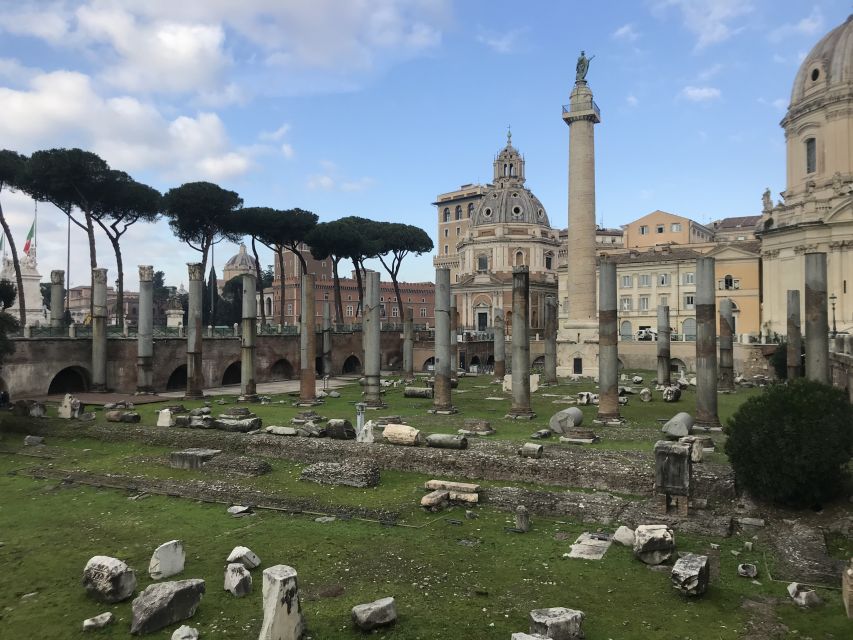
Before you step into the ruins, you get a 25-minute multimedia video on Ancient Rome. Think of it as a pre-game. You see reconstructions of major Roman monuments, and you get a quick, visual sense of what the “Imperial Age” looked like.
Why I think this matters: when you arrive at an archaeological site, it’s easy to see stone walls and lose the bigger picture. The video helps your brain map what you’re seeing to what Rome was trying to do—especially when the space is tied to commerce and the built environment, not only politics.
If you like learning fast and then doing the walking, this format works well. If you hate videos, I’d still give it a chance here, because it’s short and it pays off once you’re looking at ruins that connect to multiple historic spaces.
Using the Interactive App Audioguide (170+ Points)
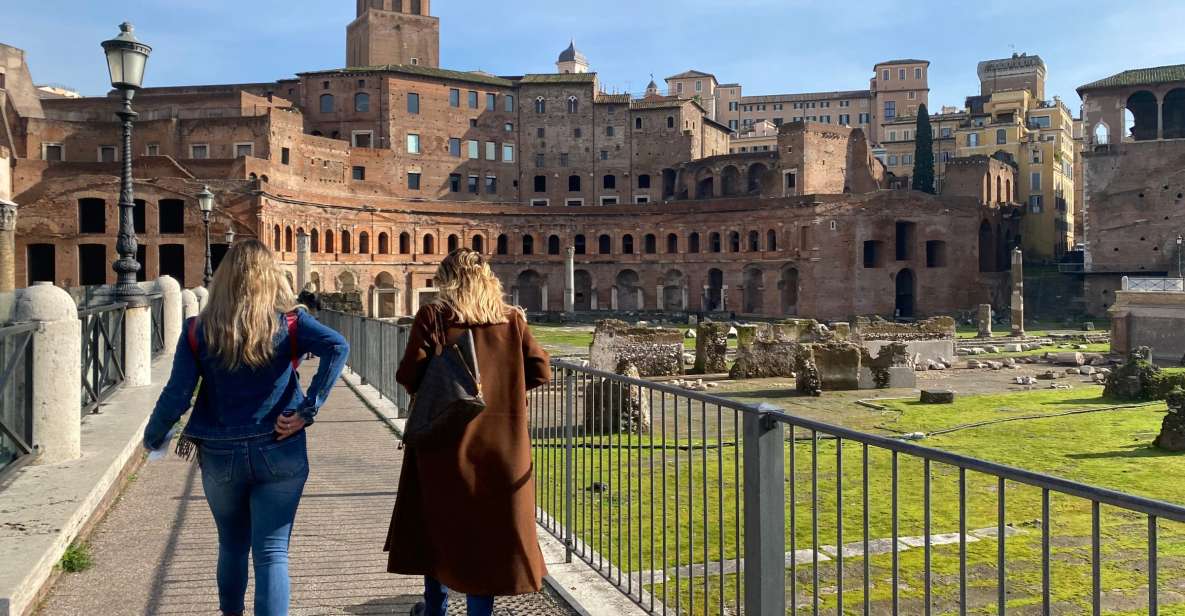
You’ll download a city app audioguide to your smartphone. The app includes more than 170 points of interest, and you use it as you explore—listening as you move around the area.
This is a big part of the experience, since the activity doesn’t include a guided tour. That’s not automatically bad. It can actually be a benefit: you control your pace, you can pause, and you can spend more time where you’re curious.
Practical note: bring headphones and make sure your phone has battery. The tour instructions explicitly call for a charged smartphone, and I’d treat that as non-negotiable. Also, you’ll want enough phone signal for an app that’s already downloaded—so plan to be on Wi‑Fi or have mobile data sorted before you start.
Trajan Markets: Rome’s Imperial-Era Shopping Mall
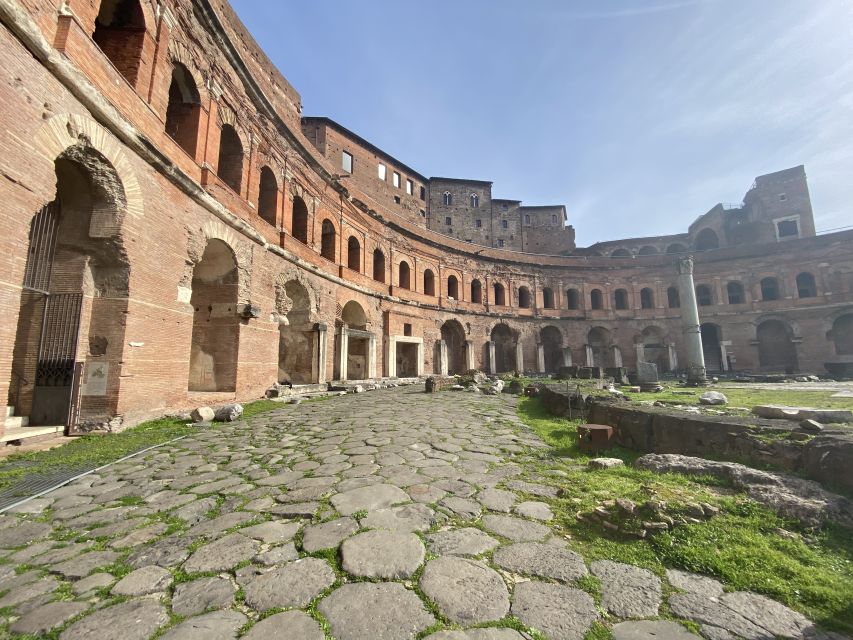
The star setting is the Trajan Markets archaeological complex—once the commercial center of the city during the Roman Imperial Age. The architecture is a big deal here, and one of the strongest impressions is the semi-circle form.
I like this shape for a simple reason: it feels designed for movement. Even without perfect reconstruction in every corner, the layout nudges your attention along the space like a route. That helps you understand it as a place built for people and transactions, not just a storage area or a random set of foundations.
As you explore, look for how the marketplace theme shows up in the environment. You’re not only sightseeing; you’re trying to picture the rhythms of everyday life—where people came to browse, where goods were handled, and how the built space supported trade at a city scale.
Forums and Trading Meeting Points: Caesar, Augustus, Nerva, and Templum Pacis
One of the most interesting parts of this experience is how it points you toward the broader network of Roman fora and civic spaces. As you move around the Trajan Markets area, you’ll discover references connected to several major forums: Caesar’s Forum, Augustus’ Forum, Nerva’s Forum, and the Templum Pacis.
The helpful twist is that you’re learning these names in a setting that relates to commerce and meeting. Fora aren’t only grand speeches and politics in your imagination; in real Roman life, they were also places where people gathered and where public and economic life overlapped.
The drawback is that Roman ruins don’t always come with instant “aha” signs. If you’re the type who wants every meaning spelled out by a guide, rely heavily on the app audio here. It’s the bridge between “I see ruins” and “I understand what this connects to.”



A 17th-Century Cistern: Why This Site Isn’t Only Roman
Rome has layers. One of the great surprises in this experience is seeing the ruins of a 17th-century cistern inside the larger archaeological area.
This matters because it reminds you that the site wasn’t frozen in time after the Roman Empire. People kept reusing parts of the city’s infrastructure, adapting spaces as needs changed. A cistern also makes practical sense in an old, dense city: water storage is always a survival issue.
So even if your brain starts out focused on the Roman Imperial Age, this cistern gives you a reality check. The past wasn’t sealed behind glass. It kept getting used.
Fori Imperiali Museum: Artifacts, Amphorae, and Everyday Trade
After you’ve walked the complex, you’ll visit the Fori Imperiali Museum. The museum focuses on artifacts from ancient cultures, including amphorae.
I like museum time at this stage because your eyes have been working hard outdoors. Inside, you can slow down and connect “what I saw” with “what Romans actually used.” Amphorae are especially valuable in a trade-focused experience because they’re part of the logistics of moving goods—wine, oil, and other products that had to travel somehow.
One review highlighted the artificers in the museum section, and that fits the overall tone of this visit. You’re not just collecting facts about rulers. You’re looking at the working life behind commerce—materials, containers, and objects that reflect production and everyday use.
If you’re short on time in Rome, this museum stop helps make the day feel more complete. You’ll leave with more than just “I walked through ruins.” You’ll leave with a stronger sense of what those ruins were built to support.
Price and Value: Is $37 a Good Deal?
At $37 per person for a 1-day experience, the value depends on how you prefer to travel.
You’re getting a few cost-relevant pieces:
- the 25-minute multimedia video
- entrance to the Trajan Markets archaeological complex
- entrance to the Fori Imperiali Museum
- the downloadable city app audioguide (with 170+ points)
- assistance at the meeting point
What you’re not getting:
- food and drinks
- hotel transfer
- a guided tour
So the math is: if you’re happy using an app for interpretation and you’ll actually take the video and museum time, $37 feels reasonable because you’re paying for access plus structure. If you dislike self-guided audio and need a live guide to translate the scene for you, that same price could feel a bit steep—because you’ll likely want more human explanation than the app provides.
For me, the sweet spot is clear: this is a strong pick if you like architecture and want to understand how Romans managed trade and public life from the inside—literally from the city’s commercial spaces.
Meeting Point and First-5-Minute Success Tips
Meet at the Touristation Aracoeli Office at Piazza d’Aracoeli 16, near Piazza Venezia. Look for the orange “Touristation” flags. There’s also a fountain in front of the office entrance.
I recommend arriving early enough that you don’t feel rushed at the start. One of the reviews called out ticket printing and the ticket-station process taking at least 15 minutes, and the process sounded confusing to the staff and clients involved. Another review said ticket exchange went smoothly with no line, so it looks like it can swing based on the moment.
So here’s the practical move: don’t treat the meeting time like a suggestion. Treat it like your entry slot. If you’re arriving in busy hours, give yourself a buffer.
Also, wear comfortable shoes. This is a walking-and-standing day, and you’ll want solid footing around uneven archaeological areas.
Practical Rules and What to Bring (So You Don’t Get Stuck)
The tour asks you to bring:
- passport or ID card
- comfortable shoes
- headphones
- a charged smartphone
The not-allowed list includes:
- pets
- weapons or sharp objects
- luggage or large bags
- drones
- alcohol and drugs
- sprays or aerosols
- glass objects
Nothing here is shocking for Rome, but it’s worth taking seriously if you’re traveling light or using day bags. If you plan to carry a big suitcase or bulky luggage, plan a different strategy. If you rely on a spray like insect repellent, check whether it falls under sprays or aerosols as listed.
And one accessibility note: the experience is not suitable for wheelchair users. If accessibility is a factor for you, you’ll need a different option.
Who This Experience Is Best For
This is the right kind of day for you if you:
- enjoy Roman architecture and “how the city worked”
- want a trade and commerce angle, not only emperors and monuments
- like using audio at your own pace
- want a museum stop that ties objects to place
It’s less ideal if you:
- want a fully guided, explanation-heavy walk
- hate using a phone as your main interpretive tool
- need wheelchair accessibility
If you’re doing the typical Rome highlights and feel like they leave you with only big names, this adds the missing layer: the infrastructure of daily life.
Should You Book This Trajan Markets and Fori Imperiali Experience?
I’d book it if you want a structured, self-guided day that still feels coherent. The combination is what makes it work: a short video to set context, an app with 170+ points to help you connect ruins to meaning, and a museum that grounds it with artifacts and amphorae.
Skip it only if you know you want a live guide at every step, or if you already feel totally saturated with Rome ruins and you need something with a different theme. For the right traveler, this is a smart use of one day in the city.
FAQ
How long is the Trajan Markets and Fori Imperiali experience?
It lasts 1 day.
What’s the starting video and how long is it?
You begin with a 25-minute multimedia video on Ancient Rome.
Do I need to download an app for this experience?
Yes. You download a city app audioguide to your smartphone, with more than 170 points of interest.
What entrances are included?
Trajan Markets entrance and Fori Imperiali Museum entrance are included.
What should I bring?
Bring a passport or ID card, comfortable shoes, headphones, and a charged smartphone.
Is food included?
No. Food and drinks are not included.
Is there a guided tour?
No guided tour is included.
Where do I meet?
Meet at the Touristation Aracoeli Office at Piazza d’Aracoeli 16 near Piazza Venezia, looking for orange Touristation flags. There is a fountain in front of the office entrance.
Is the experience wheelchair accessible?
No. It is not suitable for wheelchair users.