REVIEW · ROME
Rome: The Best of St. Peters’ Basilica in German
Book on GetYourGuide →Operated by Römerin · Bookable on GetYourGuide
St. Peter’s Basilica rewards quick context. In just 2 hours, I love how this tour gives you the big visual hits—Michelangelo’s Pietà and Bernini’s work—while also explaining why the building looks the way it does. You’ll also learn what the Fumata smoke means during papal elections. The one drawback is simple: it does not include entry to the cupola, so if your goal is high up in the dome, you’ll need a separate plan.
I also like that you don’t start inside somewhere confusing. You meet in St. Peter’s Square at a clear spot, with headsets for German narration so you can actually hear the details without craning your neck. Do note that you must go through security, and dress rules matter—no shorts, short skirts, or sleeveless tops.
Once you’re in rhythm, it’s an efficient way to see one of the world’s biggest churches without turning your visit into a scavenger hunt.
In This Review
- Key highlights you’ll actually care about
- Meeting in St. Peter’s Square and Handling Security Smoothly
- The 2-hour St. Peter’s Basilica route: what you see and why it makes sense
- Michelangelo’s Pietà: why this sculpture feels personal
- Bernini’s bronze baldachin and the ten-story scale reality check
- The Basilica’s different architectural styles: not a mistake, a story
- The Fumata: where the smoke signal fits into your visit
- What you do not get: cupola access and how to plan next
- Price and value: is $61 worth it for 2 hours?
- Who this tour fits best (and who might want a different plan)
- Guide styles you can expect in German (Inga, Julia, Paula, Gian-Carlo)
- Should you book the Deutsche Römerin St. Peter’s Basilica best-of tour?
- FAQ
- Is this tour in German?
- How long is the St. Peter’s Basilica tour?
- Where do we meet for the tour?
- Do I need to buy cupola tickets with this tour?
- What should I bring?
- Are there dress or item restrictions?
- Is the tour wheelchair accessible?
- Is there a security check?
Key highlights you’ll actually care about
- Michelangelo’s Pietà explained in plain language, with help seeing why it hits so hard
- Bernini’s bronze baldachin shown at true scale (the ten-story-house comparison is the point)
- Architectural mix: you’ll learn how multiple styles ended up in one space—and why it mattered
- Fumata smoke: where it comes from and what it signals during a new pope’s election
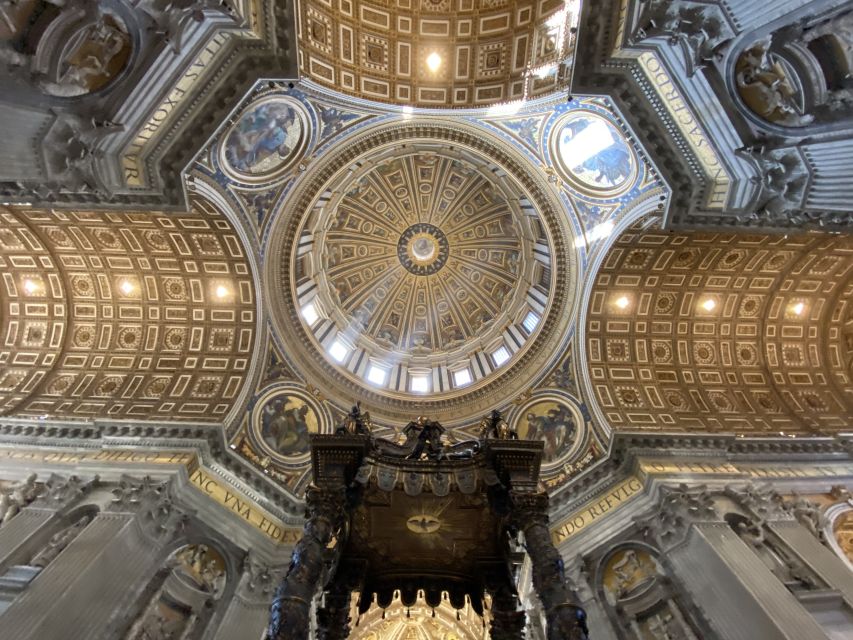
- Dome viewpoint inside the church so you understand the scale before you try to imagine climbing it
- German guide with headsets, which keeps a short tour from feeling rushed
Meeting in St. Peter’s Square and Handling Security Smoothly
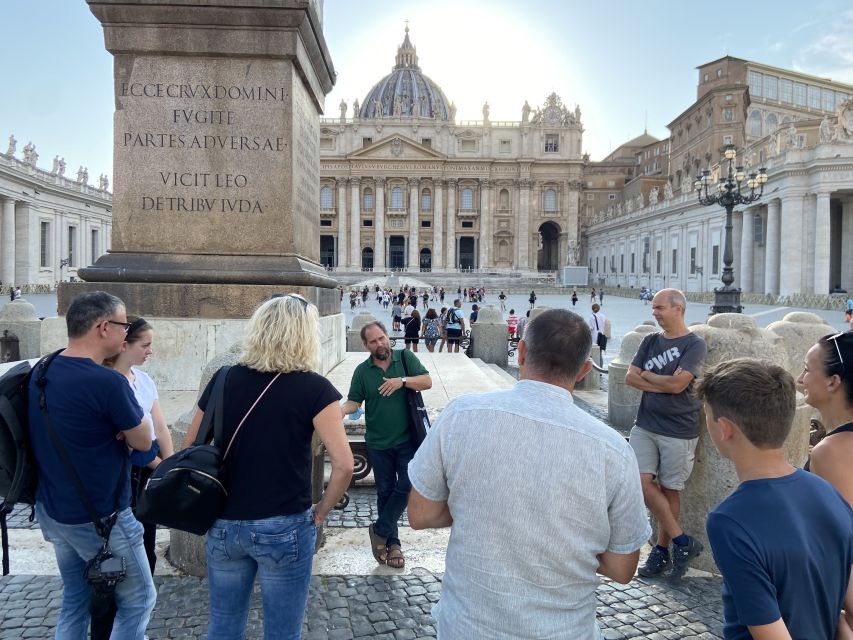
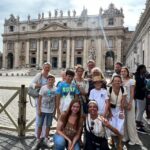
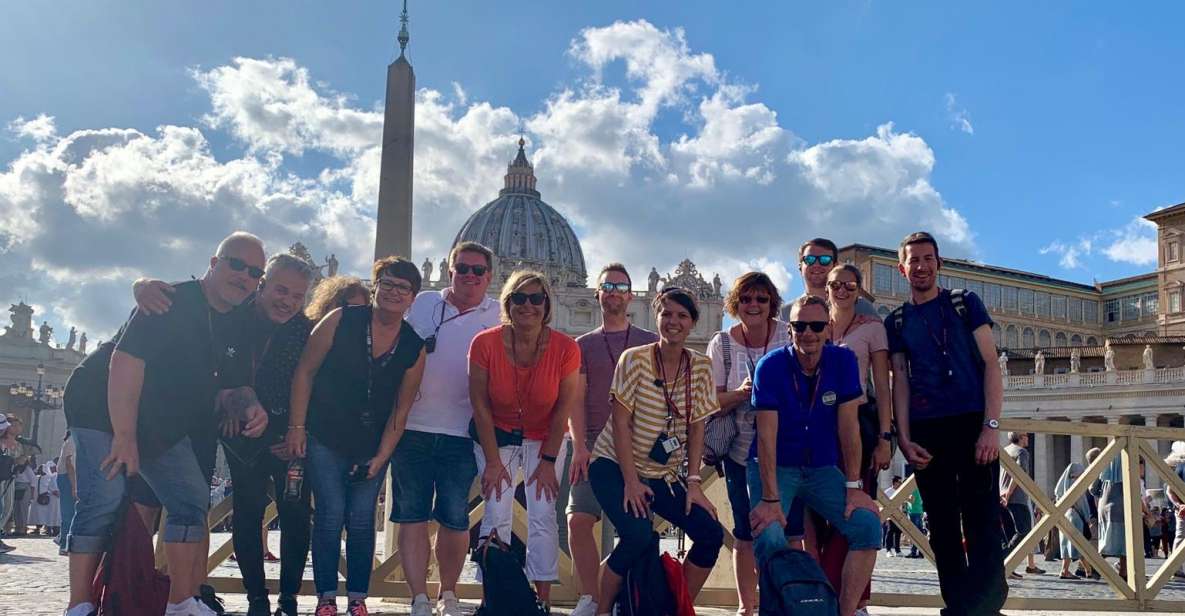
Your tour starts in St. Peter’s Square, right in the middle area in front of the barriers. The provider asks you not to enter St. Peter’s Square before the meeting time, and you’ll spot them by a sign that reads Deutsche Römerin. That sounds small, but it matters because Vatican security and crowd flow can make early wandering stressful.
Before you go into the Basilica areas, plan for the mandatory security check. Everyone passes through it, and that’s part of the reality of visiting St. Peter’s. Bring a passport or ID card (a copy is accepted), and keep clothing simple for the rules: no shorts, no short skirts, no sleeveless shirts. If you show up dressed halfway, you’ll lose time fixing it.
You can also read our reviews of more tours and experiences in Rome.



The 2-hour St. Peter’s Basilica route: what you see and why it makes sense
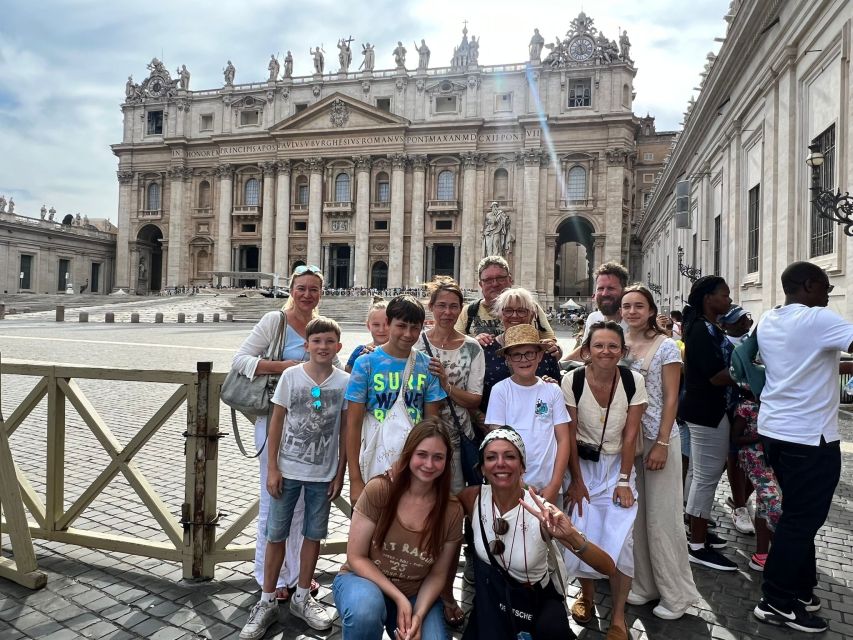
This is a 2-hour highlight tour. That time window is short enough to feel manageable, but long enough for a guide to connect the dots. The strategy here is not just to point at famous art; it’s to help you read what you’re looking at.
You’ll move through the Basilica with a focus on:
- the main artistic center under the dome,
- major commissioned works connected to the Counter-Reformation era,
- and the architectural logic behind what you see (including how different architects and generations shaped the final result).
Even if you’ve visited before, this kind of guided “how to look” approach tends to be more useful than trying to figure it out alone. You’ll also get audio in German through headsets, which is a big deal in a church where voices vanish fast.
Michelangelo’s Pietà: why this sculpture feels personal
Michelangelo’s Pietà is one of those works that can look like a textbook photograph until you stand in front of it. On this tour, it’s treated as a centerpiece, and the guide’s job is to get you seeing the details that make it emotionally intense.
Here’s what you should expect from the experience: the guide helps you slow down and notice aspects of the sculpture you might otherwise race past—how the figures are posed, how the emotion reads, and why Michelangelo’s approach is still talked about centuries later. The point isn’t academic trivia. It’s learning how to look at one of the most famous religious artworks in the world without getting overwhelmed.
If you only have one chance to concentrate in St. Peter’s, put your attention here first. This tour sets it up early so you get that pay-off while your energy is still fresh.
Bernini’s bronze baldachin and the ten-story scale reality check
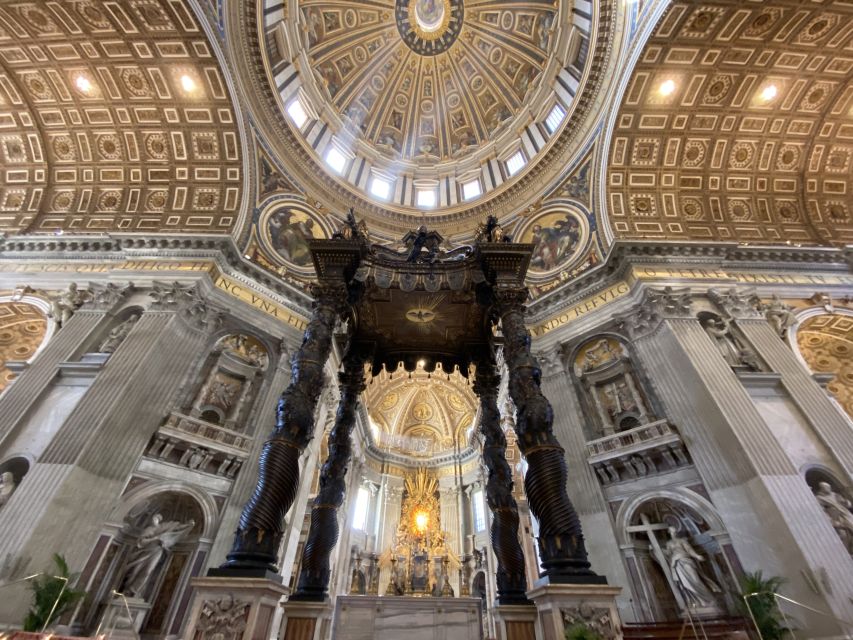
Under the dome, you’ll see the bronze baldachin (a canopy over the main altar area). The tour’s description uses a practical comparison: it’s as big as a ten-story house. That’s not a random exaggeration—it’s a way to help your brain understand scale in a building that tricks you.
When you’re standing there, you’re not just looking at a big object. You’re looking at a statement of power, craftsmanship, and design. The guide links it to Bernini and other famous architects connected to the space, so you understand that the Basilica wasn’t built in one clean, simple phase. It evolved through major decisions—artist by artist, generation by generation.
This stop is also valuable because it gives you a sense of orientation. Once you grasp where the baldachin sits and how it relates to the dome, the rest of the church becomes easier to navigate and interpret.
The Basilica’s different architectural styles: not a mistake, a story
St. Peter’s Basilica can feel confusing at first glance—especially if you expect one uniform “look.” This tour is built around explaining why the building has divided styles and how that happened.
You’ll learn who was involved in the work and how multiple architectural ideas ended up in one place. That matters, because the styles are tied to broader church politics and design goals. The tour doesn’t treat architecture like wallpaper. It treats it like public messaging—what leaders wanted people to see, and how they wanted those impressions to work.
A simple way to enjoy this part: listen for the guide’s comparisons between what you see and what each style was trying to achieve. The guide’s goal is to make you feel like you’re reading the Basilica, not just touring it.
You’ll also get a fun reality check on scale. One highlight specifically points out the idea of how many football fields fit inside—again, the point is not the math for math’s sake. It’s helping you understand how unusual the size is compared to your everyday reference points.



The Fumata: where the smoke signal fits into your visit
A lot of people hear the word Fumata and know it means smoke signals an election of a new pope. The tour makes it practical by explaining where it comes from—so it’s not just a fact you read somewhere.
Why this matters during your visit: it gives your brain a timeline. You’re not only seeing art from the past; you’re seeing a setting that still functions as a living stage for major religious events. When you connect a feature like the Fumata to the Basilica’s role in papal ceremony, you start noticing details with a different mindset.
Even if you’re not there for an election, it changes how you interpret the church. It stops being only a museum and becomes a working space with history that still shows up on the world’s radar.
What you do not get: cupola access and how to plan next
The tour does not include entrance to the cupola (the dome climb). The guide’s coverage still includes dome views from inside, but if your priority is to climb up above the city, you’ll need to plan separately.
So here’s the practical tradeoff:
- This tour is optimized for understanding and seeing major interior highlights in limited time.
- If you want panoramic views from the top, you’ll have to add another activity before or after.
If you’re deciding between the two, ask yourself what will make you happiest in the moment. Some people love the 360-degree view. Others prefer the art-and-architecture focus. This tour leans hard toward the second category.
Price and value: is $61 worth it for 2 hours?
At $61 per person for a 2-hour German guided tour, you’re paying for three things that usually cost you time and effort if you try to do them alone: a live guide, headsets, and a structured storyline.
If you’re the type of visitor who wants to understand what you’re seeing (and not just collect photos), this price tends to make sense. You’re not paying for convenience alone. You’re paying for interpretation: Pietà context, Bernini scale and symbolism, the why behind the Basilica’s mixed styles, and the Fumata explanation.
Also, headsets are a small inclusion that can change the whole experience. In a huge space like St. Peter’s, you don’t always get good acoustics. Hearing the guide properly turns a short tour from “I saw stuff” into “I understood stuff.”
Who this tour fits best (and who might want a different plan)
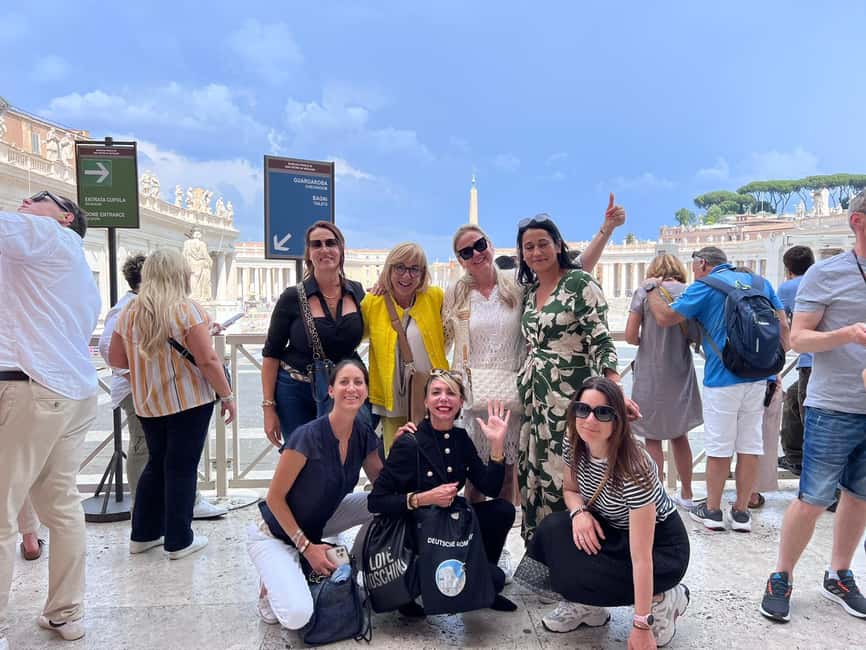
This tour is a strong fit if you:
- want a German guided experience with headsets,
- like art and architecture explained in a way you can follow in real time,
- have limited time in Rome and want the biggest hits without getting lost.
It’s also a good match if you enjoy stories that connect religion, politics, and art. The Basilica’s style evolution and the Fumata segment are there for a reason: they help you see the church as more than a collection of masterpieces.
You might want a different plan if your top goal is climbing the dome (since cupola access isn’t included). In that case, you’ll likely pair this with another activity or choose a tour that explicitly includes the climb.
Guide styles you can expect in German (Inga, Julia, Paula, Gian-Carlo)
The tour runs with German-language guides, and the names that come up include Inga, Julia, Paula, and Gian-Carlo. What you can take from that set of guides is that they tend to keep the narration detailed and organized, with a lively tone that helps the time pass quickly—even when the subject matter is serious.
Some guides lean more humorous, others more story-driven, but the thread is the same: you get a lot of information tied to what you’re standing in front of.
That’s important. In St. Peter’s, you can look at the wrong thing for the wrong amount of time and end up bored. A good guide keeps your attention moving toward the most meaningful spots.
Should you book the Deutsche Römerin St. Peter’s Basilica best-of tour?
I’d book it if you want a smart, time-efficient way to experience St. Peter’s Basilica with explanation built in. This is especially good value if you care about understanding: Pietà, Bernini’s baldachin, the architectural mix, and the Fumata context that connects the building to living tradition.
Skip it (or pair it carefully) if you’re mainly hunting for cupola views, because this one doesn’t include the climb. Also, if you have trouble with security lines or strict dress rules, plan your clothing ahead so you don’t waste time at the start.
If your day in Rome has limited hours and you want your visit to feel grounded and coherent, this tour is a practical way to get there.
FAQ
Is this tour in German?
Yes. The live guide is German, and German audio/headsets are included.
How long is the St. Peter’s Basilica tour?
It runs for 2 hours.
Where do we meet for the tour?
You meet in the middle of St. Peter’s Square in front of the barriers. Look for the sign that says Deutsche Römerin.
Do I need to buy cupola tickets with this tour?
No. Entrance to the cupola is not included.
What should I bring?
Wear comfortable shoes and bring a passport or ID card (a copy is accepted).
Are there dress or item restrictions?
Yes. No shorts, short skirts, sleeveless shirts, weapons or sharp objects, and no glass objects.
Is the tour wheelchair accessible?
Yes, it’s listed as wheelchair accessible.
Is there a security check?
Yes. All visitors must pass through a security check.