REVIEW · ROME
Rome: Pantheon, Trevi Fountain and Roman Squares Guided Tour
Book on Viator →Operated by Brastours · Bookable on Viator
Rome can feel like sensory overload. This small-group walk keeps it focused, with skip-the-line Pantheon and Trevi built in, plus clear explanations at every stop. I especially liked the small group size (max 10) and the way the guide helped me place each landmark in its Roman story. One possible drawback: the route can feel a bit fast, especially if you want extra time to soak up the view at each photo spot.
You’ll start at Largo di Torre Argentina and finish near Piazza di Spagna, hitting major squares and churches in about three hours. Along the way, you get headsets (handy in crowds) and an efficient flow from Roman ruins to baroque Rome. If you’re sensitive to crowds or have trouble hearing in busy areas, plan for that—and come dressed for strict site rules.
In This Review
- Key highlights worth your time
- A 3-hour Rome route that hits Pantheon, Trevi, and the squares
- Where you start (Largo di Torre Argentina) and how the walk lands near Piazza di Spagna
- Largo Argentina: Caesar’s assassination site, explained in plain terms
- Piazza Navona: Four Rivers Fountain, outdoor life, and crowd control
- St. Louis of the French (San Luigi dei Francesi): Caravaggio’s Saint Matthew paintings
- Pantheon: Skip-the-line entry and how to look at that dome
- Trevi Fountain: The icon, the baroque drama, and why skip-the-line is worth paying for
- Spanish Steps and La Barcaccia: Fashion streets plus a classic viewpoint
- Small-group guiding: why 10 people changes the whole day
- Price and value: what you’re actually paying for at $41.94
- Timing, pace, and the one thing that can throw you off
- Practical stuff you should plan for before you go
- Who this guided walk is best for
- Should you book this Rome Pantheon and Trevi Fountain guided tour?
- FAQ
- What time does the tour start, and how long does it last?
- Where does the tour start and where does it end?
- What’s included in the price for tickets and entry?
- Do I need to wear a certain type of clothing?
- What happens if the Pantheon is closed during the scheduled time?
- Is there a cancellation option if my plans change?
Key highlights worth your time
- Small group (max 10) keeps the walk calmer and questions easier to answer
- Skip-the-line tickets for Pantheon and Trevi Fountain save real time
- Headsets included help you catch details even when the streets get crowded
- Saint Matthew paintings at San Luigi dei Francesi connect you to Caravaggio’s impact
- Security rules on-site mean you’ll want your ID and the right clothing plan
A 3-hour Rome route that hits Pantheon, Trevi, and the squares
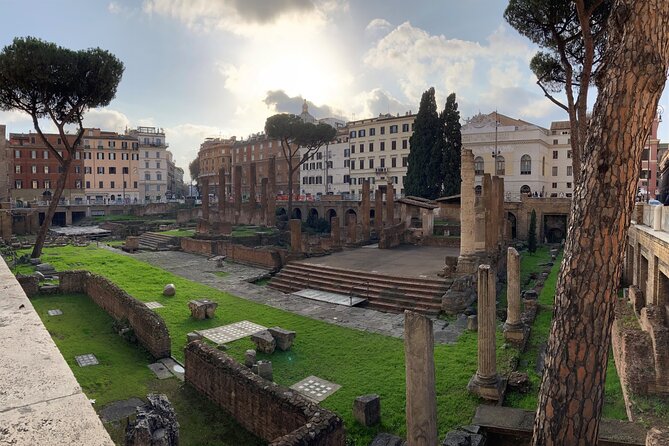
This tour is built for people who want the classic Roman highlights without turning the day into a chaotic queue-and-guess exercise. In roughly three hours, you’ll walk between some of Rome’s biggest-name sights: Area Sacra di Largo Argentina, Piazza Navona, the Church of St. Louis of the French (San Luigi dei Francesi), the Pantheon, the Trevi Fountain, and the Spanish Steps area.
The biggest value, for me, is that it mixes landmark “wow” with real context. You’re not just looking up at domes and fountains. You’re learning why they matter, and what you’re seeing when you’re standing right there. A small group also changes the feel: you’re not constantly getting bounced around by a larger crowd surge.
You can also read our reviews of more guided tours in Rome



Where you start (Largo di Torre Argentina) and how the walk lands near Piazza di Spagna
The meeting point is Largo di Torre Argentina, 52 (start time 9:30 am). That matters because early morning in Rome is when you can move. The tour ends at Piazza di Spagna, which is a smart finish because it drops you right into the best “keep walking” zone for cafés, shopping streets, and viewpoints.
It’s a walking tour, so you’ll want sensible shoes. Rome’s sidewalks near the major sights can be uneven and busy, and your route includes sections that get crowded fast. Headsets help, but you still need to be ready for stop-and-wait moments as groups funnel through narrow areas.
Largo Argentina: Caesar’s assassination site, explained in plain terms
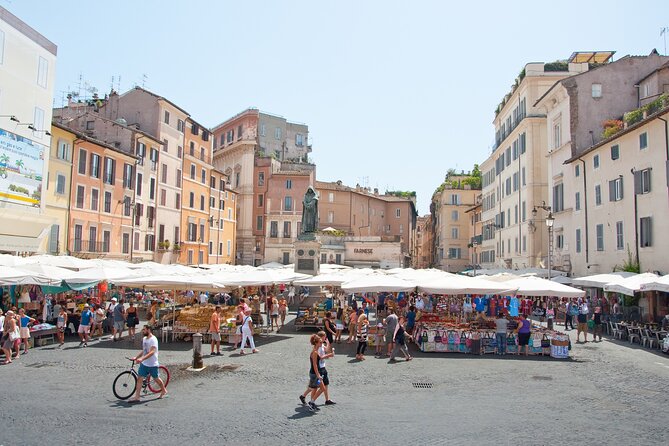
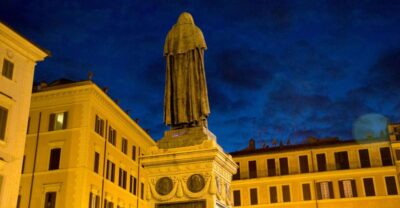
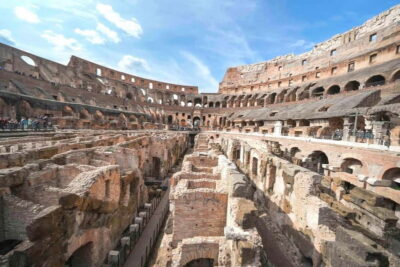
Your first stop is the Area Sacra di Largo Argentina, tied to one of Rome’s most dramatic political stories: the murder of Julius Caesar. You get about 15 minutes here, which is enough time to orient yourself and understand what you’re looking at.
This stop works well for two reasons. First, it gives you a Roman “before and after” moment—Rome before the empire fully takes shape, and Rome after power shifts. Second, it anchors the rest of the day. After you see this site, the rest of the route feels less like disconnected postcard spots and more like a timeline you can walk through.
Piazza Navona: Four Rivers Fountain, outdoor life, and crowd control
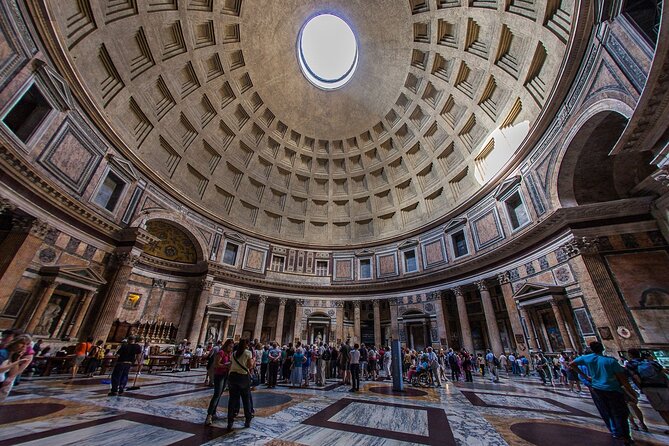
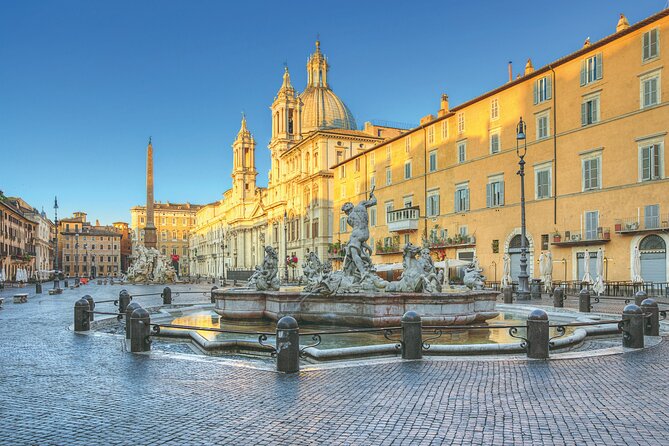
Next is Piazza Navona (about 30 minutes). This is one of the city’s most elegant squares, and it functions like a public living room: cafes, street performers, and people watching everywhere.
A highlight here is Bernini’s Four Rivers Fountain. It’s a famous baroque centerpiece, but the tour helps you read it instead of just photographing it and moving on. You’ll also get a sense of why this square keeps drawing people—its shape and layout make it ideal for gathering, not just sightseeing.
Practical note: Piazza Navona can get loud and busy. Even with headsets, you’ll likely notice how sound bounces around between buildings. If you struggle with hearing in crowds, position yourself so you can face the guide when they’re explaining.
St. Louis of the French (San Luigi dei Francesi): Caravaggio’s Saint Matthew paintings
Then you step into church territory with San Luigi dei Francesi (the Church of St. Louis of the French). You get about 15 minutes, plus entry included.
This matters because the tour connects a big-name art moment to a specific place. The church is home to the world-renowned Saint Matthew cycle of paintings by Caravaggio—and this is one of those times when a guided visit really changes what you notice. In a church, it’s easy to look at the art for five seconds and miss how the whole set works together.
The practical advantage is that this church stop is part of the walking flow, not an optional detour. You also avoid the headache of trying to time your own museum/church entry plans around Rome’s changing schedules.





Pantheon: Skip-the-line entry and how to look at that dome
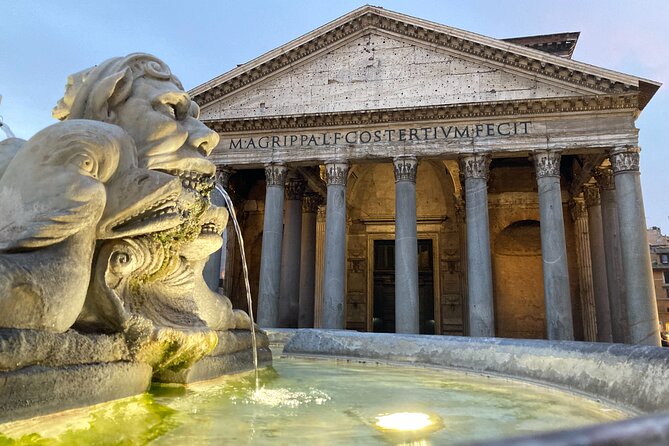
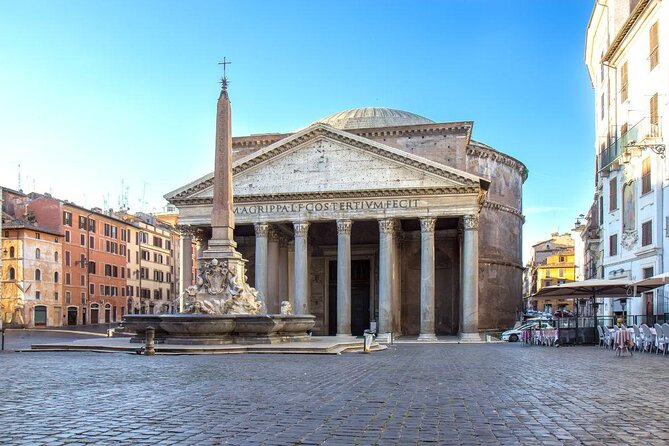
The Pantheon stop is about 30 minutes, and it’s one of the main reasons people book. You get skip-the-line entry, which is huge in practice because this building is always in demand.
What you’re seeing: the Pantheon has the world’s largest unreinforced concrete dome and is among the best-preserved ancient Roman buildings. That’s not just trivia. When you stand beneath it, you can start to grasp the engineering confidence that made Roman architecture so influential.
This is also where timing and crowd management matter. The tour is designed to move you through the entry process efficiently, then give you enough time to take in the dome and the interior without rushing out immediately.
If the Pantheon happens to be closed or inaccessible during your scheduled window, the tour will still include guidance from outside instead. That won’t replace the inside experience, but it does keep the explanation from turning into a dead stop.
Trevi Fountain: The icon, the baroque drama, and why skip-the-line is worth paying for
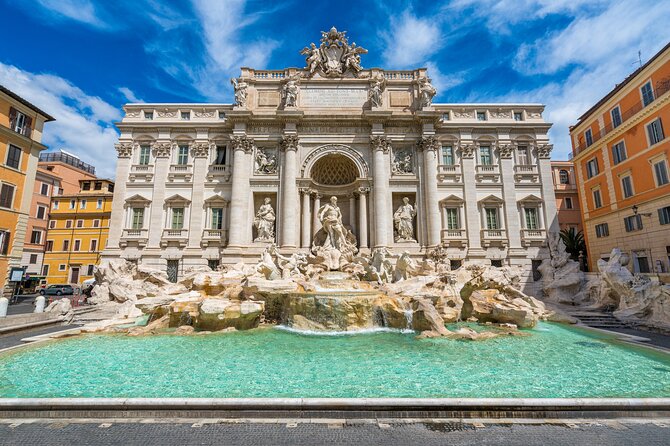
Your next big moment is the Trevi Fountain (about 30 minutes), and entry is included with skip-the-line again.
Trevi is the largest baroque fountain in Rome, and it’s one of the most celebrated fountains in the world. That level of fame is a double-edged sword: you can end up feeling like you’re trapped in a photo lineup. The value here is that the tour keeps you from wasting precious time on logistics and lets you actually enjoy the experience.
How to make the most of your time at Trevi:
- Pause long enough to look up, not just straight ahead for selfies
- Take in the fountain’s scale before you worry about the perfect shot
- Listen while you’re near the guide; it’s often during the explanation that you notice details you would have missed
One caution from real-world experience: crowds can make it harder to hear. If you can, position yourself so the guide is in your line of sight rather than behind you.
Spanish Steps and La Barcaccia: Fashion streets plus a classic viewpoint
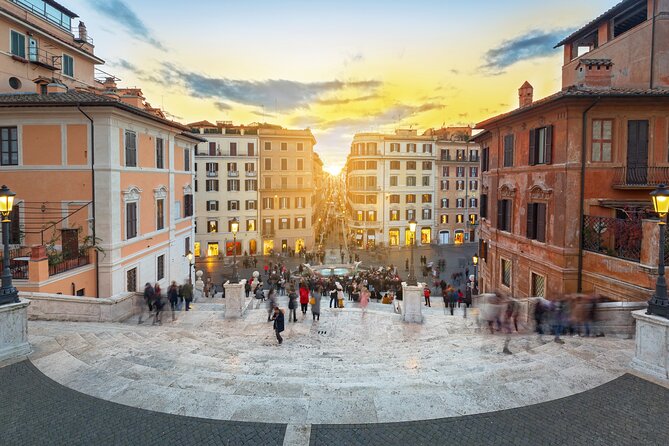
After Trevi, you head to the Spanish Steps area (about 20 minutes). You’ll see La Barcaccia, a Bernini fountain, and the Spanish Steps leading toward the Church of Trinità dei Monti.
This stop is less about “one monument” and more about the whole scene. The steps themselves are a key Rome viewpoint spot, and the surrounding streets are lined with high-fashion boutiques—exactly the kind of location that makes the area feel like a different city than the one you just walked through around the Pantheon.
Because your time here is shorter, treat it like a viewpoint-and-orientation moment. Climb if you feel like it, but don’t feel obligated to sprint from photo to photo. Rome looks best when you slow down for a minute at the edges, not only at the center.
Small-group guiding: why 10 people changes the whole day
The tour caps at 10 travelers, and that shows in how it feels. In a small group, the guide can slow down for questions and keep track of where everyone is standing. More importantly, they can adjust the pace based on what the crowd is doing in real time.
I also like that headsets are included. When you’re walking through busy squares and near major bottlenecks, you’re not stuck trying to hear across people’s backs. It’s a simple feature, but it makes the tour more usable, not just “nice on paper.”
Guide styles also seem to vary, but the common thread is pacing and interaction—some guides are especially good at crowd-handling and keeping everyone together while still answering questions without rushing you out.
Price and value: what you’re actually paying for at $41.94
At $41.94 per person, you’re not paying for a long ride or a fancy bus day. You’re paying for three things that matter in Rome:
- Skip-the-line entry at the Pantheon
- Skip-the-line entry at the Trevi Fountain
- Entry included for San Luigi dei Francesi, plus a guided explanation
And you’re getting headsets plus a guide for the walking portion. When you add that up, it’s good value compared to trying to piece together timed entries on your own while also competing with the same crowds.
Is it perfect value? Not always. One drawback that showed up in real timing is that ticket readiness can sometimes shift schedules, which can stretch the overall feel of the walk. Still, even with a bit of delay, having the Pantheon and Trevi covered is the kind of time-saver that makes the price feel fair.
Timing, pace, and the one thing that can throw you off
The plan is about three hours, but you should expect the pace to be “active.” Some people love that pace because it keeps the day moving. If you’re the type who likes extra time at each stop—especially fountains and viewpoints—you might feel a little rushed at times.
Also, crowd density affects sound. Even with headsets, you may sometimes strain to hear when the group shifts location quickly or when the square gets louder. The best fix is simple: stay close enough to face the guide when they’re talking and don’t wander too far while they’re explaining.
Practical stuff you should plan for before you go
This tour has a few rules that are worth treating like non-negotiable. If you show up prepared, everything goes smoother.
Dress code: you can’t wear shorts, miniskirts, or have uncovered shoulders. That’s pretty common in churches, but it’s still the easiest way to run into problems if your Rome wardrobe is summer-only.
Security: you’ll need ID due to new security provisions. Bring it with you.
What not to bring: the rules say it’s forbidden to bring metal objects and big bags, and animals are not allowed (assistance dogs allowed). That means your idea of a casual daypack might not be the right one if it’s large.
If Pantheon access changes: if the Pantheon is closed or not accessible at your scheduled time, your tour includes the explanation from outside. So you’re not left totally empty-handed.
Finally, this tour is near public transportation, which helps if you’re arriving from another part of Rome before 9:30.
Who this guided walk is best for
This is a great fit if you:
- Want the classic Rome highlights without spending your morning in lines
- Like having someone point out what to notice at each stop
- Prefer a small group over large bus tours
- Want a walk that blends ruins, churches, and baroque icons
It may not be the best fit if you:
- Want long, unstructured time at each landmark
- Get easily overwhelmed by crowds and prefer quieter pacing
- Need extra help hearing instructions in loud outdoor areas
Should you book this Rome Pantheon and Trevi Fountain guided tour?
Yes, I think you should book it if your goal is to make your limited Rome time count. The combination of Pantheon skip-the-line, Trevi skip-the-line, San Luigi dei Francesi entry, and headsets is exactly the kind of planning that prevents your day from turning into logistical stress.
Book it especially if you want a guide who can keep the story flowing from Julius Caesar’s world to baroque Rome’s big set pieces. Just come prepared for a walking tour pace and the clothing rules, and you’ll get a smooth, satisfying way to see Rome’s top landmarks in one morning-like block.
FAQ
What time does the tour start, and how long does it last?
The tour starts at 9:30 am and runs for about 3 hours.
Where does the tour start and where does it end?
It starts at Largo di Torre Argentina, 52, 00186 Roma and ends at Piazza di Spagna, 00187 Roma.
What’s included in the price for tickets and entry?
The tour includes skip-the-line entry tickets for the Pantheon and Trevi Fountain, entry for San Luigi dei Francesi, plus a tour guide and headsets.
Do I need to wear a certain type of clothing?
Yes. The rules say it is not permitted to wear shorts, miniskirts, or have uncovered shoulders.
What happens if the Pantheon is closed during the scheduled time?
If the Pantheon is closed or not accessible within the scheduled time, the tour includes the explanation from outside.
Is there a cancellation option if my plans change?
You can cancel for a full refund if you cancel up to 24 hours in advance of the experience start time.