REVIEW · OSTIA ANTICA
Rome: Ostia Antica Private Van Tour with an Archaeologist
Book on GetYourGuide →Operated by Rome in tours · Bookable on GetYourGuide
Ancient streets, minus the Rome crush. This private Ostia Antica tour is built around a PhD archaeologist guiding you through the site’s standout ruins, from the main street to baths and temples. I like the custom tour feel (you can steer what you focus on) and the calm, no-rush pacing that comes with a private van. The main trade-off: it’s only about four hours total, so you won’t have an endless amount of time to wander on your own.
You’ll start with pickup from your Rome hotel area and then ride out of the city toward Ostia Antica. I also like that it’s designed to reduce hassle, with flexible start times and no lines or crowds to fight along the way. One more consideration: food isn’t included, so plan to handle water and snacks yourself.
Once you’re at the site, the walking portion is where the tour shines. The guide is with you for the guided tour and walk, and if your group is 6 or more, you’ll have headsets so you don’t strain to hear every detail.
In This Review
- Key highlights at a glance
- From hotel pickup to Ostia Antica without the headache
- Your PhD archaeologist guide and how the tour actually feels
- Decumanus Maximus: the Roman street you can picture in your head
- Caupona, Thermopolium, and the Square of the Guilds
- Caupona: where evening life would happen
- Thermopolium bar: quick food culture
- Square of the Guilds: commerce and trade
- Baths and firemen barracks: Roman problem-solving in stone
- Cippus, Neptune’s bath, and other named anchors
- Castrum, Forum, Capitolium, Basilica, and the Temple circuit
- Back to Rome: using the quiet ride time
- Price and value: is $450.56 per person a fair trade?
- Who this private Ostia Antica tour is for
- When I’d book it (and when I’d hold off)
- Should you book this Ostia Antica private van tour?
- FAQ
- How long is the Ostia Antica private van tour?
- What’s included in the tour price?
- Do I need to buy tickets for Ostia Antica?
- Is food included?
- Will there be a guided walkthrough or only self-exploration?
- How does pickup work?
- What language is the guide?
- Is this a private group?
- Are there lines or crowds?
- What’s the cancellation policy?
Key highlights at a glance
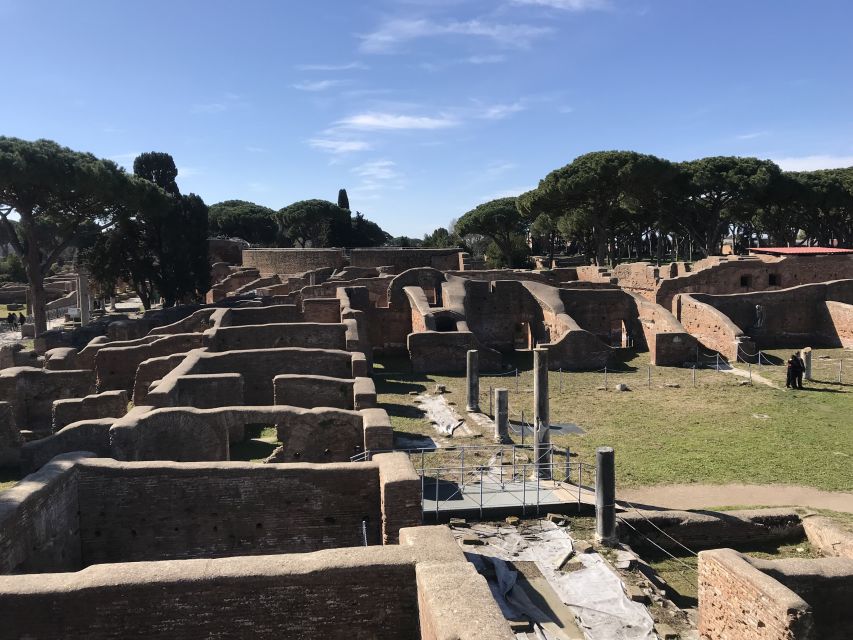
- PhD archaeologist guide on hand for the full experience
You’re not getting a scripted speech. You get expertise you can ask questions about.
- Decumanus Maximus and the “main street” walk-through
You’ll trace the Roman street layout and see how daily movement worked.
- Caupona, Thermopolium, and the Square of the Guilds
Food, drink, and trade spaces that help you picture ordinary life.
- Baths and firemen barracks
Practical Roman solutions show up in the ruins, not just temples.
- Private van time for pickup and return
Less commuting stress, more time actually spent at Ostia Antica.
- Ticket fees included, food left to you
Easy planning, but bring a simple plan for snacks.
From hotel pickup to Ostia Antica without the headache
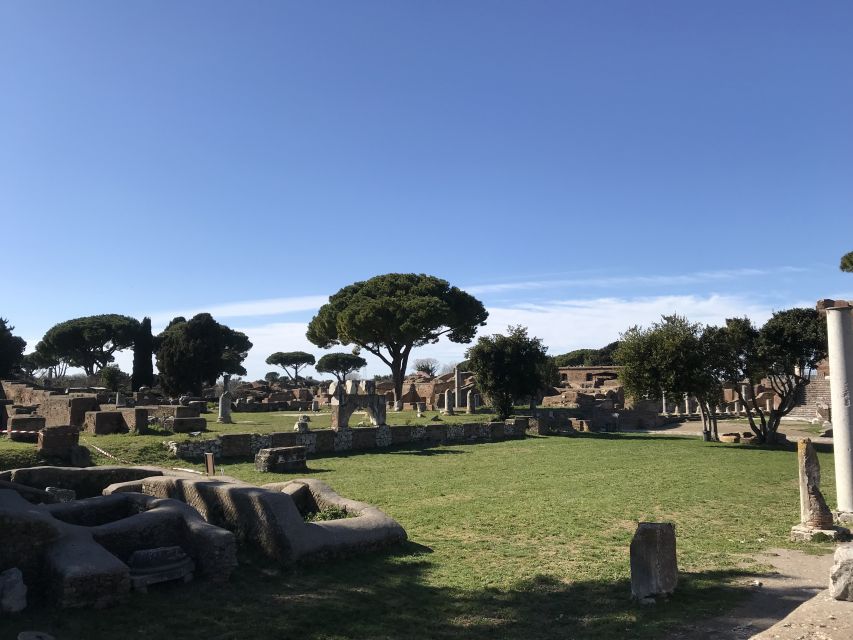
This tour is designed around one clear idea: get you from central Rome to Ostia Antica with as little friction as possible. Pickup happens from your accommodation area, and you’re asked to wait in the hotel lobby about five minutes before the scheduled time. After that, you’re in a private van or car, and you don’t have to coordinate public transport or meet up with other groups.
The pacing is built into the schedule. You spend roughly 45 minutes in transit each way, then about 2.5 hours at Ostia Antica for the visit, guided tour, and walking. That mix matters. If you’ve ever tried to do Ostia Antica as a DIY trip, you know the time can balloon once you add travel, ticketing, and figuring out where to start. Here, the structure keeps you focused: Rome to ruins, ruins to Rome.
Also, the tour offers flexible start times. That’s practical if you’re juggling jet lag, a packed Rome itinerary, or just want to avoid the busiest parts of the day. And because it’s a private experience, you’re not getting swallowed by the usual visitor flow.
You can also read our reviews of more private tours in Ostia Antica

Your PhD archaeologist guide and how the tour actually feels
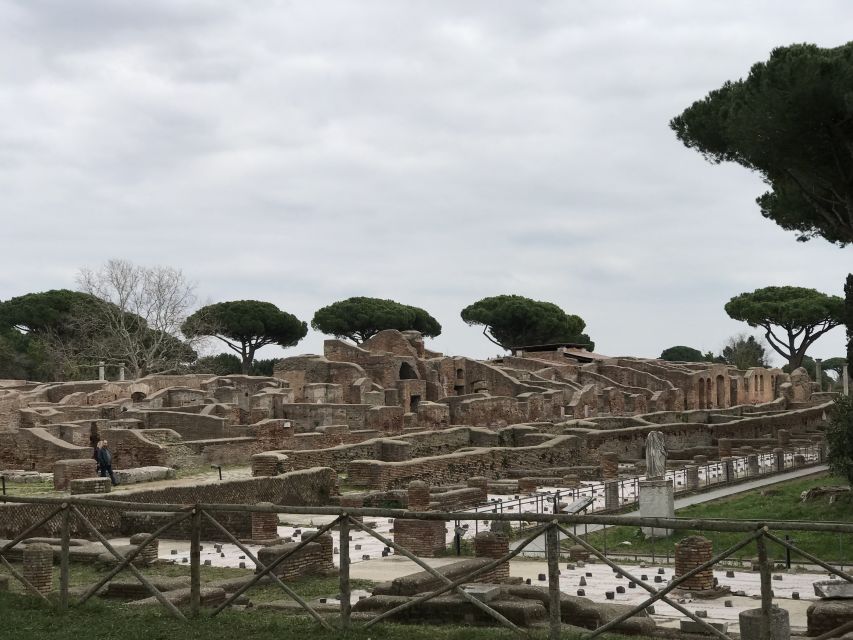
This is the part I’d call the real engine of the day. You’re with a local archaeologist guide who’s a PhD, and the goal is an itinerary that can be customized to your interests. That means you’re not locked into a one-size-fits-all walkthrough.
The guide’s expertise shows up in how the stops are explained. The tour takes you across different types of sites—street life, dining and drinking spaces, commerce areas, baths, and civic or religious buildings—so the story isn’t just “look at this wall.” It’s more like, why this place existed and what it would have meant to people using it every day.
If you get Ferdinando (his name comes up in the strongest feedback for this tour), you can expect a professional archaeologist approach with a lot of clear, grounded explanation. In other words, you’re less likely to feel lost among ruins. You get context you can hold onto while you walk.
Decumanus Maximus: the Roman street you can picture in your head
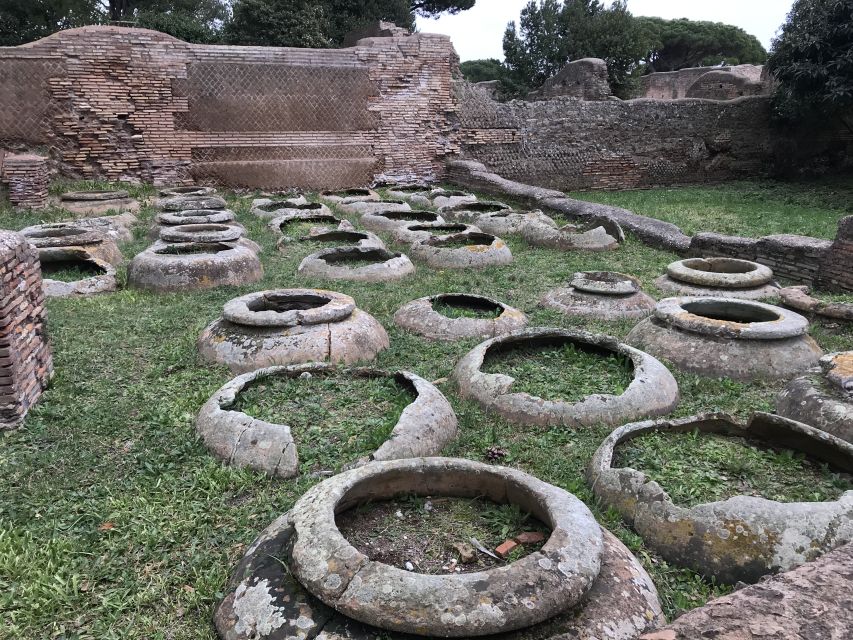
The tour’s walk begins on the main street of the site: the Decumanus Maximus. This is one of the most useful parts of any Ostia Antica visit because street grids are where your brain starts to map the whole place. When you know where the main artery runs, the rest of the ruins become easier to understand.
Walking the Decumanus Maximus helps you connect two things at once:
- movement (how people would travel through the town)
- purpose (why shops, gathering areas, and civic spaces cluster where they do)
Even if you don’t consider yourself a “ruins person,” a guided walk along the main street tends to make everything click. You’re not just staring at individual structures. You’re seeing how the site’s layout supports everyday life.
A small practical note: because you’re doing a guided walk, you’re likely to cover ground at a comfortable pace rather than trying to decide where to go next. That’s a big value for first-timers.
Caupona, Thermopolium, and the Square of the Guilds
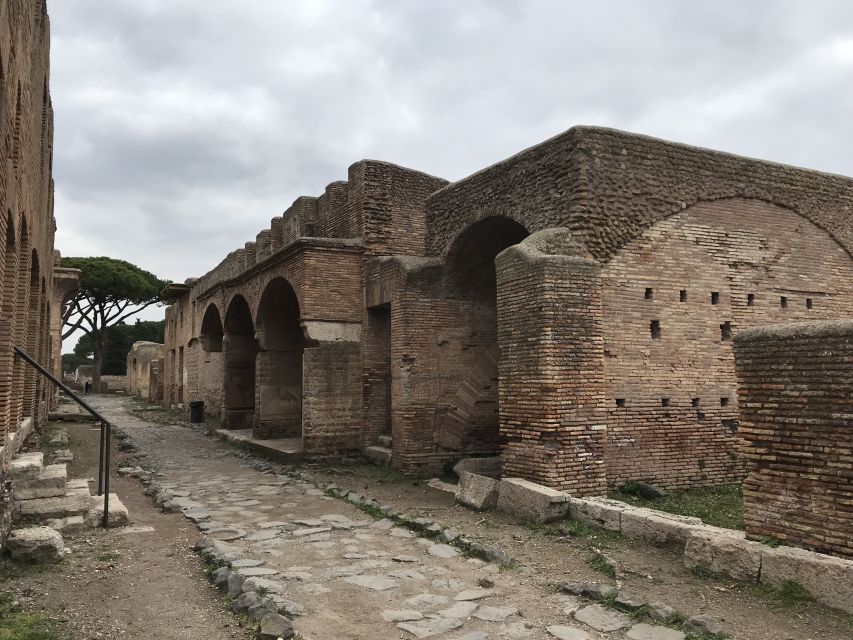
One of my favorite parts of Roman ruins is when the guide brings them back to human scale. This tour does that with stops that relate to eating, drinking, and business.
Caupona: where evening life would happen
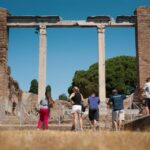
You’ll visit the Caupona, a spot tied to Roman dining and drinking. In practice, this kind of stop does more than point at a building. It gives you a lens for imagining social routines—where people met, ate, and passed time.
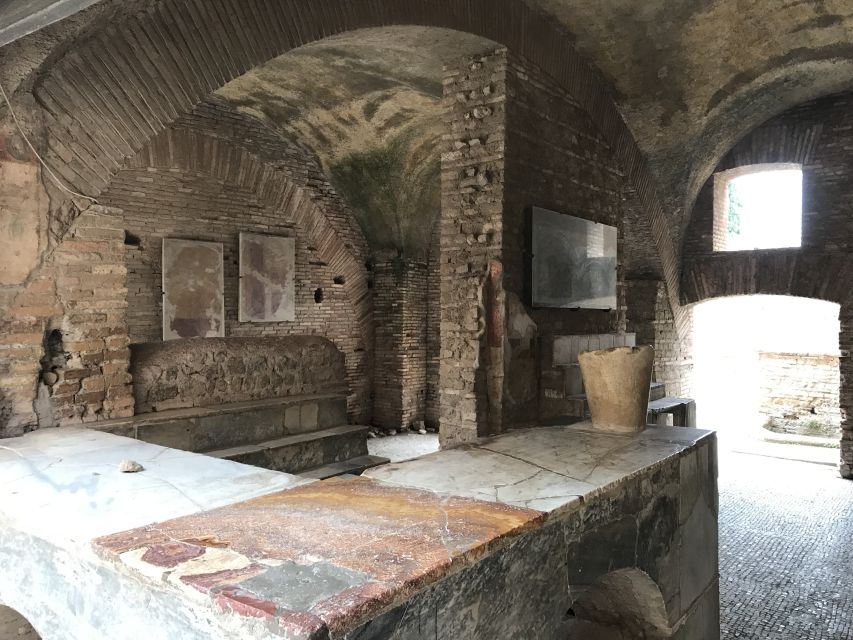
Thermopolium bar: quick food culture
Next comes the Thermopolium. This is another great name-driven stop because it signals a functional role in everyday life rather than an elite one. When you’re hearing explanations from a PhD archaeologist, you’ll likely understand how these spaces fit into the rhythm of the day.
Square of the Guilds: commerce and trade
Then you’ll move to the Square of the Guilds, described as the main commerce and trade center. This is where the tour shifts from food-and-drink back into how the town operated economically.
Together, these stops do something valuable: they help you stop thinking of Ostia Antica as only temples and public buildings. You get the “ordinary life” angle—trade, meals, and daily exchange—woven right into the walk.
Baths and firemen barracks: Roman problem-solving in stone
Many visits to ancient sites focus heavily on the dramatic buildings. This tour balances that with a very grounded topic: how the Romans managed public life.
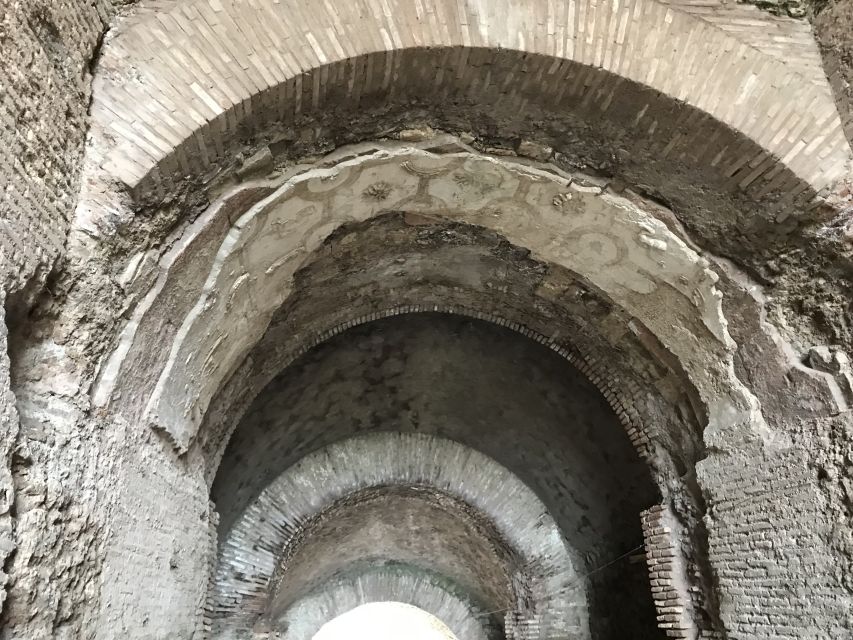
You’ll explore the old public baths and the firemen barracks. The firemen part is especially interesting because it frames efficiency as a civic priority. The tour’s focus is on how Romans prevented and extinguished fire—turning what could be dry logistics into something concrete you can picture.
The baths matter too, because bathing is social and routine. When you stand in a bath complex with explanations, you can usually understand the “why” of the space even if you don’t know every architectural term.
If you like your history with real-world function—how systems worked, not just what rulers built—this section is one of the strongest.
Cippus, Neptune’s bath, and other named anchors
Ostia Antica has a lot of named highlights, and part of the tour value is how those names become wayfinding anchors. You’ll see several specific points, including:
- Cippus of Caninius
- Bath of Neptune
- Bath of the Forum
Even without technical details, these named structures help you keep your bearings. Instead of wandering randomly, you’re moving from one named feature to the next, guided by what each one likely represented in context.
That matters for a one-day visit. Ruins can blur together fast, especially if you’re trying to self-navigate. Having the itinerary pinned to specific, named locations keeps the visit coherent.
Castrum, Forum, Capitolium, Basilica, and the Temple circuit
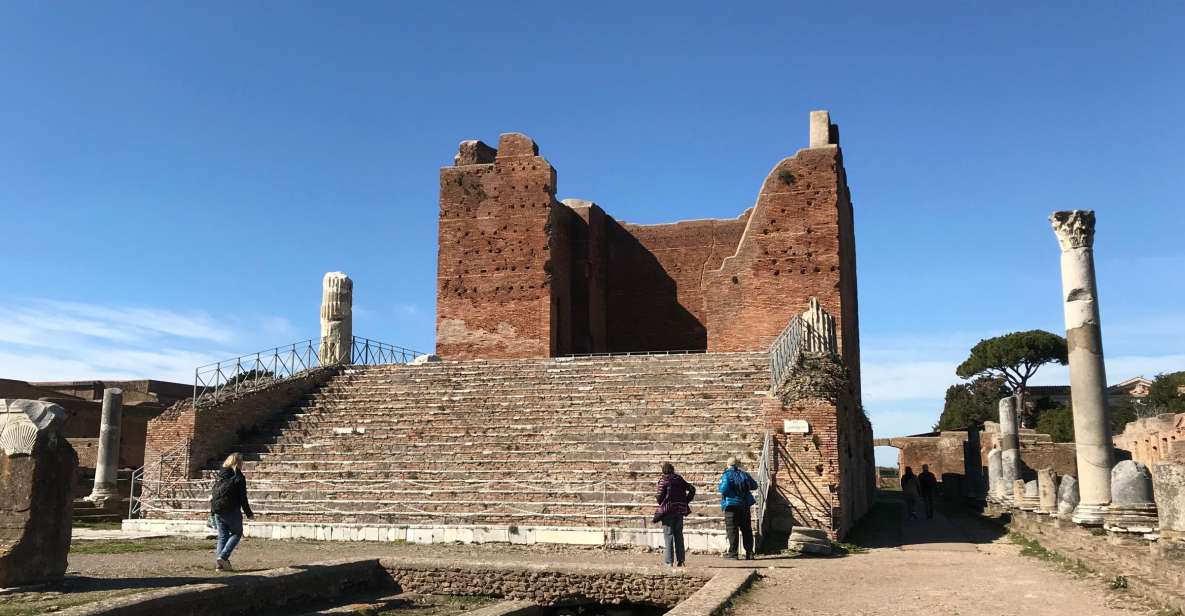
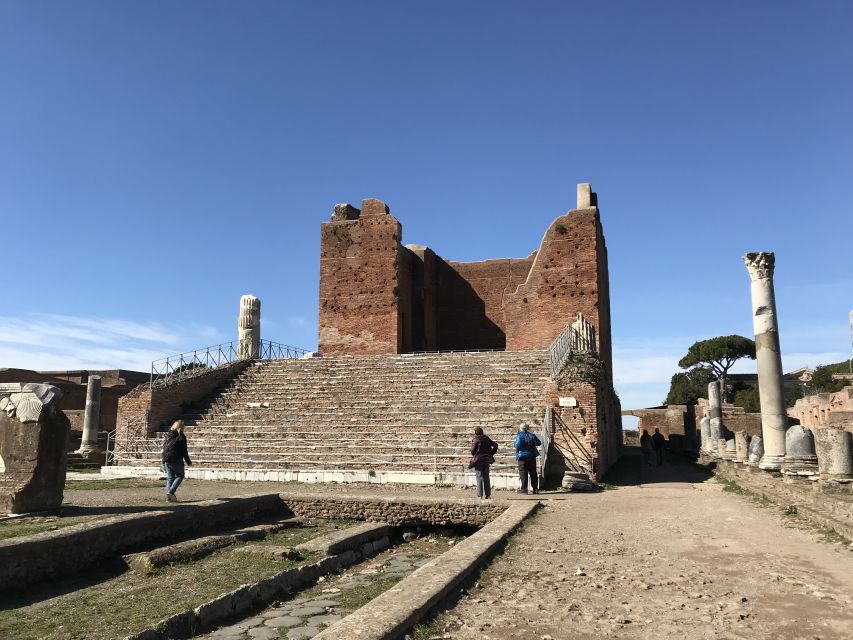
Then the tour shifts into the more civic and ceremonial side of the site. You’ll cover major areas including:
- Castrum
- Forum
- Capitolium
- Basilica
- Temple of Rome and Augustus
These stops are where you start to feel the “public square” energy of Roman life. The Forum and Basilica are especially helpful for understanding how people gathered for civic business. The Capitolium and the Temple of Rome and Augustus bring the religious and state symbolism into the walk.
One of the best things about doing this with an expert guide is that you’re less likely to treat these buildings as isolated monuments. Instead, you’ll get a sense of how they connect: public decision-making, religious meaning, and the shared spaces where community life happened.
Back to Rome: using the quiet ride time
Once the 2.5-hour visit portion wraps up, the private van brings you back to Rome. The return is also about 45 minutes. I like the way this tour protects your day. You’re not left stranded with a long wait for transport, and you don’t have to figure out how to get back while tired.
It’s also a good time to mentally sort your photos and notes. When you’ve just walked a main street, checked dining/trade areas, and then moved into civic temples, your brain will try to organize it all. The ride gives you that little buffer.
Price and value: is $450.56 per person a fair trade?
At $450.56 per person for a ~4-hour private tour, this isn’t a budget activity. But private tours aren’t just about comfort—they’re about time, guide attention, and reduced friction.
Here’s what you’re paying for, based on what’s included:
- a PhD archaeologist guide for the full tour time
- private transportation to and from the site
- ticket fees included
- a guided visit and walking time at Ostia Antica
- headsets for groups of 6+ (so the guide can be heard clearly)
If you want a basic “see the ruins” trip, you could probably do it cheaper on your own. But if you care about understanding what you’re seeing—especially with named sites like the Decumanus Maximus, Caupona, Thermopolium, Forum, and Temple of Rome and Augustus—this format can be good value. You’re essentially buying guided interpretation plus logistics handled.
Also, the private nature helps you get the schedule you want. Flexible start times and avoiding lines/crowds are real quality-of-life benefits, particularly if you only have a few days in Rome.
Who this private Ostia Antica tour is for
This tour is a good fit if:
- you like archaeology with clear explanations, not just signage
- you want a custom itinerary based on your interests
- you prefer private logistics over public transport stress
- you’d rather see a few core areas well than rush through everything
It’s also smart for first-time visitors to Ostia Antica who don’t want to spend their energy reading maps and guessing where to begin.
If you’re the type who wants to roam entirely on your own for long stretches, you might find the guided structure a bit limiting. The 4-hour time frame is fixed, and the focus is on the highlights.
When I’d book it (and when I’d hold off)
Book it if you’re excited by street life, trade, daily routines, and the practical side of Roman planning—baths, civic spaces, and even fire prevention.
Hold off if you’re traveling on a tight budget, or if you want a slow, meandering ruins day where you can take long pauses without a guided pace. Also, since food isn’t included, plan your day around eating before or after.
Should you book this Ostia Antica private van tour?
Yes, if you want to leave with understanding, not just photos. This is the kind of trip where a PhD archaeologist guide can turn named sites—Decumanus Maximus, Caupona, Thermopolium, Square of the Guilds, baths, and the major forum/temple circuit—into a connected story you can follow while you walk.
It’s also a strong pick for people who hate lines and crowded meeting points. The private van plus hotel pickup and return keeps the day smooth.
If you want, tell me your travel dates and how many people are in your group, and I can help you think through whether the private format makes the most sense versus a smaller-group or self-guided plan.
FAQ
How long is the Ostia Antica private van tour?
The tour duration is 4 hours, including pickup, travel time to the site, the guided visit and walk, and the return to Rome.
What’s included in the tour price?
Included are a local PhD archaeologist guide for the entire tour, a private tour, transportation to and from the site in an optional luxury car or van, ticket fees, and headsets for parties of 6 people or more.
Do I need to buy tickets for Ostia Antica?
No. Ticket fees are included as part of the tour.
Is food included?
No. Food is not included.
Will there be a guided walkthrough or only self-exploration?
There is a guided tour and a guided walk through the site.
How does pickup work?
Pickup is included from your accommodation in Rome within the defined pickup area. You’ll wait in the hotel lobby about 5 minutes before your scheduled pickup time.
What language is the guide?
The live tour guide is available in Italian and English.
Is this a private group?
Yes. The group type is private.
Are there lines or crowds?
The tour is designed for no lines or crowds, and it also offers flexible start times.
What’s the cancellation policy?
Free cancellation is available up to 24 hours in advance for a full refund.