REVIEW · OSTIA ANTICA
Archeological Area of Ostia Antica Entry Ticket
Book on GetYourGuide →Operated by TOURISTATION · Bookable on GetYourGuide
Ancient Rome, without the big-city chaos. With an Ostia Antica entry ticket, you get skip-the-line fast-track entry and the freedom to roam one of the best-preserved ancient cities in the area at your own pace. Add-on options can also change the feel of the visit, from a self-guided audio experience to a golf cart ride.
I like that the ticket is built around choice. You can keep it simple with basic admission, or upgrade with an audio guide app (with 170+ points) and optional comforts. The standout ruins to aim for include the Baths of Neptune and the long street axis known as Decumanus Maximus.
The one potential downside: the audio option depends on a smartphone app, and if you want a lot of scene-setting, you may find the audio on some areas too brief, especially for context like the port zones. That doesn’t ruin the site, but it can affect how much the ruins start to click.
In This Review
- Key Points You’ll Actually Care About
- Skip-the-Line Entry at Ostia Antica: Worth It for Your Time
- Your 2.5–5 Hour Plan: How to Structure a Self-Paced Ruin Walk
- Baths of Neptune and Decumanus Maximus: The Two Stops That Make Sense of Ostia
- Baths of Neptune
- Decumanus Maximus
- Mosaic Marvels: Where Ostia Looks Most Personal
- Audio Guide App in English and Other Languages: Handy, But Set Expectations
- Golf Cart Ride Upgrade: When Comfort Is a Smart Choice
- Golf Cart Ride Plus Aperitivo: A Relaxed Break That Doesn’t Eat Your Day
- Price and Value: What You’re Really Paying For
- What’s Included vs Not: Plan Like a Pro
- Included (by option)
- Not included
- Practical Tips: What to Bring (So the Day Stays Fun)
- Should You Book This Ostia Antica Ticket?
- FAQ
- FAQ
- How long does the Ostia Antica ticket take?
- Is skip-the-line entry included?
- Do I get an audio guide?
- What languages are available for the audio?
- Is a golf cart ride included?
- What’s included if I choose the aperitivo upgrade?
- Where do I get the actual entry ticket?
- Do I need hotel pickup?
- What should I bring to the site?
- Is this suitable for wheelchair users or limited mobility?
Key Points You’ll Actually Care About
- Fast-track entry (express security) helps you spend more time walking than waiting.
- Self-paced visit means you can set your own speed and stop for photos or quiet corners.
- Baths of Neptune + Decumanus Maximus are the big “orientation” landmarks to plan around.
- Optional golf cart ride can make the sprawling ruins feel much more manageable.
- Audio guide app (170+ points) is handy, but it may feel more straightforward than story-heavy.
- Aperitivo upgrade pairs a relaxed break with your ruins time, without turning it into a long event.
Skip-the-Line Entry at Ostia Antica: Worth It for Your Time
This is one of those tickets that mostly pays you back in hours, not in “included stuff.” Ostia Antica is a real walking site. So when your entry includes skip the line via an express security check, you’re much more likely to start exploring without losing momentum.
If you’re only in Rome for a few days, this matters. Getting to a site like Ostia Antica is easy to underestimate. The ruins stretch out, the sun can be intense, and you want to begin while you still have energy. Fast entry helps you do that.
Also, the ticket setup is straightforward in concept: the voucher you receive is not the entry ticket. An operator contacts you with the details you need to coordinate entry. In plain terms, you’re not left guessing at the gate.
You can also read our reviews of more tours and experiences in Ostia Antica.

Your 2.5–5 Hour Plan: How to Structure a Self-Paced Ruin Walk
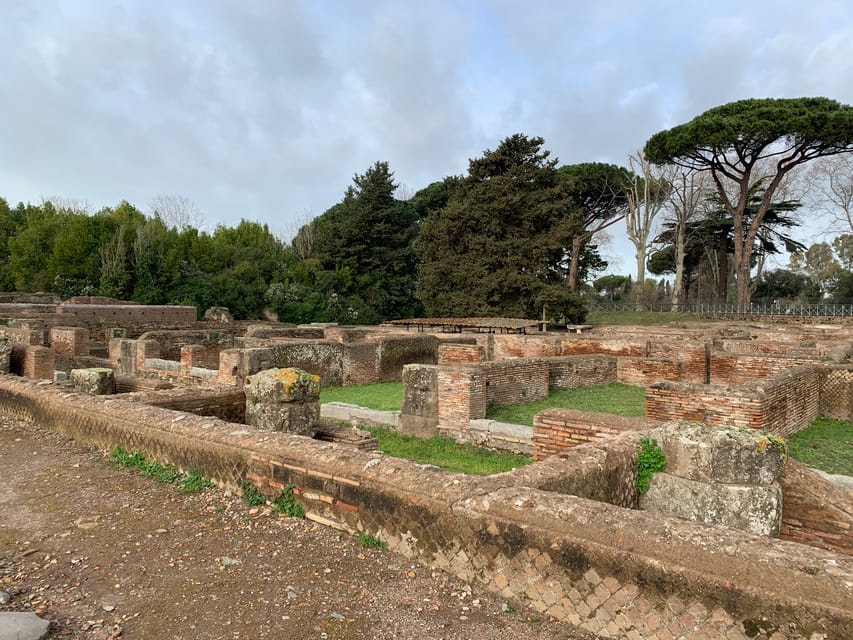
You choose the pace, but you still need a rough game plan so you don’t wander in circles. The visit window is 2.5 to 5 hours, so here’s a practical way to use it.
Think of your time in three chunks:
1) Orientation first (about 45–90 minutes): Start by finding your “spine” through the site. The big layout anchor is Decumanus Maximus. It’s the kind of main street that helps you understand where you are. Even if you do nothing else, walking that axis helps the whole place stop feeling random.
2) Go deep on a set of highlights (about 60–150 minutes): From there, aim for the Baths of Neptune, plus the mosaic-heavy house areas. These are the spots where Ostia Antica visually earns its reputation. If mosaics are your thing, give yourself time to look closely. Floor patterns are where you’ll notice details that photographs often flatten.
3) Finish with the areas that match your interests (about 30–90 minutes): This is where the audio option can help or hurt, depending on how story-driven you want your visit to be. Some audio content may be brief in places, so if you care about context (like port-adjacent areas), plan to do a little reading before you go, or be ready to enjoy the ruins as pure atmosphere.
If you’re upgrading with the golf cart option, you’ll still want to walk. Use the cart to cut down the “getting from A to B” time, then switch to walking for the densest ruins and mosaic rooms.
Baths of Neptune and Decumanus Maximus: The Two Stops That Make Sense of Ostia
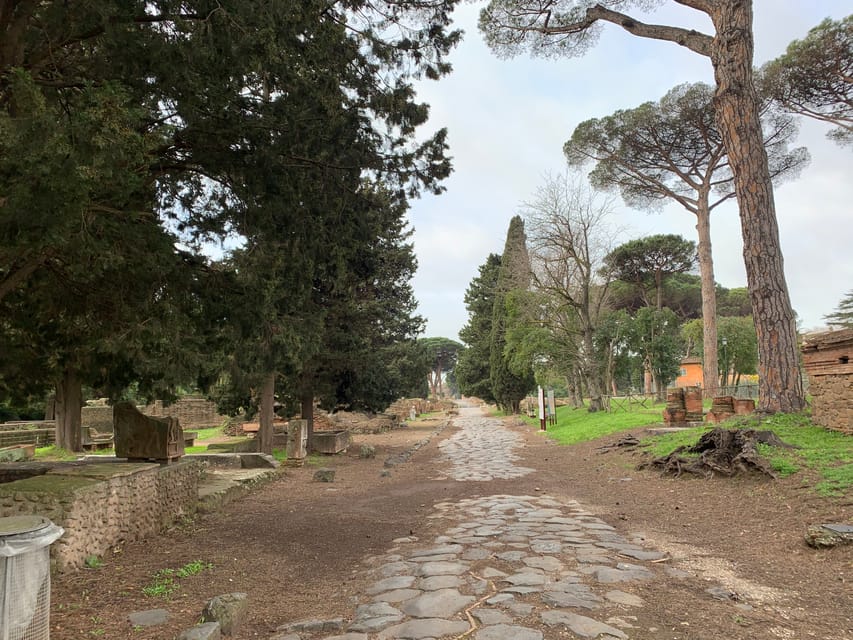
Two names show up again and again for a reason. Baths of Neptune and Decumanus Maximus are the kind of landmarks that help your brain build a map.
Here’s how to approach them so you don’t just see them as ruins-by-numbers:
Baths of Neptune
This is your “big structure” moment. When you arrive, take a minute to look at the scale. You’re not walking through a preserved building so much as reading the footprint of what was once a major public space. That’s why it works best with a little time. If you rush, you’ll miss how the layout creates flow and views.
Also, if you picked the audio option, this is exactly the kind of stop where an app can be useful—because it’s easy to understand what you’re looking at without the need for a live explanation.
Decumanus Maximus
This is your orientation tool. Walking this long east-west street (or at least navigating its route through the ruins) helps you feel how the city was organized. It’s also a great way to pace your visit. You can follow it for a while, then break off toward mosaic houses or other areas.
If you find the audio app too short on certain contexts, Decumanus Maximus is still worth your time because it teaches you the city’s geometry with your feet.
Mosaic Marvels: Where Ostia Looks Most Personal
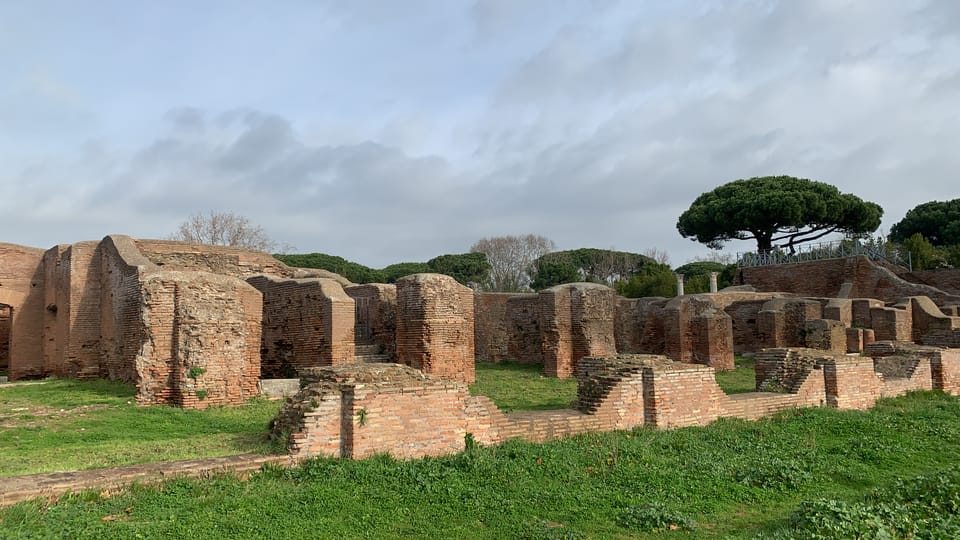
Ostia Antica is at its best when you slow down for the details. The mosaic houses area is where the ruins stop being “cool stones” and start feeling like daily life.
When you’re there:
- Look for repeating patterns and color changes across different mosaic sections.
- Pause long enough to compare floors rather than scanning everything like it’s a checklist.
- Use your shoe-free imagination: think about where someone would stand and how they’d move through rooms.
If you’re traveling with kids, this is also your easiest “look-and-find” zone—mosaics give you something visible to talk about without needing a lecture.
Audio Guide App in English and Other Languages: Handy, But Set Expectations
The audio option is not a live guide. Instead, it’s built around a downloadable Rome City audio guide app with more than 170 points of interest, plus the option to select English, Italian, French, Spanish, or German.
This is a strong setup for flexibility. You can listen when you want, pause when you don’t, and skip sections that feel repetitive. For a self-paced ruins visit, that’s a big deal.
But here’s the key consideration: if you want a lot of background and scene-setting, you might find some parts of the audio are on the brief side. In particular, context for certain areas—like port-adjacent zones—may not be as explanatory as you’d like.
My practical advice:
- If you’re the type who likes to understand the why behind every stone, do quick prep before you arrive.
- Use the audio mainly as a compass, not as your only source of context.
- If the audio feels thin in one area, switch to silent looking. Ostia Antica still rewards your attention even without narration.
Golf Cart Ride Upgrade: When Comfort Is a Smart Choice
One reason this ticket has multiple versions is that Ostia Antica isn’t a small museum. It’s a sprawling archaeological area. So the golf cart ride option can be a practical upgrade, not a luxury add-on.
Here’s when I’d choose the cart:
- You want to cover more ground without draining your legs early.
- You’d rather spend the best light and energy on mosaic houses and major landmarks.
- You’re visiting with someone who moves slower on their own.
Even with the cart, plan on walking for the most interesting sections. A cart helps you reposition through the site. It doesn’t replace the close-up viewing that mosaics and architectural remnants need.
Golf Cart Ride Plus Aperitivo: A Relaxed Break That Doesn’t Eat Your Day
The top upgrade option adds an aperitivo to the golf cart experience. This can be a good match if your ideal visit has two speeds: sightseeing plus a real pause.
Think of it like this:
- The cart helps reduce the travel time between key zones.
- The aperitivo gives you a moment to reset (hydration and a sit-down usually matter more in the heat than people expect).
If you’re the kind of traveler who hates “tour-day fatigue,” this combination can make the experience feel smoother. Just keep in mind that it turns a straightforward self-paced visit into a slightly more structured one. You may want to plan for it by giving yourself a longer total window, closer to the 5-hour end.
Price and Value: What You’re Really Paying For
The price is listed as $40 per person. That’s not just “entry.” It’s entry plus the services tied to your selected option.
Here’s a useful way to think about the value breakdown:
- The total retail price includes €18 for adult admission to the archaeological area of Ostia Antica.
- The rest of what you pay reflects the services included in the offer, such as fast-track entry.
- Optional extras like the audioguide, golf cart ride, and aperitivo only matter if you choose those versions.
So who gets the best value?
- If you’re choosing only the basic skip-the-line entry, the value is mainly time-saving. If you’d otherwise waste time at security, this helps.
- If you’re adding audio, value increases if you like self-guided listening and want an easy way to interpret what you see.
- If you’re adding the golf cart (and especially the aperitivo), value can jump because you’re buying back energy and turning part of the day into a calmer experience.
My rule of thumb: upgrade only for the parts that match your travel style. If you love walking and don’t need stops, keep it simple. If you want comfort and a break, the higher options can be worth it.
What’s Included vs Not: Plan Like a Pro
Included features depend on your selected option, but the core inclusions work like this:
Included (by option)
- Fast-track entry with express security
- Audio guide (if you choose that option)
- Golf cart tour (if you choose that option)
- Italian aperitivo (if you choose that option)
- A Rome City audio guide app with 170+ points of interest downloadable to your smartphone
Not included
- Hotel pickup and drop-off
- A live guide
This matters because it affects how much you need to prepare. Since there’s no live guide, the audio app (or your own reading) becomes your main interpretation. If you know you want deeper storytelling, plan for that in advance.
Practical Tips: What to Bring (So the Day Stays Fun)
Ostia Antica is outdoors. You’ll walk. The ticket info is clear on what helps, and you should take it seriously:
Bring:
- Comfortable shoes
- Water
- Sunglasses, sun hat, and sunscreen
- Passport or ID card (a copy is accepted)
And keep an eye on what’s not allowed:
- No pets
- No weapons or sharp objects
- No baby strollers
- No luggage or large bags
- No drones
- No alcohol and drugs
Also, note that the activity is not suitable for people with mobility impairments or wheelchair users, so if that’s relevant for anyone in your group, you’ll want a different plan.
Should You Book This Ostia Antica Ticket?
Yes, with a simple checklist.
Book it if:
- You want skip-the-line entry and a self-paced ruins visit in 2.5–5 hours.
- You like exploring at your own speed and using audio when you feel like it.
- You’re especially interested in Decumanus Maximus, Baths of Neptune, and the mosaics.
Consider another option if:
- You want a thick, story-rich guide experience throughout. The audio app may feel too succinct in some areas, including port-adjacent context.
- You’re expecting live guiding or detailed on-the-spot interpretation.
If your ideal day is: arrive, walk the big layout, slow down for mosaics, and keep control of your schedule, this is a solid way to do it without turning Ostia into a rigid tour.
FAQ
FAQ
How long does the Ostia Antica ticket take?
The experience is listed as 2.5 to 5 hours, depending on starting times and how you pace your visit.
Is skip-the-line entry included?
Yes. Your ticket includes fast-track entry with an express security check.
Do I get an audio guide?
An audio guide is included only if you select the option with audioguide. There’s also a downloadable Rome City audio guide app with 170+ points of interest.
What languages are available for the audio?
English, Italian, French, Spanish, and German are listed as available languages.
Is a golf cart ride included?
A golf cart ride is included only if you choose the ticket option that includes it.
What’s included if I choose the aperitivo upgrade?
The golf cart + aperitivo option includes a golf cart ride and an Italian aperitivo (along with fast-track entry).
Where do I get the actual entry ticket?
The voucher you receive is not the entry ticket. An operator contacts you with instructions to coordinate your entry.
Do I need hotel pickup?
No. Hotel pickup and drop-off are not included.
What should I bring to the site?
Bring comfortable shoes, water, sunglasses, a sun hat, and sunscreen. You should also have passport or ID card (a copy is accepted).
Is this suitable for wheelchair users or limited mobility?
The info states it is not suitable for people with mobility impairments and wheelchair users.