REVIEW · OSTIA ANTICA
From Rome: Ostia Antica 4-Hour Guided Tour
Book on GetYourGuide →Operated by Roma Experience Tours · Bookable on GetYourGuide
Ostia Antica feels like Rome’s lost ending. On this guided trip, you get a rare look at a working ancient port and its daily life, with Ostia Antica doing a lot of heavy lifting thanks to how well the ruins survive. I especially like the well-preserved Roman theater (still used for occasional performances) and the calm, information-packed pace of a private setup with an expert guide. One drawback to plan around: the meeting spot at Piramide metro can feel a bit awkward to wait at before you link up.
The logistics are refreshingly simple: you’re on a train for under 20 minutes from central Rome, then you walk through a site that many people find easier to enjoy than bigger-ticket ruins. I also like that you’re not left on your own, because the guide ties it all together—how goods moved, how public spaces worked, and how everyday Romans actually lived.
In This Review
- Key Points That Make This Tour Worth Your Time
- Why Ostia Antica Works So Well for a Half-Day Trip
- Getting There From Rome: Train Ride Ease and the Real Meeting Tip
- Walking Through the Ancient Port: Shops, Mosaics, and Supply Routes
- The Roman Theater: Seeing a Performance Space as a Real Place
- Capitolium, Baths of Neptune, and the House of Diana: Public Power and Daily Life
- The Brothel Stop: Rome’s Sinful Side Without the Cheesiness
- Necropolis Tombs and Eerie Atmosphere: The City’s Other Side
- Remarkably Well-Preserved Temples: Why They Feel So Legible
- Restaurant and Café Break: A Practical Pause in the Right Place
- Price and Value: What $648.74 Per Person Really Buys
- Who This Tour Fits Best (and Who Should Rethink It)
- Should You Book Ostia Antica From Rome?
- FAQ
- How long is the Ostia Antica guided tour from Rome?
- What’s included in the ticket price?
- Are food and drinks included?
- Is there a skip-the-ticket-line benefit?
- What languages is the live guide available in?
- Is the tour wheelchair accessible?
Key Points That Make This Tour Worth Your Time
- A theater you can still picture in action: one of the best-preserved Roman theaters, with occasional performances even now
- Private-group energy, not a herd: the tour runs as a private group and can feel very relaxed
- Ports-and-people storytelling: learn how Rome’s supply chain flowed through this harbor city
- Big variety in a short window: public monuments, private houses, a brothel, tombs, and temples
- Well-preserved shop details: mosaics and storefront spaces are the kind of clues you’ll notice more with a guide
- Real breaks exist: there’s a restaurant and café inside the park if you need a breather
Why Ostia Antica Works So Well for a Half-Day Trip
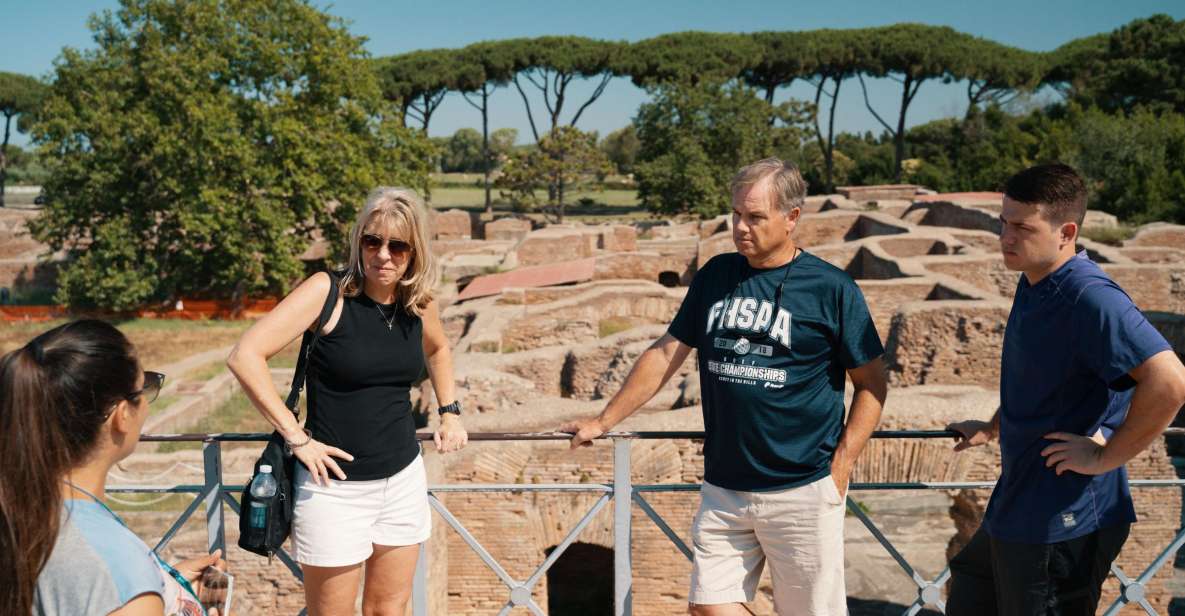
If you’re trying to see “ancient Rome” without losing a whole day to travel and crowd wrangling, Ostia Antica is a smart target. It’s not a flat ruin field. It’s a city with shapes you can follow: streets, storefronts, public buildings, homes, and the places people feared or avoided.
What makes this tour especially satisfying is the way the story stays practical. Instead of treating the site like a museum, your guide connects the dots between how the port worked and how Romans behaved inside it. You walk away understanding why this place mattered, not just what it looks like in photos.
And because the tour is private and runs at a half-day length (about 4.5 hours), you can get real sightseeing done without feeling like you’re sprinting from one “must-see” to another.
You can also read our reviews of more guided tours in Ostia Antica

Getting There From Rome: Train Ride Ease and the Real Meeting Tip
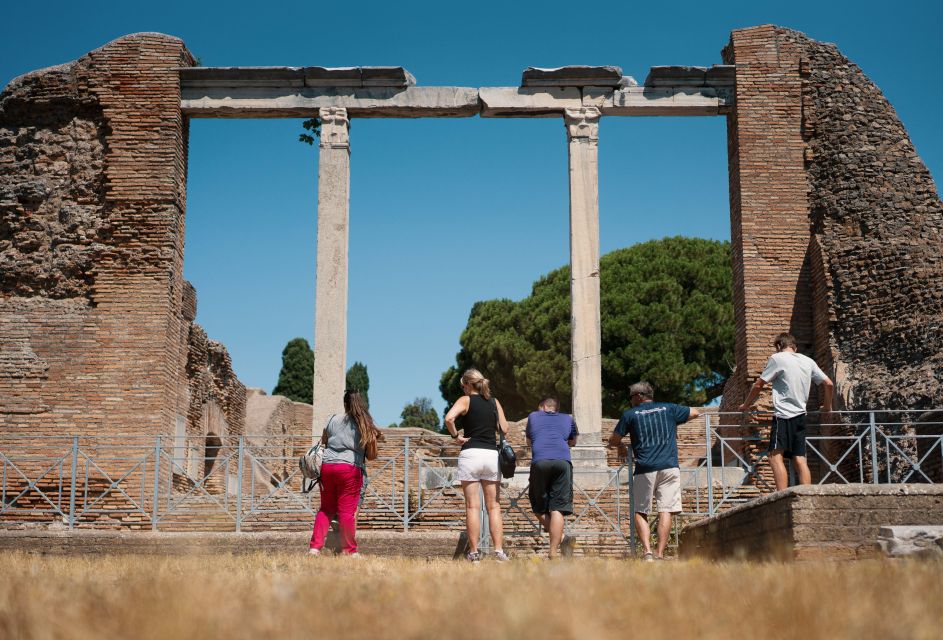
Ostia Antica sits close enough to Rome that the trip doesn’t feel like a full expedition. You’ll take a train from the city and reach the area in less than 20 minutes, then transfer into the archaeological park experience.
That quick transit matters more than it sounds. It keeps the day from turning into a commute day, and it gives you energy for the ruins themselves. Also, having a guide matters immediately on arrival, because the “where do we start?” feeling can otherwise steal time and focus.
One planning note: at least one guide experience shared that the Piramide metro meeting spot can feel a bit dodgy to wait at. So give yourself a little extra patience and arrive early enough to handle any confusion calmly.
Walking Through the Ancient Port: Shops, Mosaics, and Supply Routes
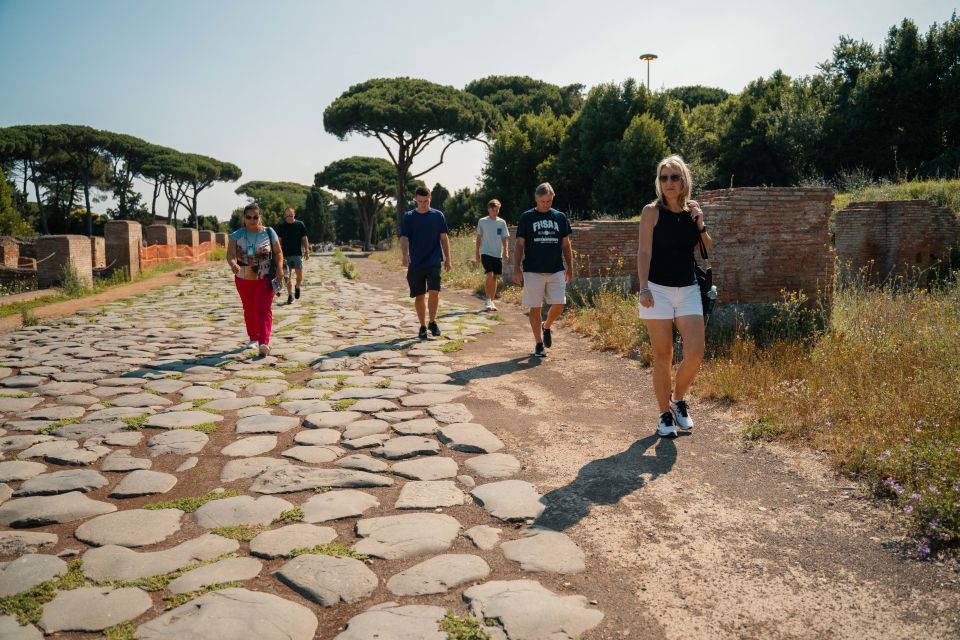
The tour’s start in the heart of the site is built around how Ostia functioned as Rome’s gateway. This is where you learn the port logic that turns scattered ruins into a coherent place.
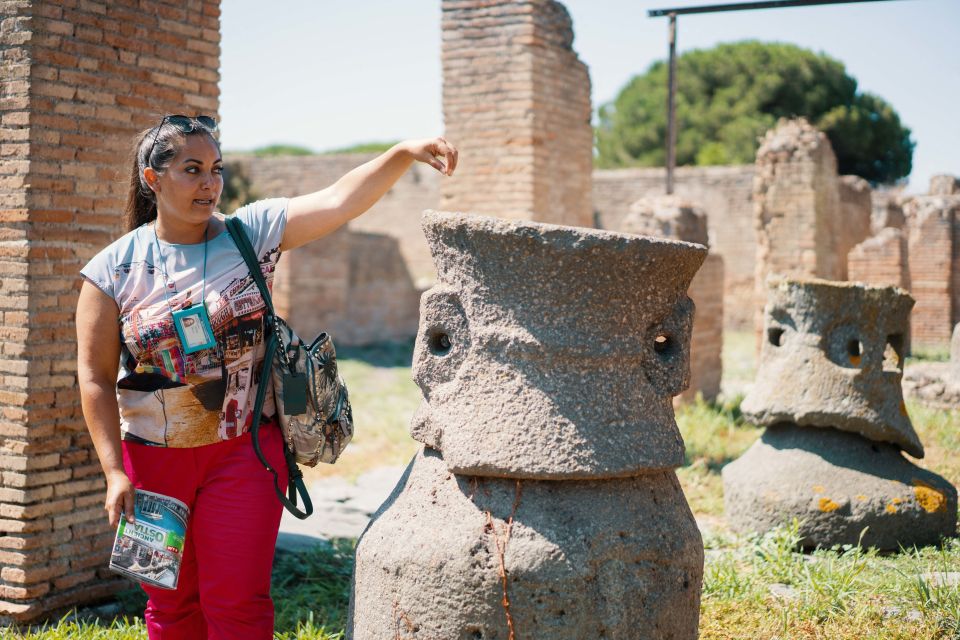
You’ll hear how Ostia sat at the mouth of the River Tiber—essentially the entry point for goods and people moving toward the capital. The tour includes specific examples of what flowed through: grains from Sicily, marble from Africa, slaves from Asia, and wine from Spain. That kind of detail is helpful because it gives you a mental map of the city’s jobs. You start seeing the buildings and shops as parts of an economy, not just stone backgrounds.
One highlight is walking through ancient shops that remain intact, including a fish shop with stunning mosaics. This is the kind of stop where a guide genuinely changes your experience. If you wander alone, you might admire the mosaic and move on. With a guide, you’ll notice how the shop spaces and layout suggest everyday commerce.
You also get the sense of “through-put” life: Ostia wasn’t just pretty; it was busy, functional, and built to handle movement on a big scale.
The Roman Theater: Seeing a Performance Space as a Real Place
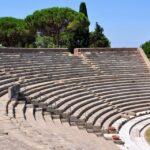
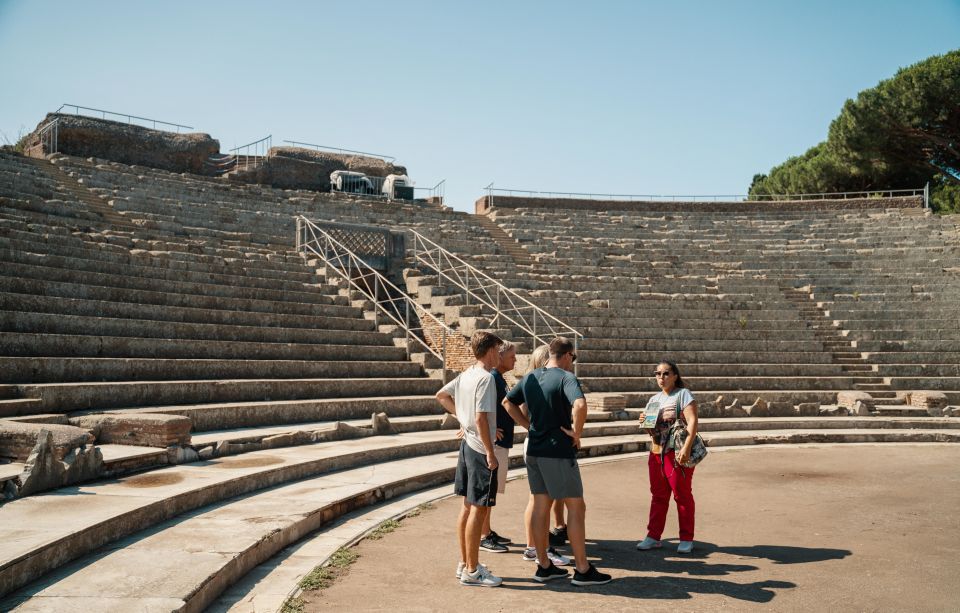
If there’s one stop that earns the wow factor, it’s the theater. The Roman theater of Ostia Antica is among the best-preserved in the world, and it’s still used for occasional performances.
Standing in a space like this shifts your brain from sightseeing to imagining. You can picture crowds gathering, see how the architecture supports sightlines and sound, and feel how entertainment fit into civic life. It’s not just a monument; it’s a machine for public gathering.
A good guide experience here is about interpretation: how the theater relates to the rest of the city and what it signals about Roman public culture. In a short tour, this stop helps you anchor everything else you see afterward.
Capitolium, Baths of Neptune, and the House of Diana: Public Power and Daily Life
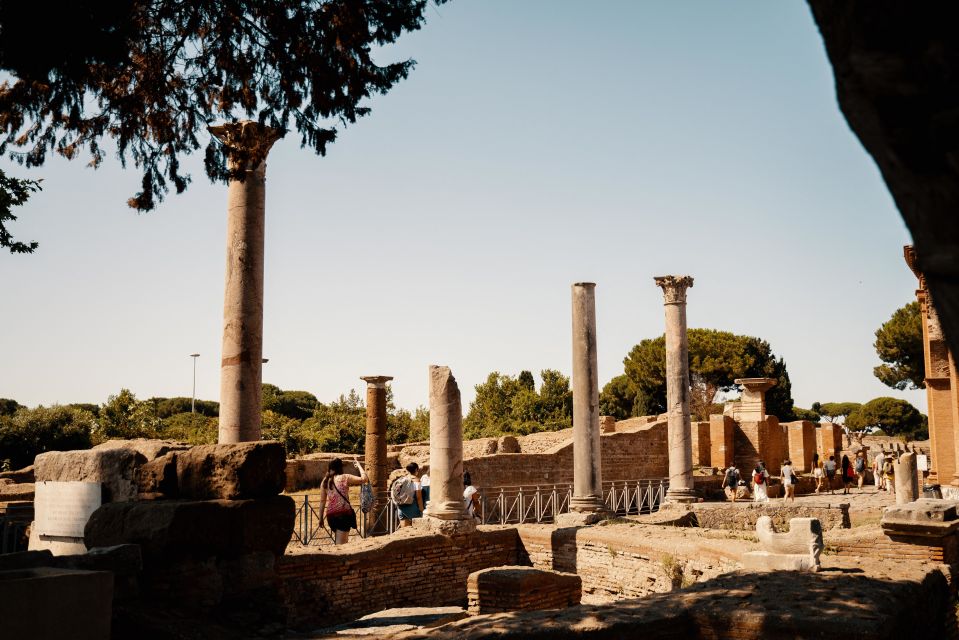
Now you move into the core of civic identity—where Ostia shows off the “we run the city” energy.
At the heart of public life, you’ll visit the Capitolium, a key monument area tied to Rome’s official world. Even if you don’t know the details before you arrive, your guide connects the dots so it doesn’t turn into a list of names. The point isn’t memorizing inscriptions; it’s understanding that these spaces were built for authority, ceremony, and gatherings.
From there, you’ll see the Baths of Neptune. Roman baths were more than washing. They were social space, routine space, and a place where conversation happened. Watching the ruins through that lens helps you appreciate why the area mattered to residents.
Then comes the House of Diana. This is where the tone shifts from public spaces to more private experience. You’ll learn about homes of former citizens, and the tour notes how the surroundings can feel green and pleasant. That contrast is one of the tour’s strengths: your eyes keep resetting, so the half-day doesn’t feel like one long stone lecture.
The Brothel Stop: Rome’s Sinful Side Without the Cheesiness

Some sites mention controversial topics. Ostia Antica lets you face one directly: the local brothel. The highlight list frames it as Rome’s sinful side, but the value here is what your guide turns it into: a window into street-level life and what Romans did with morality, commerce, and public space.
This is also a stop where a good guide matters. Without context, you might treat it as shock value. With context, it becomes a historical clue. You learn how the city’s adult entertainment was located and how it fit into the urban reality of a working port city.
If you’re sensitive to topics like this, it’s worth knowing it’s included. But it’s presented as part of the city’s story, not as a gimmick.
Necropolis Tombs and Eerie Atmosphere: The City’s Other Side
After the more public, earthy side of daily life, the tour takes you into the Necropolis area. These tombs can feel eerie, and that’s part of why the stop lands.
This isn’t just “look at graves.” It’s about seeing how Ostia handled mortality and memory, and how the city’s edges had their own kind of meaning. Your guide helps you interpret the space so it doesn’t just become a gloomy photo stop.
If you’ve only thought of Roman culture as grand monuments and heroic stories, this section corrects that imbalance. Rome also built for fear, loss, and remembrance, and Ostia shows that plainly.
Remarkably Well-Preserved Temples: Why They Feel So Legible
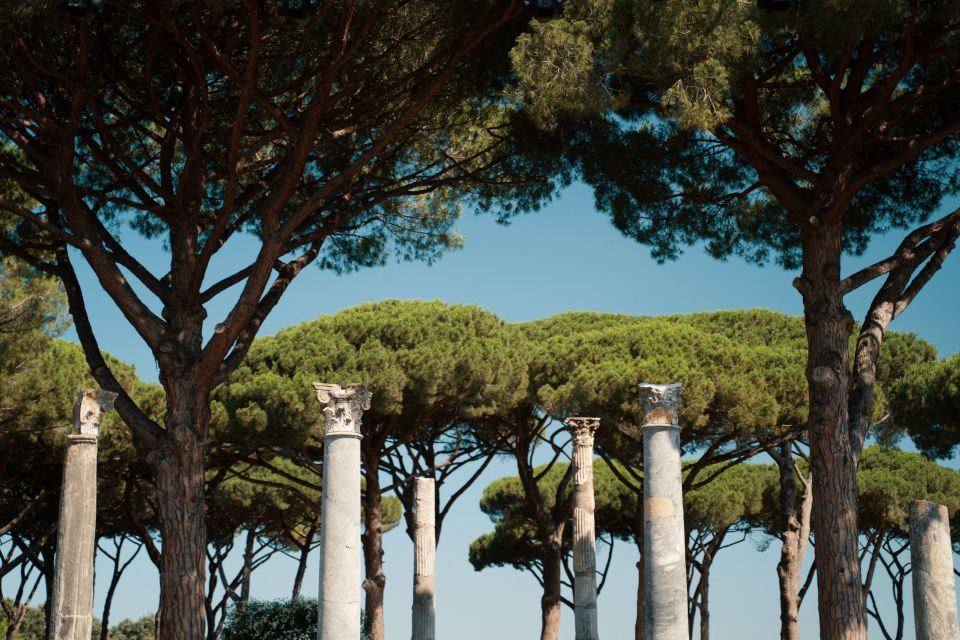
Another standout is how the tour treats the temples as something you can actually read. They’re described as remarkably well-preserved, which means you can make out architectural relationships without squinting like it’s a scavenger hunt.
These temple stops do two jobs. First, they show religion as visible city infrastructure. Second, they help you understand why Ostia’s “look” feels cohesive even when you’re surrounded by ruins. When structures stay intact, the city becomes legible—roads, squares, and building purposes become easier to understand.
With a guide, you also get the benefit of a structured explanation. You won’t have to guess at what you’re looking at, or how it ties into the rest of the city.
Restaurant and Café Break: A Practical Pause in the Right Place
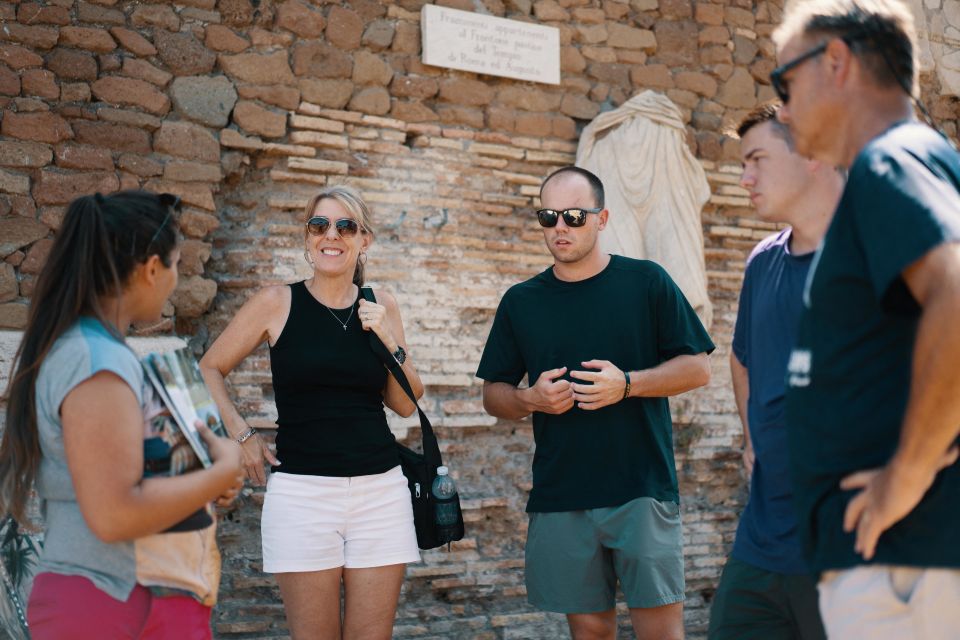
One underrated part of good archaeological tours is where the break happens. This one notes there’s a restaurant and café inside the park, so if you need food, water, or a quick sit, you don’t have to leave the site to find it.
Food and drinks are not included, so plan to buy on your own. Still, having the option inside the park makes the half-day feel more comfortable, especially if you’re sensitive to heat, walking time, or long stretches of standing.
Price and Value: What $648.74 Per Person Really Buys
The price—$648.74 per person—is not cheap. But for a private guided outing that includes admission, a train ticket, and a guide, the question becomes whether it’s the right fit for how you travel.
Here’s how I think about the value:
- You’re paying for a guide, and not just “someone to walk with.” The best parts of the tour are interpretation-heavy: the port supply story, the public buildings, the brothel context, and the Necropolis mood.
- You also get transport built in via the train ticket, which cuts down on planning effort and time.
- Admission is included, so you’re not juggling extra steps in a ticket process right before entering.
Where the cost might feel harder is if you’d rather do everything on your own, or if you’re traveling solo and the private-group pricing doesn’t spread across multiple people.
My practical advice: check your group size and compare it to the cost of separate tickets plus a local guide. If you want the city explained rather than just photographed, this can feel like a fair trade for your time.
Who This Tour Fits Best (and Who Should Rethink It)
This tour is a great fit if you want a focused, interpretation-led look at ancient Rome in a shorter time block. It’s especially good for:
- Couples or small groups who like a calmer pace
- People who want context for big stops like the theater, Capitolium area, baths, and tombs
- Travelers who appreciate details like mosaics and intact shopfronts
It may be less ideal if:
- You need wheelchair access or mobility accommodations, since it’s not suitable for people with mobility impairments or wheelchair users
- You’re looking for a mostly free-roam experience, because the guided structure is a big part of the value
Should You Book Ostia Antica From Rome?
I’d book this if you like your archaeology with a point of view. The ruins are genuinely impressive, but the tour’s real strength is how it turns them into a functioning story: port logistics, public power, private life, the adult side of the city, and the eerie Necropolis all in one half-day.
Do book with the mindset that you’ll do some steady walking on uneven ground, and bring comfortable shoes. And arrive early around the Piramide metro meeting point so you’re not stressed before the fun begins.
If you want a high-impact ancient Rome experience without spending your entire day traveling, this is one of the cleaner choices.
FAQ
How long is the Ostia Antica guided tour from Rome?
The tour lasts about 4.5 hours.
What’s included in the ticket price?
You get the admission ticket, train ticket, and a live guide.
Are food and drinks included?
No. Food and drinks are not included, but there is a restaurant and café inside the park if you want a break.
Is there a skip-the-ticket-line benefit?
Yes, skip-the-ticket-line is included.
What languages is the live guide available in?
The live tour guide is available in English, Arabic, French, and Spanish.
Is the tour wheelchair accessible?
No. It’s not suitable for wheelchair users or people with mobility impairments.
If you want, tell me your travel month and whether you’re visiting with family or just two people, and I’ll help you judge if the private-group price is likely to feel like a good deal for your setup.