REVIEW · OSTIA ANTICA
Rome: Ostia Antica Half Day Semi-Private Tour with Guide
Book on GetYourGuide →Operated by LivTours - We craft tours, you live them · Bookable on GetYourGuide
Ostia Antica turns Rome into stories you can walk through. This small-group half-day focuses on the ancient harbour city and the real mechanics of Roman commerce, from mosaics in the Neptune Baths to the places where people worked, bought, sold, and watched events.
I especially like the small-group size (up to 6), which keeps the pace human and the questions actually answered. I also like that the tour is built around specific, impressive stops, not just a quick pass through ruins. One consideration: 2.5 hours goes fast, so it’s best if you’re okay with a highlights route rather than a long, slow wander.
In This Review
- Key highlights you’ll remember
- Why Ostia Antica feels different from a Rome-only trip
- Starting at the right spot: entrance, guide, and timing
- Neptune Baths: mosaic magic and Roman bathing in context
- Necropoli di Porto: the burial city angle
- Piazza della Minerva: where public space meets daily function
- Forum of Corporations and trade power you can trace
- Ancient bakery, storefront-style spaces, and latrines: the stuff we forget
- Teatro di Ostia: scale, crowd energy, and what the events meant
- English guide, small group pacing, and why it helps
- Price and value: is $146.14 a smart use of time?
- What to bring and how to prepare
- Who this tour suits best
- Should you book this Ostia Antica half-day tour?
- FAQ
- Do I need a ticket in advance for Ostia Antica?
- How long is the tour?
- What group size should I expect?
- Where do I meet the guide?
- What’s included in the guided visit?
- What do I need to bring?
Key highlights you’ll remember
- Semi-private group (max 6): more attention from your guide and fewer bottlenecks at the big sights
- Skip the ticket line: you start exploring without losing time
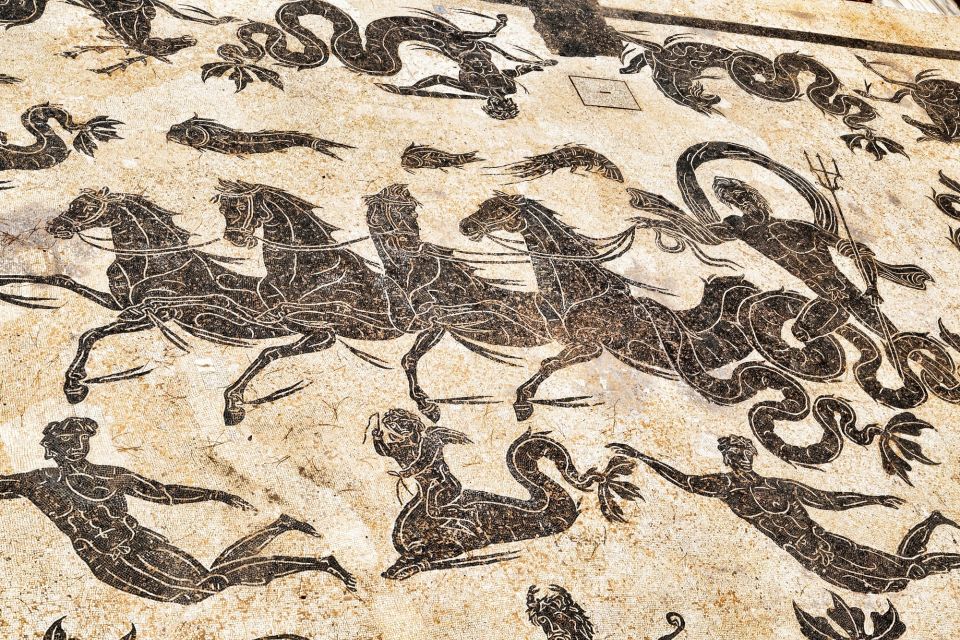
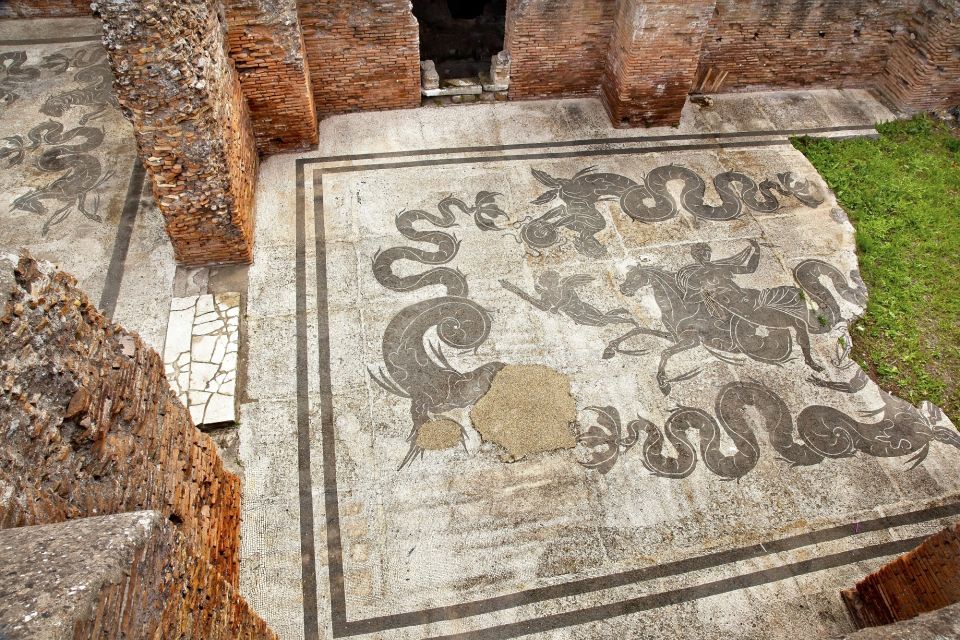
- Baths of Neptune mosaic: one of the most eye-catching preserved mosaics at the site
- Forum of Corporations and trade focus: you see how Augustus-era commerce shaped the city
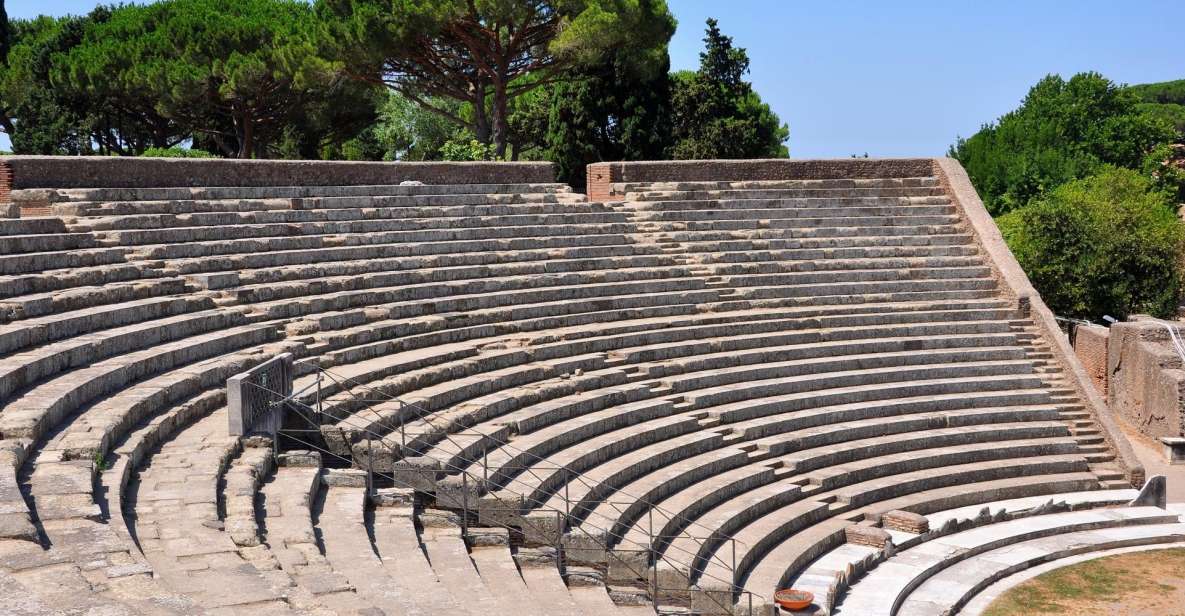
- Teatro/Amphitheatre scale: a venue that once held up to 3,500 people
- Daily life details beyond temples: storefront-like spaces, bakery, and even ancient latrines
Why Ostia Antica feels different from a Rome-only trip
If Rome is the grand stage, Ostia Antica is the working port that kept the show going. You’re looking at a major trade and commerce center of the Roman Empire, and your guide will keep tying each ruin to a practical question: who used this place, and what problem did it solve?
I like that this tour doesn’t just point at stones. It links them to systems. The tour highlights how advanced Roman engineering supported everyday life, including complex water systems that brought hot and cold water into buildings. That’s the kind of detail that makes ruins feel less dead and more like infrastructure.
You can also read our reviews of more guided tours in Ostia Antica
Starting at the right spot: entrance, guide, and timing
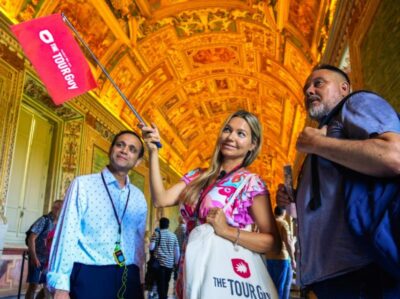
Your meet-up is simple and easy to find: at the entrance of the Ostia Antica archaeological site, directly outside the ticket office. Your guide will be holding a LivTours sign.
Because the tour is listed as a 2.5-hour experience, the schedule is designed for momentum. You’ll have enough time to understand the “why” behind each area, but you won’t have hours to linger at every corner. If you like taking your time, plan a little extra after the tour to return to one or two spots your guide mentions.
Neptune Baths: mosaic magic and Roman bathing in context
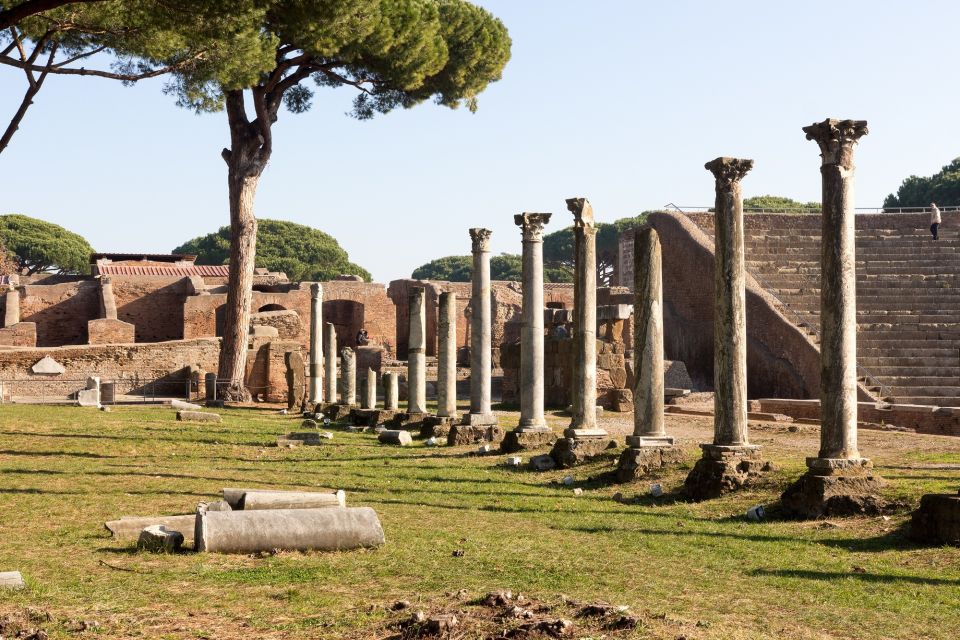
The tour’s first big stop is the Baths of Neptune, and that choice tells you what kind of experience you’re getting. Your guide focuses on the impressive preserved mosaic of Neptune, the Roman god of the sea.
This isn’t just an art stop. In an ancient port city, the sea was money, transport, and survival. Seeing Neptune depicted in a bath complex helps you connect religion and daily routine. And because the tour also touches on Roman engineering, you’ll get a sense that public bathing wasn’t only about hygiene—it was about comfort and urban life in a major city.
A practical tip: take a moment to look at the mosaic from a few angles. Mosaics can read differently as you shift your position, and with a guided group, you’ll often have a short window where the guide’s explanation helps you notice details faster than you would alone.
Necropoli di Porto: the burial city angle
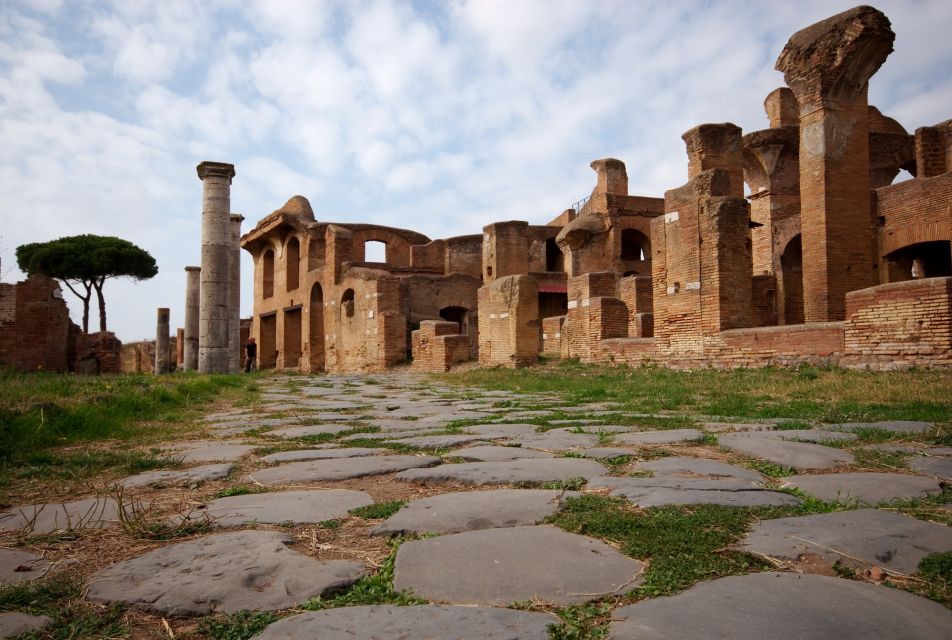
Next comes Necropoli di Porto. Even if you’ve toured Roman ruins before, necropolises change the tone. Instead of focusing on the bustle of commerce, you’re stepping into the world of remembrance—how communities marked identity and continuity.
Why it’s worth including in a trade-focused tour: a port city isn’t only built for shipping goods. It’s also where families lived, worked, and made arrangements for the afterlife. Your guide’s framing helps you see the harbour city as a full society, not just a backdrop for ancient business.
One consideration here: if you’re sensitive to museum-style walking where the ground can be uneven, keep your footing careful. Ostia Antica is an archaeological site, and comfort depends on shoes as much as on the route.
Piazza della Minerva: where public space meets daily function
Then you move to Piazza della Minerva. The name points to a defined square space, and your guide will use it to connect the dots between the city’s major activity zones.
This is also a good moment for the tour’s broader theme to click: you’ll hear how Ostia’s commerce network fed Rome’s growing needs. The guide doesn’t keep it abstract. Expect explanations that connect the city’s trade role to food supply, population growth, and the systems that made a huge network function.
If you enjoy tours where the guide paints the “how it worked” story—not only the “what it was”—this stop style tends to land well.
Forum of Corporations and trade power you can trace
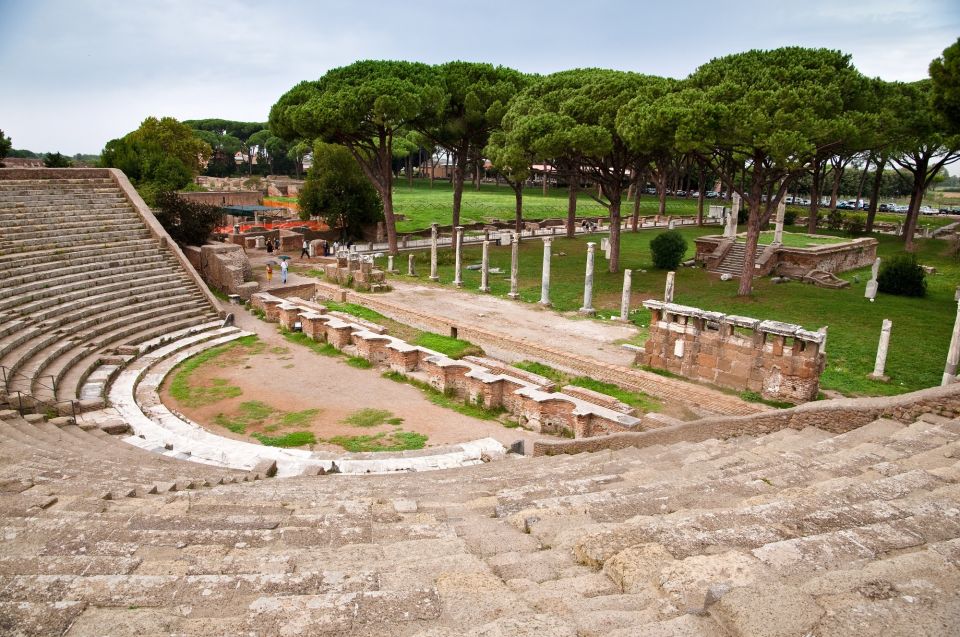
The tour includes the Square of the Corporations and the Ostia Forum, and that matters because the Forum of Corporations is described as the center of commerce and trade during the time of Emperor Augustus.
Here’s why I think this kind of focus is smart for visitors: a lot of historical ruins are famous for the political elite. This one highlights the network that supported daily trade. If Rome was the empire, Ostia was a key machine. Once you understand that, it becomes easier to read other structures—like how storefront-like areas fit into the larger city economy.
You might also notice the guide’s attention to day-to-day logistics, including how Romans managed practical systems and how the city supported movement, storage, and consumption. It’s the difference between seeing ruins and understanding a functioning city.
Ancient bakery, storefront-style spaces, and latrines: the stuff we forget
Ostia Antica isn’t only monuments. This tour specifically includes the ancient bakery and ancient latrines, plus “ancient storefronts” type spaces as part of the walk-through experience.
These details are often what make Ostia feel real. People argue about the Roman Empire’s scale, but you don’t need a lecture hall to get it. You see how everyday life was organized: food production, trade activity, and sanitation. That’s how the ancient city stayed healthy enough to serve a growing population and keep the port running.
The humor part, if you can call it that: latrines are not glamorous, but they’re incredibly useful for understanding what Romans expected from a city. A guide who points this out well helps you look past the “tourist ruins” label and treat it like evidence.
Teatro di Ostia: scale, crowd energy, and what the events meant
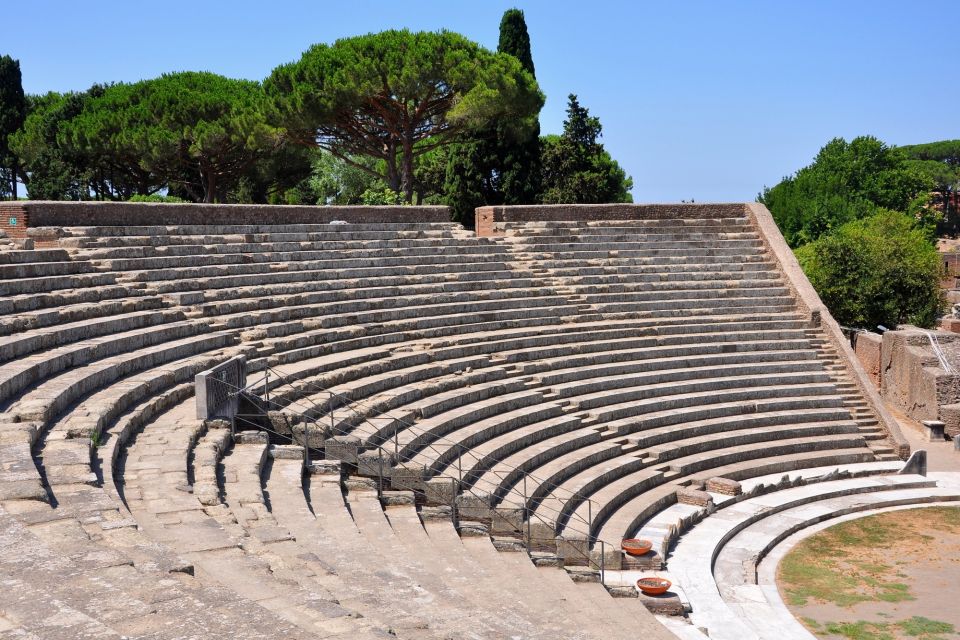
The tour ends with Teatro di Ostia (the ancient theatre). This is one of the most dramatic locations on the route, and your guide will give you the context: the venue once held up to 3,500 onlookers.
You’ll learn about what kinds of events were held there and how the theatre fit into life in a major harbour city. Even if you’ve visited big Roman amphitheatres before, the port-city setting changes the vibe. This wasn’t only for elites making political theatre. It was entertainment for people living and working in a busy commercial hub.
Practical note: seats and sightlines matter less than your guide’s explanation here. If you listen closely while standing where the crowd might have been, you’ll understand how the space was designed to hold attention—then you’ll look at it with different eyes long after the tour ends.
English guide, small group pacing, and why it helps
The tour runs with an English live guide, and the group is limited to 6 participants. That size is the key. With a half-day route, crowded groups can turn stops into photo-lines. Here, the smaller format makes it more like a guided conversation with stops, rather than a rapid march.
The pacing also matters. In the feedback associated with this tour, guides like Tiffany have been praised for timing and a lot of interesting information, and Federico has been noted for being an amazing guide. Even without relying on names, you can treat this as a signal that the experience is built around clear explanations and a plan that doesn’t leave you guessing.
Price and value: is $146.14 a smart use of time?
At $146.14 per person for about 2.5 hours, you’re paying for two things: expert guidance and a concentrated hit of major areas. The tour includes entrance tickets for Ostia Antica and coverage of specific sites such as the Baths of Neptune, Ostia necropolis, Piazza della Minerva, and the ancient theatre, along with features like the forum, square of the corporations, ancient bakery, and ancient latrines.
If you were to visit on your own, you could buy tickets and walk the grounds. But without a guide, you’re likely to spend more time figuring out connections between sites—especially for the trade-focused story (Augustan commerce, corporation spaces, water systems, and how daily life supported the harbour economy). For many visitors, that context is exactly what turns “I saw ruins” into “I understood the place.”
In short: this price makes sense if you want interpretation and structure more than you want free-form wandering.
What to bring and how to prepare
You only need to bring a passport or ID card. For a smooth day, also pack your usual site-walking basics: comfortable shoes and sun protection, since you’ll be outside for the full half-day.
Also, check the starting times when you book, since the itinerary is listed as 2.5 hours and availability can affect when you can go.
Who this tour suits best
This experience is a great fit if you:
- want a trade-and-engineering themed visit to Ostia Antica, not just highlights
- like learning from a guide with a small group size
- enjoy a route that covers major anchors like the Neptune Baths, theatre, and necropolis without turning it into a full day
If you’re the type who wants to spend half the day photographing mosaics silently, you might find the pacing too structured. But if you want to understand what you’re seeing, this tour style usually works well.
Should you book this Ostia Antica half-day tour?
I’d book it if your goal is understanding. The mix of stops—Baths of Neptune, Necropoli di Porto, Piazza della Minerva, and Teatro di Ostia—combined with the guide’s focus on commerce, daily life details, and Roman engineering gives you a strong story in a short time.
I wouldn’t choose it if you’re chasing maximum free time on-site or if you’re hoping for a slow, pick-your-own-adventure wander. The 2.5 hours format is built for momentum and clarity, not lingering.
FAQ
Do I need a ticket in advance for Ostia Antica?
No. This tour includes entrance tickets for Ostia Antica, and it’s described as skipping the ticket line.
How long is the tour?
The duration is 2.5 hours.
What group size should I expect?
It’s a small group experience limited to up to 6 participants.
Where do I meet the guide?
Meet at the entrance of the Ostia Antica archaeological site, directly outside the ticket office, where your guide will be holding a LivTours sign.
What’s included in the guided visit?
The tour includes a fully guided experience with stops covering Baths of Neptune, Ostia necropolis, Piazza della Minerva, Teatro (ancient theatre) of Ostia, plus the Square of the Corporations, Ostia forum, ancient bakery, and ancient latrines.
What do I need to bring?
Bring passport or ID card.