REVIEW · ROME
Rome: Leonardo da Vinci Exhibition Entrance Ticket
Book on GetYourGuide →Operated by Mostra di Leonardo da Vinci · Bookable on GetYourGuide
Leonardo da Vinci made engineering feel like play. This ticket gets you into a multimedia exhibit in the Vatican-owned Palazzo della Cancelleria, where you’ll see 65 full-scale machines plus 9 holograms that bring his ideas to life. I like the hands-on setup and the calm, well-paced layout—but watch your step in the interactive areas, since it’s not a wide-open, stroller-friendly space.
Two things I really liked: the chance to touch and test many of the machines, and the way the exhibit turns sketches into something you can understand in minutes, not months. As a bonus, it includes an on-site gadget and you can usually dip in when you want, as long as you enter up to an hour before closing. One consideration: it’s not a “big museum day” attraction, so if you’re expecting hours of galleries, plan around a shorter visit.
In This Review
- Key highlights you’ll actually notice
- Leonardo da Vinci, but in machine form at Palazzo della Cancelleria
- What you see first: 65 machines and the 3D hologram effect
- The four science rooms: Water, Air, Fire, and Earth
- The hands-on stops: touch, test, and even build a bridge
- The underground pond and the tomb from 43 BC
- The audio/headphones option: worth using if you like context
- Location and meeting point: Piazza della Cancelleria 1
- Planning your visit: how long to allow and when to arrive
- Price and value: why $10 feels fair here
- Who should book this Leonardo da Vinci exhibition ticket?
- Should you book this Leonardo da Vinci exhibition ticket?
- FAQ
- Where is the Leonardo da Vinci exhibition in Rome?
- How much does the ticket cost?
- How long should I plan for the visit?
- What’s included with the ticket?
- Is a guide included?
- Do I need to book a specific time?
- Does the ticket skip the line?
- Is it wheelchair accessible?
- Something else to consider
Key highlights you’ll actually notice
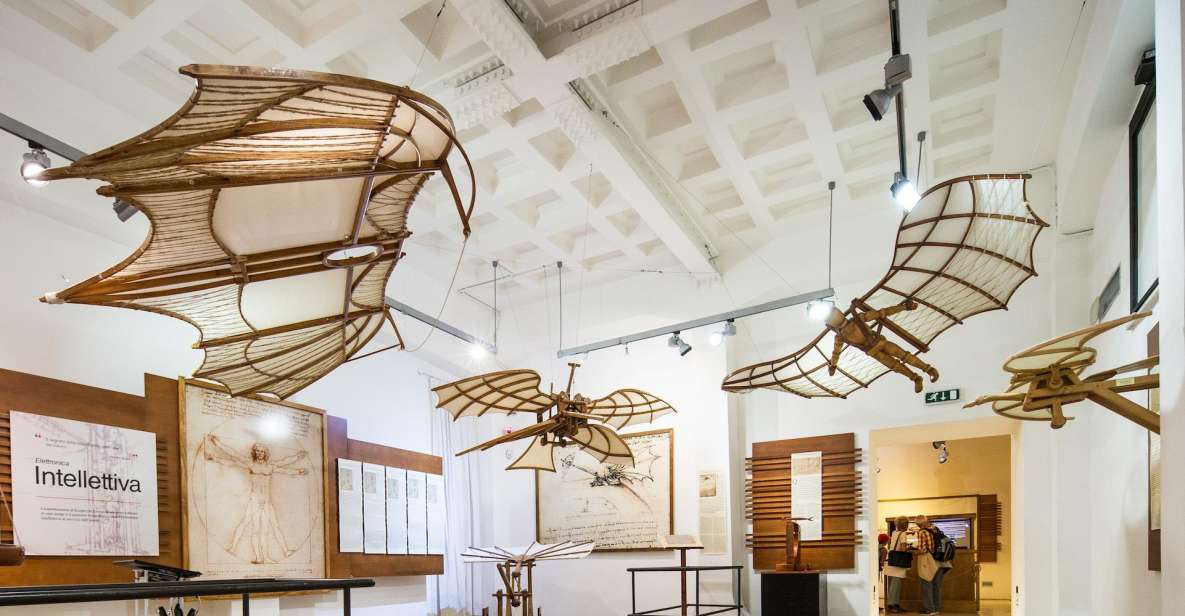
- 65 full-scale Leonardo machines built from his designs
- 9 holograms that show Da Vinci’s works and inventions in 3D
- Four themed sections built around Water, Air, Fire, and Earth
- Hands-on installations tied to his drawings (7 interactive stops)
- A tomb from 43 BC set inside an underground pond feature
- A gadget included with your entry plus optional audio/headphone guidance on site
Leonardo da Vinci, but in machine form at Palazzo della Cancelleria
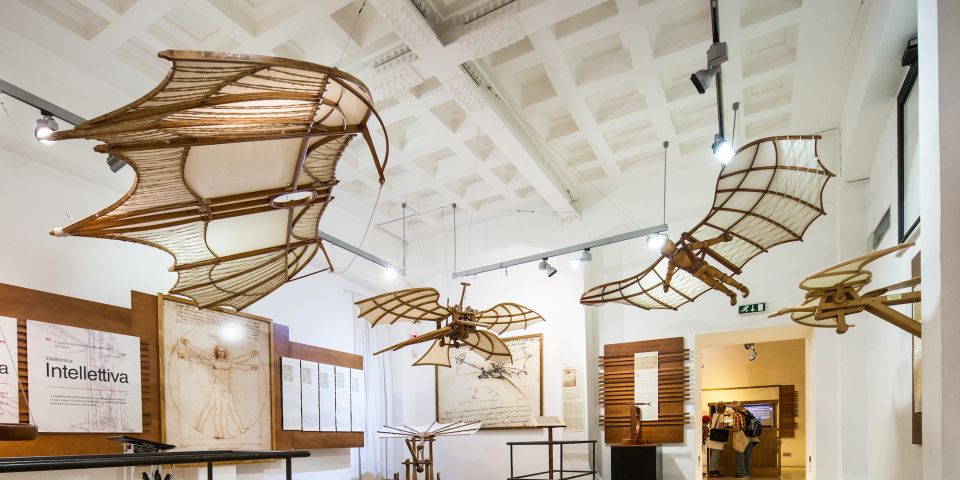
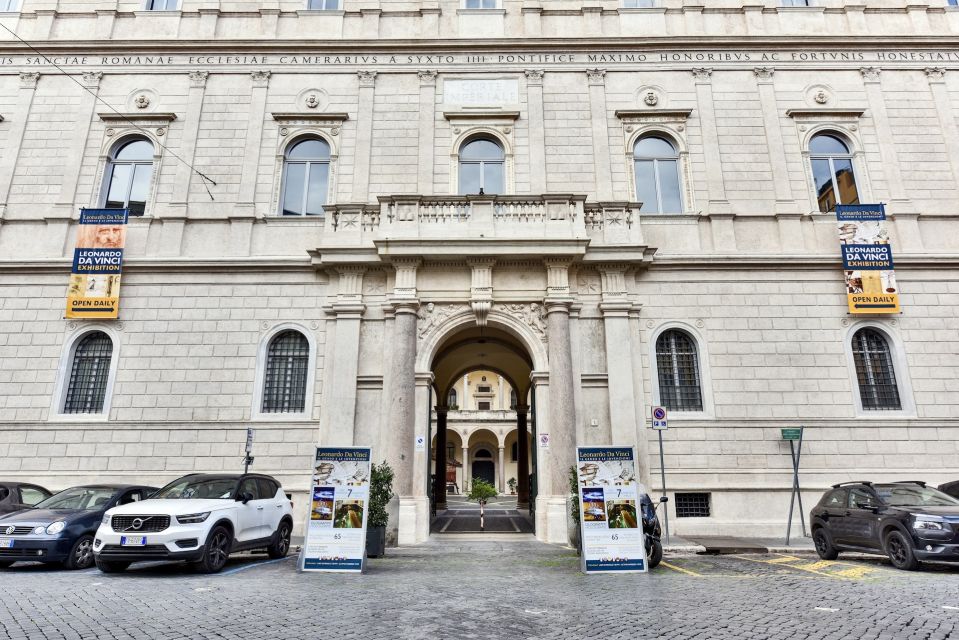
Rome has a lot of “look but don’t touch” museums. This one flips that rule. Your entrance ticket leads you into a focused exhibition housed in the Palazzo della Cancelleria, a historic building linked to the Vatican, with architectural interest all by itself.
The setting helps the experience. Even if you’re hot and tired from walking around Campo de’ Fiori or Piazza Navona, this exhibit gives you a sheltered route to something different. One theme shows up again and again: Da Vinci as an engineer, not just a painter. The museum is built around that idea, so you won’t feel like you’re wading through unrelated rooms.
You can also read our reviews of more tours and experiences in Rome


What you see first: 65 machines and the 3D hologram effect
The core promise is clear—you’re seeing machines made from Leonardo’s thinking. The exhibition displays 65 full-scale machines created according to his drawings and principles. That “full scale” part matters. Little diagrams can look clever; working models (even reproductions) make you understand what problem he was trying to solve.
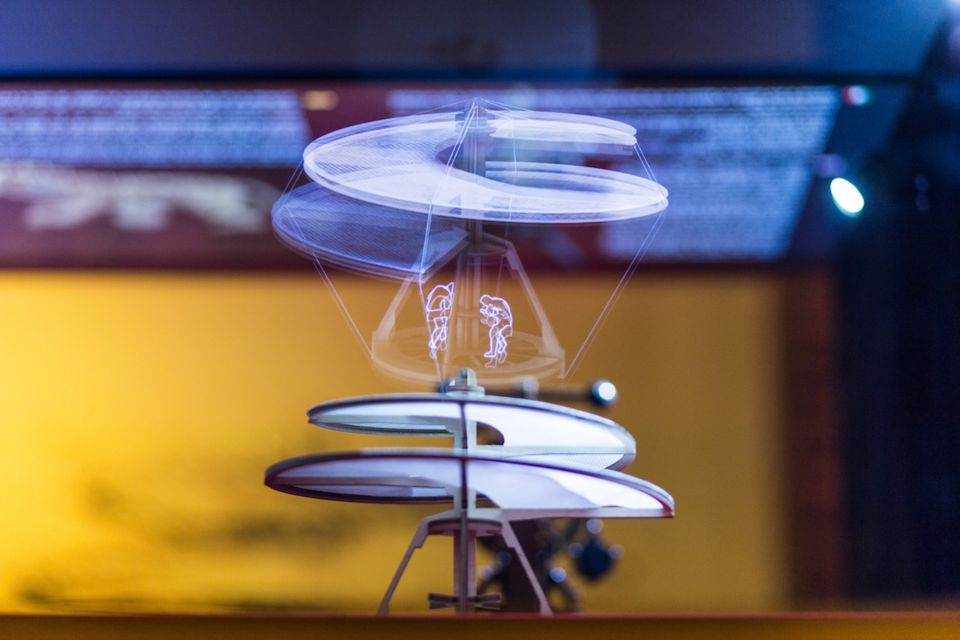
Then comes the wow factor: 9 holograms. These aren’t just flashing visuals. They’re used to show Da Vinci’s paintings and inventions in 3D, so you can connect the art side and the engineering side. If you care about how ideas become form, this is the moment that helps the exhibit click.
A practical note: this is a multimedia museum, so lights, screens, and effects are part of the experience. If you’re sensitive to intense audio or bright projection, give yourself a few minutes to choose where you stand before pressing play.
The four science rooms: Water, Air, Fire, and Earth
The exhibit is organized into four sections. You’ll see Leonardo’s thinking across themes that feel timeless: how water behaves, how air moves, how fire works, and how earth and structures hold up. Each section ties back to the same question: how do nature’s rules turn into technology?
Here’s what that means for you as you walk through:
- You get a “systems” view of Da Vinci. It’s not just machines one at a time; it’s principles.
- You can read the room like a science starter kit—each theme supports the next.
- It feels more like learning physics through inventions than studying inventions through trivia.
If you’re the type who likes architecture, transportation, or mechanical design, these sections are the bridge between historical sketches and the modern world. Even if you don’t have a technical background, the organization keeps things understandable.
The hands-on stops: touch, test, and even build a bridge
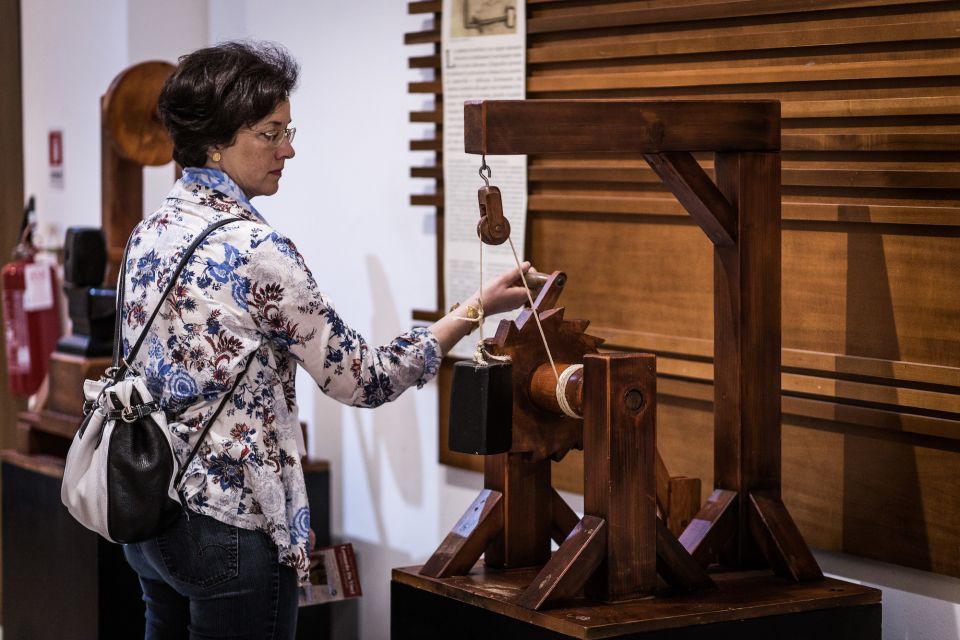
Leonardo would probably enjoy how this museum works. You’re encouraged to interact. The exhibit includes 7 interactive installations tied to Leonardo’s drawings, and many of the machines are ones you can get close to—and in many cases, touch and try.
The highlight of this interactive style is that it turns “understanding” into “doing.” You might test how a mechanism behaves, then compare it to what you’d expect from real engineering. That’s what makes it memorable. It’s not only watching; it’s experimenting in a safe, museum-style way.
There’s also a “build” concept. One of the activities lets you create your own version of a bridge that Leonardo invented. That’s a small task compared to what you’re seeing on the walls, but it’s a smart way to put the idea into your hands. If you like creative prompts, this is the section that keeps you engaged.
One drawback to keep in mind: it’s interactive, so surfaces and paths can be uneven or crowded with people leaning in. Go slow at eye level, and keep an eye on the small “don’t trip” spots—especially if you’re with kids who run ahead.
The underground pond and the tomb from 43 BC
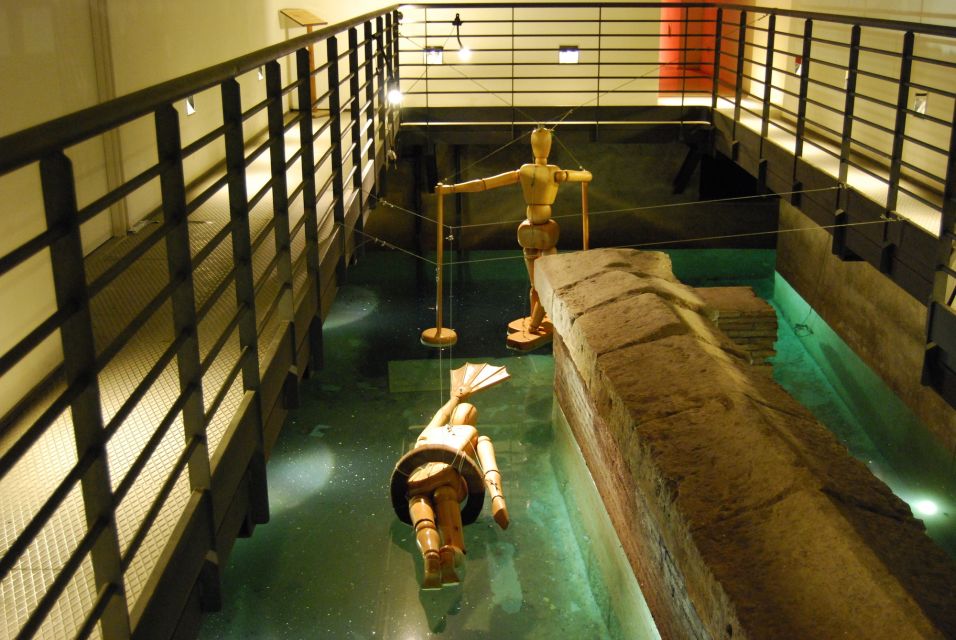
Not every Da Vinci exhibit gives you a surprise history lesson from ancient Rome. Here, you’ll encounter a tomb dating to 43 BC, and it’s presented in an underground space with an immersed pond feature.
This matters because it changes the pace. After moving through machines and holograms, your brain gets a reset in a quieter setting. You’re still in the Palazzo, still surrounded by history, but the focus shifts from technology to setting—time layers under one roof.
If you like when museums connect eras (ancient engineering, Renaissance engineering, and how all of it influences modern design), this tomb-with-pond moment delivers.
You can also read our reviews of more museum experiences in Rome





The audio/headphones option: worth using if you like context
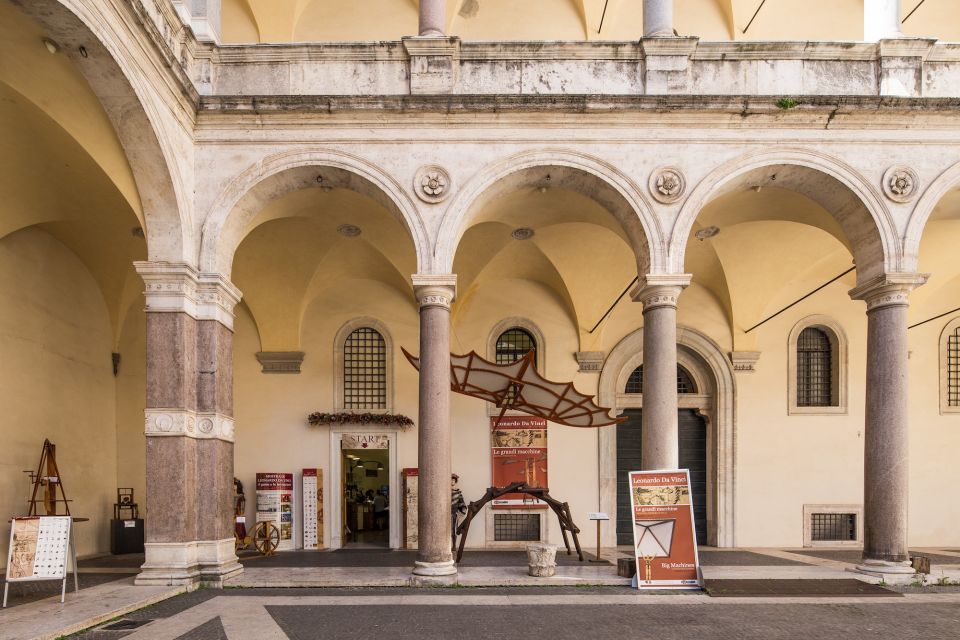
The ticket you buy includes exhibition entrance, and you’ll also receive a gadget. A guide is not included.
That said, multiple visitors point out that audio support can make a big difference, especially if you want more explanation for what you’re looking at. The exhibit is visual and interactive, but some machine details are easier to follow when someone ties the meaning together for you.
So if you’re deciding whether to add the headphone/audio experience on site, I’d lean yes—especially if you want the “why” behind the drawings, not only the “what.” It’s also helpful if you’re moving through faster and want the exhibit to feel coherent.
Location and meeting point: Piazza della Cancelleria 1
You’ll find the exhibition at Piazza della Cancelleria 1, near Campo de’ Fiori and Piazza Navona. That’s a handy location because you can pair it with a normal sightseeing day without turning it into a logistical puzzle.
In practice, I recommend treating it like a “midday cool-off” stop. The museum is indoors, and it’s a way to get out of the heat while still feeling like you’re doing something meaningful.
Planning your visit: how long to allow and when to arrive
The activity is listed as 1 day, and you can enter until 1 hour before closing time. The exhibit isn’t huge, so you don’t need to carve out a whole day.
From the way people describe their timing, a realistic plan is:
- 45–60 minutes if you move at a steady pace and focus on the big highlights
- 1.5–2 hours if you stop, read, and actually try the interactive pieces
If you’re trying to fit it between crowded landmarks, this flexibility is a genuine advantage. It’s also one reason the museum works well for families: you get a full experience without needing to keep everyone entertained for an entire afternoon.
Tip: arrive with comfortable shoes and a slow start. The first part can pull you in quickly, and then you’ll want time to return to whatever you touched earlier.
Price and value: why $10 feels fair here
At $10 per person, the value equation is straightforward: you’re paying for a ticket that includes entry and a gadget, and you’re walking through a museum where the exhibits are big, physical, and interactive.
This isn’t one of those attractions where you pay for a quick photo stop and then leave. Even when the museum isn’t “massive,” the combination of:
- full-scale replicas,
- hologram storytelling,
- and hands-on machine time
adds up to more than a ticket to look at glass cases.
Also, the exhibit is a smart “interest match” purchase. If you’re into design, engineering, architecture ideas, or even just how the mind works when it sketches systems, this is the kind of ticket that doesn’t punish you for not being technical.
One more value angle: it’s a calmer alternative to Rome’s biggest lines. If you want Da Vinci without spending your day fighting crowds, this is a good choice.
Who should book this Leonardo da Vinci exhibition ticket?
I’d book it if you:
- love hands-on learning or you’re traveling with kids who like to try things
- want Da Vinci’s inventions presented as engineering, not only artwork
- prefer a shorter museum stop you can fit into a day of walking
- enjoy multimedia museums when they’re used to explain ideas, not distract
I might skip it (or at least set expectations) if you:
- want a large museum crawl with hours of rotating galleries
- dislike interactive displays and prefer quiet viewing
- are extremely focused on original Renaissance paintings or rare artifacts (this is mostly about reproductions and concept storytelling)
Should you book this Leonardo da Vinci exhibition ticket?
Yes, I think you should book it if your goal is Da Vinci as an inventor you can understand quickly. The price is low, the setting is distinctive, and the experience leans into what makes Leonardo fun: turning drawings into working mechanisms.
If you’re the sort of traveler who likes a break from the sun and wants something thoughtful without being heavy, this hits the mark. Go in expecting a focused exhibit—not an all-day mega-museum—and you’ll likely leave with that rare feeling: you learned something new and you actually had time to play with it.
FAQ
Where is the Leonardo da Vinci exhibition in Rome?
It’s at Palazzo della Cancelleria, Piazza della Cancelleria 1, near Campo de’ Fiori and Piazza Navona.
How much does the ticket cost?
The ticket price is listed as $10 per person.
How long should I plan for the visit?
The duration is listed as 1 day for the activity overall, and the exhibit itself is generally a shorter stop—often around an hour, with more time if you interact with machines and read.
What’s included with the ticket?
Your ticket includes the exhibition entrance fees, and you’ll receive a gadget.
Is a guide included?
No. A guide is not included.
Do I need to book a specific time?
Your entry is available until 1 hour before closing time, and it’s valid for 1 day. Check availability for starting times.
Does the ticket skip the line?
Yes, it includes skip-the-ticket-line access.
Is it wheelchair accessible?
Yes, the activity is wheelchair accessible.
Something else to consider
If you want the extra context as you move through the machines and holograms, look for the audio/headphone option on site when you arrive. If you don’t want extra extras, you’ll still get a solid experience from the exhibit design and interactive parts.