REVIEW · ROME
Rome: Jewish Ghetto, Great Synagogue & Trastevere Tour
Book on GetYourGuide →Operated by Brastours · Bookable on GetYourGuide
Old Rome turns into living memory. I like the small group size (10 max) and the skip-the-line access to the Jewish Museum and Great Synagogue. One thing to consider: depending on the pacing, you may not always get the full advertised 3 hours.
I also enjoy how the route strings together places you usually see separately—Trastevere streets, the Tiber Island crossing, and then the Jewish quarter—so the story feels connected rather than chopped up. You’ll finish with time inside the Jewish Museum and the Great Synagogue, where artifacts and documents point to a community that’s been here for centuries.
In This Review
- Key highlights to look forward to
- From Ponte Sisto to Trastevere: the walk that sets the mood
- Santa Maria in Trastevere and the art stops you’ll remember
- Crossing the Tiber, then landing in the Jewish Ghetto
- Jewish Museum and Great Synagogue: where the story gets tangible
- Headsets, group size, and why the guide matters
- Timing reality: aiming for 3 hours, but watching your pace
- Dress code and site rules: what you can wear and what you should skip
- Price and value: is $82 a fair deal for this route?
- Who this tour fits best
- Final call: should you book this Rome Jewish Ghetto tour?
- FAQ
- How long is the Rome Jewish Ghetto, Great Synagogue & Trastevere Tour?
- Where do I meet the guide?
- What is included with the tour price?
- Is the tour in English?
- Is the group small?
- Are headsets provided?
- Is this tour wheelchair accessible?
- Are there dress code rules?
- What should I avoid bringing?
Key highlights to look forward to

- 10-person small group keeps the walk manageable and questions more likely to land
- Skip-the-line tickets for both the Jewish Museum and the Great Synagogue saves real time
- Trastevere-to-Ghetto route pairs everyday Roman street life with a site of deep memory
- Headsets included so you can hear the guide without craning your neck
- Stops tied to Bernini and Caravaggio show how art weaves through the neighborhood’s landmarks
- A panoramic view moment gives you a great sense of where you are in Rome
From Ponte Sisto to Trastevere: the walk that sets the mood
This is a walking tour that starts right by the Fontana di Ponte Sisto, a good launch point if you want to get your bearings fast. From there, you move into Trastevere, one of Rome’s most character-filled neighborhoods: narrow lanes, lively piazzas, and that mix of locals, late-night energy, and casual street scenes that makes you feel like you’re watching real daily life.
I like the way Trastevere acts as the warm-up before the heavier stops. You’re not just shuffling from one “sight” to the next—you’re moving through a district with its own rhythms, so when you reach the Tiber crossing and then the Jewish Ghetto, the change in setting hits harder (in a good way).
Expect a guided stroll with time to look closely as you go. If you’re trying to fit everything into one afternoon, this route makes sense because it uses a tight loop of areas that are close together on a map and connected in theme.
You can also read our reviews of more tours and experiences in Rome.



Santa Maria in Trastevere and the art stops you’ll remember

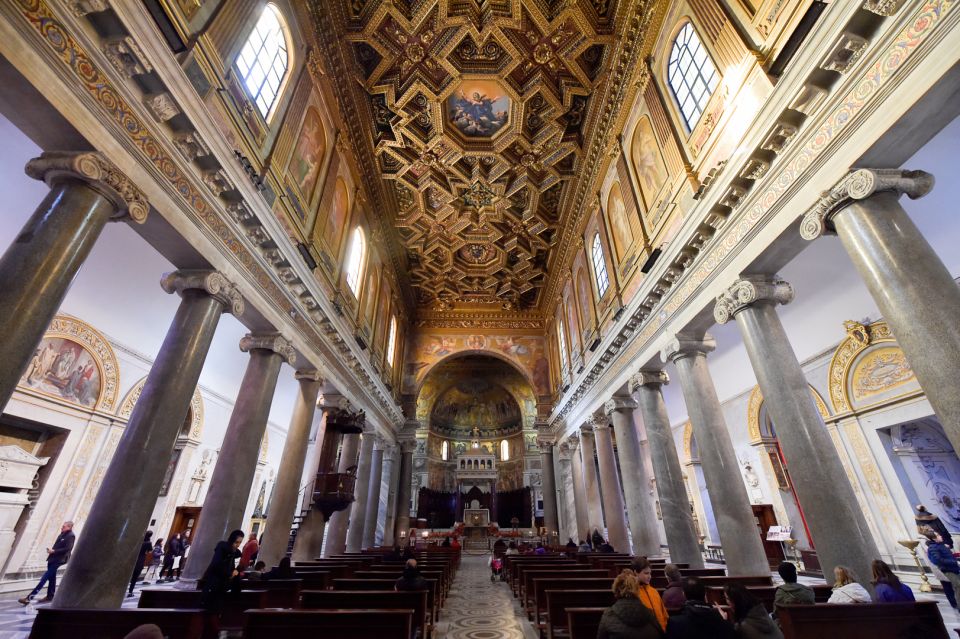
A key mid-tour stop is Santa Maria in Trastevere, with guided time inside. This church stop matters here because the tour isn’t only about the Jewish quarter—it’s also about understanding Rome as a whole, where different communities and different artistic traditions overlap in the same city blocks.
The tour highlights call out masterpieces by Bernini and Caravaggio, and that’s the sort of detail that can turn a “quick church visit” into a more meaningful one. Even if you’re not a hardcore art person, you’ll likely appreciate spotting why these artists are still talked about—because the works are visibly influential, not just trivia.
Here’s the trade-off: the tour includes time around churches. If your main goal is strictly the Jewish Ghetto and synagogue story, you may want to mentally budget for a little extra sightseeing time before you get to the museum and synagogue doors.
Crossing the Tiber, then landing in the Jewish Ghetto

After Trastevere, the route takes you to the Tiber Island, including a guided walk across the river. That crossing is more than scenic. It helps you feel the city’s layout—how the river splits neighborhoods and how Rome grew around natural barriers and crossings.
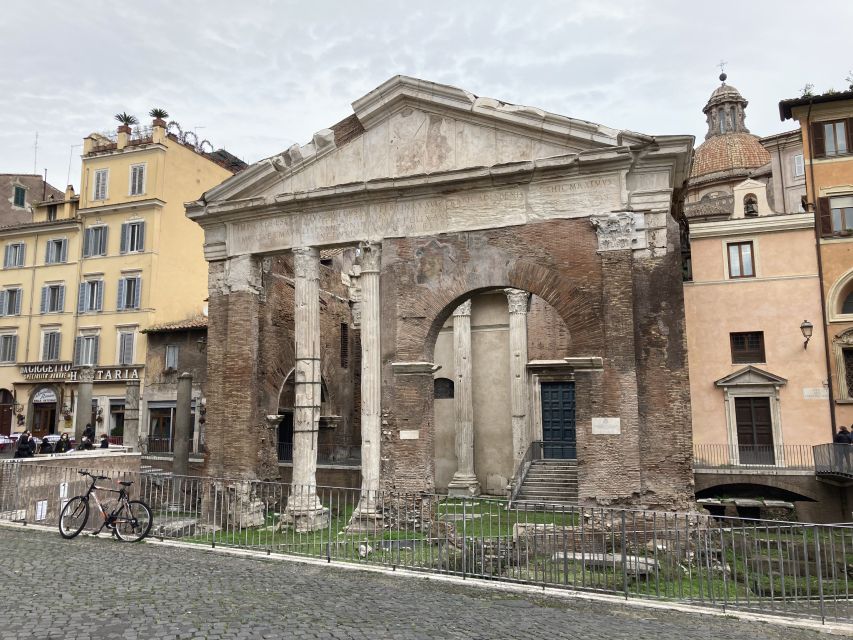
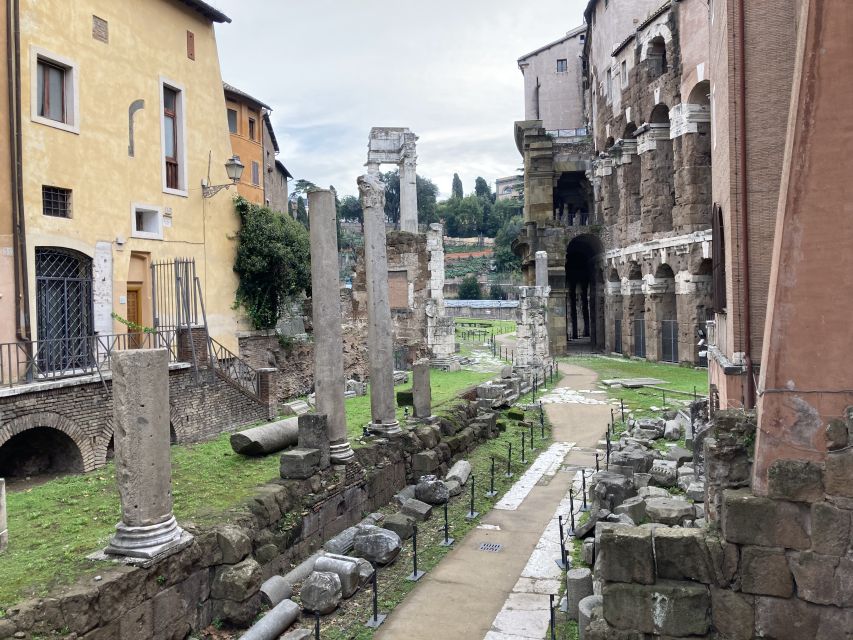
Then you reach the Jewish Ghetto of Rome. This is the heart of the experience, and the guided walk through tiny streets and pedestrian areas is where the tour starts to feel especially specific. You’ll be looking at the past and the present of Jewish life in Rome side by side—because you’re walking where the community once lived, while still seeing today’s streets and buildings.
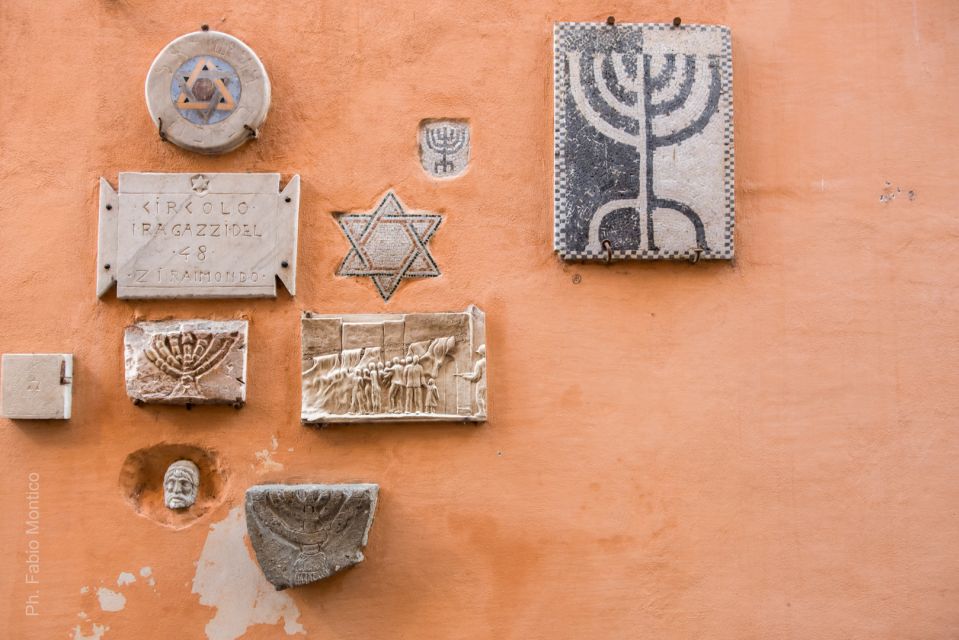
The tour’s framing is also worth noting. It points out something many visitors don’t realize at first: the Jewish Community of Rome is described as the oldest in the world. Whether you already know that or not, it sets a different lens for what you see next—this isn’t a generic “heritage district,” it’s a living thread through 2000 years.
You’ll also hear about daily life, not just big facts. That small-scale focus is what makes a walking tour work well for this topic.
Jewish Museum and Great Synagogue: where the story gets tangible
The final part of the tour is built around two closely linked visits: the Jewish Museum and the Great Synagogue of Rome.
According to the tour description, the Jewish Museum is located in the Great Synagogue complex and focuses on artifacts and precious documents. That’s the difference you’ll feel compared to outdoor sightseeing. Outside, you read the city. Inside, you see the evidence—objects and paperwork that make history feel real instead of abstract.
You’ll also learn how the Jewish community evolved over time in Rome, with the museum’s materials used to show the long arc of the story. And because this tour includes skip-the-line entry tickets for both the museum and the synagogue, you avoid the common Rome problem: wasting prime time waiting while the sites tick by.
The synagogue itself is the other big anchor. The guided explanation helps you connect what you’re seeing to what the community practiced and valued. Even if you’re visiting as a first-time traveler, you’ll likely leave with a clearer sense of what this place represents.
Practical note: the tour includes strict clothing rules for the synagogue and museum area (more on that below), so plan your outfit early.
Headsets, group size, and why the guide matters

This tour is designed for a small group of up to 10, and that tends to improve the experience in two ways. First, you can move at a human pace on narrow streets. Second, you can actually hear your guide’s answers without the whole group turning into a bottleneck.
You also get headsets, which is a huge deal in Rome. Churches, alleys, and courtyards can make normal voice projection tough. With headsets, you’re less likely to miss key points—especially if you’re trying to follow details about community history and specific sites.
Guides vary by departure, but the names you may hear mentioned include Serena, who stood out in at least one recent experience for clear explanations and good pacing. There’s also a mention of a break when needed—like a bathroom or drinks stop—so the tour doesn’t feel like pure endurance.
One caution based on actual experience from past tours: if your headset volume doesn’t feel right, speak up early. Ask the guide to adjust rather than waiting.






Timing reality: aiming for 3 hours, but watching your pace
The tour is advertised as 3 hours, and ideally it should feel complete by the time you wrap up at the end of the synagogue and museum area. Still, pacing can shift depending on foot traffic and how long the group stays at interior stops.
In one case, the tour reportedly ended closer to 2 hours, even though 3 hours was the target. That’s not something you can control, but you can protect yourself by planning your next activity with some buffer. If you’ve booked something right after, aim for later rather than immediately on the dot.
If you strongly care about finishing the synagogue and museum with enough time to absorb everything, give yourself a little slack and don’t schedule another fixed appointment right away.
Dress code and site rules: what you can wear and what you should skip
This tour has clear restrictions, and they’re important because the Great Synagogue area is strict about appearance and safety. You cannot wear shorts, short skirts, or sleeveless shirts, and uncovered shoulders are also not permitted. If you show up dressed too casually, you could face refusal, delays, or having to change.
Other rules to plan around:
- Avoid large bags, luggage, and anything bulky
- Pets are not allowed (assistance dogs are allowed)
- Don’t bring metal objects
- Don’t bring weapons or sharp objects
It’s also worth traveling light. Even if you’re not carrying much, Rome’s streets can make bag control annoying fast. Keep what you bring simple.
Price and value: is $82 a fair deal for this route?

At $82 per person for a 3-hour guided walk, the value comes from a few concrete things, not just “a guide in the city.”
You’re paying for:
- A guide and headsets
- Skip-the-line entry to both the Jewish Museum and the Great Synagogue
- A structured route that connects Trastevere, the Tiber Island crossing, and the Ghetto on foot
Skip-the-line access matters in Rome because entry delays can wipe out the benefits of a paid time slot. And a small group means you’re not fighting crowds for your turn to ask questions or hear explanations.
So is it worth it? If your goal is learning with minimal wasted time and you want the museum/synagogue portion handled with an efficient plan, the price looks reasonable. If you’re the type who only wants the outdoor neighborhood walk and would rather wander churches on your own schedule, you might prefer a cheaper approach. But for most people, the combination of sites and entry speed is what justifies the cost.
Who this tour fits best

I’d put this tour high on the list if you:
- Want a guided explanation focused on the Roman Jewish experience, not just sightseeing photos
- Appreciate a tight route that links neighborhoods with meaning
- Like small groups with headsets so you can actually follow the story
- Want art context along the way, including references to Bernini and Caravaggio
It may not be your best match if:
- You strongly prefer avoiding church interiors entirely (the route includes time at Santa Maria in Trastevere)
- You’re very sensitive to pacing and need every second of the full 3 hours
Final call: should you book this Rome Jewish Ghetto tour?
If you’re excited to connect Trastevere street life to the Jewish Ghetto and then walk into the Jewish Museum and Great Synagogue with skip-the-line tickets, this is a smart use of time. The small-group setup and headsets are practical wins, and the museum/synagogue portion is the main reason to choose a guided format.
My advice: wear the right clothes from the start, keep your next booking flexible, and go with the mindset that the tour mixes neighborhood walking with key indoor stops. If that blend sounds appealing, you’ll likely come away with a clearer, more human view of Rome’s Jewish community and how the city remembers it.
FAQ
How long is the Rome Jewish Ghetto, Great Synagogue & Trastevere Tour?
The tour lasts 3 hours.
Where do I meet the guide?
Meet in front of the Ponte Sisto fountain. Your guide will meet you there.
What is included with the tour price?
It includes Jewish Museum skip-the-line entry, Great Synagogue skip-the-line entry, a live tour guide (English), and headsets.
Is the tour in English?
Yes. The live tour guide language is English.
Is the group small?
Yes. The group is limited to 10 participants.
Are headsets provided?
Yes. Headsets are included.
Is this tour wheelchair accessible?
Yes, the tour is wheelchair accessible.
Are there dress code rules?
Yes. Shorts, short skirts, and sleeveless shirts are not allowed, and uncovered shoulders are not permitted.
What should I avoid bringing?
You should not bring luggage or large bags, and metal objects are not allowed. Pets are also not allowed (assistance dogs are allowed).