REVIEW · ROME
Rome: Domus Aurea Tour with Virtual Reality Experience
Book on GetYourGuide →Operated by Open Mind Tours · Bookable on GetYourGuide
Nero’s palace comes back to life. In this Domus Aurea visit, you walk the east and reopened west wings and then experience 3D VR that rebuilds what Nero’s Golden Palace may have looked like. It is a smart mix: real archaeology you can see with your own eyes, plus a high-impact reconstruction that helps the rooms make sense.
One possible drawback: the start can feel a bit fiddly. Your GYG voucher is not the ticket, you meet outside with an Open Mind Tours sign, and the Domus entrance can be at least 20 minutes after the outside presentation.
In This Review
- Key things I’d watch for
- Why this Domus Aurea tour feels different from most Rome tours
- Getting in smoothly: the outside meeting and the real entry
- Guided time inside: east and the reopened west wing
- What to look for in the frescoed halls (so it actually lands)
- Nero’s story: fire of 64 AD myths and his political reality
- The 3D VR Golden Palace: what it adds and what to expect
- Size, crowd level, and how to time your visit
- How this pairs well with other Rome stops
- Who should book this tour, and who might skip it
- Should you book the Domus Aurea with VR?
Key things I’d watch for
- Reopened west wing access: a major upgrade from the versions many people have seen before.
- 3D VR reconstruction during a seated moment: look around in every direction when it starts.
- 30 frescoed halls and the Octagonal Room: expect a lot more space than you probably imagined.
- Myth-busting Nero storytelling: the guide connects the famous fire of 64 AD to the wider political mess.
- Fast entry via a separate entrance: less waiting means more time with the fragile site.
- Comfort-first rules: closed shoes and a jacket matter, and large bags are not allowed.
Why this Domus Aurea tour feels different from most Rome tours
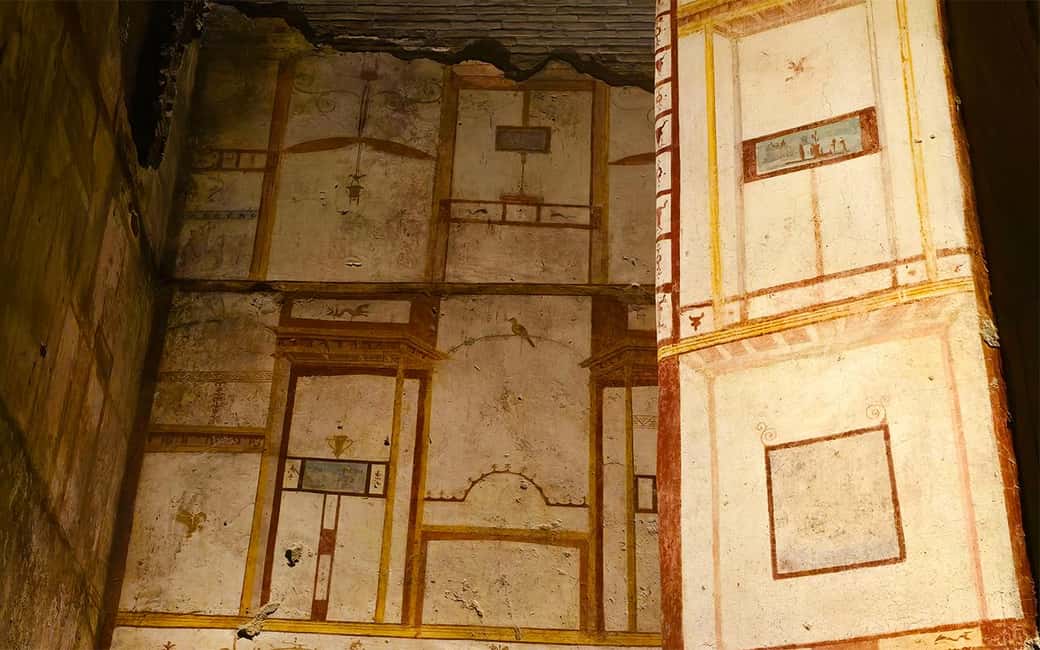
The Domus Aurea is Rome’s most interesting “lost-and-found” story. Nero built it as a luxury palace with a personal vibe, then the city changed around it, and for centuries it basically vanished from everyday Rome. What you get here is the rare chance to stand inside the surviving parts and learn how it all fit together.
The VR helps, but the bigger win is how the tour teaches you how to see. You do not just get dates and names. You learn why the walls look the way they do, how the palace used light, and what the emperor was trying to communicate with his tastes. That context turns “cool ruins” into something that feels readable.
And yes, the west wing being newly opened changes the experience. If you have ever seen photos or older tour versions, this is one of the updates that actually matters once you are on site.
You can also read our reviews of more tours and experiences in Rome.



Getting in smoothly: the outside meeting and the real entry
Your meeting point is outside the Domus Aurea, with an Open Mind Tours sign. Your guide has the entry ticket, so the GYG voucher is not the pass you walk in with. One practical thing to plan for: the Domus entrance can open at least 20 minutes after the scheduled outside presentation.
That timing detail matters because the site is delicate. The tour is built to keep you moving, with organized entry, rather than wandering the hills and hoping you found the right door. If you are the type who likes to arrive fashionably early (good life choice), you will be glad you did.
Also note the “no nonsense” rules for the site:
- Closed-toe shoes and a jacket help.
- Luggage or large bags are not allowed.
- Drones, pets (assistance dogs allowed), selfie sticks, professional cameras, tripods, and sprays/aerosols are not allowed.
If you show up with big gear, you will spend energy solving that instead of spending energy looking at Nero’s rooms.
Guided time inside: east and the reopened west wing
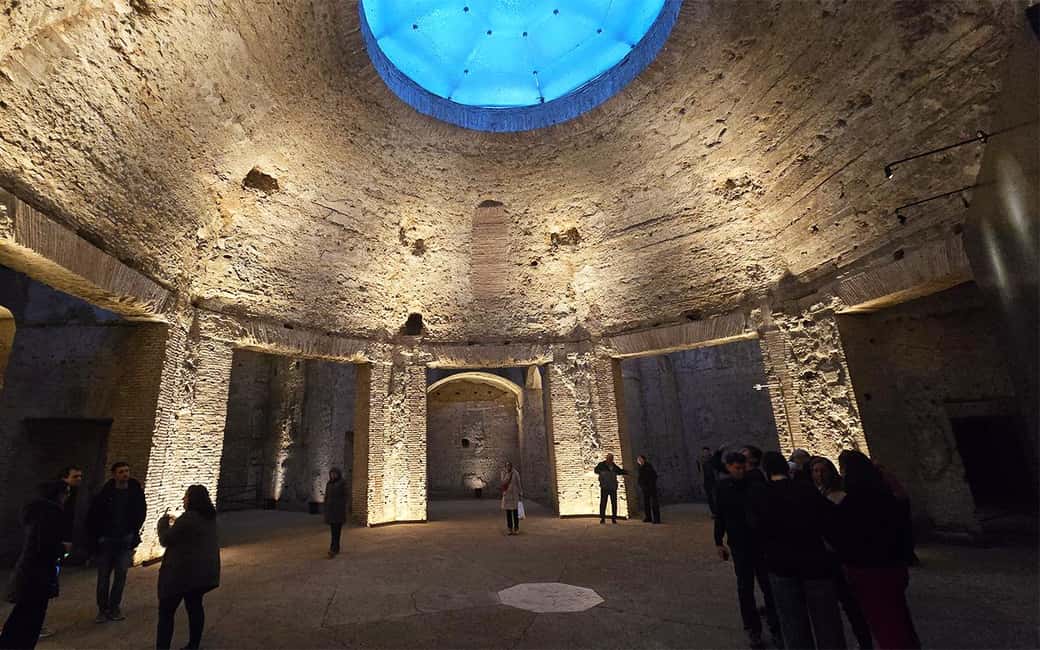
The heart of the experience is the guided walk through the Domus Aurea with a focus on both the east section and the recently reopened west wing. The tour time inside is set at about 105 minutes within the full 2-hour experience.
What I like about this format is that it turns a confusing site into a guided story. Domus Aurea does not work like the Colosseum, where you can read the building instantly from one big overlook. It is spread out, and the rooms can feel like you are moving through layers of time. A good guide is the difference between feeling lost and feeling oriented.
The guide’s approach also matters. The tour language is English, and the guides I saw referenced by name (like Linda, Rosario, Alexei, and Yev) are praised for being clear enough to follow even when the building is complex. That matters because frescoes are fragile, and the meaning can be easy to miss if you are just rushing for the “big wow” moments.
What to look for in the frescoed halls (so it actually lands)
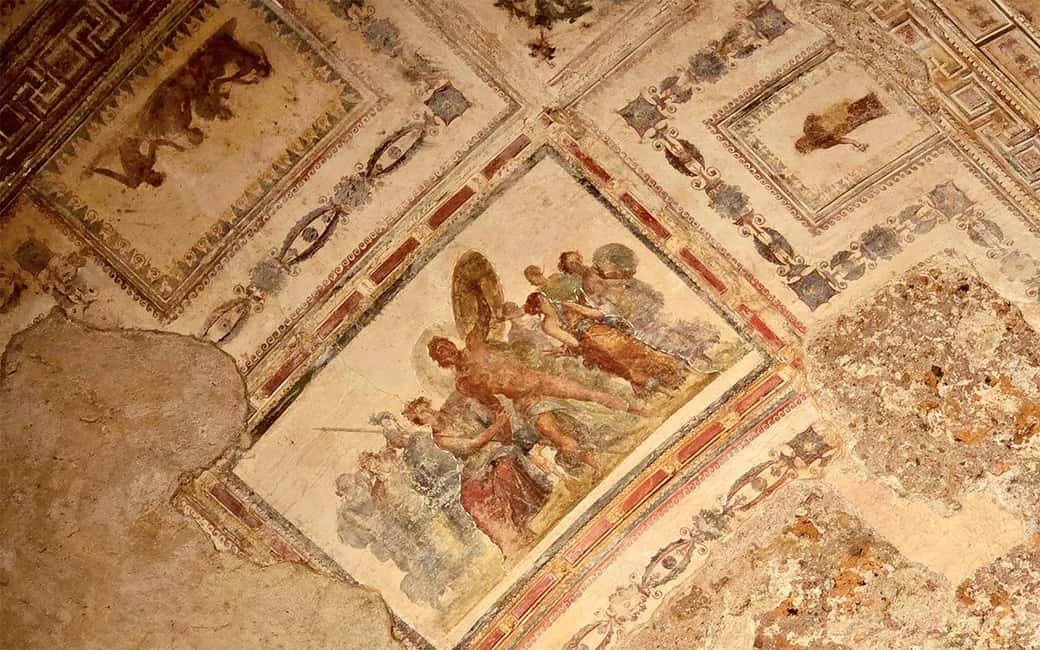
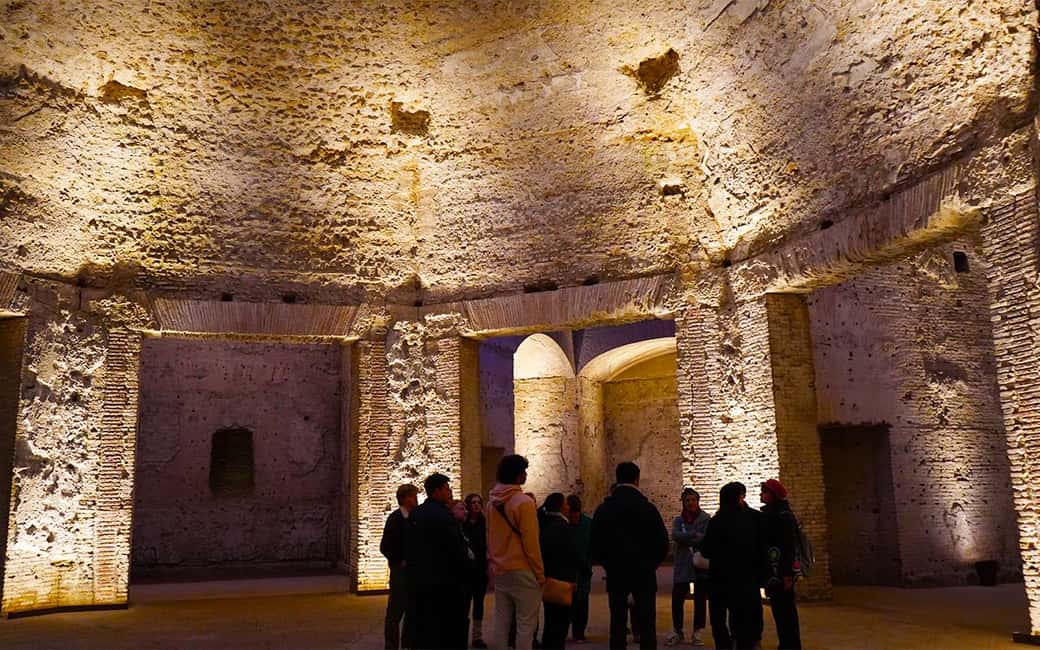
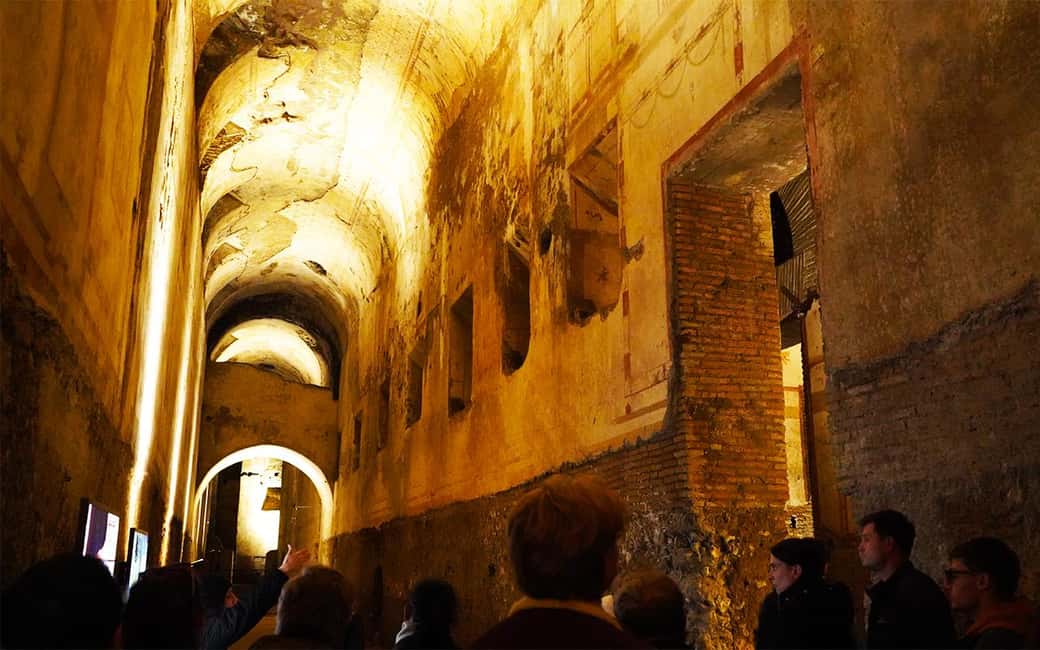
This is one of those Rome experiences where you win by slowing down your attention. You will move through about 30 frescoed halls, and the tour is designed to point your eyes toward what makes the space unusual.
Here is what you should pay attention to as you go:
- Fresco subjects and weird figures: the guide frames the bizarre imagery as eccentric personality and artistic sensitivity, not some simple horror story.
- Architecture that shapes light: the tour connects the illusion of brightness to porticoes, fountains, and gardens that helped the palace feel theatrical.
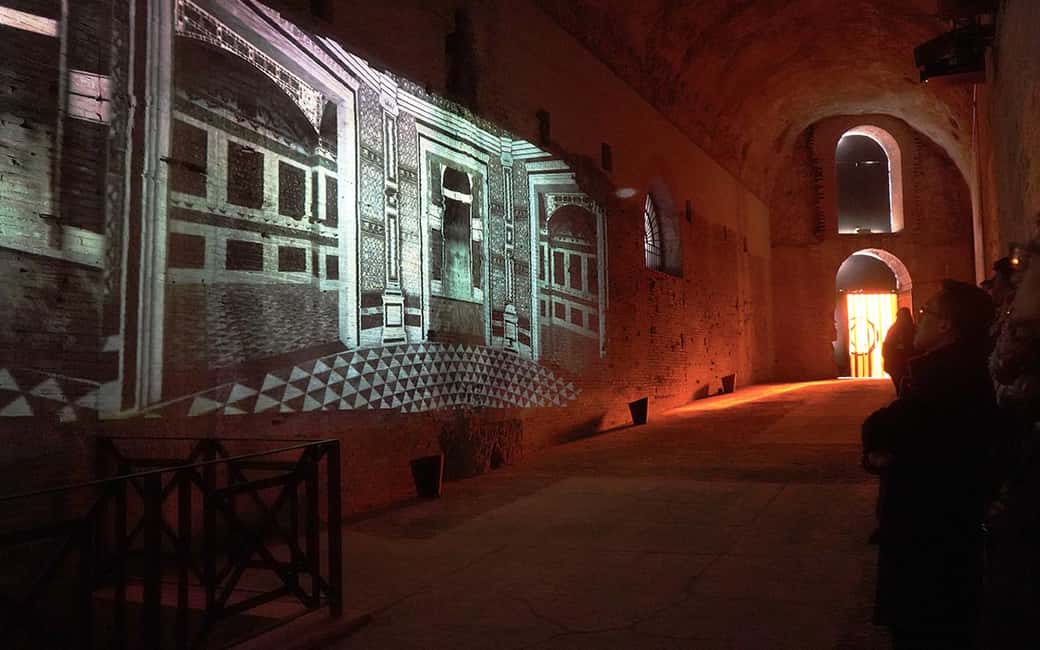
- Vast spatial rhythm: you are not just in a hallway. You are in a system of high alleys, vaulted spaces, and long corridors that create movement and mood.
- The Octagonal Room: this is singled out as a major internal stop, and it may be paired with a rotating ceiling concept in the reconstruction storytelling.
The frescoes are not only decoration. They are part of a larger message: Nero’s palace wasn’t built for public approval. It was built for personal fantasy, controlled atmosphere, and a very specific type of power.
A practical note: if you rely on audio only, be mindful of group spacing. The space can be tight, and if you end up stuck on the edge, you might miss some details that the guide is explaining to the center of the group. Bringing comfortable shoes and keeping your body position flexible helps.
Nero’s story: fire of 64 AD myths and his political reality
A big part of why this tour works is the storytelling. You retrace Nero’s path through the palace world until his dramatic suicide, and you also get the guide’s take on what is myth and what is context.
You start with a key correction: Nero was not responsible for the disastrous fire of July 64 AD. The guide places Nero at his seaside villa at the time, then explains how the blame stuck anyway. That is important because it shows how political narratives form. The palace is luxury, but the era is propaganda and accusation.
Then the tour shifts to how Nero reacted after the catastrophe. The guide highlights actions like:
- opening his gardens to shelter people
- distributing essential goods
- lowering the price of grain
- adding urban planning regulations meant to prevent similar disasters, including rules about distances between buildings and the use of stone and bricks instead of wood
The palace story and the fire story are connected, even when the facts do not match the scandal. After all, Nero expanded his palace using the destroyed areas on the Palatine Hill and even created a private lake at the center of the complex. It is a luxury move built out of a public tragedy, which helps explain why support for him kept collapsing.
The tour wraps up the arc with the next emperor’s political reversal: Vespasian replacing the lake with the Colosseum as a public symbol of Rome’s rebuilding and a shift in imperial messaging. Then later, Trajan burying Nero’s Golden House under a massive bath complex pushes the site into near-oblivion for about 1,500 years.
When you hear that timeline while standing in the surviving spaces, it becomes easier to understand why the Domus feels both grand and fragmentary.



The 3D VR Golden Palace: what it adds and what to expect
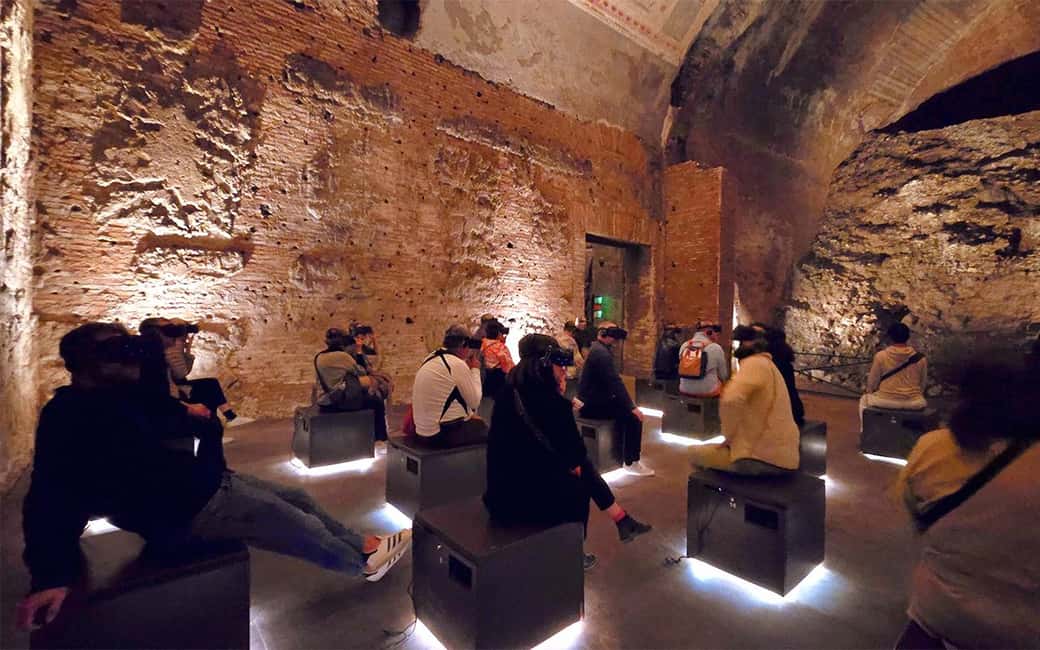
The peak moment is the 3D virtual reality reconstruction. This part focuses on the halls and an outside lavish portico of the palace, described as not yet completed when Nero took his own life.
Here is what is useful to know before you sit down:
- The VR happens during one seated segment of the tour.
- The experience is tied to orientation. Look around in every direction, not just straight ahead.
- It is designed to “cement” what you are seeing, because the palace was destroyed and covered long before it could be fully experienced in its original form.
VR cannot replace the authenticity of being in the actual rooms. You still feel the building’s size and texture, and you still see what restoration has preserved. But VR can do something the ruins cannot: it can show scale, shape, and a possible arrangement of spaces that were later buried and broken.
So think of it as a translator. The domus is hard to read cold. The VR turns your guide into a visual map.
Also, this is where the tour’s value feels most obvious. If you are the type who hates “talk-only” visits, the VR gives your brain a fresh channel. If you are the type who loves architecture, the VR gives you a way to connect artistic ceilings and wall scenes to the physical layout.
Size, crowd level, and how to time your visit
The Domus Aurea can surprise you. People often come in expecting something smaller, then realize the site is larger than they thought. That matters because you may plan your mental energy differently. This is not a quick “in-and-out.” You are working through an extensive complex with real stop-and-look segments.
Crowd intensity can also be part of the appeal. Some bookings describe it as far less crowded than the biggest Rome names, and that likely helps you actually absorb the frescoes instead of rushing past them. If you prefer Rome sites with fewer bottlenecks, this can be a better fit than the most famous daytime lines.
Heat can also matter. If you are visiting in summer, note that the Domus can feel cooler than outdoors, and at least one review specifically mentioned the relief of the indoor temperature during hot weather.
How this pairs well with other Rome stops
This tour fits best after you have a bit of Roman context, or before you see the big public monuments. The Domus Aurea is private-power Rome: Nero’s personal world. Then, when you shift later to bigger public works (or you already saw them), you notice the contrast.
If you are doing Pompeii earlier in your trip, you may find the Domus adds a different angle: instead of a whole city frozen by disaster, you see one emperor’s taste and the archaeology left behind by layers of political change. Either way, you should come ready to connect art and power, not just admire paint.
If you are doing Vatican Museums or Colosseum-area stops the same week, this tour is a good “change of pace” choice. You get restoration-focused learning, and you get a story that is much more personal and messy than the clean narrative most monuments offer.
Who should book this tour, and who might skip it
Book this if you want:
- a guide-led experience through frescoed rooms that you can actually understand
- a VR component that helps your brain reconstruct what destruction hid
- the Nero storyline, including myth corrections about the fire of 64 AD
- access to the reopened west wing, not just the older footprint
I would be more cautious if:
- you need wheelchair access, since the tour is listed as not suitable for people with mobility impairments or wheelchair users
- you dislike tours that include a seated VR segment
- you struggle with noisy or crowded audio situations, because the site layout can make it harder to hear from every position in a group
If you are comfortable with walking on-site and following museum-style rules, it is an unusually “smart” way to see a fragile part of Rome.
Should you book the Domus Aurea with VR?
If you care about seeing how art, architecture, and politics connect, I think this tour is a strong pick. The combination is the real reason: you get guided time in the actual palace spaces, and then you get VR that helps the rooms click into place. Add the reopened west wing and you have a version that feels current, not just a recycled route.
I would still consider one thing before booking: plan your arrival so you do not lose time trying to find the Open Mind Tours guide outside. Once you are in the flow, it is exactly the kind of Rome experience that makes you look twice at every wall and ceiling you thought you already understood.