REVIEW · ROME
Rome: Colosseum with Arena, Roman Forum and Palatine Guided Tour
Book on Viator →Operated by Journey Tours · Bookable on Viator
Rome’s best shortcut is inside the ring. This tour strings together three top ancient sites—Colosseum, Roman Forum, and Palatine Hill—so you cover a lot in one focused session. I especially love the chance to step onto the arena floor, where the games were staged and the scale of the place hits you fast.
The other big win is the storytelling setup: you’ll get headset audio for clear explanations, and your guide uses tools like books and 3D pictures to help you picture how the ruins looked in Roman times. One thing to plan around: access is selective—3rd level and Underground areas aren’t included—and the entry rules are strict, especially around ID names and timing.
In This Review
- Key highlights that make this tour worth your time
- Entering the Colosseum arena floor (and why it matters)
- What you should know about what’s not included
- Roman Forum: politics, religion, and daily life in ruins
- Palatine Hill views over the Circus Maximus
- How the tour keeps pace (and where it can feel tight)
- Price and value: what you’re really paying for
- Guides, storytelling, and the difference between hearing and understanding
- Practical entry rules you must respect
- Group size and the semi-private question
- Who should book this tour?
- Should you book this Colosseum + Forum + Palatine guided tour?
- FAQ
- What parts of the Colosseum are included?
- Is the Colosseum Underground area included?
- What ID do I need for entry?
- How early should I arrive for check-in?
- How big are the groups?
- Can I cancel for a full refund?
Key highlights that make this tour worth your time
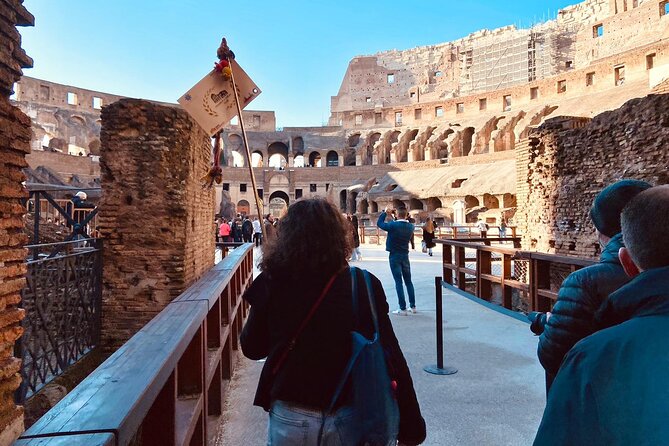
- Arena floor entry gives you a rare, front-row start in the Colosseum
- Roman Forum + Palatine Hill means you see more than just the main amphitheater
- Headsets for audio clarity help you follow the guide even while walking
- Visual aids like books and 3D images make ruined spaces easier to understand
- Group size stays capped (max 24, and semi-private is typically smaller)
- Multiple start times let you fit it into your Rome plan
Entering the Colosseum arena floor (and why it matters)
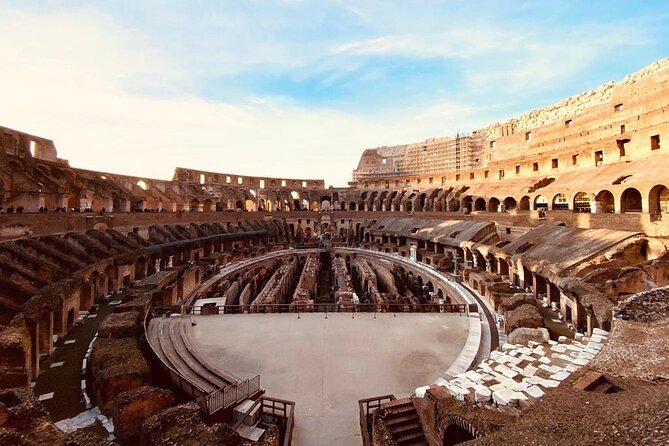
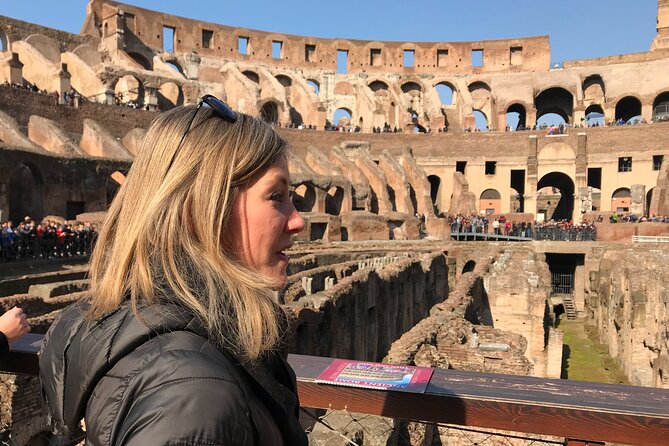
The Colosseum can feel like a museum of stone until you stand where the action happened. That’s the whole point here: you enter directly from the arena-side access and get onto the arena floor at the start. It’s not just dramatic for photos—it also gives you the correct mental “map” before you look out over the seating levels.
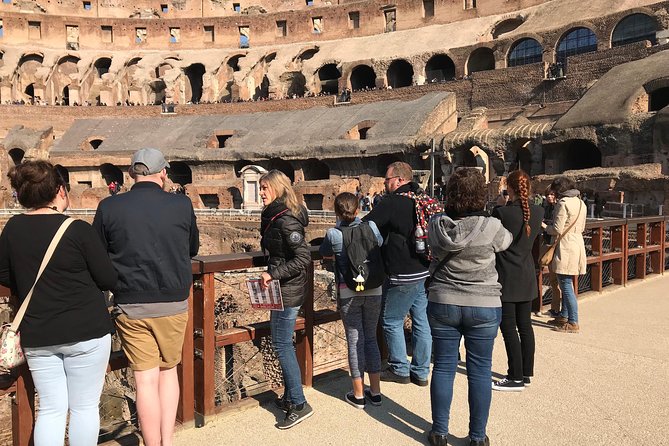
From there, you’ll move through the main public viewing areas included on this tour: the 1st and 2nd level. You’ll also get a ring view that overlooks the Colosseum’s underground-adjacent sections. Even though you don’t go down into the Underground itself on this specific experience, seeing the layout from above helps you understand how the arena operated.
What I like about this approach is that it prevents the common mistake of wandering the Colosseum “blind.” Starting on the arena floor gives you context for everything you see next: where people stood, how the spectacle was set up, and why the building’s engineering was such a big deal.
You can also read our reviews of more guided tours in Rome



What you should know about what’s not included
This tour does not include the 3rd level or the Underground areas. If you’re the type who wants every restricted access zone and the full vertical sweep, you might feel the boundaries. For many first-timers, though, the arena-first format plus Forum and Palatine Hill is a better use of limited time in Rome.
Roman Forum: politics, religion, and daily life in ruins
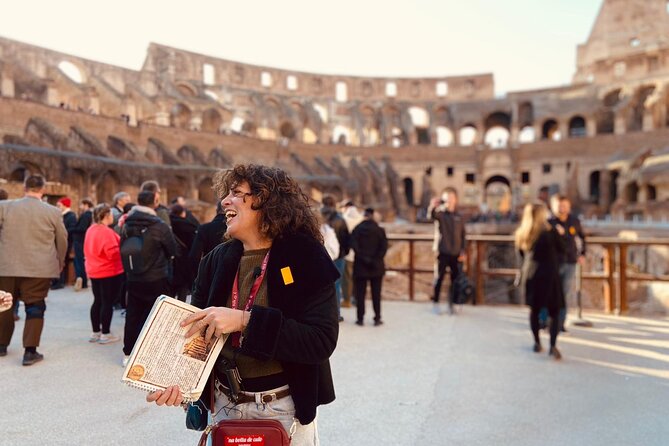
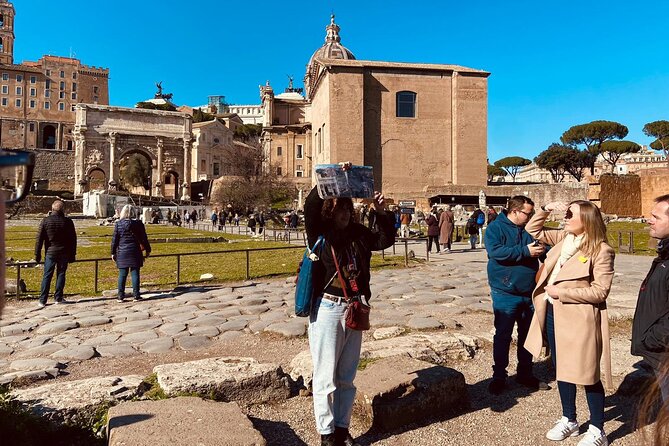
After the Colosseum, you’ll head to the Roman Forum—Rome’s old “center of gravity.” You’ll be walking among ruins that once supported everything from power and law to religion and public life. This is the part where the tour can feel less like a big monument stop and more like a walk through how Rome ran.
You’ll get guidance while moving through the site, and the added context matters here. A lot of the Forum looks like broken stone unless you know what you’re looking at. With a guide (and headset audio when needed), you can connect names, roles, and real political drama to the spaces you’re standing in.
Also, you’ll likely notice the way the Forum ties visually into the wider ancient city. On this day, you’re building a bigger mental picture as you go—first the spectacle at the Colosseum, then the civic world at the Forum.
Palatine Hill views over the Circus Maximus
Palatine Hill is where Rome’s wealth and power lived. You don’t just visit “another ruin”—you climb into the vantage point that made the Seven Hills so valuable. The included time is long enough to appreciate the height and the sweep of the views.
One of the most useful parts of this stop is that it links your sightlines: you’ll get views toward the Roman Forum and the area of Circus Maximus. Standing there, you start to understand why emperors and wealthy families wanted this spot. It’s not only about status—it’s about visibility, control, and being close to the city’s major activity.
You’ll also get explanations as you explore the ruins. The Palace Hill areas can feel repetitive if you’re self-guiding, but with the framing you get here—how Palatine became a center of elite residence—you’ll likely leave with a clearer story than you would with just a map.
How the tour keeps pace (and where it can feel tight)
This is a fast, efficient format: you’re stacking three major sites into about 2 hours 30 minutes (about 2 hours in July and August, when heat shortens the visit). That can be a great value if your time in Rome is limited. It can also mean you won’t linger as long as you might on your own.
Plan for walking and steps. The ancient sites aren’t flat, and surfaces can be uneven. Even if you’re in decent shape, you’ll feel the pace—especially if you’re trying to fit photos, stairs, and stops into a short window.
If you want a calmer day, consider adding extra time afterward on your own. For example: do this tour, then return later to the Forum or Palatine Hill for a slower wander when your legs have recovered.





Price and value: what you’re really paying for
At $60.22 per person, this can look like a “group tour premium” until you break down what’s inside. Admission to the Colosseum is priced into the experience, and this option includes an arena reservation component as well.
Why that matters: the Colosseum is timed and controlled. Having reserved access and an organized entry process reduces wasted time and helps you actually hit the arena-floor start rather than waiting and missing your moment.
The remainder of the cost goes to the “human infrastructure” of the day:
- a guide who can explain what you’re seeing (not just point)
- the headset system for clear audio
- the scheduling that lines up Colosseum, Forum, and Palatine Hill in one flow
If you’re the type who would otherwise spend hours piecing together separate ticket purchases and building a route, this price tends to feel more fair. If you already have a detailed self-guided plan and want maximum flexibility, you may decide a do-it-yourself route is cheaper. But for many people, convenience plus the arena-floor start is exactly what makes the spend worthwhile.
Guides, storytelling, and the difference between hearing and understanding
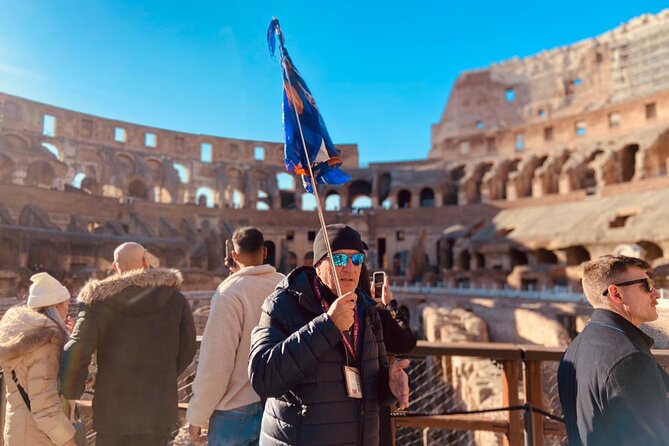
A big part of the value is the guide’s style. I can’t guarantee who you’ll get, but names that have come up include Francesca, Laura Antonucci, Paola M / Paola, Hilary, and Paula. When the guide leans into the story, the ruins stop feeling like leftovers and start feeling like a place with real people and real stakes.
The best tours here use more than facts. They explain:
- what the Colosseum was built to do
- why specific areas mattered
- how Palatine’s elite life connected to the civic center of the Forum
And the inclusion of visual aids—like books and 3D pictures—is especially helpful if you struggle to “reconstruct” the past in your head.
Practical entry rules you must respect
This is one of those “amazing site, strict process” days. You’ll go through security at the Colosseum, including a metal detector—and the rules are non-negotiable.
Here’s what you should take seriously before your day:
- Bring valid ID for everyone. Names on the booking must match ID/passports exactly. No nicknames.
- Show up early for check-in—at least 15 minutes before the tour starts.
- Don’t bring items that are restricted (for example: large bags, alcohol, sharp items, and similar prohibited items).
- Avoid arriving late. Timed entry at the Colosseum doesn’t work like a museum you can drift into.
One extra note that’s worth building into your planning: roadworks and foot-traffic changes can affect the walk to the meeting area near the Forum/Colosseum corridor. I always recommend giving yourself a time cushion so one detour doesn’t turn into a missed window.
Group size and the semi-private question
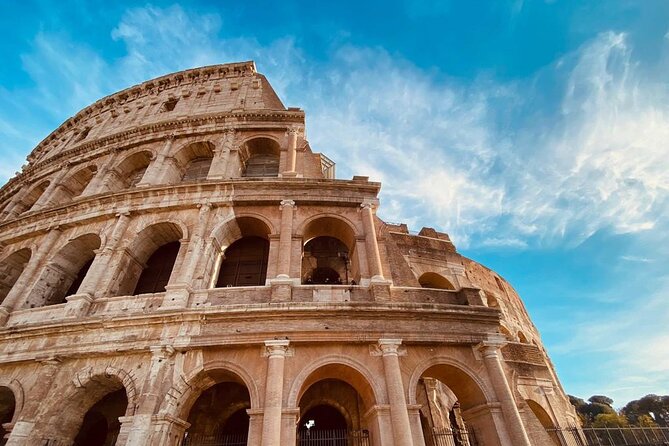
The tour has a cap of 24 travelers. If you pick a semi-private option, the experience is generally smaller—typically up to 7 guests per guide, though the exact number can shift based on operations and family/friends traveling together.
Why you should care: smaller groups usually mean easier pacing and more time for explanations. With a larger cap, you can still have a great experience, but you’ll likely spend more time following the group flow and less time stopping for extra questions.
Who should book this tour?
This experience is a strong match if you:
- want to hit three major sites in one day without juggling multiple bookings
- like guided explanations more than reading plaques
- care about “starting at the action,” since the arena-floor entry changes how you see the Colosseum
- want a structured route that reduces guesswork
It may be less ideal if you:
- hate stairs and uneven surfaces
- want full access to every tier and Underground spaces in one package
- prefer long, slow wandering and independent pacing
Should you book this Colosseum + Forum + Palatine guided tour?
I think it’s a smart booking for most first-timers who want maximum Rome value in limited time—especially because the arena-floor start is the kind of access that’s hard to recreate on your own. The Forum and Palatine Hill pieces also help you build a complete picture instead of treating the Colosseum as a standalone wow moment.
My final advice is simple: do the prep that protects your entry day. Bring your ID, make sure the names match exactly, and arrive early. If you do that, you’ll get a tightly organized, story-driven tour that makes the ruins feel like a real city—not just rocks in the sun.
FAQ
What parts of the Colosseum are included?
This tour includes entrance to the Colosseum with arena access, plus access to the 1st and 2nd levels. It does not include the 3rd level.
Is the Colosseum Underground area included?
No. The Underground areas are not included on this tour.
What ID do I need for entry?
You’ll need valid ID for everyone in your party, and the names you provide must match the IDs/passports exactly. Colosseum entry can be denied if names don’t match, and you should bring a valid ID for each person.
How early should I arrive for check-in?
Plan to arrive at least 15 minutes before the tour start time to do check-in.
How big are the groups?
The tour has a maximum group size of 24 travelers. If you select the semi-private option, it generally includes up to 7 guests per guide.
Can I cancel for a full refund?
Yes. You can cancel up to 3 days in advance for a full refund, as long as you cancel at least 3 full days before the experience start time.