REVIEW · ROME
Rome: Colosseum, Roman Forum & Palatine Hill Guided Tour
Book on GetYourGuide →Operated by Walks of Italy · Bookable on GetYourGuide
Three hours, and Rome feels close. This guided Rome: Colosseum, Roman Forum & Palatine Hill tour leans hard into the real stuff—gladiators, politics, and the city’s origin story—while express access helps you waste less time staring at lines. I like that it runs as a tight group (max 8), so the guide can actually answer questions instead of talking at you from the back.
What I like most is the storytelling plus the structure. At the Colosseum, you’re guided inside and led through the main areas (first and second levels), with details that make the ruins and arenas make sense. In the Forum, the guide helps you read the site like a map, spotting the subtle differences between spaces people used every day, and on Palatine Hill you get the legendary origin thread (Romulus and Remus) tied to the palaces that came later.
One possible drawback: because it’s about moving through three major stops in one go, you may feel a bit rushed if you want extra unstructured time for wandering, photos, or shopping. A few people wished they had more free time inside the Colosseum to explore on their own, so plan to treat this tour as the main event, not a slow museum day.
In This Review
- Key highlights to expect
- Why this small-group Colosseum tour makes sense
- Meeting points near the Colosseum: get there calmly
- Entering the Colosseum: bypass crowds and follow the story
- Roman Forum walk: turning ruins into everyday life
- Palatine Hill: legends of Romulus and Remus meet palace power
- Pace, comfort, and what to wear
- Headsets, group size, and why the guide matters
- Price and value: is $75.45 a fair deal?
- Who should book this tour
- Should you book this Colosseum, Forum, and Palatine Hill tour?
- FAQ
- How long is the Rome Colosseum, Roman Forum & Palatine Hill guided tour?
- What time does the tour start?
- Is the tour in English?
- What’s included in the ticket and tour price?
- Is lunch included?
- Do I need an ID to enter?
- Are strollers or large bags allowed?
- Is the tour suitable for wheelchair users or limited mobility?
- Where does the tour start and end?
Key highlights to expect
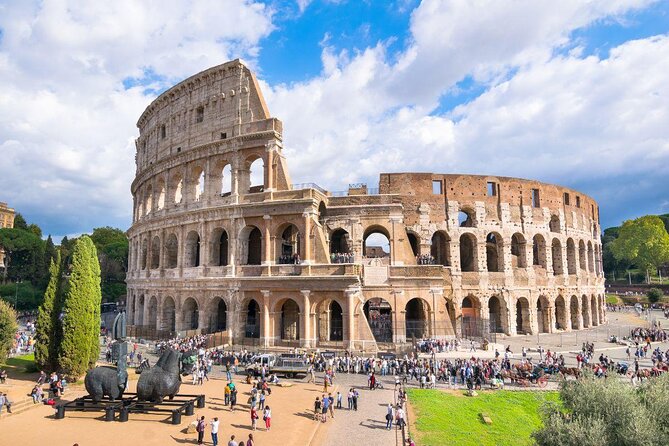
- Skip-the-line entry that helps you start the Colosseum experience fast
- Small group format (max 8) for easier Q&A and a smoother pace
- Expert historian guide who turns ruins into real-life context
- Colosseum focus on 1st and 2nd levels, plus gladiator and emperor stories
- Roman Forum “read the ruins” approach to understand everyday Roman spaces
- Palatine Hill origin legend and how power shifted from myth to palace
Why this small-group Colosseum tour makes sense
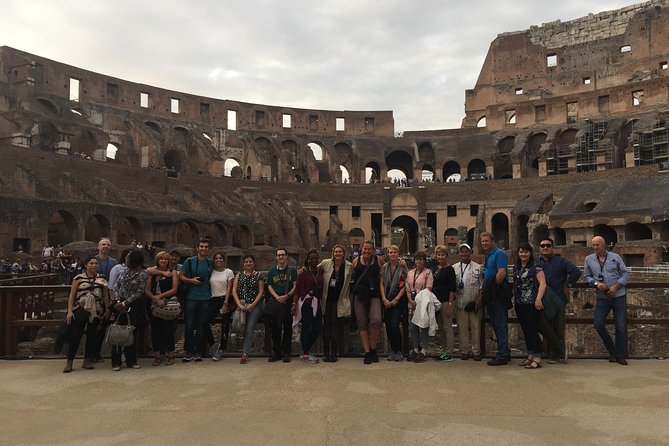
Rome’s top sites are popular for a reason, but they’re also popular in the frustrating way. Without a plan, you can burn a lot of energy just getting inside and figuring out where to look. This tour is built to avoid that. You get express access at the Colosseum, and the visit flows from the arena to the civic heart (Roman Forum) to the power center on Palatine Hill.
The small group is a big deal here. With up to 8 people, you get more back-and-forth during the walk, and it’s easier for the guide to notice if you’re missing a key detail. Several guides mentioned by name in reviews—Nicola, Marta, and Francesca show up often—are praised for story delivery and keeping a workable pace.
You also get a practical audio assist: headsets are included for groups over 6, and people reported them working well. That matters because these ruins aren’t quiet, and you’ll want to hear the “why this mattered” parts, not just what you can see.
You can also read our reviews of more guided tours in Rome



Meeting points near the Colosseum: get there calmly
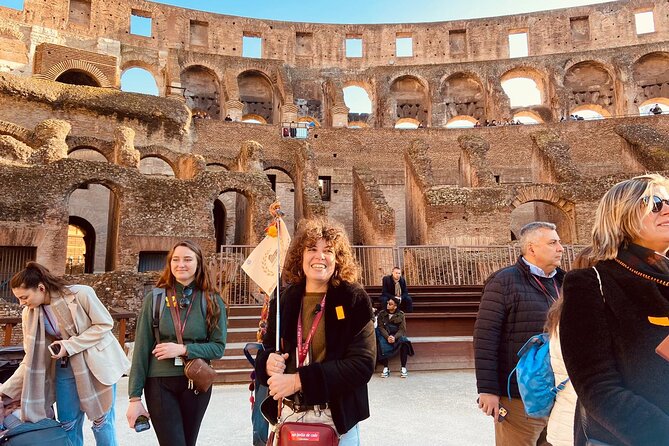
Meeting point options can vary by booking, and the listed start options include Via delle Terme di Tito 72 (Oppio Caffè area). Because this is a tight schedule, I’d treat the meeting spot like a check-in for a theater show: arrive a few minutes early, not “as you walk by.”
One tip that comes up in reviews is navigation around the access routes. If you’re coming on foot and using Maps, it may send you toward a closed path. People suggested using access through the Colosseo metro area to reach the pickup point. That’s the kind of small fix that saves time and stress.
Also note the tour meeting style: it starts at a designated point and ends back at the meeting point. That helps if you’re trying to make the rest of your day fit around lunch, sunset plans, or an evening appointment.
Entering the Colosseum: bypass crowds and follow the story
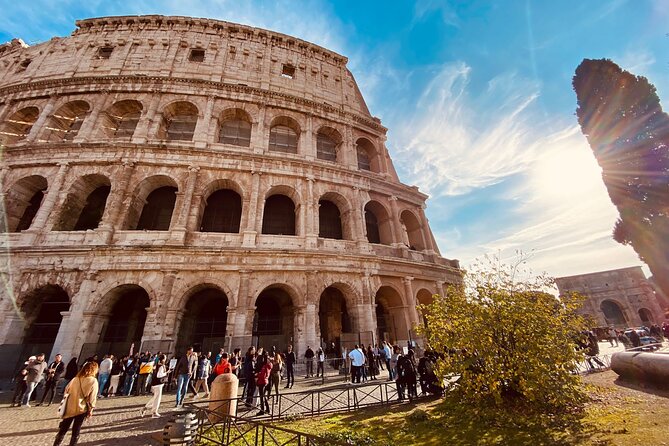
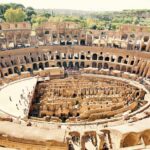
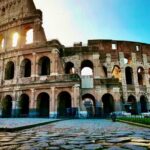
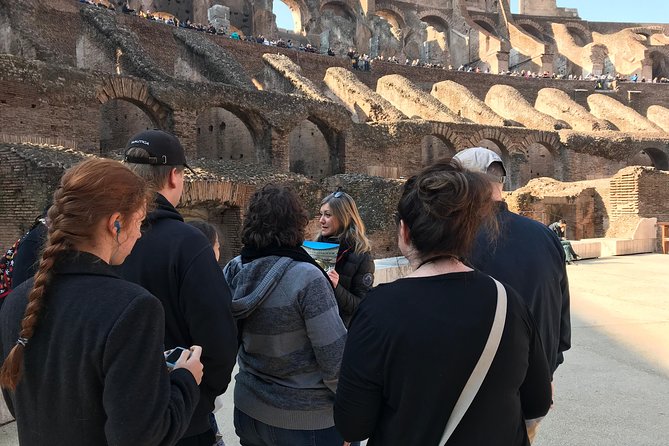
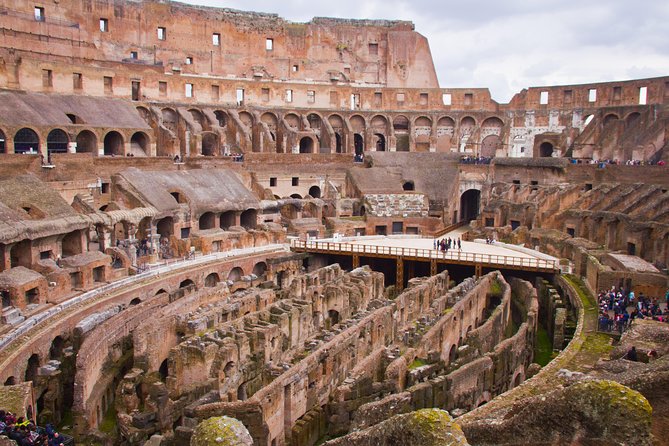
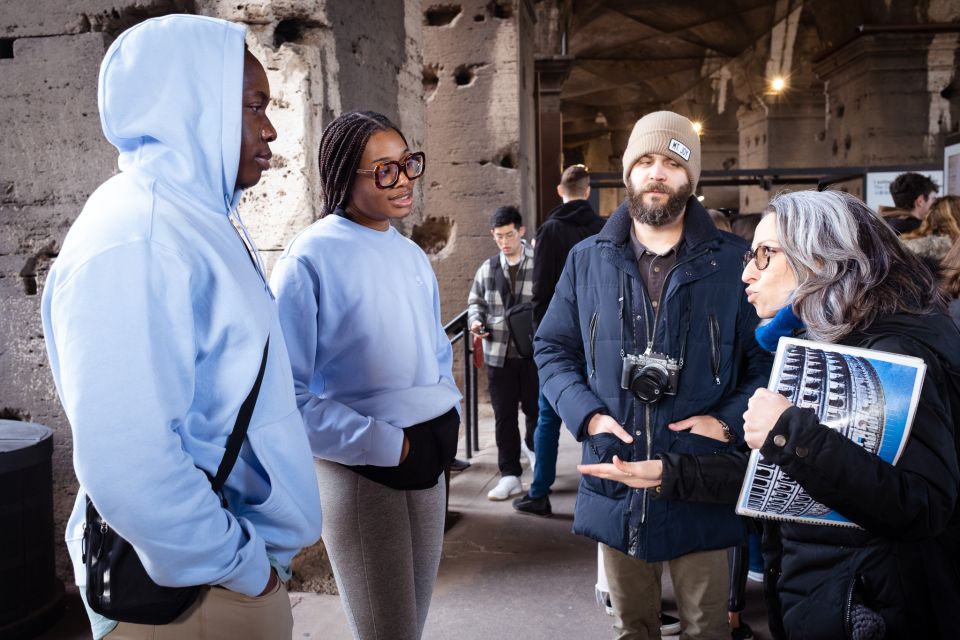
The Colosseum stop is about 1.5 hours, and it starts with the key advantage: you bypass the crowds with pre-reserved passes. Then you go inside, up stairs, and through the arches to get your first real view of the arena space.
What makes this tour feel different from a basic ticket-and-wander is the way the guide uses the structure. You’ll move through the first and second levels, and the commentary is tied to how the games worked and who had power over them. Expect discussion of gladiators—some by choice, some by force—and how emperors shaped the outcomes. The guide also brings in the “audience” side, including traces of graffiti that still mark the walls today.
There’s also a reminder that the Colosseum wasn’t only a sports arena. Your guide shares other uses you might not expect, which helps explain why the building looks the way it does and why certain features exist.
A practical note from reviews: some guides keep an eye on comfort during heat. People mention water refills, shade breaks, and toilet stops—exactly the small logistics that keep a 3-hour tour from turning into a test of willpower.
Roman Forum walk: turning ruins into everyday life
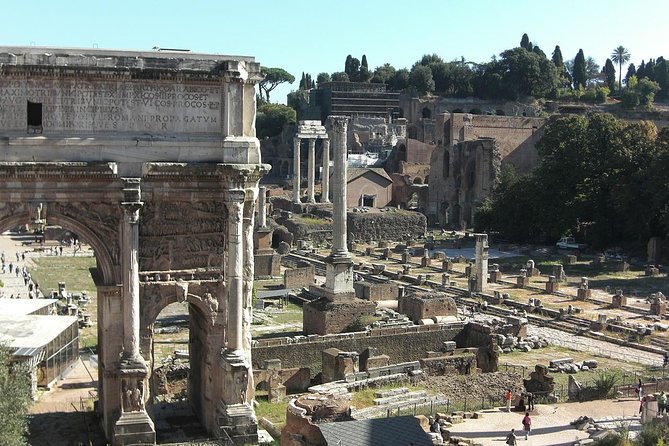
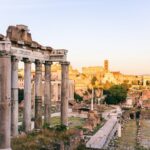
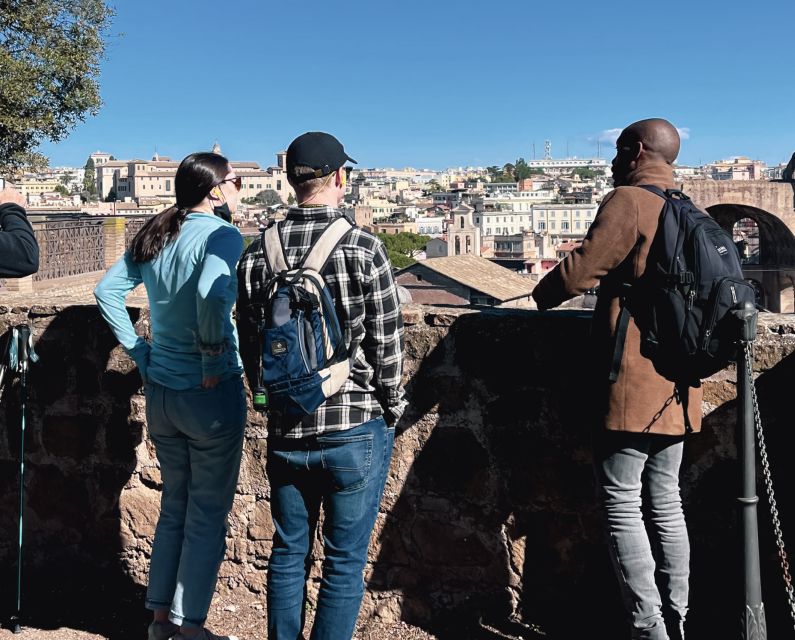
After the Colosseum, you move to the Roman Forum for about 45 minutes. This part is where a historian guide really earns their fee. The Forum can look like scattered stone—until someone explains how the layout functioned as a real neighborhood of offices, gathering spaces, and public routines.
As you walk, you’re guided through how to interpret what you’re seeing. The guide points out subtle differences that can tell you whether a remaining structure fits the pattern of a moneylender’s shop, a public bath, or other common functions. That’s a powerful skill because it changes your experience from “I visited the ruins” to “I can read the place.”
This is also where you get the civic and political story thread. You’ll connect Roman society to major figures like Caesar, Nero, and Hadrian, and you’ll hear how Rome’s public life ran. It’s not just about famous emperors; it’s about how power, belief, and daily routines were intertwined.
Reviews commonly praise the pacing here. Guides like Marta and Siriana are singled out for making the Forum feel logical rather than random. If you only have a day or two in Rome, this guided time is one of the best ways to make the Forum worth your attention.
Palatine Hill: legends of Romulus and Remus meet palace power
The last major stop is Palatine Hill, also about 45 minutes. The big idea is that this is the place where myth and authority overlap. Your guide connects the legend of Rome’s founding—Romulus and Remus and the she-wolf—to the reality of later palaces built on the hill.
This portion is shorter than the Colosseum but often lands emotionally because it feels like the origin stage of Roman power. Even if you’re not a “legend person,” you’ll likely appreciate the way the guide frames what happened here: the city’s story evolving from founding legend to political control.
You’ll see the palaces’ footprints and the logic of where elite residence and rule were placed. And since the group is small, you’ll likely get time to ask the follow-up questions that turn “I saw a hill with ruins” into “I understand why this hill mattered.”
For many visitors, this is where the tour starts to feel like more than a checklist. The shift from the Colosseum’s spectacle to the Forum’s public life to Palatine Hill’s power makes the day feel like a single narrative arc.



Pace, comfort, and what to wear
This is a walking tour with multiple sites packed into about 3 hours. That’s a good length for seeing a lot without getting stranded in museum mode, but it does mean you should show up ready for uneven stone and regular steps.
Comfort shoes are non-negotiable. The tour also is not suitable for mobility impairments or wheelchair users, and baby strollers aren’t allowed. If you’re traveling with limited mobility or you’re pushing a stroller, you’ll need a different plan.
Heat management is a real factor. Reviews mention guides actively finding shade spots, helping the group stay comfortable, and offering breaks for water and bathroom use. That’s especially important around midday. If you’re sensitive to heat, consider bringing your own water bottle and plan to move slowly during transitions.
Also watch what you bring. The tour rules say no large bags or luggage, and no weapons or sharp objects. That means pack light, or expect that you’ll have to leave items behind somewhere inconvenient.
Headsets, group size, and why the guide matters
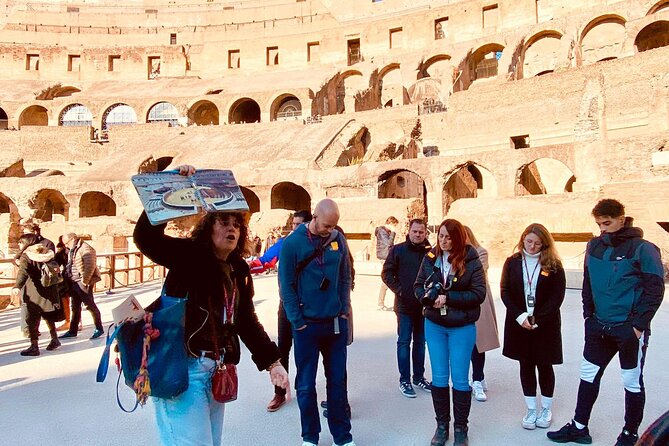
A max group size of 8 makes a difference in how the tour feels. You’re not just getting faster entry. You’re getting a better conversation. Guides can tailor explanations to what you’re actually looking at, and they can clarify details as you go.
English is the listed language, and reviews repeatedly mention clear English delivery and story flow. Some guides stand out by name—Nicola and Marta in particular—because people describe them as energetic and engaging, not dry or lecture-like. Others get praised for kindness and practical support, including taking photos for the group.
Headsets are included for groups over 6, and that’s a smart inclusion in open-air archaeological sites where ambient noise can make it hard to follow. One review specifically calls out headsets working perfectly, which is worth noting if you’re the type who hates straining to hear.
The operator is Walks of Italy, listed as an official Parco Archeologico del Colosseo operator approved to lead guided tours. That matters because it signals the guide team is operating inside the real rules of access and site flow.
Price and value: is $75.45 a fair deal?
The price listed is $75.45 per person for a 3-hour guided experience. At first glance, that can feel steep for something that’s still just walking and looking at ruins. But here’s what you’re actually buying:
First, you’re buying Colosseum ticket access plus access to the Roman Forum and Palatine Hill. Second, you’re buying express entry that helps you avoid the worst lines. Third, you’re buying an expert guide who translates stone into story and structure—especially valuable at the Forum, where self-guided wandering often feels like staring at fragments.
Then there’s the group size. A max group of 8 keeps the experience more personal, which you can feel in pacing and questions. And if you’re in a slightly larger group, you still get headsets so the information doesn’t get lost.
Is it worth it? For most first-timers, yes. This is the kind of tour where the guide turns the sites into a coherent day, not three separate stops you have to “figure out” alone. If you’re the type who loves reading signs and moving at your own pace for hours, you might prefer a self-guided approach. But if you want time-saving and story-driven context, this pricing is in the reasonable zone for what it includes.
Who should book this tour
This tour fits well if you:
- Want a structured way to see Colosseum + Roman Forum + Palatine Hill without losing time to confusion.
- Prefer small groups for Q&A and a smoother flow.
- Value a guide who explains why structures look the way they do, not just what they’re called.
It might not fit if you:
- Need accessibility accommodations (it’s not suitable for wheelchair users or mobility impairments).
- Travel with a stroller (strollers aren’t allowed).
- Want long stretches of solo exploring inside the Colosseum after the guided portion. The tour is designed to cover a lot, so you’ll likely feel the time compression if you expected to drift.
If you’re visiting with kids, note that ID requirements apply to all guests, including children. Make sure you’re ready on that front so security doesn’t derail your schedule.
Should you book this Colosseum, Forum, and Palatine Hill tour?
I’d book it if you’re visiting Rome for the first time or you only have a short window in the city. It’s a smart use of time because express access reduces the worst friction, and the guide helps you get meaning from places where self-guided experiences can feel random.
I’d also book it if you like your history with clear cause-and-effect: how rulers shaped entertainment, how civic spaces worked, and why Palatine Hill became a symbol of power. This tour is built to connect those dots.
Hold off only if you truly want unstructured time inside one monument, or if your mobility needs don’t match the tour’s rules. Otherwise, for most people, this is a practical, high-value way to see Rome’s biggest archaeological highlights in one shot.
FAQ
How long is the Rome Colosseum, Roman Forum & Palatine Hill guided tour?
The tour lasts about 3 hours.
What time does the tour start?
The tour has an 11:15 AM start time only.
Is the tour in English?
Yes, the live guide is listed as English.
What’s included in the ticket and tour price?
You get a guided walking tour, a ticket to the Colosseum, and access to the Roman Forum and Palatine Hill. Headsets are included for groups over 6.
Is lunch included?
No, lunch is not included.
Do I need an ID to enter?
Yes. A government-issued ID or passport is required for all participants, including children.
Are strollers or large bags allowed?
No baby strollers are allowed, and luggage or large bags are not allowed.
Is the tour suitable for wheelchair users or limited mobility?
No. The tour is not suitable for guests with mobility impairments or wheelchair users.
Where does the tour start and end?
It starts at a meeting point that may vary by the option booked, and it ends back at the meeting point.