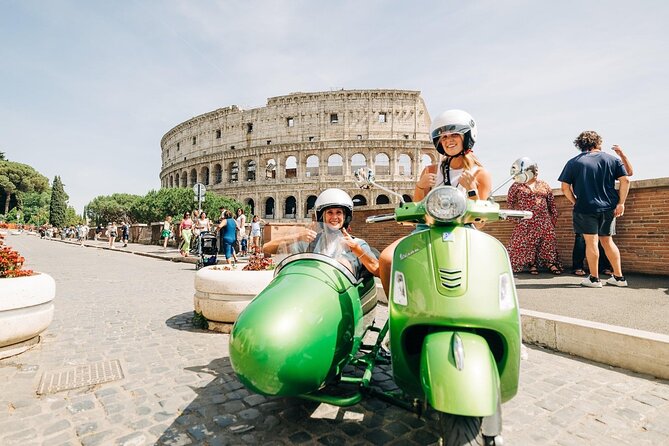
Rome moves fast. This Vespa sidecar tour turns that speed into comfort, with provided helmets and a capped group that keeps the ride personal. I love the guided storytelling that links big sights to the smaller streets between them, and I love that you can choose to sit in the sidecar or swap seats behind the driver. The one drawback to plan for: you are a passenger only, so if you’re hoping to drive, this isn’t your tour.
You’ll get safety gear, plus headsets so the guide is easy to hear while you glide past Rome’s top monuments and off-the-route stops. It’s also timed well: there are morning and evening options, which helps you pick the vibe you want for lighting and crowds.
At $179.81 for about 3 hours, it costs more than a normal walking tour. But you’re paying for transport, narration, and the real Roman experience of moving through traffic-like streets without doing the hard work yourself.
In This Review
- Key Things I’d Mark on Your Map
- Vespa Sidecar Style: What You Actually Do (and Don’t)
- Where the Tour Starts and How the 3-Hour Route Feels
- Getting Prepped: Helmets, Headsets, and First Impressions
- Santa Maria Maggiore and the Monti Streets You’d Miss Walking
- Colosseum, Palatine Hill, and Circus Maximus: Big Names, Real Context
- Aventine Hill and the Buco della Serratura Keyhole Stop
- Testaccio, the Pyramid of Cestius, and Bocca della Verità
- Gianicolo Viewpoints and Piazza Navona’s Four Rivers Fountain
- Campo de’ Fiori, Trevi Coin Toss, and Largo Argentina
- Spanish Steps Finale and a Quick Pass by the Pantheon
- Price and Value: Is $179.81 Worth It?
- Who This Tour Fits Best
- Should You Book This Vespa Sidecar Tour?
- FAQ
- FAQ
- How long is the Vespa sidecar highlights tour?
- What does the tour cost?
- Where does the tour start and end?
- Can I drive the scooter or sidecar?
- Can I ride in the sidecar the whole time?
- Are helmets and safety gear provided?
- Is this tour good for children?
- Do I need special clothing for churches?
- Is food included?
- Is there a refund if I cancel?
Key Things I’d Mark on Your Map
- Passenger-only thrills: you sit back with helmets and safety instructions, no driving required
- Helmet + headset setup: easier listening while you zip around, even when the streets get lively
- Two ride styles on one tour: sidecar seat or seat behind the driver, with alternation at stops
- A route built for variety: basilica-adjacent streets, ancient landmarks, and viewpoints in one loop
- Aventine keyhole and Mouth of Truth stops: short, memorable moments that feel different from typical photo stops
- Small max group size (8): more attention, less waiting, and a smoother flow through the city
Vespa Sidecar Style: What You Actually Do (and Don’t)
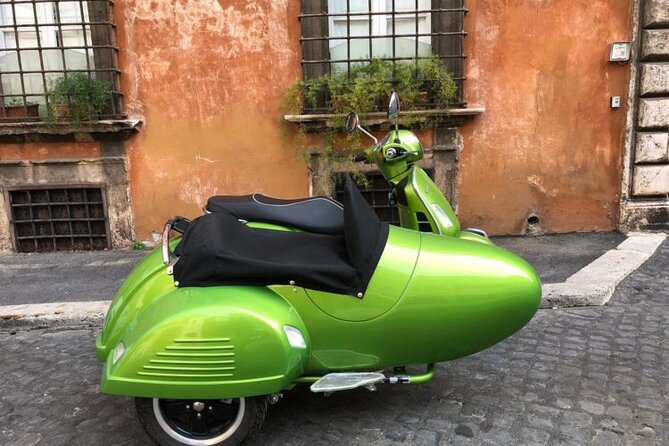
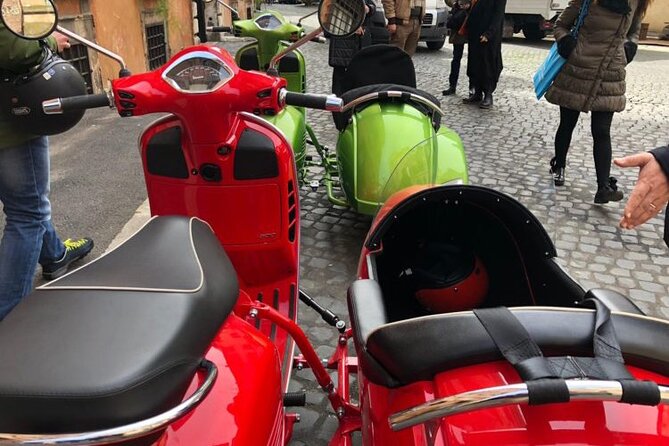
This experience is built around the simplest idea: you ride a Vespa with a sidecar while a professional driver handles the road. You’re not meant to operate the scooter, even if you’re tempted. Think of it as controlled fun. No scooter math. No stress about balance in a new city.
Each vehicle fits two people: one in the sidecar and one on the Vespa behind the driver. You can alternate who sits where at the stops. That matters more than you might think. Sidecar riding can feel like a tiny street-level theatre seat, while the back seat behind the driver gives you a different view angle of Roman streets and facades. Swapping keeps things feeling fresh instead of monotonous.
Safety equipment is part of the deal. You get helmets, and the tour provides safety requirements that matter for fit. Sidecar passengers must be at least 4 feet tall, and there’s a max weight of 110kg / 240lbs. If you’re traveling with kids, the tour notes extra specifics: children under 5 are not set up to alternate seats, so they ride in the sidecar for the entire tour with seatbelts on, plus a kid-size helmet and booster seat when needed. It’s a good detail to check early if your group includes younger kids.
There’s also a dress code note for places of worship: shoulders and knees covered. That’s not optional, so it’s worth planning your outfit even if you’re mostly viewing from the scooter.
You can also read our reviews of more guided tours in Rome



Where the Tour Starts and How the 3-Hour Route Feels
The tour ends at the top of the Spanish Steps, above Trinità dei Monti. That’s a smart way to finish because it’s central and scenic, and it makes it easy to keep exploring afterward on foot.
The meeting point listed is Piazza di S. Andrea della Valle, 9, but the ride itself is described as starting around Piazza della Repubblica, where the guide and driver prep you with safety instructions and equipment. If your confirmation details the exact exact spot, follow that. Either way, you’re close to public transportation, so you won’t need a long commute just to start the fun.
You get around in a group limited to a maximum of 8. That cap helps with the rhythm of the tour: fewer people to coordinate, faster stops, and more time spent moving through Rome instead of waiting on check-ins.
Timing matters here. The tour offers two tour times in the morning and evening. Morning is usually best if you want clear sightlines and less crowd pressure. Evening is often better for mood and light, especially when you’re passing major monuments in softer conditions. Pick the time that matches your energy level, not the one that sounds fancy on paper.
Getting Prepped: Helmets, Headsets, and First Impressions
Right at the start, you meet the guide and driver and get your safety instructions. Helmets are provided, and headsets come along so you can hear the guide clearly as you ride. This is one of those small logistics choices that changes everything. When you can actually follow the story, the ride becomes more than scenery.
The guide doesn’t just list monuments. They connect what you’re seeing to how Rome functioned and how certain landmarks came to matter. That’s especially useful on a first day, when your brain is still building a mental map of the city.
Also, the tour includes photo stops. Your guide and driver pause at key sights so you can grab a picture without trying to solve traffic or angles while moving. It’s the kind of service that saves time and keeps the whole group safe.
Santa Maria Maggiore and the Monti Streets You’d Miss Walking
The early part of the route takes you from the central area toward Santa Maria Maggiore, one of Rome’s ancient basilicas. You’ll pass through Monti, a neighborhood known as one of the oldest areas of Rome. This section of the tour gives you a taste of older Rome while still feeling modern enough to enjoy the street life.
From a passenger perspective, this is where you feel the difference between being on foot and moving through the city. Driving by fast makes the streets feel like a real commute, not a museum shuffle. You see building fronts, street shapes, and the way neighborhoods transition without having to cover miles on uneven sidewalks.
A possible drawback: basilicas and historic sites can mean stricter dress requirements. If your plan includes sleeveless tops or short skirts, adjust your outfit before you show up, because you may not get access to the places of worship if you don’t meet the shoulders-and-knees rule.
Colosseum, Palatine Hill, and Circus Maximus: Big Names, Real Context
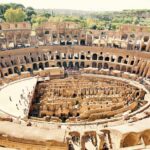
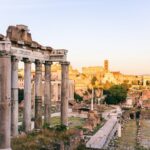
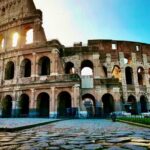
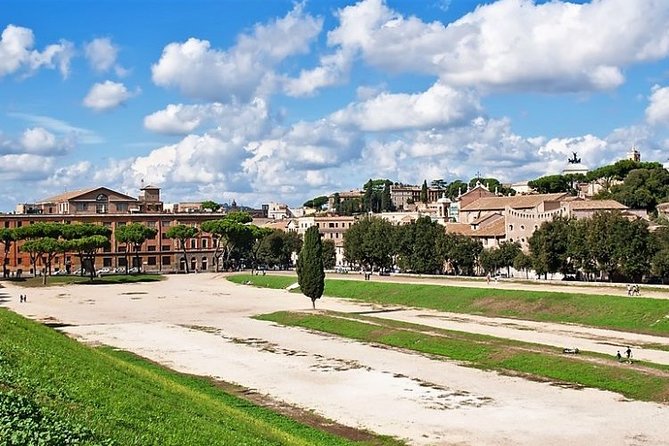
Next comes the ancient core. Your guide brings Ancient Rome to life as you pass by the Colosseum, Palatine Hill, and Circus Maximus. Even if you’ve seen photos, this stretch works because you’re traveling at street speed and getting an explanation that helps the shapes make sense.
This is also where your tour keeps moving rather than turning into a long queue session. The route is built to show you major sites and then redirect you quickly toward other scenes in Rome. If you’re the type who gets impatient waiting for slow lines, this pacing will feel like relief.
Photo stops happen here too, which is handy because the Colosseum area is full of spots where your angle matters. You won’t have to reinvent it. The guide times pauses so you can shoot quickly, then get back to riding.
You can also read our reviews of more city tours in Rome



Aventine Hill and the Buco della Serratura Keyhole Stop
Aventine Hill is your big viewpoint moment in the tour: the legendary Buco della Serratura, the keyhole everyone talks about. Your guide takes you up to the top of the hill where you can look through the world’s most famous keyhole. The tour keeps the experience playful and private by not giving away what you see.
This stop is brief, about 5 minutes, and the admission is listed as free. That’s a strong ratio of meaning to time. You get an iconic Rome moment without spending your whole afternoon standing around.
What makes this stop special is the way it changes your scale perception. Rome is famous for grand ruins, but a keyhole flips that. Instead of trying to see everything, you focus on one small aperture that frames the view in a way you won’t get from normal viewpoints.
One practical note: hills in Rome can feel steeper than they look from street level. If you’re not used to stairs or uneven pavement, wear shoes with grip and plan on a short, uphill walk here.
Testaccio, the Pyramid of Cestius, and Bocca della Verità
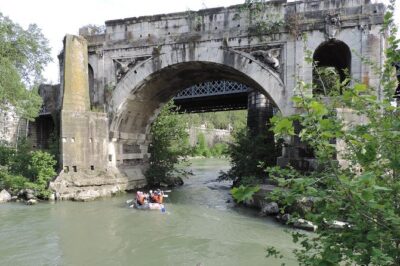
After Aventine, the tour continues toward Testaccio, one of Rome’s more authentic neighborhoods. You’ll pass the Pyramid of Cestius, known as Piramide Cestius, a curious and unusual sight in the city.
Then comes the famous Mouth of Truth stop, also listed as Bocca della Verità. The tour says this is about 5 minutes and that admission is free. The emphasis here is on the story and the photo moment, not on a long museum-style visit.
Testaccio adds value because it gives you a different Rome than the postcards. You see the city as a living place with neighborhood textures, not just big monuments stacked like set pieces.
A small consideration: Bocca della Verità involves a specific location and crowd patterns can vary. The tour’s short, scheduled stop is designed to manage time, but you may still want to keep your expectations flexible if you arrive when the area is busy.
Also, this part of the ride includes passes like the Theatre of Marcellus. It’s not always a stop where you’ll go in. It’s more about seeing the scale and atmosphere from the scooter.
Gianicolo Viewpoints and Piazza Navona’s Four Rivers Fountain
One of the most satisfying moments comes from riding uphill to Colle del Gianicolo, a viewpoint you’re told not to miss. It’s another short stop, again about 5 minutes, but it’s exactly the kind of moment that makes the whole loop feel worthwhile. You get that Rome panorama feeling without turning it into a long hike.
After the view, you head toward Piazza Navona, described as the former Stadium of Domitian, and you’ll see the Fountain of the Four Rivers by Bernini. This is where the tour shifts from ancient ruins to a lively piazza mood.
What I like about reaching Piazza Navona mid-tour is timing. You don’t just end with the big squares. You get a change of scenery when the ride starts to feel like it’s been going forever in the best way.
Campo de’ Fiori, Trevi Coin Toss, and Largo Argentina
From Piazza Navona you travel through winding roads into the historic center, starting with Campo de’ Fiori. This area is famous for its market energy, and on a scooter tour it feels different because you’re gliding past the edges instead of pushing through the busiest spots.
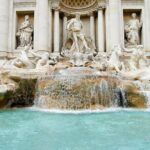
Then you zip by the Trevi Fountain. The tour also includes the classic coin toss moment. If you like small rituals, this is your chance to do it the traditional way.
Next is Largo Argentina, connected to Julius Caesar’s assassination. The tour doesn’t frame it as dry facts. It places it in the flow of your ride so it feels like you’re tracing stories through the city, not memorizing dates.
If you’re the type who likes a focused arc, this is the part where Rome feels connected. You go from icon to icon, but each one is tied to a reason the guide cares about.
Spanish Steps Finale and a Quick Pass by the Pantheon
The tour ends at Piazza della Trinità dei Monti, above the Spanish Steps. That finish is a practical win. You’ll be close to one of Rome’s most photogenic staircases and an easy jumping-off point for dinner plans nearby.
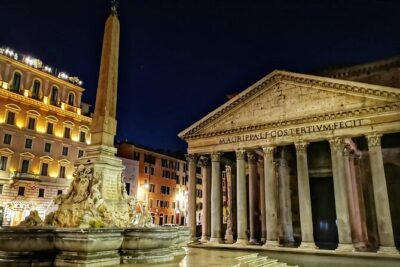
Along the way, you also pass by the Pantheon, one of the world’s best-preserved ancient temples. The tour describes it as a must-see you won’t forget. Since the route is fast-paced, you’re not meant to spend hours here, but seeing it from the route gives you a strong anchor point for a return visit later if you want more time.
As a final note, the end point near the Spanish Steps can be busy and crowded in peak times. Plan to move with the flow, and don’t be shocked if you’re walking through a crush of people once your ride ends.
Price and Value: Is $179.81 Worth It?
At $179.81 per person for about 3 hours, this is not a budget-only activity. But you’re not just paying for a guide with a microphone. You’re paying for transport through Rome in a way that’s fast and comfortable, plus safety gear, plus headsets, plus a route designed to hit major sights and specific iconic stops like the Aventine keyhole and Bocca della Verità.
Here’s how I think about the value:
- If you’d otherwise hire a private driver or rely on lots of taxis, the savings on logistics can feel real.
- If you hate spending half a day in lines or walking when you’re tired, the scooter format reduces that friction.
- If it’s your first or second day in Rome, the itinerary helps you build a mental map fast, which can make your later days more fun.
The main reason it costs more is that the experience includes vehicle time plus trained guiding. You’re buying convenience with a story.
Who This Tour Fits Best
This tour is a great fit if you want a first-day overview that still feels personal. It also works well for families, with the caveat that children under 5 have special seating rules and height/weight requirements for the sidecar passenger.
It’s also a good choice for people who:
- prefer riding over long walking days
- want to see major monuments plus a few Rome-only moments
- like hearing stories through a headset rather than reading signage
It’s less ideal if you want extensive time inside major sites or if you specifically want to drive a scooter yourself. This is about riding and learning, not piloting.
Should You Book This Vespa Sidecar Tour?
Yes, I think you should book it if your goal is to see Rome efficiently without turning the day into a marching contest. The mix of major landmarks, photo pauses, and distinctive stops like the Buco della Serratura and Bocca della Verità makes the 3 hours feel like a complete storyline.
You might skip it if you’re hoping for long indoor visits, or if your group has very specific mobility or comfort needs that could clash with short walks at viewpoints and strict dress rules at places of worship. Also, remember you’re a passenger only.
FAQ
FAQ
How long is the Vespa sidecar highlights tour?
It runs for about 3 hours.
What does the tour cost?
The price listed is $179.81 per person.
Where does the tour start and end?
It starts at Piazza di S. Andrea della Valle, 9, 00186 Roma RM, Italy, and ends at Piazza della Trinità dei Monti, 00187 Roma RM, Italy (above the Spanish Steps).
Can I drive the scooter or sidecar?
No. This tour is for passengers only. Each vehicle is driven by a professional driver.
Can I ride in the sidecar the whole time?
You can, but it requires booking the needed spots so there’s capacity for two people in the sidecar for the full tour. The tour notes examples using multiples of booked spots.
Are helmets and safety gear provided?
Yes. Helmets and safety equipment for riding in scooters or sidecars are provided.
Is this tour good for children?
Most people can participate, but there are specific rules. Children under 5 ride in the sidecar for the entire tour with seatbelts on, plus a kid-size helmet and booster seat when needed.
Do I need special clothing for churches?
Yes. For entry at places of worship, shoulders and knees must be covered (no tank tops or short dresses).
Is food included?
No. Food and drink are not included, and the tour also does not include pickup or drop-off.
Is there a refund if I cancel?
Yes. Free cancellation is available up to 24 hours in advance for a full refund.