REVIEW · ROME
Rome: Big Bus Hop-on, Hop-off Open-Top Sightseeing Tour
Book on Viator →Operated by Big Bus Tours - Rome · Bookable on Viator
Rome can feel like a blur. This hop-on hop-off open-top bus gives you an orderly loop through the big sights, with recorded narration and built-in time to wander when something pulls your attention. It’s a simple way to get street-level bearings without spending your whole day bouncing between transit stops.
I love the headphones with recorded audio that spell out what you’re seeing as you pass it. I also like that your ticket includes a free VOX digital self-guided walking tour, so you can turn a bus stop into a real on-foot visit. One possible drawback: bus stops are not always at the exact doorstep of the attraction, and closures or route changes can add walking.
In This Review
- Key highlights worth knowing
- Price and time: what you’re really paying for
- How the hop-on hop-off loop works (and why timing can be weird)
- Recorded audio in multiple languages, plus the VOX walk
- Stop 1: Rome Termini Station as your orientation base
- Stop 2: Papal Basilica of Saint Mary Major (Santa Maria Maggiore)
- Stop 3: Colosseum area (and the reality of stop distance)
- Stop 4: Circus Maximus for broad, open views
- Stop 5: Piazza Venezia as a historic-center landmark
- Stop 6: Vatican Museums stop (what “close” really means)
- Stop 7: Spanish Steps for a quick rest and Rome rhythm
- Stop 8: Piazza Barberini for a calmer finish
- Free Wi‑Fi and the tracking app: helpful tools, but stay alert
- Open-top bus expectations and what to watch for
- Who this tour is best for (and who might be disappointed)
- Should you book this Rome hop-on hop-off bus?
- FAQ
- How long is the Big Bus Rome hop-on hop-off tour?
- What ticket options are available?
- Is there recorded audio, and are headphones included?
- Is the VOX digital walking tour included?
- Is Wi‑Fi included on the bus?
- Does the 72-hour ticket include a night tour?
- Where does the tour stop in Rome?
- Are hotel pick-up and drop-off included?
- Is luggage allowed on board?
- Can I cancel for a full refund?
Key highlights worth knowing
- Headphones included for recorded commentary, so you can listen at your pace
- Hop-on, hop-off timing flexibility across a 3-, 24-, 48- or 72-hour ticket
- VOX walking tour download included with every ticket option
- Free Wi‑Fi on board plus a real-time bus tracking app
- Stops built for classic Rome like Termini, Santa Maria Maggiore, the Colosseum area, Vatican Museums, Spanish Steps, and Barberini
Price and time: what you’re really paying for
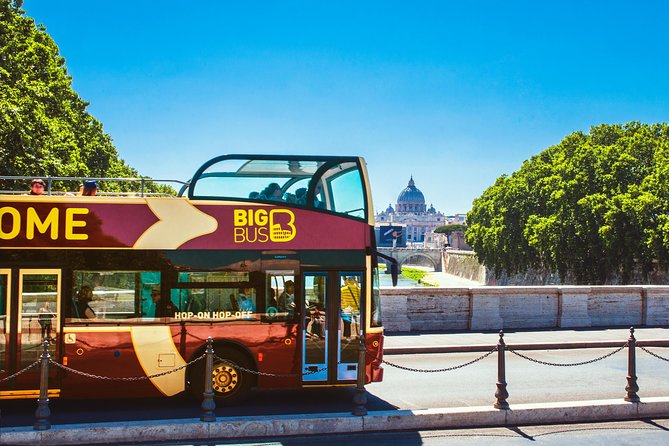
This Big Bus Rome tour costs $26.43 per person, and it’s priced like an all-in sightseeing shortcut rather than a guided walking experience. You’re not just buying a seat—you’re buying time flexibility. The standard tour length is about 1 hour 40 minutes, but what matters is the validity window on your ticket: 3-, 24-, 48-, or 72-hour access.
That makes a real difference in Rome, where the “perfect plan” usually lasts about 40 minutes before crowds, rain, or your own curiosity change it. With hop-on hop-off service, you can ride the loop to orient yourself, then choose which stops get your attention later. This is especially handy for first-time visits when you’re still learning where the major sites sit in relation to each other.
One more value note: the tour runs in English, and the company includes both bus narration and a separate VOX walking tour download. If you use those thoughtfully, the price starts to feel less like “bus ticket” and more like “two layers of sightseeing support.”
You can also read our reviews of more tours and experiences in Rome.



How the hop-on hop-off loop works (and why timing can be weird)
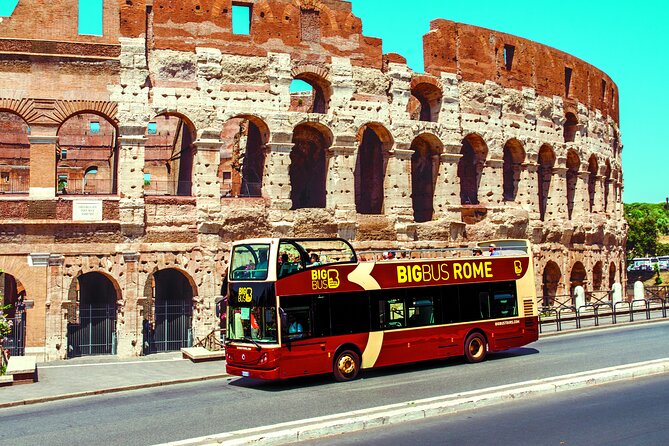
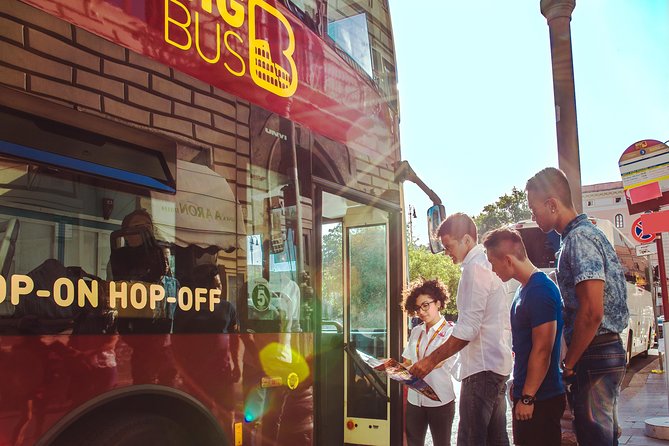
You exchange your voucher for a ticket that matches your time window, then you can board at stops along the route. From there, you can hop off, explore as long as you want, then hop back on later at the next stop.
In theory, it’s easy. In practice, Rome traffic and city events affect bus flow, and that’s when things feel slow. Some stops can be skipped, delayed, or rerouted during road works or special events. If you’re visiting on a heavy event day (marathons, major disruptions), plan extra buffer time and don’t assume every stop will be served exactly as expected.
To keep your day calm, use the real-time bus tracking app and double-check stop status before you commit to a long walk. A small habit that saves time: look for the bus stop you’re using in the app (it’s designed to help you find the right place). And if there’s any doubt, it’s reasonable to ask staff whether all stops are running as scheduled.
Recorded audio in multiple languages, plus the VOX walk
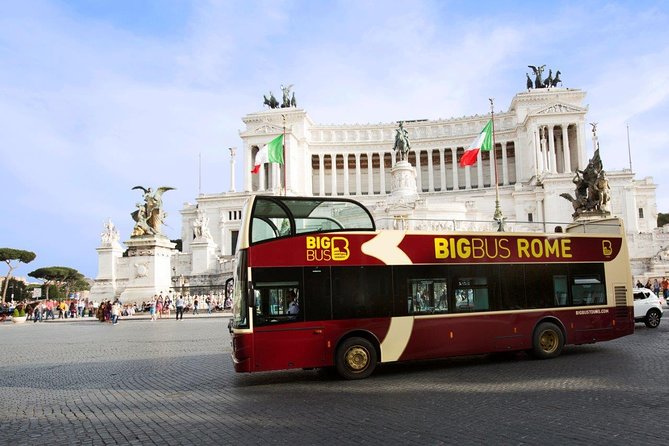
The tour includes recorded commentary through headphones in multiple languages, with narration designed to connect the landmarks you see with the larger story of the city. This is not live guiding; it’s a pre-recorded track, so the audio won’t react to your questions. Still, it’s useful because it gives you a framework while you watch Rome unfold from the open-top road.
The biggest “upgrade” in the experience is the included VOX digital self-guided walking tour. The bus gives you the overview; the VOX tour helps you go deeper on foot using your own pace. If you like structure but hate rigid schedules, this combo works well: ride first to understand the geography, then use VOX to pick a focused walking route afterward.
One practical tip: always keep an eye on headphone sound quality. I’ve heard reports of headphone ports not working reliably for everyone on board, so if yours crackles or goes silent, ask staff right away.
Stop 1: Rome Termini Station as your orientation base

Termini Railway Station is a smart starting point because it’s a major hub. Even if you don’t enter the station buildings themselves, the area helps you “reset” your Rome day. You’re starting from somewhere recognizable with transit connections, and that matters if you want to rearrange plans mid-day.
From Termini, you quickly begin moving through the city’s layers—modern streets, medieval corners, and the broader historic center. The bus narration helps turn that movement into context, so you’re not just looking at random buildings; you’re building a mental map.
If you’re arriving by train, this starting point is also convenient. You can do a loop the same day without committing to long transfers.
Stop 2: Papal Basilica of Saint Mary Major (Santa Maria Maggiore)

Santa Maria Maggiore is a standout because it’s not only a beautiful basilica stop—it’s also one that gives you a different angle on Rome. A lot of Rome tours focus only on the “ancient wow” sites. This one adds an important church stop early, so the day isn’t all ruins and stone colosseums.
What I’d watch for here is the way this stop changes the tone of the route. After the more monumental ancient sights, shifting to a major church helps you remember that Rome is living, not just museum pieces. Even if you don’t spend ages inside, the surrounding area gives you a sense of where religious life fits into the modern city.
The potential drawback? Like many stops on this kind of tour, you may still need a short walk to the places you actually want to photograph up close. Build a little walking tolerance into your plan.






Stop 3: Colosseum area (and the reality of stop distance)
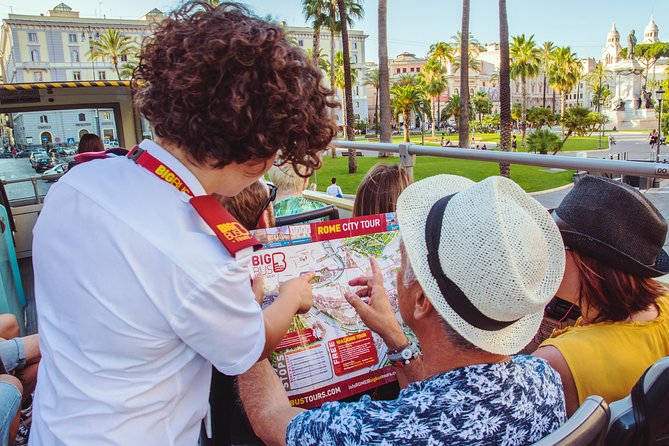
The Colosseum stop is listed as being outside the Roman Forum entrance area, which is exactly where you want to be if you’re hoping to connect the Colosseum with the broader ancient zone. Sitting on the bus as the narration runs helps you understand scale before you ever buy tickets or cross the entry lines.
Big plus: the Colosseum is the kind of site where a little context makes a big difference. Even from street distance, you start seeing why the ruins matter.
The consideration: the Colosseum area can face temporary closures or stop changes. I’ve also seen reports that the exact stop for the Colosseum isn’t always available, which can mean extra walking from the next served location. If you have mobility limits, swap in a more flexible approach: plan to ride early, then decide on the ground once you see what’s open and what the walking distances look like that day.
Stop 4: Circus Maximus for broad, open views
Circus Maximus isn’t as visually “single-monument” as the Colosseum, but that’s the point. It helps you understand how Rome also worked as a space—long, sweeping activity zones built for public spectacle.
From the bus and nearby areas, you’ll often get better “big picture” views here than you will at tighter, enclosed sites. It’s a good stop if you like imagining how crowds would have moved through these spaces.
Again, expect walking. Some stops sit a bit away from where you expect the postcard view. Use the app’s Find a Stop support so you’re not guessing where you need to be.
Stop 5: Piazza Venezia as a historic-center landmark
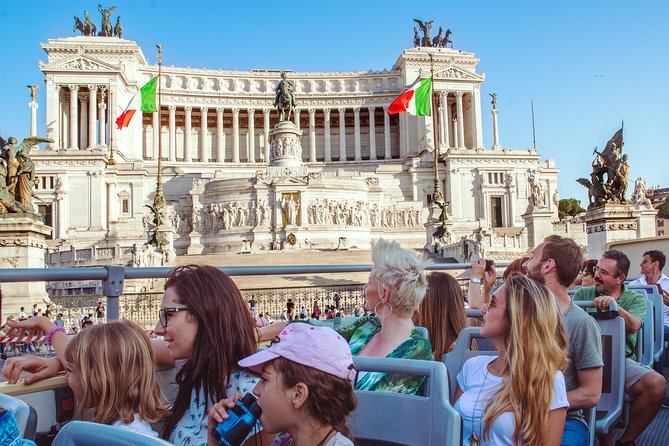
Piazza Venezia is a classic Rome crossroads. It’s not just a place to pass; it’s a helpful geographic anchor because it sits at the intersection of several historic routes. When your goal is to get bearings fast, stops like this help.
I like this kind of stop in particular because it gives you options: you can take a quick coffee break, reposition yourself, or simply reset your timing. It’s also the kind of place where bus narration can help you connect what you saw earlier with what you’ll see next—especially on a short visit.
Stop 6: Vatican Museums stop (what “close” really means)
The Vatican part of the route drops you at a specific stop location near the Vatican Museums area (Lungotevere Tor di Nona 7). From there, you’re meant to get off and explore.
This is where expectations need calibration. Even when the stop is in the Vatican orbit, it can still be a walk to reach the areas people picture when they think of Vatican City. I’ve heard accounts of the stop not feeling very close or not being in plain sight, which is important to know if you’re traveling with limited mobility or if you’re trying to time visits tightly.
If you’re visiting the Vatican zone, my advice is simple: treat the bus as your transport and orientation tool, not your final drop-off guarantee. Use the tracking app, and give yourself more time than you think you need for walking around crowds.
Also note: if you choose the 72-hour ticket option, it includes a panoramic night tour during the warm season (listed as spring-to-fall, with dates described as either April–October or May–October). That night tour is not hop-on hop-off, so factor it as a separate planned component, not just another stop you can freestyle.
Stop 7: Spanish Steps for a quick rest and Rome rhythm
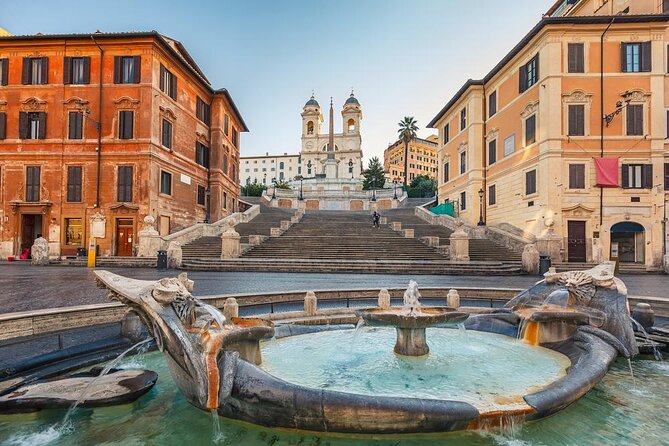
The Spanish Steps stop is a great way to see Rome’s social side. It’s also one of those places where the “bus view” isn’t the main event. When you get off, you’ll likely want to sit, watch, and let the square-level energy do its thing.
This is a practical stop too: it breaks up a day. You can take a breather, step into nearby streets, and pair it with a snack or gelato while you reset your legs.
Consideration: like other stops, you may not be right at the exact spot you want unless you walk a bit. I’d rather walk 5–10 minutes intentionally than chase a moving bus while trying to guess the right corner.
Stop 8: Piazza Barberini for a calmer finish
Piazza Barberini is a solid capstone stop because it’s central without feeling as immediately “ritual” as some of the big-name sites. It gives you another classic Rome scene, and it’s helpful if you want to end your bus day feeling like you’ve covered more than just the loudest attractions.
You can use this stop to wander outward, catch a ride on public transportation, or simply grab a meal nearby after a loop.
The tour’s structure works especially well when you don’t treat the bus as the main event. If you hop off with a plan (VOX walk, short on-foot loop, or just a wander), the day feels rounded instead of rushed.
Free Wi‑Fi and the tracking app: helpful tools, but stay alert
The bus includes free Wi‑Fi on board, and there’s a real-time bus tracking app. In theory, this helps you manage your day like a pro: check where the bus is, plan your next hop-off, and avoid long waits.
In reality, Wi‑Fi quality can be hit-or-miss, and I’ve seen reports that the app experience wasn’t smooth for some people (hard to find stop lists, frustration navigating). So I recommend you treat the app as a guide, not your only source of truth.
My practical plan if I were doing this again:
- Use the tracking app to locate buses.
- Use your phone maps as a backup.
- Confirm the stop location with the Find a Stop function (it includes photos to match what you’re seeing).
That way, even if one system is glitchy, you’re still moving.
Open-top bus expectations and what to watch for
The tour is presented as an open-top experience, but day-to-day operational details can vary. If you’re sensitive to comfort (sun, wind, cold), check how the bus is operating that day once you arrive. When the top deck isn’t the most comfortable option, you can still enjoy the route from where you can actually see clearly.
Also, luggage is not permitted on board for security reasons. If you’re traveling with bags, plan to leave them elsewhere and carry only what you can manage. This is one of those rules you’ll feel quickly once you’re at the vehicle.
Who this tour is best for (and who might be disappointed)
I’d book this if you want a fast overview, easy transportation across major sights, and narration that keeps you informed without hiring a separate guide for each stop. It fits well for:
- First-time Rome visits
- Short stays where you still want multiple landmarks
- People who learn best by pairing “seeing” with guided context through audio
- Anyone who likes choosing their own pace at each stop
I’d be more cautious if your dream day requires “drop me exactly at the entrance with no walking.” Several issues can pop up in a city like Rome: stop closures, route adjustments, and long walks between a served stop and the exact attraction people expect. If you have tight mobility constraints, you should be ready to adapt on the spot using the app and on-the-ground information.
That said, staff support appears to be a bright spot. I’ve seen reports praising the helpfulness of staff, including assistance described for wheelchair users. So if accessibility matters, don’t be shy about asking for guidance when you board.
Should you book this Rome hop-on hop-off bus?
Yes, I think you should book it if you’re aiming for a smooth, flexible “Rome greatest hits” day with strong built-in information. The combination of headphone audio plus the included VOX walking tour gives you a way to go beyond passive sightseeing, and the hop-on hop-off format keeps the day from feeling trapped.
Skip the bus or consider a different approach if your priority is maximum closeness to entrances with no uncertainty. Rome can force detours, and this kind of tour can’t promise every stop will feel perfectly placed at every moment. If you go in with the right mindset—use it for orientation and then choose your walking priorities—you’ll likely be happy with what the bus helps you accomplish.
FAQ
How long is the Big Bus Rome hop-on hop-off tour?
The duration is listed as approximately 1 hour 40 minutes.
What ticket options are available?
Tickets are available for 3-, 24-, 48-, or 72-hour time periods.
Is there recorded audio, and are headphones included?
Yes. The tour includes recorded audio commentary in multiple languages, and headphones are included.
Is the VOX digital walking tour included?
Yes. A free VOX digital self-guided tour download is included with all ticket options.
Is Wi‑Fi included on the bus?
Yes. Free Wi‑Fi is included on board.
Does the 72-hour ticket include a night tour?
Yes. The 72-hour ticket includes a panoramic night tour during the warm season (described as April–October and also as May–October). It is not hop-on, hop-off.
Where does the tour stop in Rome?
Stops include Rome Termini station, Basilica Santa Maria Maggiore, the Colosseum area, Circus Maximus, Piazza Venezia, Vatican Museums, Spanish Steps, and Piazza Barberini.
Are hotel pick-up and drop-off included?
No. Hotel pick-up & drop-off is not included.
Is luggage allowed on board?
No. Luggage is not permitted on board for security reasons.
Can I cancel for a full refund?
Yes, free cancellation is available. You can cancel up to 24 hours in advance of the experience for a full refund.