REVIEW · ROME
Colosseum & Ancient Rome with Arena Floor Option I Max 6 People
Book on Viator →Operated by LivTours · Bookable on Viator
You’ll feel the Colosseum in your bones. This small-group experience gets you guaranteed entry straight into the arena and then strings together Rome’s power center at the Roman Forum and the imperial hills of Palatine.
I especially like two things: the tight group size (max 6) that makes it easier to ask questions and move at a human pace, and the optional chance to walk where gladiators stood via the Gladiator Entrance.
One thing to think about: the tour is about 3 hours, so it’s a fast, concentrated hit. If you want to linger for ages in every corner, you’ll probably wish you had more time.
In This Review
- Key points to look for
- Where the tour starts, and why it matters
- Entering the Colosseum: guaranteed access plus real orientation
- Arena Floor Option: walking the gladiator world (and why it’s special)
- First-tier views and the engineering you’ll actually remember
- Roman Forum: the center of power, not just stone leftovers
- Palatine Hill: origins of Rome with actual context
- Pace, comfort, and what to bring for a smooth 3-hour run
- Price and value: why $180 can make sense here
- Should you book the Arena Floor upgrade?
- Who this tour suits best
- Quick match: book or pass?
- FAQ
- FAQ
- How big is the group for this Colosseum and Ancient Rome tour?
- How long is the tour?
- What sites are included in the itinerary?
- Do I get admission tickets included?
- Is the Arena Floor access included?
- What language is the tour guide?
- What do I need to bring for entry?
Key points to look for
- Max 6 people: easier logistics, less crowd pressure, more room for real questions
- Arena Floor upgrade (optional): special access through the Gladiator Entrance, off-limits to the general public
- Guaranteed Colosseum entry: you avoid the stress of timing and long lines
- Roman Forum stops that matter: Arch of Titus, Basilica of Maxentius, and Temple of Antonino and Faustina
- Palatine Hill viewpoint payoff: Circus Maximus and imperial-home origins, including Livia and Augustus
- English guide + guided storytelling: Caesar, gladiators, and the games come with context, not just labels
Where the tour starts, and why it matters
The meeting point is Largo Gaetana Agnesi (in Rome, near public transportation). You’ll meet your guide and group there, then head over together for a direct, timed-entry plan into the Colosseum. Starting in a real gathering place helps you avoid the classic Rome problem: wandering around monumental buildings while you lose precious minutes.
The tour ends at the Roman Forum, which is convenient. You’re already in the heart of the ruins when you’re done. That means if you want to keep exploring on your own afterward—grabbing photos, grabbing coffee, or checking out a nearby corner of the neighborhood—you don’t have to backtrack across the city.
Also, this is set up for a group of no more than 6 travelers. That small number changes how the tour feels. It’s still a guided route, but you’re not being dragged along in a long line where your photos only happen when the group stops for 12 seconds.
You can also read our reviews of more tours and experiences in Rome.



Entering the Colosseum: guaranteed access plus real orientation
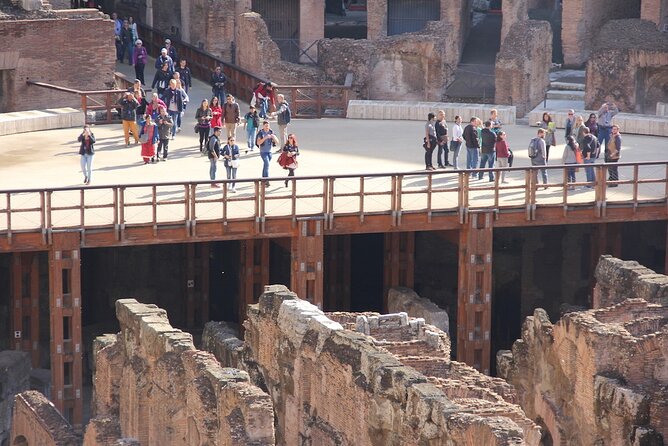
The big moment starts with you walking into the Colosseum as a guided group, with admission included. This isn’t just about skipping generic hassles. It’s about getting in with a plan and a guide who helps you read what you’re seeing.
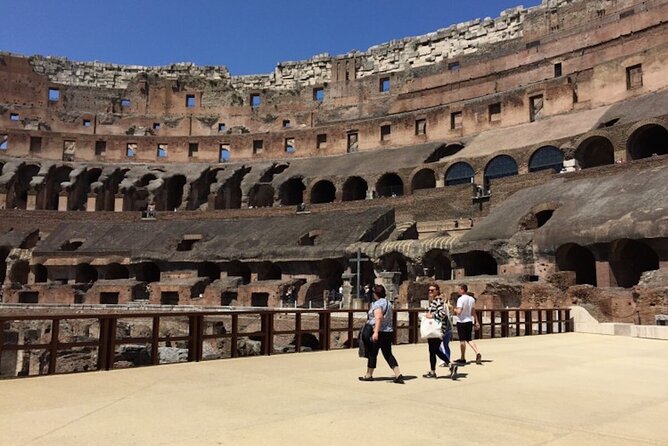
You’ll start at the arena level for the most dramatic first impressions. The Colosseum is one of those places where first-time visitors often miss what makes it tick: the sightlines, how the tiers were used, and why the space was built to stage spectacle. With a guide, the building turns into a machine with a story.
Another practical win: the tour includes the Colosseum reservation fee, and your entry is tied to the booking details. That matters because you’ll need to show valid photo ID and match the names provided during booking. If your paperwork is even slightly off, you can get stuck at the ticket checkpoint, and Rome doesn’t do sympathy delays.
For many people, the Colosseum feels overwhelming at first. A short, guided orientation fixes that. You stop seeing random arches and seating and start seeing design choices.
Arena Floor Option: walking the gladiator world (and why it’s special)
The optional upgrade is the star: access to the Arena Floor through the Gladiator Entrance. According to the tour details, the arena area is off-limits to general public, which is a big reason this option exists in the first place.
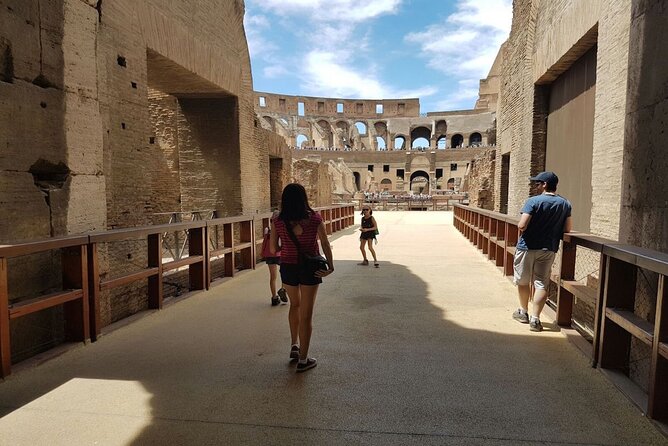
If you choose the upgrade, you won’t just stand on the outside and point upward. You’ll explore the first two rings of the arena, then climb to the first tier. That combination helps you build a mental map: where the fighters came from, how close the audience really was, and how the space directed attention to the center.
This is where the guide storytelling matters most. The tour doesn’t treat the arena like a museum display. You’ll hear about Caesar, gladiators, games, and entertainment, and that context changes how you perceive the architecture. You start thinking about crowd behavior, noise, and the choreography of spectacle—because the building was built for that exact purpose.
Photo lovers also get a real benefit. Being lower down means you can frame the Colosseum’s geometry without the usual sea of heads. And if the tour timing lines up with softer crowds at your start time, you’ll get calmer moments at the best angles.
First-tier views and the engineering you’ll actually remember
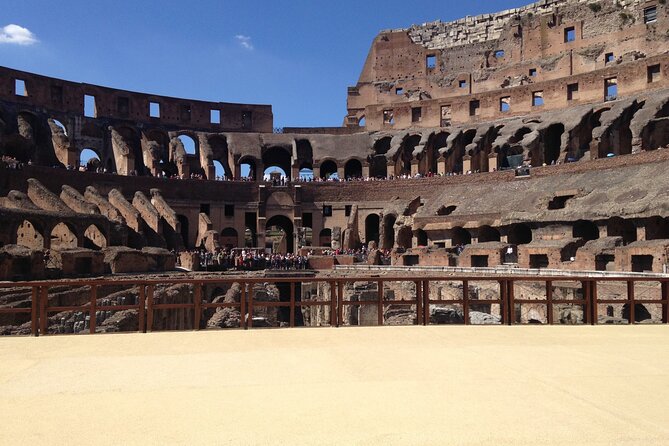
After the arena-level segment, you climb onto the first tier. From there, the view isn’t just pretty. It’s instructive. You see how the tiers stepped around the arena and how the sightlines were engineered for mass entertainment.
This is also where the guide’s job becomes more than narration. You’ll hear about architecture and engineering, which is a fancy way of saying the Colosseum wasn’t only built to look grand—it was built to function for events at scale.
Even better: the tour is designed so you don’t wander. You go where the important visuals are, then the guide connects them to the big themes. That’s how you end up remembering things later, instead of just collecting snapshots.
There’s a trade-off, though. Since the whole tour is around three hours, you’ll still be moving. You can stop for photos, but you won’t have “sit and stare for an hour” freedom. If you like long, slow archaeological hangs, plan a later self-guided visit too.
Roman Forum: the center of power, not just stone leftovers
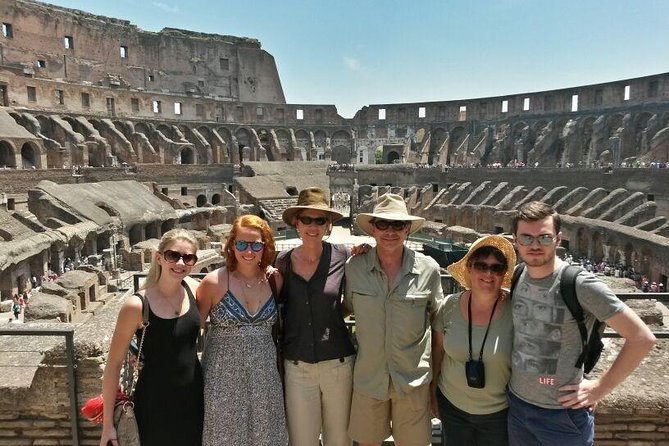
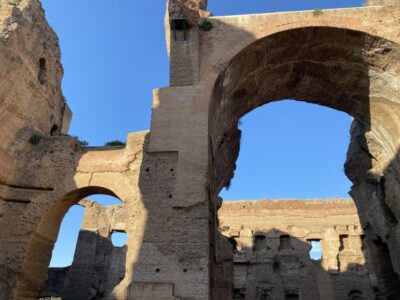
Next you head into the Roman Forum. This part feels like Rome’s social network went public: it was the heart center of the bustling city, where government, ceremony, and daily life overlapped.
The tour highlights specific landmarks with clear references:
- Arch of Titus
- Basilica of Maxentius
- Temple of Antonino and Faustina
You’ll walk through the valley of the Forum while hearing what happened in those streets. The guide approach matters here because the Forum can feel like a confusing scatter of ruins if you don’t have a framework. With a guided route, the stones become a sequence: public buildings, political power, and the way people gathered.
One practical note: this is still a walking tour with uneven ground. Wear shoes that handle Rome’s mix of smooth pavement and rough, ancient surfaces. And if you’re visiting in warmer months, bring water. A review-style theme for this kind of route is that you can underestimate how much walking you do for a “half-day” plan.






Palatine Hill: origins of Rome with actual context
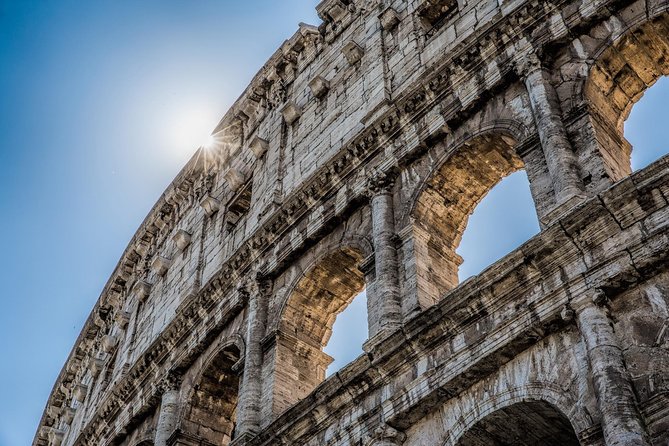
The final stop is Palatine Hill. If the Colosseum is where the Romans watched entertainment, Palatine is where they imagined origins and authority. You’ll climb uphill as the guide explains how ancient Rome began to form, including stories tied to Livia and the House of Augustus.
Palatine also gives you big-picture views. The itinerary specifically calls out the valley between Palatine Hill and Aventine Hill, where Circus Maximus once stood. That’s a key detail. When you look across that valley, you’re seeing the space that once hosted large-scale entertainment, which mirrors the Colosseum theme: Romans didn’t just like politics. They liked public spectacle.
You’ll also see that Palatine was home to major imperial villas, including Augustus’ expansive home. That’s not just trivia. It helps you understand why emperors treated this hill like a stage for legitimacy. Standing there makes the political story feel physical.
This segment is shorter—about 30 minutes—so think of it as a viewpoint and a context wrap-up, not a full deep study. Still, it’s a strong ending because it links the entertainment of the Colosseum to the political and symbolic worlds of the empire.
Pace, comfort, and what to bring for a smooth 3-hour run
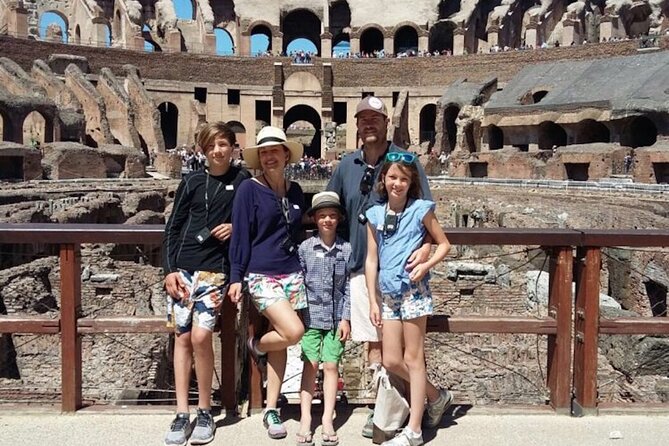
The itinerary totals about 3 hours. For the value-minded traveler, that’s a good length: you get Colosseum + arena experience (optional) + Forum + Palatine without losing an entire day.
The downside is simple: you’ll be busy. Even with a small group, you’re moving between sites and climbing. Multiple reviews for this style of route mention that 3 hours can feel short because there’s so much to see and so much history to process.
Here’s what I’d plan around:
- Comfortable shoes (seriously).
- Water, especially if you’re going outside mild weather.
- A charge on your phone for arena-floor photos and later Forum viewpoints.
- If you get bothered by crowds, arrive with the mindset that this is a timed-entry experience. Still, Rome is Rome.
If you’re traveling with kids or anyone who tires quickly, the small-group size can help. You can often pause a beat to look closer, and the guide can adjust the cadence. But you should still expect movement.
Price and value: why $180 can make sense here
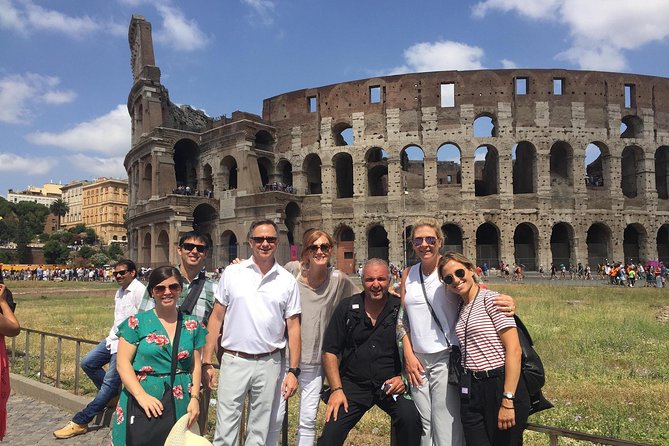
At $180.19 per person, this isn’t a bargain. But value here isn’t just the ticket price. It’s the mix:
- Guaranteed entry to the Colosseum
- Small group max 6
- A guided route connecting Colosseum, Forum, and Palatine
- And if you upgrade, access to the Arena Floor via the Gladiator Entrance (the tour lists this option as valued around €24 per person)
So the question becomes: what are you buying?
- If you only want the basics, you might decide to self-guide and save money.
- If you want the arena experience and a guide to connect the dots, this starts to look more reasonable fast—because the arena access is the part that’s hardest to replicate on your own.
Also consider the time you save by arriving with a timed plan. In Rome, your itinerary can be wrecked by delays and lineups. A tour that’s built around guaranteed entry can protect your schedule. That’s real value, even if the price tag feels spicy.
Should you book the Arena Floor upgrade?
If you’re deciding whether to pay extra for the arena option, I’d use this simple checklist:
Book the upgrade if:
- You want the closest, most cinematic views from inside the Colosseum space
- You like learning through place-based storytelling (Caesar, gladiators, games)
- Photos are a priority and you want angles most visitors never get
Skip the upgrade if:
- You’re mainly after the Forum + Palatine highlights and prefer staying higher up
- You dislike extra crowds or time spent in a specific confined area
- You’d rather spend money on meals and a second activity later
Either way, you’re still getting the Colosseum interior experience and the full Forum-to-Palatine storyline. The upgrade mostly adds the “where the action was” feeling.
Who this tour suits best
This tour fits best if you want:
- A guided route that hits three top ancient sites in one half-day
- A small group to keep things personal
- A guide who connects architecture to human stories—entertainment, politics, and Roman life
It also works well for first-timers because the route is concentrated. You’ll see the big landmarks, then you’ll leave with a clearer sense of how the Colosseum and Forum relate.
If you’re an advanced Roman history fan, you might still enjoy it for the arena-floor element and the tight organization. But you’ll likely want extra independent time after the tour to slow down and study details your guide only touches briefly.
Quick match: book or pass?
Book this tour if you want guaranteed Colosseum entry with a small-group feel and you like the idea of seeing the Forum and Palatine as a connected story. The optional arena-floor access is the biggest reason to pay the higher price, because it’s the part most tourists can’t easily DIY.
Pass if $180 feels steep for your budget and you’d rather allocate that money toward food, museums, or a longer Rome day. Also pass if your ideal pace is slow and unstructured—you’ll be moving through highlights on a schedule.
FAQ
FAQ
How big is the group for this Colosseum and Ancient Rome tour?
The tour is designed for a maximum of 6 travelers, keeping it small and semi-private.
How long is the tour?
The duration is about 3 hours.
What sites are included in the itinerary?
You’ll visit the Colosseum, the Roman Forum, and Palatine Hill.
Do I get admission tickets included?
Yes. Admission tickets for the Colosseum, Roman Forum, and Palatine Hill are included in the tour.
Is the Arena Floor access included?
Arena Floor access is optional. It’s included only if you select the upgrade when booking, and it’s described as access through the Gladiator Entrance.
What language is the tour guide?
The tour is offered in English.
What do I need to bring for entry?
You’ll need a valid photo ID (passport or ID document) that matches the full names provided at booking. You may also need to present names exactly as listed on your voucher.
—
If you want, tell me your travel month and whether you’re considering the Arena Floor upgrade. I can help you decide based on how busy the sites usually feel and how much time you’ll want for photos and climbing.