REVIEW · ROME
Professional Lab Pasta Experience
Book on Viator →Operated by Emanuele Faini · Bookable on Viator
Rome gives you pizza on every corner, but this class teaches the real technique. You’ll learn homemade pasta with Chef Angelo at a dedicated pasta workshop, working through dough, cutting, shaping, and sauce-building in about 3 hours. What I like most is the variety of flours (spelt, buckwheat, wholemeal) and the hands-on coaching that keeps things practical, even if you’re a first-timer. One thing to consider: it’s a small setup (max 4 travelers), so book early if you want a specific time slot.
You also get a meal that goes beyond pasta. Along the way there’s cheese with Prosecco, a tasting of hand-cut homemade ham, wine with dinner, and an express tiramisu at the end. The overall vibe is focused, warm, and food-centered, not rushed sightseeing.
Best for: people who want a real skill, not just a plate of pasta for a photo. If you prefer quiet tours, you may find the kitchen energy a bit loud and busy.
In This Review
- Key Highlights You Should Know
- Entering the Pasta Workshop: The Setting Matters
- Chef Angelo’s Dough Lessons: Spelt, Buckwheat, and Wholemeal
- Shaping Pasta Like a Local: Ravioli, Tortellini, and Fettuccine
- Sauces and the Weekday Twist: Carbonara and Cacio e Pepe
- The Meal Plan: Prosecco, Ham, Wine, and Express Tiramisu
- Allergies and Vegan Food: Clear Options, Not an Afterthought
- Price and Timing: Is $77.40 Worth It?
- Where It Fits in Your Rome Plan
- Should You Book Professional Lab Pasta in Rome?
- FAQ
- How long is the pasta experience?
- Where does the class meet?
- Is the experience offered in English?
- What pasta dishes will I make?
- Does the experience include wine and food?
- Can gluten-allergic or vegan guests join?
- How big is the group?
- What is the cancellation policy?
Key Highlights You Should Know
- Small group, up to 4 travelers so you get direct guidance as you work.
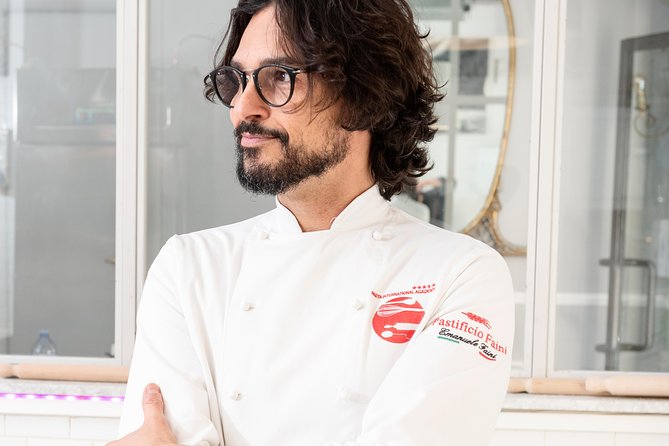
- Chef Angelo leads from dough to finished dishes, with step-by-step instruction.
- Multiple flours (spelt, buckwheat, wholemeal) so you learn what changes in texture and handling.
- You shape classic pasta like ravioli, tortellini, and fettuccine, plus a thin puff pastry.
- Sauce variations by weekday: carbonara on Monday-Saturday listed as a weekday version, and cacio e pepe on Tuesday, Wednesday, Thursday, and Friday versions.
- Food extras are part of the experience: Prosecco with cheese, wine with the meal, ham tasting, and express tiramisu.
Entering the Pasta Workshop: The Setting Matters
This isn’t one of those “watch from the sidelines” food tours. The whole setup is built around you working at a prep station, rolling dough, cutting shapes, and assembling plates. That matters because pasta isn’t hard because it’s fancy; it’s hard because dough behaves differently depending on flour, hydration, and how you handle it. A real workshop gives you the space and time to get it right.
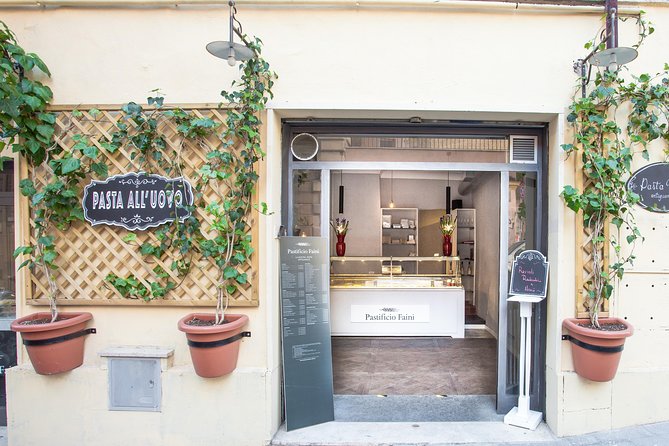
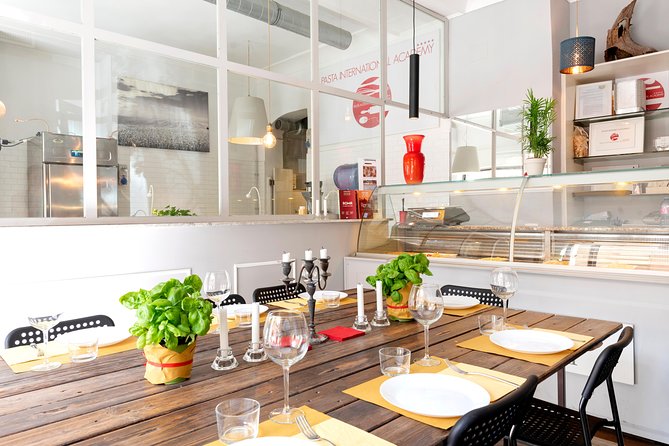
The location is Ass. Culturale Pasta International Academy, at Via dei Latini 13, Rome. It’s described as near public transportation, which is useful if you’re juggling a busy Rome itinerary. And because the group is kept small, the room doesn’t feel chaotic. One of the best signals here is how often people talk about the place being clean, well organized, and designed for both cooking and eating.
If you’re worried that a pasta class will feel like a demo with optional participation, relax. The format is hands-on “from scratch,” with clear coaching as you go. You also get background on safe food cutting procedures, which sounds like a minor point until you realize it changes how relaxed you feel while you’re working with tools.
You can also read our reviews of more tours and experiences in Rome.



Chef Angelo’s Dough Lessons: Spelt, Buckwheat, and Wholemeal
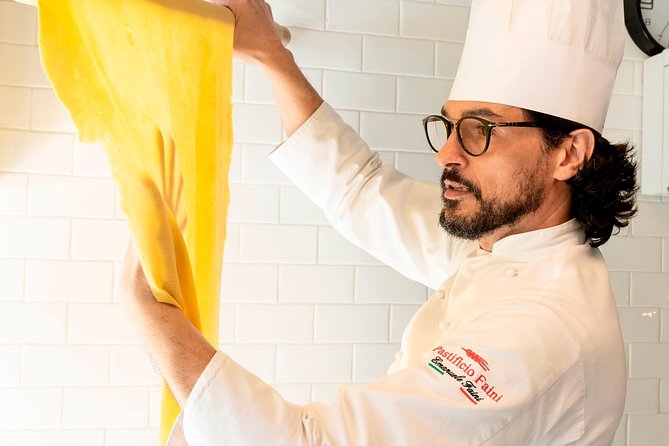
The heart of this experience is learning homemade pasta dough using different flours. Instead of only teaching one version of pasta, you start with a base that changes depending on the grain. The class includes spelt, buckwheat, and wholemeal flour, and that’s where the real learning happens.
Here’s why it’s valuable for you: flour choice changes everything from how the dough stretches to how it holds shape when cooked. Even if you never want to get fancy at home, understanding the behavior of different flours makes you a better cook. It also helps if you shop in Italy and come home with ingredients you don’t recognize.
You’ll also learn more than just rolling. The program includes making thin puff pastry, and it doesn’t treat that as a separate “random add-on.” It ties into technique: how to handle dough thinly, how to keep it workable, and how to avoid common messes.
And since the class is limited to a maximum of 4 travelers, you’re not competing for attention. Chefs can correct technique as you work, and that’s one of the reasons people leave feeling confident they can repeat the recipes.
Shaping Pasta Like a Local: Ravioli, Tortellini, and Fettuccine
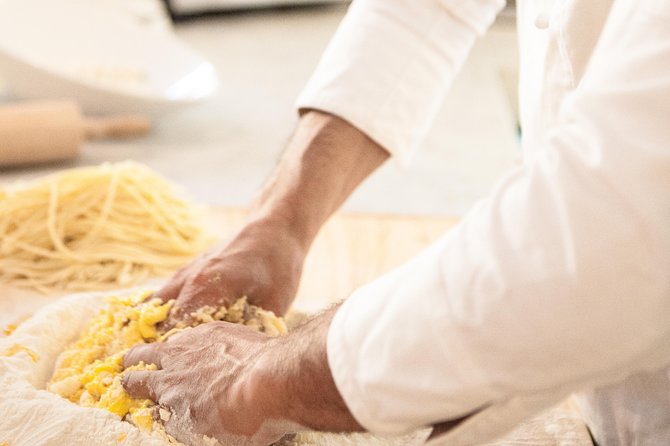
Once your dough is ready, the class moves into shaping. You’ll make three types of ravioli, tortellini, and fettuccine. That’s a lot of variety in one evening, but it works because the instruction stays stepwise: make the dough, learn the motions, practice the shapes, and then cook and eat what you made.
Ravioli and tortellini are where most people get stuck at home. The filling, the sealing, and the ability to keep shapes consistent takes practice. In a guided workshop, you’re not learning from failure. You’re learning with feedback.
One smart detail: you don’t just learn the “how” of shaping; you also learn how the shapes connect to sauces. That’s the part that makes the dishes taste right. Even people who love pasta but have never cooked it learn something useful here: sauce selection isn’t random. It matches texture, thickness, and how pasta holds flavor.
You’ll also cook the pasta and sauces you make during the lesson. That’s a big deal for your confidence. Tasting what your own pasta does at the stove tells you whether your dough handling was on target.
Sauces and the Weekday Twist: Carbonara and Cacio e Pepe
This is one of the more interesting “variety without chaos” parts of the class. The core program focuses on classic pasta and two typical Italian sauces, but the workshop also offers a different sauce version each weekday.
You’ll get:
- Carbonara sauce on the weekday listed for Monday–Saturday version
- Cacio e Pepe sauce on the weekday versions for Tuesday–Wednesday–Thursday–Friday
Why this matters: if you visit Rome midweek and want something that still feels flexible, the menu adapts without turning into a totally different class each day. You can also plan around the sauce you care about most, which is easier than hunting down specific restaurant menus.
Cacio e pepe and carbonara are also great teaching sauces because they show technique. Cacio e pepe is about balance and how the sauce clings. Carbonara is about timing and emulsification. When you cook in class, you learn when to stop cooking, not just what ingredients to use.
The Meal Plan: Prosecco, Ham, Wine, and Express Tiramisu
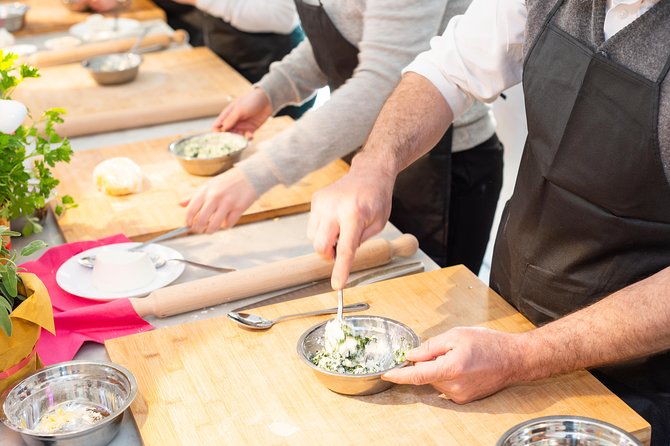
A pasta class should end in food, not just dough on your hands. Here, the lesson is structured so you eat throughout.
What you can expect:
- A starter that includes Italian cheese with Italian Prosecco
- A special appetizer from Chef Angelo during the class
- A tasting of delicious hand-cut homemade ham
- A meal made from the pasta and sauces you prepared
- Sipping good Italian wine with the experience
- Express tiramisu served as dessert
That sequence is helpful for your appetite and your focus. You start with small tastes while you learn, then you eat the results. By the time tiramisu arrives, you’re done with the busy work and ready for something sweet and satisfying.
Also, the class includes a free souvenir: a professional chef’s hat with the Pastificio Faini logo. It’s not the main point, but it’s a fun “I actually did this” reminder, especially if you’re traveling with kids or teens.



Allergies and Vegan Food: Clear Options, Not an Afterthought
If you have food restrictions, you’ll be happy this workshop says it can accommodate GLUTEN allergic guests and VEGAN guests. That doesn’t mean every dish automatically becomes safe for every allergy situation (you should always confirm details at booking), but it signals the kitchen is prepared to handle special needs rather than forcing substitutions you can’t trust.
This also matters for peace of mind. Pasta is one of those foods where cross-contact can be an issue. The fact that the experience specifically calls out gluten-allergy and vegan accommodation means they’ve already built the flow around those needs.
It’s also a good fit if you’re traveling with a mixed group: one person is vegan, another is gluten-free, and everyone still wants to cook and eat together.
Price and Timing: Is $77.40 Worth It?
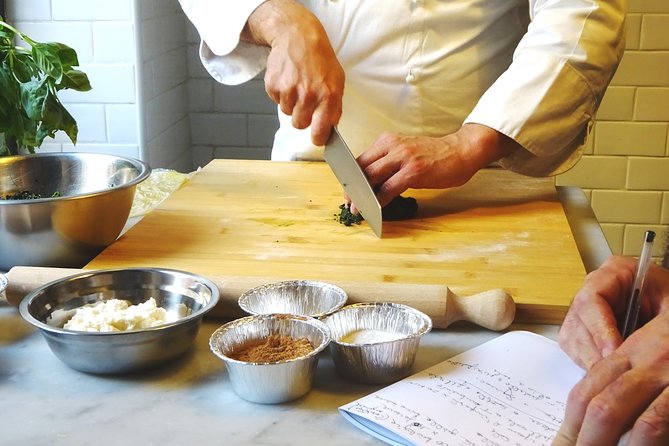
At $77.40 per person for about 3 hours, the value comes from what you actually do and eat. This isn’t paying only for a plate. You’re paying for:
- hands-on instruction from start to finished dishes
- time at a real pasta workshop
- multiple pasta types, plus sauce work
- included tastings (Prosecco, cheese, ham)
- included drinks (wine)
- dessert (express tiramisu)
- recipe take-home value is implied because people repeatedly say they can recreate it at home
You’re also paying for the small group size. Maximum 4 travelers reduces waiting time and increases coaching time. In cooking classes, that’s where price differences show up. A cheaper class can still be fun, but you often spend most of the evening watching or trying to read instructions across a crowded counter.
One practical note: the experience is offered in English (and also available in Italian). If you’re traveling with mixed language skills, you’ll still be able to follow what matters for the cooking steps.
Where It Fits in Your Rome Plan
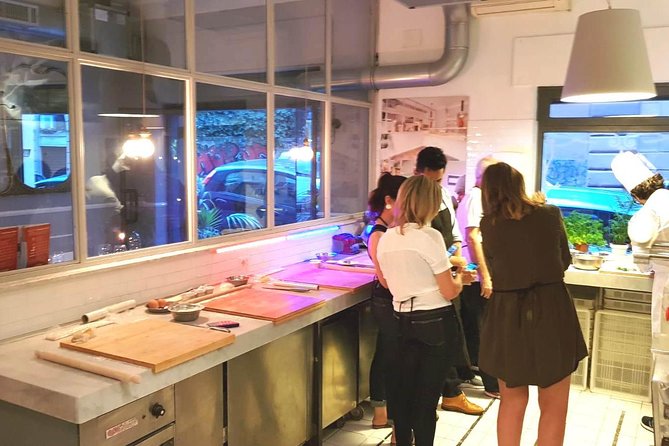
This class is perfect as a “first weeknight” activity when you want something different from museums. It’s also a good way to balance Rome’s heavy walking days. You can start your evening with local food tastes, then spend the next few hours in a focused workshop setting.
If you want the best rhythm with your schedule, aim for a time that doesn’t force you into rushing out for a second dinner right after. The lesson includes wine and dessert, so you’ll feel like you’ve had a real meal.
It also suits families and groups with teens. Multiple accounts highlight that it’s engaging without requiring cooking expertise beforehand. In fact, the structure is beginner-friendly because the chefs correct technique as you go.
Should You Book Professional Lab Pasta in Rome?
Book it if you want a hands-on Rome experience where you learn techniques you can actually use later. I’d especially recommend it if you care about more than one kind of pasta or you like the idea of tasting what you make with wine and a proper meal flow.
Don’t book it if you’re mainly looking for passive sightseeing, or if you’re trying to keep the evening completely quiet and low-energy. This is a working kitchen experience.
If you’re on the fence, consider this simple test: do you want to leave Rome knowing how to make pasta dough and shapes, or do you just want to eat pasta? This workshop is built for the first option.
FAQ
How long is the pasta experience?
It lasts about 3 hours.
Where does the class meet?
You meet at Ass. Culturale Pasta International Academy, Via dei Latini, 13, 00185 Roma RM, Italy. The activity ends back at the meeting point.
Is the experience offered in English?
Yes. It’s offered in English (and also available in Italian).
What pasta dishes will I make?
You’ll make homemade pasta and also prepare thin puff pastry, three types of ravioli, tortellini, and fettuccine, plus accompanying sauces.
Does the experience include wine and food?
Yes. It includes a tasting with Italian Prosecco, a tasting of hand-cut homemade ham, wine during the meal, and express tiramisu for dessert.
Can gluten-allergic or vegan guests join?
Yes. The experience states it can accommodate GLUTEN allergic guests and VEGAN guests.
How big is the group?
The group size is limited to a maximum of 4 travelers.
What is the cancellation policy?
You can cancel for a full refund up to 24 hours before the experience starts. If you cancel less than 24 hours before, the amount paid is not refunded. Cut-off times are based on local time.