REVIEW · ROME
Private Vatican Highlights Guided Tour with Sistine Chapel
Book on Viator →Operated by LivTours · Bookable on Viator
The fastest way to enjoy the Vatican is with a plan. This private highlights tour lines up the best art stops—then gives you time to actually understand what you’re seeing.
I especially like the skip-the-line entry that protects your energy for the important parts, not ticket waits. I also like that your guide keeps the pace comfortable while working in plenty of questions.
The only real drawback is that St. Peter’s Basilica can close unexpectedly, so Wednesday mornings and Jubilee-related dates may change what you get.
In This Review
- Key points before you go
- Skip the long ticket line with private Vatican access
- Vatican Museums highlights: courtyards, Maps, Raphael Rooms, and more
- Ask any question: how private guides make the Museums feel human
- Sistine Chapel rules, silence, and what the restoration can change
- St. Peter’s Basilica: VIP passage, dress code, and possible closures
- What you’re really paying for at $302.32
- Practical essentials: ID, bags, photos, and pacing
- Who this tour is best for (and who should pick something else)
- Should you book this private Vatican Highlights tour?
Key points before you go
- Private guide, private pacing: you’re not stuck in a cattle-car group rhythm.
- Skip-the-line access: included entry helps you move through busy areas faster.
- Sistine Chapel with context first: your guide sets up what you’ll see (and what you won’t, during restoration).
- Raphael Rooms and major galleries: you get multiple “greatest hits” stops in one stretch.
- VIP entry into St. Peter’s Basilica: you use a shortcut passage instead of the long line.
Skip the long ticket line with private Vatican access
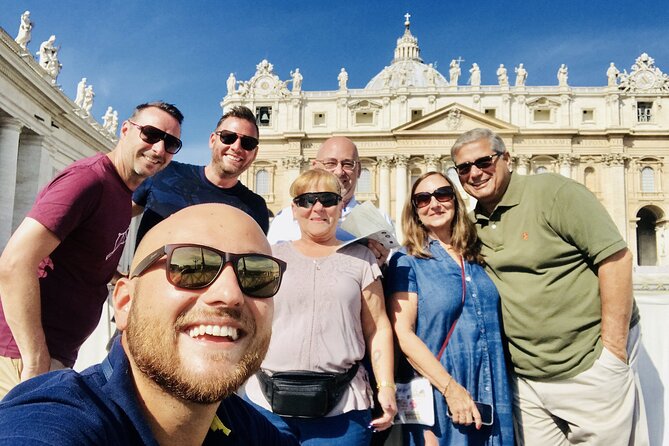
At the Vatican, lines aren’t just slow—they steal your attention. This tour is priced so you can trade waiting in queues for time inside the Museums, the chapel, and St. Peter’s Basilica. You’ll still go through security and check-in like everyone else, but the tour’s skip-the-line to the Vatican Museums is the difference between rushing and seeing.
Because it’s a private tour, you only share the experience with your group. That matters in the Vatican, where crowds can make it hard to hear, hard to look closely, and hard to ask follow-up questions. With a private guide, you can ask as many questions as you want and shape the visit to your interests—religious art, famous artists, architecture, or just how the place works.
The meeting point is Viale Vaticano, 100, 00192 Roma, and the tour ends back there. It’s near public transportation, which helps if you’re combining this with other Rome plans the same day.
You can also read our reviews of more guided tours in Rome



Vatican Museums highlights: courtyards, Maps, Raphael Rooms, and more
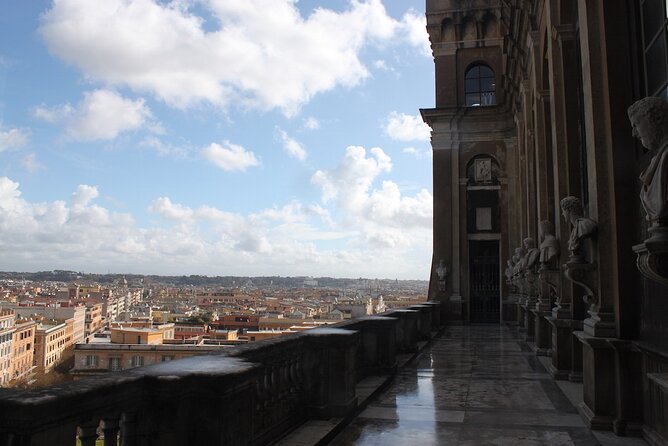
Your tour begins in the Vatican Museums, where the challenge isn’t seeing art—it’s choosing what to see without burning out. Here, you get a structured route that covers the major highlights without feeling like a checklist. You’ll have around 2 hours in the Museums area, with an included admission ticket.
You’ll move through memorable courtyards that set the tone before you even hit the big galleries. The route includes the Pinecone Courtyard and the Octagonal Courtyard, which are classic Vatican backdrops for spotting how the complex is laid out. Then you’ll head through key themed rooms like the Museums Room, Round Room, and themed galleries such as the Gallery of Candelabra and Gallery of Maps.
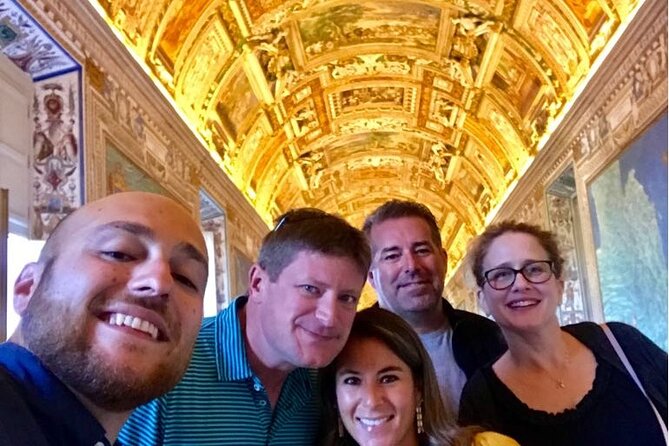
The Gallery of Maps is a standout for a first-time visitor because it gives you a visual map of the world as Europeans once understood it—connected directly to papal ambition and cultural identity. It’s also a place where a guide’s commentary can change your experience from looking at decoration to realizing it’s a message.
You’ll also visit the Raphael Rooms (when the route allows). Access to these rooms depends on crowd conditions and guard-regulated paths, so it’s not guaranteed in every situation. If conditions don’t allow, your guide can adjust the itinerary to protect the quality of the tour rather than forcing a bad fit.
One detail I like: you won’t just hear art descriptions. You’ll get amusing anecdotes and context about popes and artists tied to what’s on the walls. That kind of storytelling helps you remember what you saw—especially when you’re standing in long halls that can blur together.
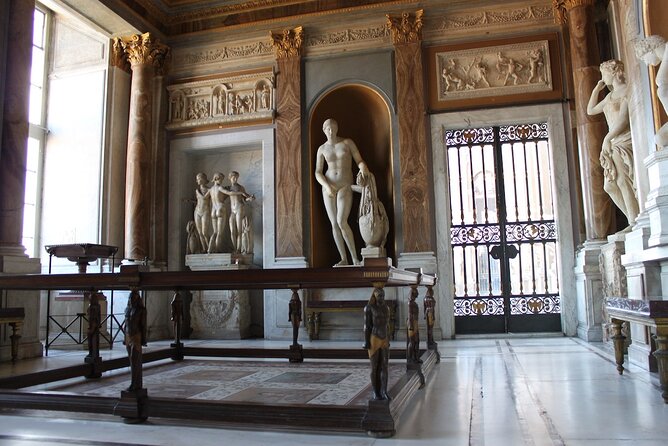
There’s even a sense of discovery baked into the tour route. You’ll see sculptures tied to Greek mythology, including figures associated with Aphrodite and other Nymphs and Graces. And yes, the tour route includes an iconic Vatican trivia moment often described as the pope’s toilet—exactly the kind of weird historical detail that makes the Vatican feel less distant.
Ask any question: how private guides make the Museums feel human
In the Vatican, art is one layer. People are the other layer. That’s why the guide’s style matters more than you might think.
Guides such as Fabrizio, Dario, Massimo (and even a “Maximo” on some groups), and Santi are repeatedly singled out for the same thing: they don’t just recite facts. They explain with warmth, pacing, and a sense of humor, and they answer questions in a way that makes the art click.
A practical plus: having a guide who can read the room helps you avoid the most exhausting parts of the day. If a corridor gets jammed, the route can shift so you keep moving at a comfortable pace. If you get curious about a specific painting, you won’t be told to wait until the next group arrives—you can ask, listen, and then carry on.
Some guides also use tools to sharpen your viewing. One guide noted as Massimo has been described as using an iPad to help explain what you’re looking at. That’s useful because certain details in Renaissance art are easier to understand when someone points them out directly and explains why they matter.
The big takeaway here is simple: you’re paying for interpretation plus timing. Without that, you can absolutely walk the Vatican on your own—but you’ll spend more time guessing what’s important and less time understanding what you’re seeing.
Sistine Chapel rules, silence, and what the restoration can change
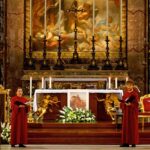
After the Museums, you head into the Sistine Chapel with a guided explanation beforehand. This is important because inside the chapel itself, talking is strictly forbidden. Your guide sets the context before you enter, so you’re not stuck standing there thinking, I know it’s famous, but why.
You’ll spend about 15 minutes in the Sistine Chapel. That’s short, but it’s realistic given the sacred rules and the fact that the chapel is one of the busiest rooms in the whole complex. The upside of a guided entry is that you’re not wandering for meaning—you’re prepared for the details that make the art work.
One thing to watch: from January 12 through March 31, conservation work may cover Michelangelo’s Last Judgment with scaffolding. The Sistine Chapel remains open and accessible, but that specific wall won’t be visible during the restoration period.
If you’re visiting during those dates, don’t assume you’ll see the Last Judgment in full view. Instead, treat this as your chance to study the rest of the chapel’s visual program with a guide’s help—so you still leave with a clear understanding of Michelangelo’s bigger scheme, even if one section is temporarily blocked.
Also note that there is no photography allowed in some or all areas of the tour. In practice, you should plan for no photos in the chapel area and stay flexible elsewhere.
St. Peter’s Basilica: VIP passage, dress code, and possible closures
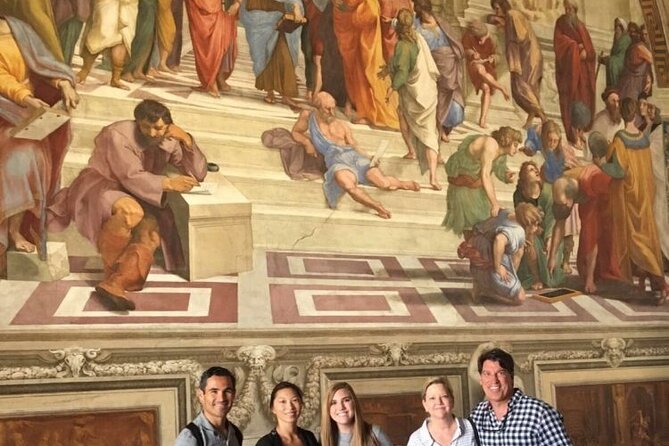
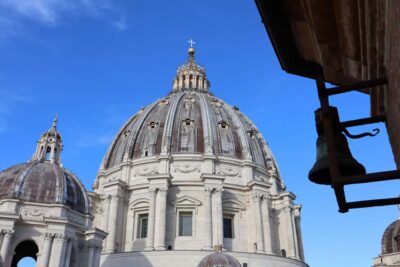
Your final stop is St. Peter’s Basilica, with access via a VIP passage designed to skip the long line. You’ll have around 45 minutes inside, which is enough time to see the main highlights without feeling like you’re getting trapped in the busiest bottlenecks.
This part of the tour is awe-inducing partly because of scale. The Basilica is enormous, and the decoration can feel like it never ends—so a guide’s direction helps you prioritize what to look at first. You’ll also get a smoother experience because you’re not starting from the back of a massive public line.
Before you go, keep the practical rules front of mind: places of worship have strict dress requirements. You need shoulders and knees covered (no tank tops or short dresses). If you forget, entry can be refused, and that ruins the day.
There’s also the closure reality. St. Peter’s Basilica is an active church and can close unexpectedly for liturgical ceremonies. For example, Wednesday mornings are impacted because the Holy Father’s weekly audience happens in St. Peter’s Square, and due to security the Basilica is closed. If you book an early morning tour on a Wednesday, you can’t assume Basilica access.
For the Jubilee Year 2025, from December 24th, 2024 to January 6th, 2026, closures may be partial or complete without much notice. In those rare cases, your guide adapts the itinerary and still keeps the tour running at full quality, with museums time extended if needed. Just know the rules are firm: refunds can’t be issued due to Basilica closures.
So the smartest move is mental flexibility. If St. Peter’s Basilica is closed on your timing, you’ll still have a guided Vatican experience—but your exact “final photo moment” might change.
You can also read our reviews of more private tours in Rome





What you’re really paying for at $302.32
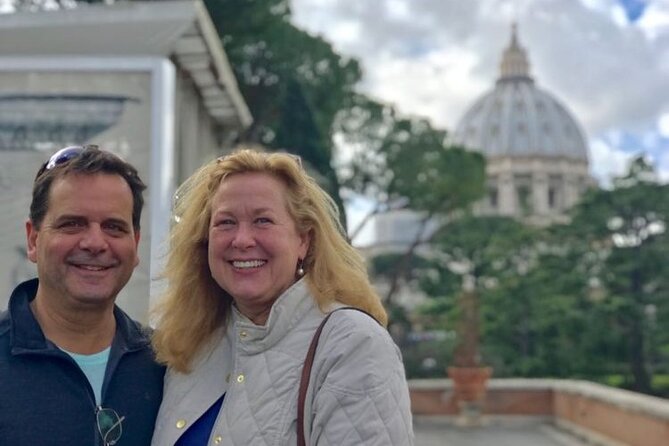
At $302.32 per person for about 3 hours 15 minutes, this isn’t the cheapest way to see the Vatican. But you’re not just buying entry tickets. You’re buying three things that add up quickly in real life: a private guide, included skip-the-line access, and a guided route through high-demand spaces.
If you did this yourself, you’d still face long waits, you’d still need to navigate rules about bags and dress code, and you’d still be guessing where to spend your limited attention. Here, your guide handles the flow and helps you understand what matters—so you can enjoy rather than manage.
You’re also getting included access to several named areas and galleries, plus entry into the Sistine Chapel and St. Peter’s Basilica. Even if you’ve visited other big museums before, Vatican Museums can drain people because it’s so dense. Paying for a structured route is often what turns a “we tried” day into a “we got it” day.
There’s mention of group discounts, but the big value is that it’s still a private experience for your party. In a crowded site, private time is often worth more than the difference between public and private ticket prices.
Practical essentials: ID, bags, photos, and pacing
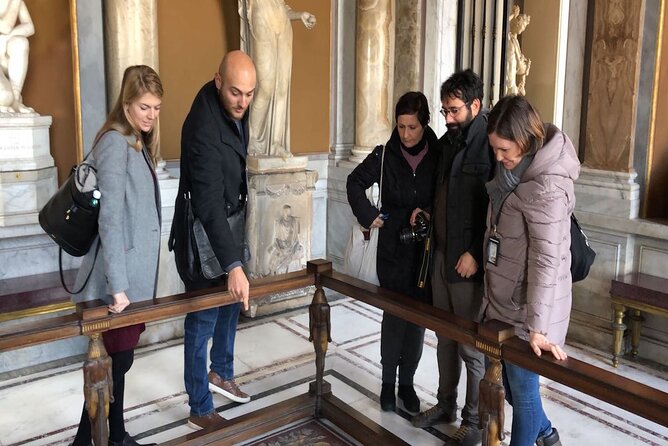
Before you show up, handle the small stuff. It’s the small stuff that prevents big frustration.
Bring a government-issued ID. The requirement is for everyone in the group, regardless of age, to enter the Vatican Museums. That’s non-negotiable, so don’t assume a child’s ticket is enough.
For bags: backpacks are not permitted in the Museum. Traveling light is the best strategy here—think small day bag or something you can keep out of the way during security and walking.
On photography: there’s no photography allowed in some or all areas of the tour. Since that wording can vary by room and rules, I’d assume you’ll have limits everywhere inside the Museums and definitely in the chapel. Keep your phone ready for silent use only.
Language options exist, with the tour offered in English, French, Spanish, Portuguese, and Italian. If you want another language, you need to specify it when booking.
Mobility note: this tour isn’t recommended for severe mobility issues. The Vatican isn’t built for easy, flat, obstacle-free movement, and the route is inside a complex with lots of walking and crowd management.
Finally, remember the chapel is a holy place. Inside, talking is forbidden. Your guide will do the heavy lifting of explanations before you enter, so you can just focus on looking.
Who this tour is best for (and who should pick something else)
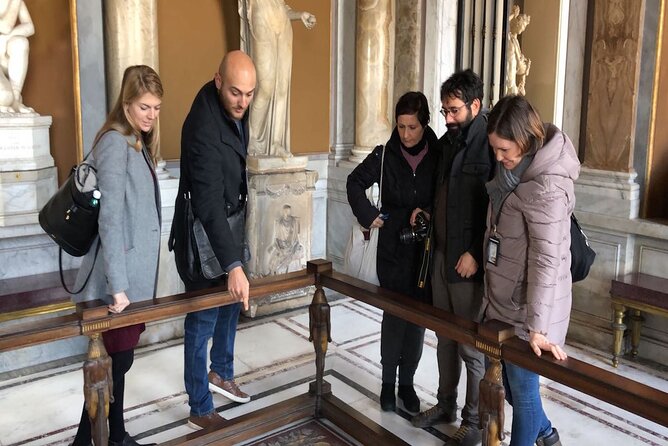
This private highlights tour is a great fit if you:
- Want the Vatican’s top sights—Vatican Museums, Sistine Chapel, Raphael Rooms, and St. Peter’s Basilica—without spending your day in queues.
- Like learning with a person who can answer your questions, not just read a guidebook.
- Care about art context: who made what, why it looks the way it does, and what it meant to the people commissioning it.
It’s also a strong choice for first-timers who are overwhelmed by the sheer size of the complex. Your guide’s job is to help you choose the right things and see them properly, not to sprint you through.
You might consider another option if you’re:
- Visiting with severe mobility constraints.
- Expecting guaranteed access to St. Peter’s Basilica on a Wednesday morning or during Jubilee-related dates. The Basilica can close unexpectedly.
Should you book this private Vatican Highlights tour?
I’d book it if your goal is a smooth, guided Vatican day where the time inside the art actually matters. The combination of skip-the-line entry, a private expert guide, and a route that hits the Sistine Chapel and Raphael Rooms makes it a strong value for people who want fewer hassles and more meaning.
I’d also book it if you appreciate guides who bring personality. Guides like Fabrizio, Dario, Massimo, and Santi are described as warm, focused on questions, and attentive to pacing—exactly what you want in the Vatican when crowds can push you into “just get through it” mode.
Only hesitate if St. Peter’s Basilica access is a must-have for your plan on a sensitive date (Wednesday mornings, or during the Jubilee closure window). If that happens, your guide will adapt—but you should go in with flexibility.
If you want a Vatican visit that feels guided, paced, and easier to remember, this one is a solid bet.