REVIEW · ROME
Piazza Navona and Trevi District Underground Pass with Audioguide
Book on Viator →Operated by TOURISTATION · Bookable on Viator
Rome’s best views are under your feet. This pass sends you underground beneath Piazza Navona and into the Trevi area with an audioguide so you can go at your own pace.
I especially like the mix of building types: a Domitian-era masonry stadium under Navona and an aqueduct-related space tied to the Vergine system. I also like that you get reserved entrance tickets for both stops, so you’re not spending your precious time hunting for lines above ground.
One thing to consider: it’s not a guided tour with a person walking you through. If you’re sensitive to tight spaces or you dislike queuing at check-in, plan extra time and be flexible with your schedule.
In This Review
- Quick hits before you go
- Piazza Navona Underground: Domitian’s Stadium Beneath the Modern Piazza
- Trevi Underground: The Vicus Caprarius and the City of Water
- How the Audioguides Work (and when they might annoy you)
- The 2-Hour Reality Check: Timing, Distance, and Energy
- Value and Price: Why $54.07 Can Work (or feel like too much)
- Where It Fits Best in Your Rome Day
- Who Should Book This Underground Pass
- Should you book Piazza Navona and Trevi District Underground Pass?
- FAQ
- What is the duration of the Piazza Navona and Trevi District Underground pass?
- Is this tour guided by a person?
- What languages are available for the audioguides?
- What is included in the price?
- Where do I redeem my voucher?
- What time does the experience start?
- Can I get a full refund if I cancel?
Quick hits before you go
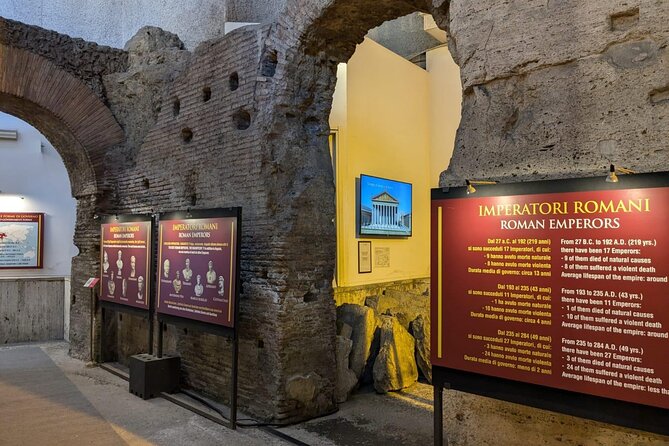
- Two sites, one pass: reserved entry with audioguides at both locations in about 2 hours total.
- Domitian Stadium under Piazza Navona: a masonry stadium built in the late 1st century for the Certamen Capitolino Iovi.
- Vicus Caprarius, the City of Water: an underground aqueduct area with a water tank connected to the Vergine aqueduct (visible inside).
- Self-guided with audioguides: designed for you to move at your own speed, in multiple languages.
- Niche but rewarding: a strong pick if you love archaeology details and hate spending another hour in a museum shop line.
- Claustrophobia check: underground passages are not the right fit if small spaces make you uneasy.
Piazza Navona Underground: Domitian’s Stadium Beneath the Modern Piazza
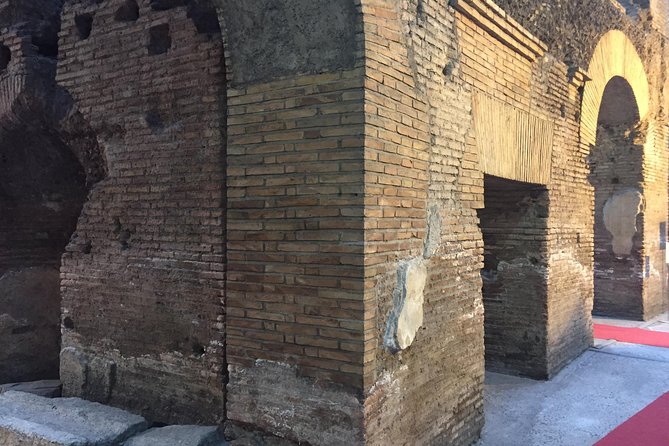
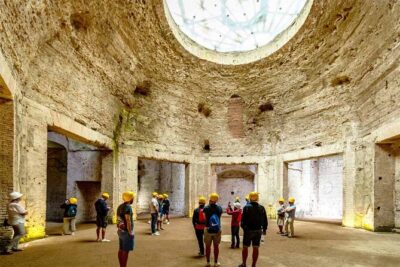
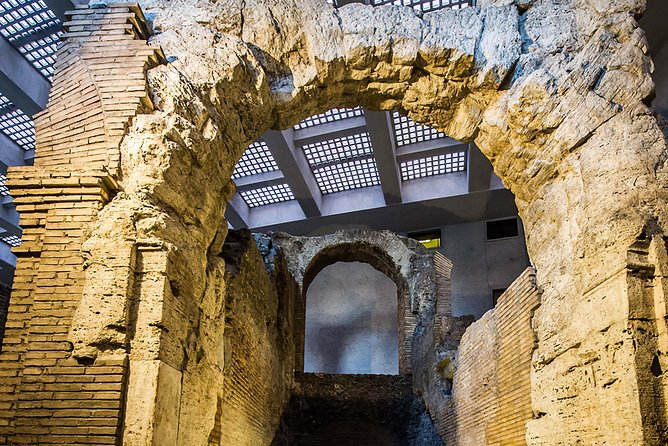
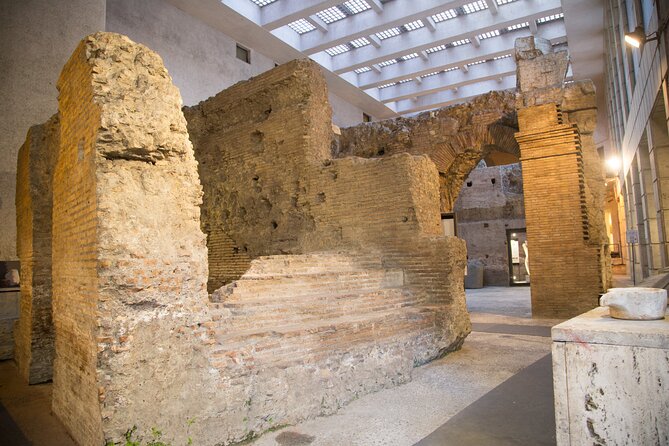
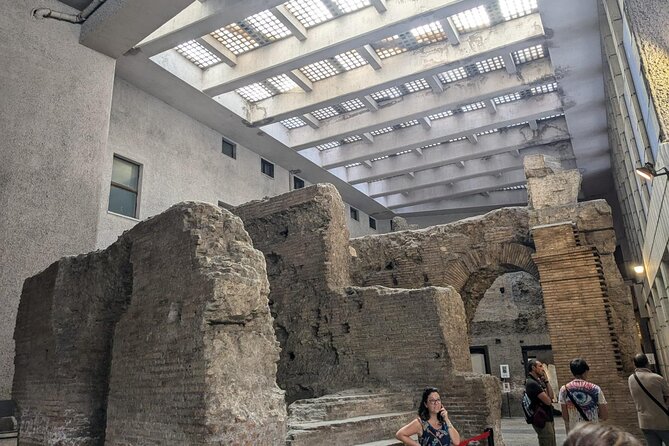
Start with the Stadio di Domiziano area, the underground level beneath today’s Piazza Navona in central Rome. This is the rare kind of site where you look down at a busy piazza above you, then walk into the bones of an old world.
Here’s what makes this stop interesting. You’re seeing an early example of a masonry stadium, built in Campo Marzio around 85–86 A.D. It was created to celebrate the Certamen Capitolino Iovi, tied to a five-year competition established to inaugurate the stadium in 86 A.D., modeled on Olympic-style events. That means the space wasn’t just entertainment. It was Roman identity, politics, and showmanship, all packed into stone.
Your audioguide is doing the heavy lifting. You’ll get a guided-style explanation as you move through the underground remains—posters, photos, and physical artifacts are meant to help you match what you hear to what you see. One of the practical joys of these setups is pacing: you can pause if something clicks, or keep moving if you want the big picture fast.
What to watch for here: this stop is timed (about 40 minutes), so don’t plan to “just skim” on arrival. Give yourself a little breathing room at the start so you’re not rushing your listening when you get inside.
You can also read our reviews of more tours and experiences in Rome.



Trevi Underground: The Vicus Caprarius and the City of Water

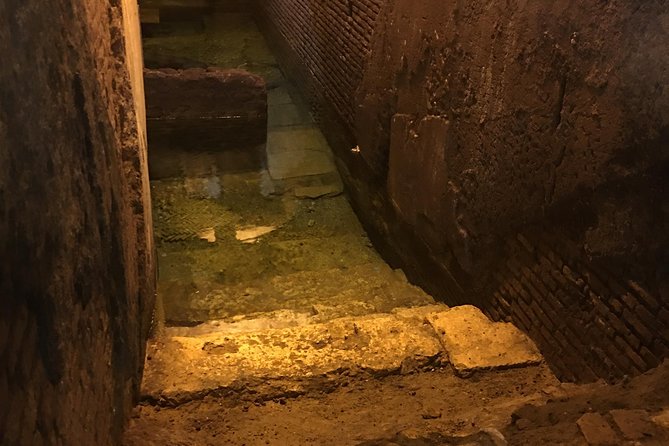
Next is the Vicus Caprarius section, often described as the City of Water. This underground stop centers on an aqueduct space that was discovered in 1999, in the basement of a cinema. That alone gives you a fun mental picture: Roman infrastructure hiding under modern buildings, waiting to be uncovered.
Inside, you can see a water tank connected to the Vergine aqueduct. It’s the kind of detail that makes ancient Rome feel practical, not just dramatic. Water wasn’t an abstract achievement—it was engineering, maintenance, and everyday survival.
This is also where expectations matter. Some people find the Navona portion more straightforward visually, while the Trevi stop can feel more like a niche infrastructure visit—quiet, underground, and detail-based. If you love aqueducts, water systems, and how cities worked, you’ll likely eat this up.
One logistical reality: the two parts aren’t in the exact same room. You’ll need to transition between entrances. Plan on a walk of roughly 15–20 minutes and treat it like part of the tour, not an annoying detour. If rain is falling, that outdoor stretch can slow you down quickly.
How the Audioguides Work (and when they might annoy you)
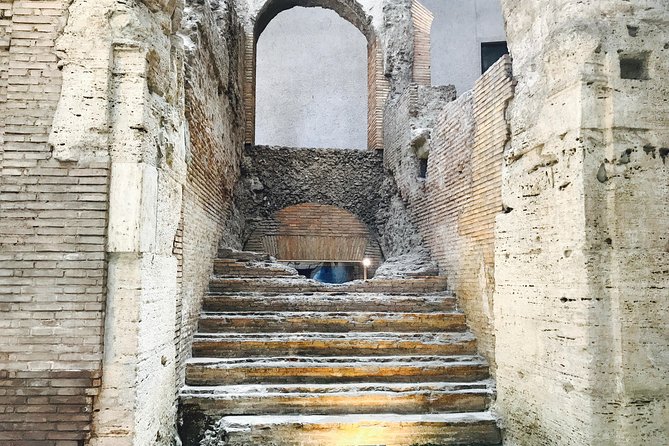
This pass is all about the audioguide. There’s reserved entry plus a device at each underground site, and you listen while you explore.
The upside is control. You’re not stuck with someone moving too fast for your brain to catch up. You can spend extra time on the elements that matter to you—stadium architecture here, aqueduct details there.
The catch is reliability and fit. One person found the Trevi audio to be inconsistent, and another mentioned that the audio setup for children wasn’t as flexible as they’d hoped. I’d suggest you travel with a little patience and have a backup plan for kids or anyone who needs a working device right away.
Also note the tone and pacing can vary by stop. The Navona audio may feel more structured to follow, while the Trevi audio can be more stop-and-start in its delivery. If you want a flowing narrative from one room to the next, you may find yourself doing more mental stitching than you expected.
The 2-Hour Reality Check: Timing, Distance, and Energy
The pass is listed at about 2 hours total, and the two underground segments are each around 40 minutes. That means you’re not signing up for a half-day archaeology marathon. It’s designed to be a tight, focused experience.
Timing is the part you should respect. You’ll check in at the meeting location (the Touristation Navona office) and then redeem your voucher there. If you arrive late, you risk feeling rushed once you’re inside.
There’s also a queue possibility at check-in. I can’t promise what your day will look like, but it’s smart to show up with buffer time, especially on busy days. If you’re the type who gets stressed by lines, treat this as a “start calm” activity.
What about walking? Between the two underground stops, you’re likely dealing with that 15–20 minute move outdoors. This affects how “2 hours” feels in real life. Comfortable shoes matter, and a light rain layer can save your mood.
Value and Price: Why $54.07 Can Work (or feel like too much)

At $54.07 per person for reserved entry plus audioguides at two distinct underground sites, the value depends on your style of travel.
Here’s when it’s a great deal:
- You want Rome off the main route without the time cost of a full guided tour.
- You like structures and systems—stadiums, aqueduct connections, and how buildings were used.
- You’ll actually use the audioguides. This isn’t a “look at it and go” kind of ticket.
Here’s when it may feel expensive:
- If you were hoping for a true guided experience with someone leading you through everything, this is not that. The tour format is self-guided with an audioguide.
- If you hate underground spaces, you may feel like you paid for something you didn’t fully enjoy.
- If you’re hit with delays at check-in or you’re traveling in heavy rain, the experience can feel more like logistics than archaeology.
One more pricing lens: this pass is especially compelling when you’re pairing it with a day already planned around Piazza Navona and Trevi. You’re already in the neighborhood. This ticket then becomes an add-on that gives you a completely different dimension of the city—below street level.



Where It Fits Best in Your Rome Day
This is the kind of activity that helps you stop treating Rome like a checklist. Instead, it gives you a “how the city worked” lens.
It pairs well with:
- A sightseeing day that includes Piazza Navona and the Trevi area.
- A rainy day, since both underground parts are set up to be indoors.
- A more relaxed afternoon where you want to slow down and listen.
It’s less ideal if:
- Your schedule is tight and you can’t afford a queue.
- Your group doesn’t like self-guided formats.
- You’re claustrophobic or strongly uncomfortable underground.
If you’re traveling with kids, it can still be a worthwhile stop because Roman sites are naturally story-rich. Just be aware that the audioguide setup may not be as straightforward as you hope, so bring flexibility.
Who Should Book This Underground Pass
I’d recommend this pass if you:
- Want two underground experiences in one outing.
- Like architecture and infrastructure more than only famous facades.
- Appreciate the idea of learning through audioguides rather than a live guide.
I’d skip it if you:
- Need a guided, question-and-answer format with staff explaining everything in real time.
- Know you don’t do well in confined underground areas.
- Get easily frustrated when check-in takes longer than expected.
Should you book Piazza Navona and Trevi District Underground Pass?
Book it if you’re the type of traveler who loves Rome when it gets practical and hidden—stadiums under plazas and water systems tied to the Vergine aqueduct. For the money, it’s hard to beat when you’re already planning to be in the Navona and Trevi area, and when you’re happy with a self-guided audioguide format.
Think twice if you’re claustrophobic or if you want a live guide to steer every step. Also, go in with a calm attitude about timing. Arrive with buffer time at the Touristation Navona office, and treat the between-stops walk as part of the experience, not wasted time.
If that sounds like your style, this pass can turn two crowded famous squares into something much more personal: the city beneath the city.
FAQ
What is the duration of the Piazza Navona and Trevi District Underground pass?
It takes about 2 hours total, with both underground stops timed at roughly 40 minutes each.
Is this tour guided by a person?
No. This experience includes reserved entrance tickets and an audioguide, but it is not listed as a guided tour.
What languages are available for the audioguides?
The audioguides are available in 6 different languages. English is offered.
What is included in the price?
Your ticket includes reserved entrance to the Trevi District Underground site with an audioguide, and reserved entrance to the Piazza Navona Underground site with an audioguide.
Where do I redeem my voucher?
Report to the Touristation Navona office to redeem your voucher.
What time does the experience start?
The start time is listed as 10:00 am.
Can I get a full refund if I cancel?
Yes. You can cancel up to 24 hours in advance for a full refund.