REVIEW · ROME
Pantheon: Tour with Archaeologist of the best preserved Roman work
Book on Viator →Operated by OLGA DI CAGNO · Bookable on Viator
The Pantheon hits different with a guide. This small-group tour pairs Olga di Cagno, an archaeologist, with the building itself, so you can connect what you see to how Romans built and promoted power. What I like most is the way Olga makes you notice details you’d miss on your own, and how she ties art, inscriptions, and construction choices into one story. The one possible drawback: this is not a pure engineering seminar, so if you want nonstop structural deep detail, be ready to work for it with questions.
You’ll start right where the Pantheon energy is loudest: Piazza della Rotonda. You get admission included, plus a mobile ticket and an English-speaking guide, so you spend less time figuring things out and more time looking. I also like the small cap of 15 travelers, which makes it easier to ask questions in the crush of the crowd outside. Consider the dress rule—shoulders and knees covered—because it can slow you down if you arrive unprepared.
A quick note on timing: the listing says about 1 hour, but real-world entry lines can make it feel shorter. Still, with Olga’s focus on the “why” behind the monument, it’s a smart way to upgrade a must-see stop into something you’ll remember.
In This Review
- Key things to know before you go
- Pantheon With an Archaeologist: What You Actually Experience
- What makes this tour feel different
- Possible mismatch to watch for
- Piazza della Rotonda Start: Easy to Find, Built for a Crowd
- Timing reality check
- Stop: The Pantheon Interior and the Stories Inside
- What you’ll learn to notice
- Latin and meaning
- A note on access expectations
- The Guide Factor: Olga di Cagno’s Style and Why It Matters
- Engineering lovers get something here (with a caveat)
- What You’re Paying $64.88 For (And How to Judge Value)
- Small group = practical value
- Dress Code and Quick Practical Tips So You Don’t Lose Time
- Who This Tour Fits Best (And Who Might Want Another Option)
- If you should think twice
- Should You Book Pantheon With an Archaeologist of the Best Preserved Roman Work?
- FAQ
- How long is the Pantheon tour?
- Where do we meet for the tour?
- What language is the tour offered in?
- Is admission to the Pantheon included?
- What is the maximum group size?
- Do I need a dress code?
- Will I receive a ticket on my phone?
- When will I get confirmation after booking?
- Are service animals allowed?
- Is free cancellation available?
Key things to know before you go

- Archaeologist-led explanations: Olga’s background shows up in how she reads the Pantheon’s layers over time.
- Admission is included: you’re not juggling extra ticket steps for the main event.
- Small group size (max 15): better chances to hear answers, even when crowds swell.
- Focus on construction choices, not just sightseeing: you’ll learn what the design was trying to do.
- Latin and meaning when it fits: one standout moment is Olga translating and interpreting what you’re seeing.
- Dress code matters: cover shoulders and knees so you don’t get shut out mid-trip.
Pantheon With an Archaeologist: What You Actually Experience
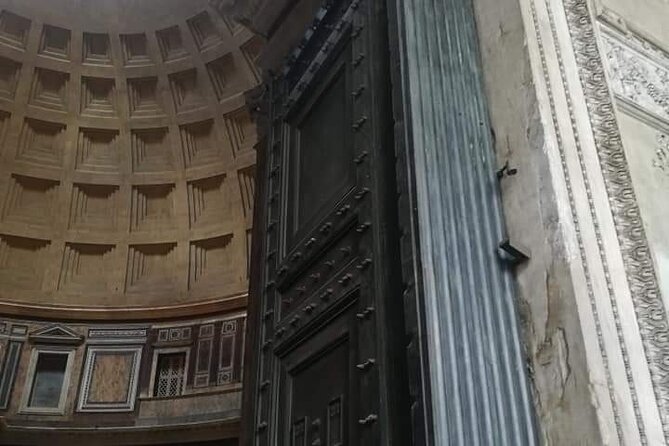
The Pantheon works on two levels at once: it’s a jaw-dropping Roman building, and it’s a living public space people still move through every day. A tour like this helps you slow down long enough to understand what you’re standing in. Instead of treating the monument like a photo backdrop, you start reading it like a machine and a message.
Olga di Cagno brings a history-and-materials lens. In practical terms, you’ll get explanations that connect the big architectural moves to the visual details inside—things like artwork and decorative elements—so the interior feels less random and more planned. Several comments point to Olga taking time with explanations, encouraging questions, and staying interactive rather than rushing through a checklist.
You’ll also learn how Romans used monument-building to project authority. One memorable theme from descriptions: you come away thinking about money, power, and the message behind a lavish public monument—stuff that would look very different in today’s world. It’s not just culture-watching. It’s persuasion-by-architecture.
You can also read our reviews of more tours and experiences in Rome.



What makes this tour feel different
Most Pantheon visits are “look, learn a couple facts, move on.” This one leans harder into interpretation. You’re not only told what the Pantheon is; you’re taught how to think about a Roman monument—what it tried to achieve, how it was perceived, and how later eras kept reshaping its meaning. That approach is especially valuable if this is your first time in Rome and you want a reliable foundation for everything you’ll see next.
Possible mismatch to watch for
One reviewer felt the engineering side didn’t get enough attention for them, despite liking Olga’s friendly knowledge in other areas. If you’re the type who wants nonstop structural and build-method detail, I’d treat this as a history-led architecture tour. Bring your curiosity, and ask early for more construction specifics if that’s your priority.
Piazza della Rotonda Start: Easy to Find, Built for a Crowd
The meeting point is Piazza della Rotonda (00186 Roma RM). That matters because you’re already in the right place for the real experience: the Pantheon is surrounded by people, noise, and city motion. Starting at the square helps you skip the confusion of “where exactly do we gather?” and gives you a clean entry into the story before you step into the building.
The tour also ends back at the meeting point. That’s simple and useful in Rome, where “ending somewhere else” can turn into extra walking you didn’t plan for. Here, you finish in the same area you started, so you can keep your day moving—cafés, streets nearby, and onward transit are all close.
Timing reality check
The duration is listed as about 1 hour. One experience was shorter once meeting and wait time were included. I’d plan for a visit that feels like an hour of guide time plus whatever time you spend before entry flows. The Pantheon can be busy, so a little flexibility is your friend.






Stop: The Pantheon Interior and the Stories Inside
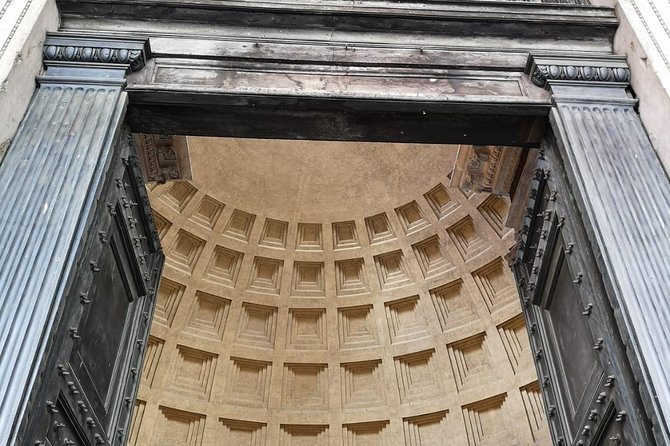
This is the whole show. The stop is structured around the building itself, starting with an experience of stepping into a space that still looks remarkably intact. People describe that it’s one of the rare monuments where you feel transported by sheer scale and design—still surrounded by crowds, but somehow “inside another time.”
What you’ll learn to notice
Here’s the part that often separates a good tour from a forgettable one: you learn how to look. Olga’s explanations focus on why the Pantheon’s architectural choices matter, and how engineering and design work together.
Expect themes like:
- how the Pantheon’s form supports its function
- why the space feels so controlled and monumental
- how decorative elements connect to the monument’s message
- what different eras left behind, creating a layered history
Several comments highlight the guide spending time on paintings, sculptures, and mosaics—and, crucially, explaining the stories behind them. That’s a big deal. If you don’t know what you’re looking at, you usually treat interior art like decoration. With context, you start seeing it as part of a political and religious narrative.
Latin and meaning
One standout detail: Olga did Latin and translated meanings. Even if you’re not a classics person, that kind of context gives you a handle on what you’re seeing. It turns symbols and wording into something that reads like a message, not an abstract decoration.
A note on access expectations
One potential frustration showed up in a disappointed review. The host response clarified a key expectation: the Pantheon has restrictions, and you can’t expect behind-the-scenes access or entry to areas closed to the public. So treat this as a guided visit of the public monument, with interpretation and attention to details—not a backstage engineering walkthrough.
The Guide Factor: Olga di Cagno’s Style and Why It Matters
In Rome, “a guide” can mean anything from a quick narrator to someone who treats your time like the main event. The consistent praise here is that Olga is fun and interactive, takes her time with explanations, and makes space for questions.
That interactive element shows up in multiple ways:
- clear storytelling that connects art and architecture
- opportunities to ask questions
- a relaxed pace for a site that often feels rushed
A few reviews also mention Olga’s personality and humor. It sounds small, but it changes the whole vibe. In a place where you’re squeezed by crowds, a guide who keeps things moving calmly—and can answer you on the spot—turns frustration into understanding.
Engineering lovers get something here (with a caveat)
There are comments from an engineering-field traveler who loved the construction details, and one other who wanted more of that side. Translation for you: if you’re an engineer or architecture nerd, you’ll likely find plenty to enjoy. But if you want a strict, technical lecture with zero detours, this may not be the right format.
My advice: if construction depth is your top priority, come with questions ready. Start by asking what design choice surprised you most, or what element you should focus on visually if you only have a short time.
What You’re Paying $64.88 For (And How to Judge Value)
Price is $64.88 per person, and it includes admission ticket. That instantly improves value, because the Pantheon is one of those sites where “just show up” can become a mess of time and ticket management—especially when crowds are high.
But the bigger value question isn’t the ticket. It’s the upgrade from “I was there” to “I understood what I was seeing.” Multiple accounts call this one of the most educational tours they took in Rome, largely because Olga explains relevance across nearly 2000 years of adaptation and historical layers.
So, judge it like this:
- If you like to walk into a monument and immediately start understanding it, the guide pays for itself.
- If you prefer to wander on your own and just read a sign, you might be happier skipping the paid guide.
Small group = practical value
The maximum group size is 15 travelers, which matters at the Pantheon. The space is busy and standing still can be uncomfortable. A smaller group improves your odds of hearing the guide, asking a question, and not feeling like you’re being pushed through a conveyor belt.
Dress Code and Quick Practical Tips So You Don’t Lose Time
You need to cover shoulders and knees. This isn’t a “nice to have.” It can affect whether you get into the space smoothly. I’d dress with it in mind, especially in warm months when people show up in shorts or tank tops.
Also keep expectations realistic:
- The Pantheon is busy. Plan for some crowd flow and standing.
- The tour is short. You’ll want to listen closely and ask questions early rather than saving everything for the end.
One more practical detail: this includes a mobile ticket, which is helpful because Rome often makes you manage your phone while you’re already wrangling bags and transit schedules.
Who This Tour Fits Best (And Who Might Want Another Option)
This experience is a strong match if you:
- want a first-rate, guided introduction to one of Rome’s best-preserved icons
- like history with architectural attention, not just dates and names
- enjoy interactive guides who answer questions
- appreciate context for art elements like mosaics and sculpture details
It can also work well for students or classics-minded travelers, especially because Olga uses Latin when it helps you understand meaning.
If you should think twice
You might be less happy if:
- you expected a long, heavily technical engineering session without room for questions or slower interpretation
- you’re sensitive to tours that can feel faster than the posted duration due to real crowd timing
Should You Book Pantheon With an Archaeologist of the Best Preserved Roman Work?
Yes—if you want your Pantheon visit to feel like more than a photo stop. This is a compact, small-group format with admission included, led by Olga di Cagno, and focused on how to read the Pantheon as both architecture and message.
Book it especially if you value:
- guided attention to the interior details (art and meaning, not just general facts)
- explanations that connect construction choices to Roman power and purpose
- the chance to ask questions in a site that’s otherwise hard to interpret alone
Skip it only if you’re determined to do everything independently and you don’t care about meaning, layers, or construction context.
FAQ
How long is the Pantheon tour?
It runs for about 1 hour (approx.).
Where do we meet for the tour?
Meet at Piazza della Rotonda, 00186 Roma RM, Italy.
What language is the tour offered in?
The tour is offered in English.
Is admission to the Pantheon included?
Yes, an admission ticket is included.
What is the maximum group size?
The tour has a maximum of 15 travelers.
Do I need a dress code?
Yes. You must cover your shoulders and knees.
Will I receive a ticket on my phone?
Yes. The tour uses a mobile ticket.
When will I get confirmation after booking?
Confirmation is received within 48 hours of booking, subject to availability.
Are service animals allowed?
Yes, service animals are allowed.
Is free cancellation available?
Yes. You can cancel up to 24 hours in advance for a full refund.