REVIEW · ROME
Ostia Antica: Small group tour from Rome
Book on GetYourGuide →Operated by Estaalia · Bookable on GetYourGuide
Roman streets, minus the crush. A short train ride turns into a clear, guided look at how ancient people lived in Ostia Antica, Rome’s port town. I love that the tour pairs a roundtrip train ticket with skip-the-line entry, so you spend more time walking ruins and less time figuring out logistics.
I also like how the guide connects the big stops to everyday life: the outdoor theater, the Square of the Guilds, and the public baths all feel like parts of one working city, not random rocks. The walk to the House of Diana is a nice capstone because it shifts from public spaces to the way people slept and moved indoors.
One consideration: this is a moderate walking tour and it is not suitable for wheelchair users, and there’s no hotel pickup. Wear comfortable shoes and plan for some time on your feet.
In This Review
- Key things to know before you go
- Getting there from Rome: the train ride that sets the tone
- What Ostia Antica is really about: a port city shaped by movement
- The grand outdoor theater: where entertainment mixed with spectacle
- Square of the Guilds: shipping, merchants, and everyday ambition
- Public baths: exercise, soaking, and cleaning with olive oil
- The House of Diana: stepping into a Roman bedroom reality
- How the licensed guide changes the whole experience
- Price and value: is $113.17 worth a 4-hour ruins outing?
- The practical side: timing, walking, and what to bring
- Who this Ostia Antica tour suits best
- Should you book? My honest call
- FAQ
- Where do I meet for the Ostia Antica small-group tour?
- How long is the tour?
- Is skip-the-line entry included?
- What’s included in the price?
- What languages are available for the guide?
- Is food or drinks included?
- Is the tour suitable for wheelchair users or people with mobility impairments?
- What should I bring (and what should I avoid)?
- What are the cancellation and payment options?
Key things to know before you go
- Train-first plan: Meet at Roma Ostia Lido area (Piazzale Ostiense) and ride the local train together.
- Skip-the-line tickets: You avoid the long entry wait and get straight into the site.
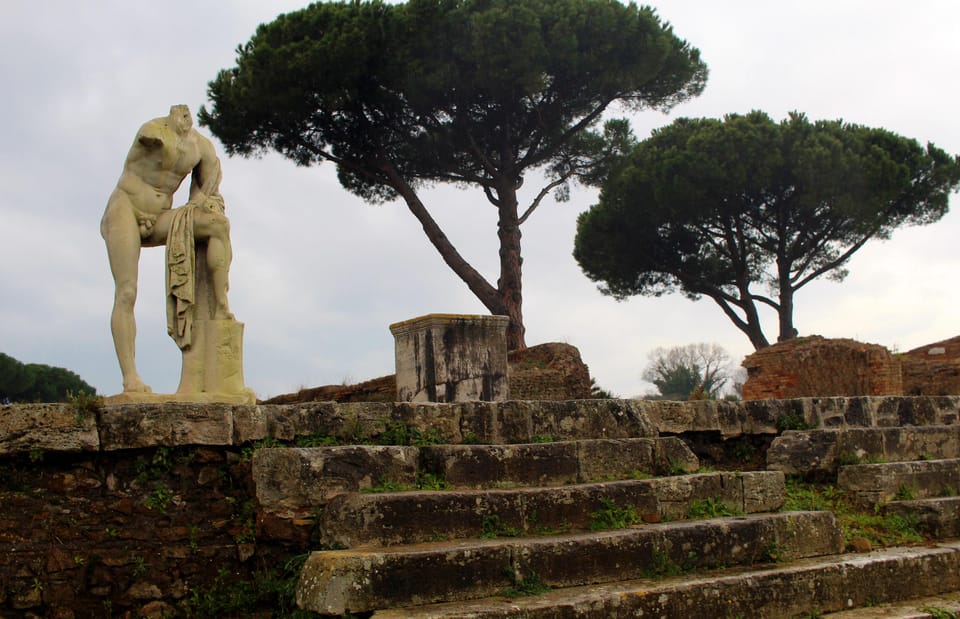
- Port city layout in your head: Theater, guild square, baths, and homes follow the rhythm of a real Roman town.
- Outdoor theater with major draw: Expect context for how performances and even gladiator fights fit into public life.
- Baths as daily routine: You’ll see where people worked out, relaxed, and cleaned with olive oil.
- House of Diana for intimate scale: A quieter, residential finale where you see where people likely slept.
Getting there from Rome: the train ride that sets the tone
This tour starts in a very practical way: you meet in front of the Roma Ostia Lido Train Station at Piazzale Ostiense, 9. Arrive about 15 minutes early so you can check in and get rolling without stress. From there, you take the local train up to the archaeological park.
I like this approach because Ostia Antica has a different feel than central Rome. You’re not doing another museum room; you’re walking through an ancient city that was buried by time. The train transfer helps you mentally switch gears from modern streets to a place where silt and mud protected the remains long enough for excavators to bring them back.
The tour lasts about 4 hours, so you can fit it into a half-day without feeling like you gave up your whole day. And since the roundtrip train ticket is included, you don’t have to juggle transit add-ons.
You can also read our reviews of more tours and experiences in Rome.



What Ostia Antica is really about: a port city shaped by movement
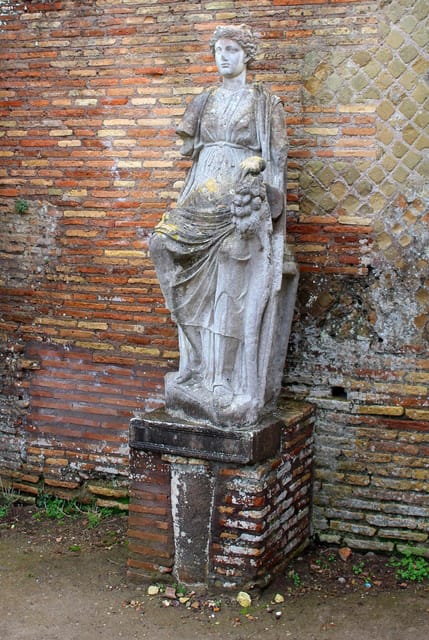
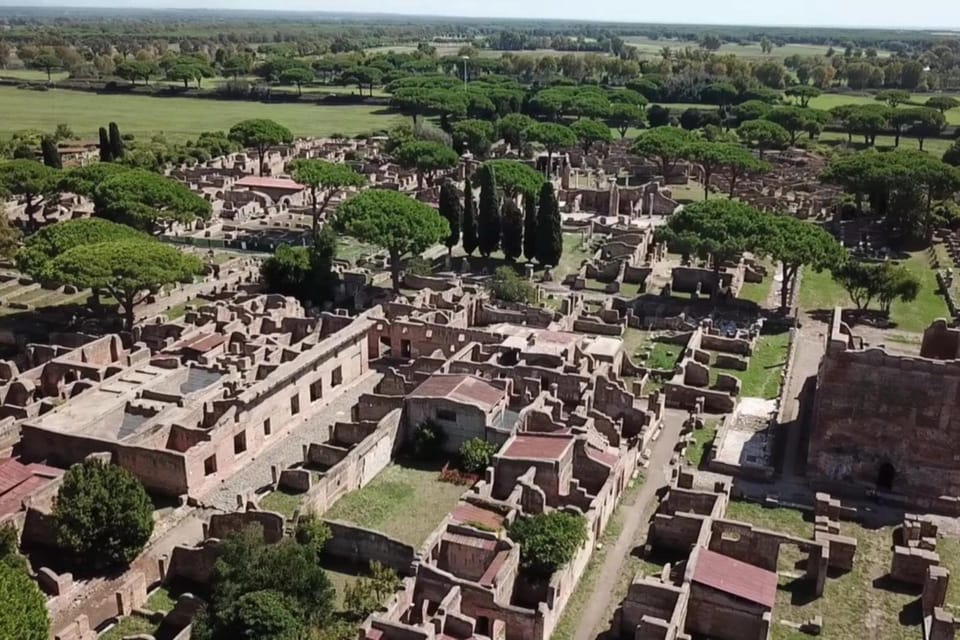
Ostia Antica was once Rome’s thriving port city and a busy commercial center. The story isn’t just that people lived there; it’s that goods and money flowed through there, day after day. When you walk the streets with a guide, you start noticing how the sites connect to work, leisure, and community.
After the fall of the Roman Empire, the city was eventually abandoned. Over time, the river changed course and the area became covered in silt and mud, which helped protect the ruins. That means what you see today has a lived-in quality. Buildings are still laid out where you expect them, and the spaces don’t feel like isolated monuments.
For you, that matters because ruins can be hard to interpret on your own. A guided route turns the site into a map: public entertainment in one zone, commerce in another, daily hygiene and exercise in the baths, and domestic life in the homes.
The grand outdoor theater: where entertainment mixed with spectacle
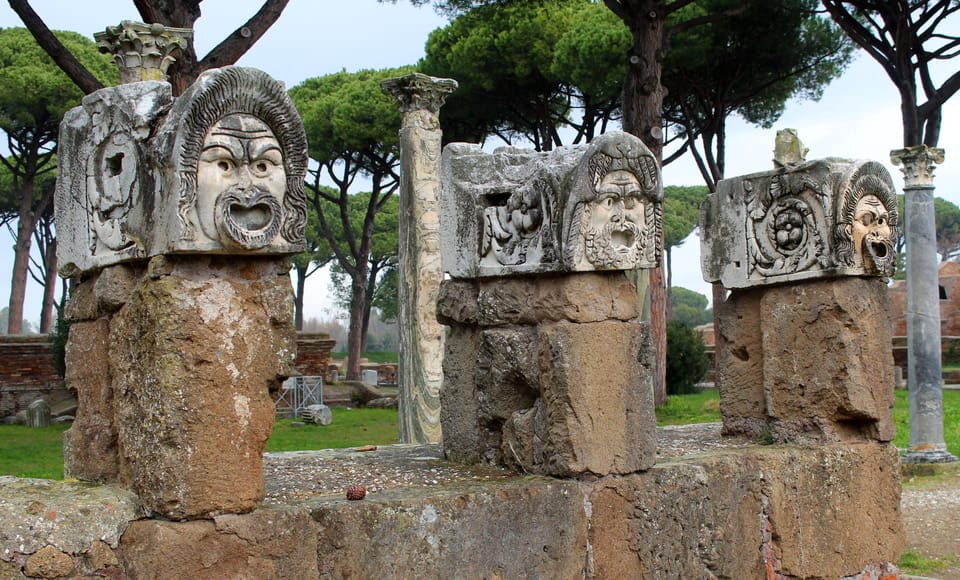
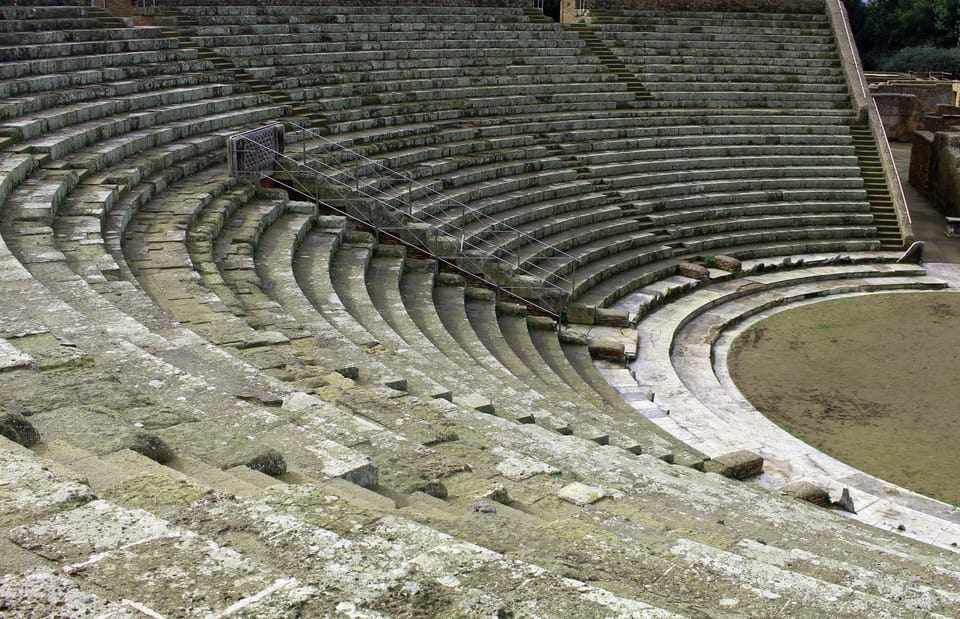
One of the first big emotional hits at Ostia Antica is the outdoor theater. This wasn’t a quiet place for speeches. It hosted plays, and the tour description also notes it could include gladiator fights.
Standing in the theater area, you’ll get a sense of how Roman public culture worked. This is where crowds gathered, where the city showed off its identity, and where entertainment had real social weight. The guide’s job is to connect the structure you see to the types of events that would have filled the space.
A small tip: since it’s an outdoor site, expect sun and shifting light. If you’re thinking about photos, you’ll often get better results in the earlier or later portions of your walk when the light is less harsh. Either way, this stop is a strong reason to go with a guide rather than only doing a self-walk, because the context turns seating and stage into something you can picture.
Square of the Guilds: shipping, merchants, and everyday ambition
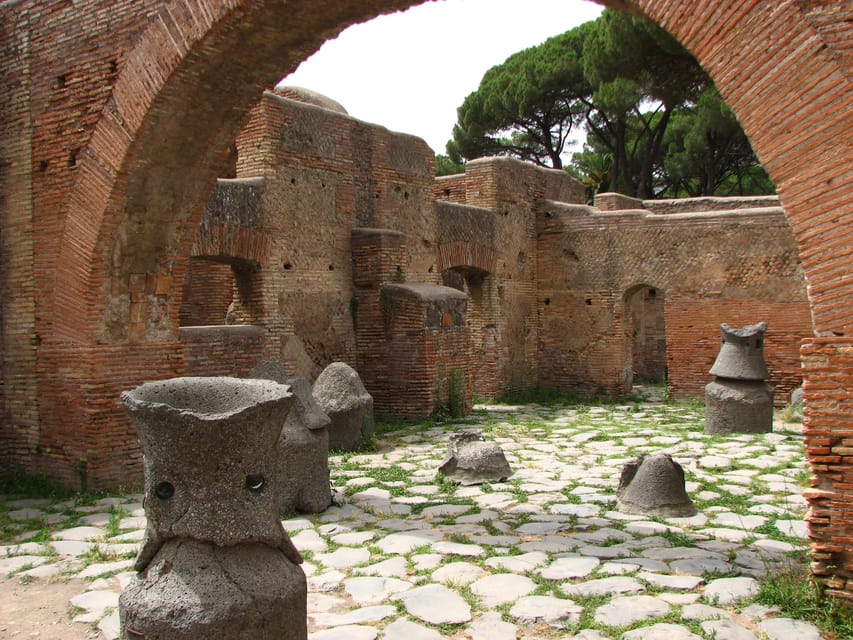
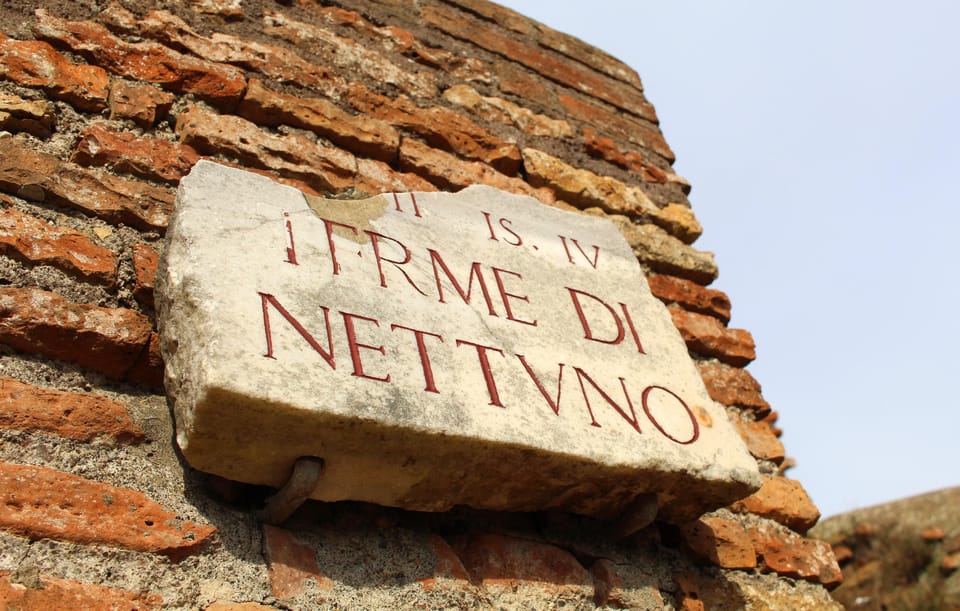
Right along the route is the Square of the Guilds, an area linked with people trying to make a fortune through trade. The tour highlights ship owners and merchants here, and that’s the key idea: this wasn’t just a pretty plaza. It’s where commercial life and organizations connected to shipping would have come together.
This stop gives you a chance to understand Ostia Antica’s engine. Rome didn’t run on agriculture alone; it relied on movement of goods. When you connect the port-city identity to the commercial square, the ruins start telling a coherent story about how wealth and business operated.
If you care about the practical side of history—who did what and why—you’ll enjoy this section. It’s also where I think many visitors learn the most, because it’s easy to assume ancient cities were only temples and statues. Ostia Antica is different: you’re seeing a working town with a commercial core.
Public baths: exercise, soaking, and cleaning with olive oil
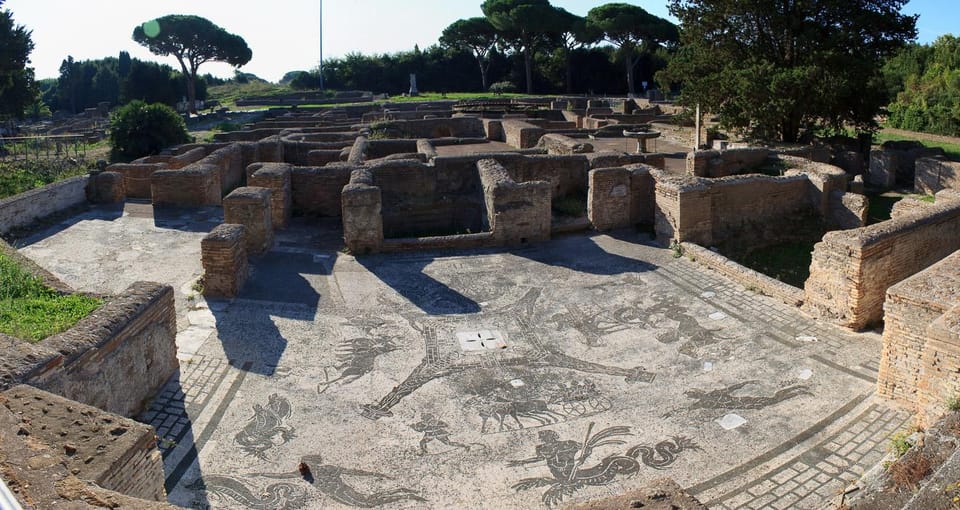
Down the street from the guild area, you’ll reach the public bath houses. This is one of the best stops for understanding daily life, because baths weren’t only about cleanliness. The tour explains that people would lounge in pools, work out, and clean themselves with olive oil.
That olive oil detail is worth holding onto. It’s a reminder that bathing habits weren’t identical to modern showers and soap. Romans often used oil as part of the grooming routine, then scraped it away. Even if you don’t get the full chemistry of the process from the guide, you’ll leave with the important mental picture: baths were multi-purpose spaces with social energy.
Also, the baths area helps you see how different parts of the city served different needs—commerce in one zone, entertainment in another, and then the place where people relaxed and reset. The guide’s commentary ties these spaces together so the city doesn’t feel like separate “attractions.”





The House of Diana: stepping into a Roman bedroom reality
The tour ends with a very human scale stop: a walk to the House of Diana, where you’ll see where the ancients laid their heads at night. That residential focus is a smart final act because it shifts from public buildings into private routines.
You’ll likely notice the contrast in space and tone. Public areas are about crowds and shared experience. A home is about daily life—sleeping, moving around, living with family and routine. Even with limited remains, your guide will point out what you’re looking at so it doesn’t feel like you’re guessing.
If you enjoy history that connects to living—how people slept, cleaned, and spent downtime—this is the stop that makes the whole day feel complete. It’s also a good reminder that Ostia Antica wasn’t just a backdrop for commerce. It was a city with households, habits, and nights that ended the same way for thousands of people.
How the licensed guide changes the whole experience
The tour is led by a licensed English tour guide, with live guide options in Spanish, English, and French. In practice, what you get is a person who helps you “read” the site: where you’re standing, what the buildings were likely used for, and how the different areas fit together.
One of the most praised aspects is that the guide brought serious information. The result is that you don’t just walk past places—you understand why they matter. A review also mentioned the guide shared extra practical local tips for another stop on the trip, including local bus information. That kind of helpful, real-world advice is exactly what makes a tour feel worth it, especially when you’re juggling multiple sights in a short window.
Small group matters here too. With a smaller group, you usually get better pacing and fewer long bottlenecks. You also get a better chance to hear the guide clearly without strain.
Price and value: is $113.17 worth a 4-hour ruins outing?
At $113.17 per person, this isn’t the cheapest way to see Ostia Antica. But you’re not just paying for a guide and a walk. You’re also paying for:
- Skip-the-line tickets for the archaeological park
- A licensed live tour guide
- A roundtrip train ticket
For many travelers, the value is in reducing friction. Rome can be easy when you’re prepared and annoying when you’re not. This tour handles the big unknowns: getting to the site, entering without waiting in line, and having someone translate what you’re seeing into a story you can actually follow.
If you’re the kind of visitor who gets more out of context than checklists, the price makes sense. If you prefer total independence and you enjoy researching ruins on your own, you might decide to DIY. But with Ostia Antica, the guided route is what helps everything click: theater, commerce, baths, and home life in one coherent afternoon.
The practical side: timing, walking, and what to bring
Expect moderate walking. Comfortable shoes are not optional on this one, especially because the site is outdoors. Bring water, and plan for sun with a hat and sunscreen. The tour notes that people should also check the weather forecast and dress appropriately.
You’ll also want to think about what you carry. The tour specifies that luggage or large bags aren’t allowed, and there’s no hotel pickup or drop-off—so travel light. At the meeting point, you’ll need passport or ID card; a copy is accepted.
Finally, arrive early—about 15 minutes before the scheduled departure time. That small buffer helps you avoid delays when you’re transferring to the train and regrouping with the group.
Who this Ostia Antica tour suits best
This is a great fit if you:
- Want a guided understanding of Roman daily life, not just photos
- Like the idea of a small group day trip rather than a big coach crowd
- Prefer a half-day plan that’s structured but not exhausting
- Enjoy learning how entertainment, commerce, and home life connect
It may not be the best fit if you:
- Need wheelchair access (it’s not suitable for wheelchair users)
- Get uncomfortable with outdoor walking in sun
- Want a fully flexible, unscheduled itinerary (the tour has a set structure)
Should you book? My honest call
I’d book this tour if you want Ostia Antica to feel readable and meaningful in one afternoon. The combination of train convenience, skip-the-line entry, and a guide who clearly explains what you’re looking at makes the day work. The route also covers the main categories of city life—public entertainment, commercial business, daily hygiene, and home life—so you leave with more than scattered impressions.
If you’re comfortable with moderate walking and you can travel light, this is a strong use of time while in Rome. And if your priority is skipping friction and getting story-driven ruins instead of guesswork, this small-group format is exactly the kind of day trip that pays off.
FAQ
Where do I meet for the Ostia Antica small-group tour?
You meet in front of the Roma Ostia Lido Train Station, Piazzale Ostiense, 9.
How long is the tour?
The tour duration is 4 hours.
Is skip-the-line entry included?
Yes. The tour includes skip-the-line tickets to the Ostia archaeological park.
What’s included in the price?
Included are a roundtrip train ticket, skip-the-line tickets, a licensed English tour guide, and the small group tour.
What languages are available for the guide?
The live tour guide is available in Spanish, English, and French.
Is food or drinks included?
No. Food and beverages are not included.
Is the tour suitable for wheelchair users or people with mobility impairments?
No. It’s not suitable for people with mobility impairments and it’s not suitable for wheelchair users.
What should I bring (and what should I avoid)?
Bring comfortable shoes, a hat, sunscreen, water, and a passport or ID card (a copy is accepted). Luggage or large bags are not allowed.
What are the cancellation and payment options?
You can cancel up to 24 hours in advance for a full refund. There’s also a reserve now & pay later option, where you can book your spot and pay nothing today.