REVIEW · ROME
Leonardo da Vinci Museum: the Universal Genius and His Works
Book on Viator →Operated by Mostra di Leonardo · Bookable on Viator
Da Vinci comes with hands-on buttons. This interactive stop in Rome lets you see his machine ideas up close, with touchable replicas, 3D holograms, and modern tech that turns sketches into something you can understand fast.
I especially like the real-life-scale reproductions you can try yourself, plus the way the show connects Leonardo’s engineering ideas to everyday life. The standout moment for me is the end of the exhibition, where there’s a hidden surprise: an underground pond with the tomb of Aulo Irzio (dating to 43 BC).
One thing to keep in mind: the exhibit is compact, so plan for a 45 minutes to 1 hour visit, and consider renting an audio guide since they are not included in the ticket price.
In This Review
- Key highlights to know before you go
- Why Piazza della Cancelleria is a smart Leonardo stop
- What you’ll see in Il Genio le Invenzioni: 65+ machines at real scale
- The 3D holograms and videomapping: learning without heavy reading
- The hidden ending: Aulo Irzio’s tomb and the underground pond
- Audio guides at €3: when they’re worth the extra cost
- Timing it right: how long to plan and what pace to expect
- Getting there smoothly near public transportation
- Value check: $10.81 for admission plus optional audio
- Who should book this exhibition?
- Should you book this Leonardo da Vinci Museum experience?
- FAQ
- How long does the Leonardo da Vinci exhibition take?
- What is included in the ticket price?
- Are audio guides included?
- What languages are available for audio guides?
- Where is the museum located?
- When is it open?
- Can children visit?
Key highlights to know before you go
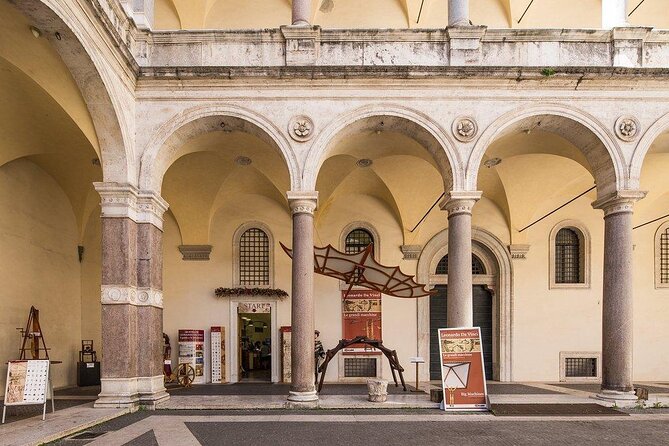
- Touch-and-try machines: more than 65 real-life-scale reproductions of Leonardo’s machine drawings
- 3D holograms and videomapping: modern visuals that explain how ideas work
- Underground pond + Aulo Irzio tomb: a rare 43 BC surprise at the end
- Audio guide available on arrival: extra €3, with many language options
- Mobile ticket + English offered: simple entry if you’re coming prepared
Why Piazza della Cancelleria is a smart Leonardo stop
If you like Leonardo da Vinci, this is an easy win because it’s built for learning, not just looking. You’ll move through a single focused exhibition that mixes replicas, interactive elements, and multimedia storytelling.
What makes it feel especially worthwhile is the setting. The address is Piazza della Cancelleria 1, in the heart of Rome, inside a beautiful Renaissance-era building associated with the Vatican complex. That adds a little extra “wow” before you even reach the machines.
Also, it’s not a huge time commitment. With a typical visit running around 45 minutes to 1 hour, you can pair it with other nearby sights without turning your day into a marathon.
You can also read our reviews of more museum experiences in Rome



What you’ll see in Il Genio le Invenzioni: 65+ machines at real scale
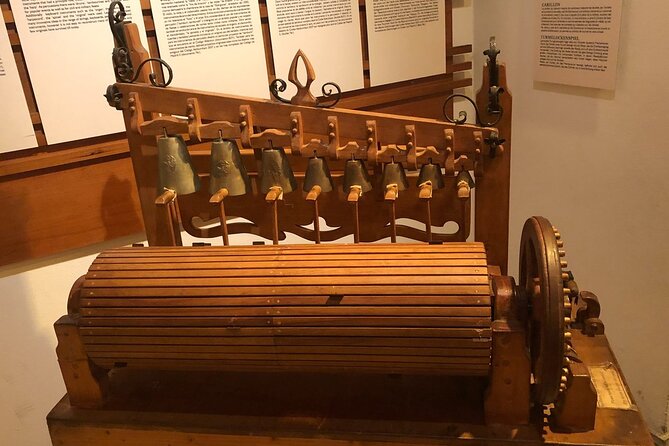
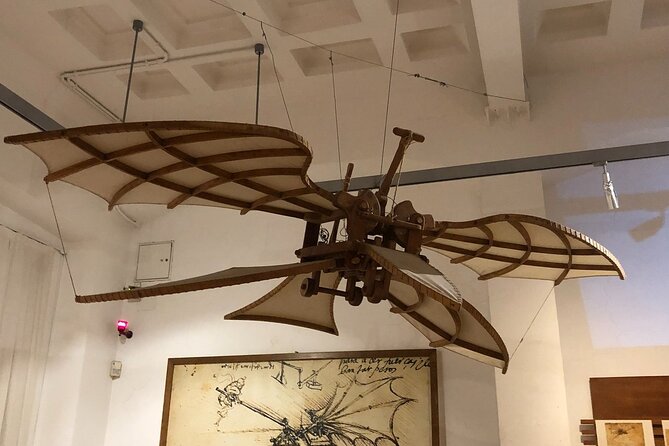
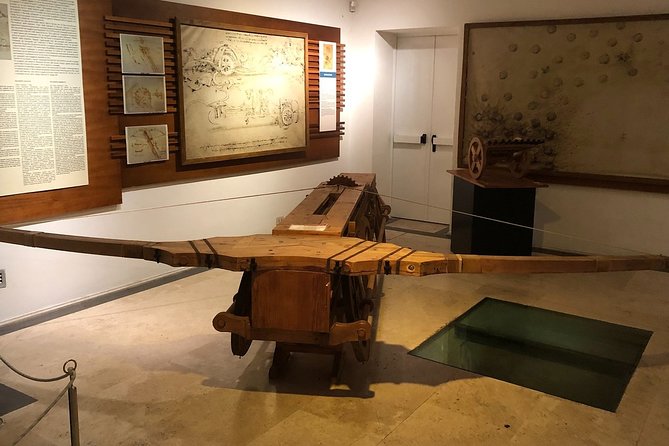
The core of the experience is the exhibition devoted to Leonardo da Vinci: Il Genio le Invenzioni. Expect an area filled with more than 65 reproductions on real-life scale of his drawings of machines—so you’re not only reading about ideas. You’re seeing them as objects with size and structure.
Here’s what you’ll likely enjoy most: many of the displays are made to be touched and tested. That matters because Leonardo’s work can sound abstract if you’re only looking at sketches. When you can physically interact with the concept, it clicks sooner.
You’ll also notice the show keeps a clear mix of Leonardo the maker—art, engineering, and craftsmanship are all part of the flow. Even if you’re not a hardcore history person, the exhibition is designed to be understandable for different ages, with plenty of hands-on moments.
Possible drawback: since it’s an interactive setup, there can be instances where some elements are under construction or not available to physically try. If that would bother you, I’d still go—but go with flexibility and a “mostly interactive” mindset rather than expecting every single model to be in perfect working order.
The 3D holograms and videomapping: learning without heavy reading
Leonardo’s machines are fascinating, but they can be hard to imagine from paper drawings alone. That’s where the exhibition’s multimedia layers help.
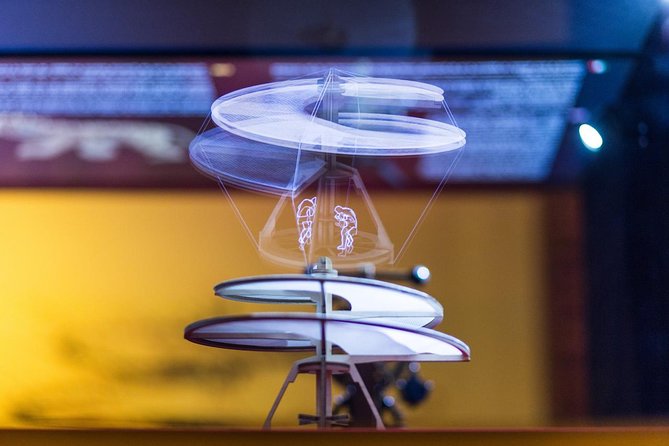
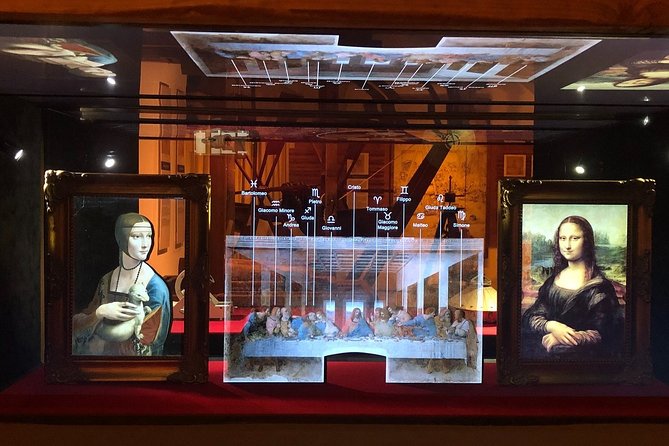
Inside, you’ll find 3D holograms and videomapping used alongside the replicas. The goal is simple: show how the ideas function and connect the dots between concept and mechanics. It’s the kind of presentation that works well even when your Italian is limited, and it keeps the pace from getting too lecture-like.
If you’ve ever visited a museum where you slowly drift from label to label, this is a different style. The experience pushes you forward with visuals and interactive cues, so you spend more time understanding than trying to translate.
And yes, there’s an added comfort factor: some visitors note the space has air conditioning, which can make a big difference during warm Roman afternoons.
The hidden ending: Aulo Irzio’s tomb and the underground pond
The last part of the exhibition has a special payoff. At the end, there’s a hidden treasure: an underground pond containing the tomb of Aulo Irzio, dated to 43 BC.
This is one of those “only in Rome” moments where the setting becomes part of the story. Instead of ending on another room of machinery, the show literally drops underground and lets you see a historical element that predates modern tourism by a lot.
If you tend to remember experiences more than information, this is the part that sticks. It also helps the exhibition feel like more than a small display of models. It has a narrative twist at the end—ancient history tucked into the visit’s final minutes.
Audio guides at €3: when they’re worth the extra cost
Admission includes entry to the Leonardo da Vinci exhibition, but audio guides are not included. They’re available at the entrance for €3.00 per person.
So the decision is really: do you want extra explanation, or are you happy “learning by doing” as you move through the exhibits? If you want context for what you’re touching—what each machine is showing and why it matters—an audio guide is likely the difference between a fun walk-through and a more satisfying understanding.
The good news is you can choose from many languages. Audio guides are available in Italian, Spanish, English, French, German, Portuguese, Russian, Dutch, Romanian, Polish, and Hebrew. Since the tour is offered in English, you can match your audio language to your comfort level if you’d like.
Also keep in mind: some people find the exhibit moves faster without audio, so if you prefer time for interpretation rather than just action, budget for the upgrade.




Timing it right: how long to plan and what pace to expect
Most people don’t need more than an hour here. The experience notes that a minimum of 40 minutes is needed to visit, and typical visits usually land between 50 minutes and 1 hour.
That means you can plan a clean block in your day. For example, if you’re touring around the Campo de’ Fiori area, this is a good candidate for a mid-day or early-evening stop because it’s close enough to stitch into a walking route.
One practical tip: Rome has multiple Leonardo da Vinci-related museums/exhibitions. Double-check your exact location before you arrive. This one is Piazza della Cancelleria 1, and getting to the wrong place can waste time fast.
Getting there smoothly near public transportation
This exhibition is near public transportation, so you’re not stuck with a long transit puzzle. The address is Piazza della Cancelleria 1, which makes it straightforward to plug into maps.
Because the experience uses a mobile ticket and confirmation is sent at booking, I’d treat your phone and your voucher as key travel gear. Have it ready before you reach the ticketing/entry point. If you’re arriving during peak hours, that little bit of preparation helps you move with less stress.
Also, pay attention to where you’re told to go at arrival. Some visitors have had confusion when they ended up needing extra walking for tickets. You can avoid that by reviewing your meeting/entry instructions before you set off.
Value check: $10.81 for admission plus optional audio
At about $10.81 per person, the value comes from how the ticket is structured: you’re paying for admission to an interactive exhibition, not just a room of static displays.
You get:
- a focused exhibition on Leonardo’s inventions
- more than 65 real-life-scale replicas
- interactive and multimedia elements (holograms and videomapping)
- a notable historical surprise at the end (Aulo Irzio’s tomb and underground pond)
The extra cost is mainly the audio guide (€3.00 per person), which you can decide based on your learning style. If you enjoy touching, trying, and figuring things out through visuals, you may skip it. If you want more explanation while you walk, it’s an easy add.
If you’re comparing value, this is a good option when you want a compact, hands-on Leonardo experience without spending half a day traveling between multiple stops.
Who should book this exhibition?
This works well for:
- families with kids who like hands-on learning
- adults who want Leonardo beyond portraits and famous paintings
- visitors short on time but still curious about mechanics and design
It also suits you if you prefer a calmer, more digestible museum experience. The show is compact, and the interactive elements keep it from turning into a slow slog.
If you’re the type who needs long, deep academic explanations all day, you might find the overall time feels short. In that case, plan on spending more time at the exhibits that catch your attention and consider renting the audio guide.
Should you book this Leonardo da Vinci Museum experience?
Book it if you want a Leonardo experience that’s tactile, visual, and easy to fit into a Roman day. The combination of touchable machine replicas, 3D holograms, and that underground 43 BC surprise makes it feel like more than a quick stop.
Skip or reconsider if:
- you hate paying extra for audio context and prefer labels only
- you expect a huge museum with hours of wandering
- you’re likely to get stressed by needing to confirm the correct entrance/address in a city with multiple similar Leonardo sites
One last practical note: cancellation is free if you cancel up to 24 hours in advance, which gives you some safety if your schedule in Rome shifts.
If you do go, plan for about an hour, bring comfortable shoes, and set aside a few minutes for the end section. That final underground reveal is the kind of moment you’ll remember after the rest of the day fades.
FAQ
How long does the Leonardo da Vinci exhibition take?
The experience is listed at about 45 minutes to 1 hour, and a minimum of 40 minutes is needed to visit the museum.
What is included in the ticket price?
Your ticket includes admission to the Leonardo da Vinci exhibition.
Are audio guides included?
No. Audio guides are available at an extra rate of €3.00 per person at the entrance.
What languages are available for audio guides?
Audio guides can be rented on arrival in Italian, Spanish, English, French, German, Portuguese, Russian, Dutch, Romanian, Polish, and Hebrew.
Where is the museum located?
The address is Piazza della Cancelleria 1, Rome, Italy.
When is it open?
Opening hours are listed as Monday to Friday, 9:30 AM to 7:00 PM. The exhibition is closed on December 25th.
Can children visit?
Yes, but children must be accompanied by an adult.