REVIEW · ROME
Jesuit Art Treasures in Rome Guided Tour including Church of Gesù & St Ignatius
Book on Viator →Operated by Alessandra Tours · Bookable on Viator
Jesuit art in Rome is like a private language, and this tour helps you read it. You start in the Baroque heart of Piazza Sant’Ignazio, then step into two of the Jesuit order’s most important churches and learn how faith, architecture, and artwork work together. I especially like that the focus is on the Jesuits’ contribution to Rome, not the usual must-see circuit.
Two things I really liked: the art historian guide approach, and the way the tour spotlights Andrea Pozzo’s trompe-l’oeil optical tricks. You get context for what you’re seeing, not just a quick look and move on. The second big win is the pairing of Chiesa di Sant’Ignazio di Loyola (the painted 3D-vault) with Chiesa del Gesù (the mother church and St. Ignatius tomb), all in 90 minutes.
One drawback to consider: you have to follow a strict dress code for churches. No shorts or sleeveless tops, and knees and shoulders must be covered. If you show up dressed casually, you risk being turned away and wasting your time.
In This Review
- Key Highlights You’ll Notice Right Away
- Why Jesuit Art Feels So Purposeful in Rome
- Price, Timing, and What 90 Minutes Buys You
- Piazza Sant’Ignazio: Starting in a Baroque Square Rather Than a Side Door
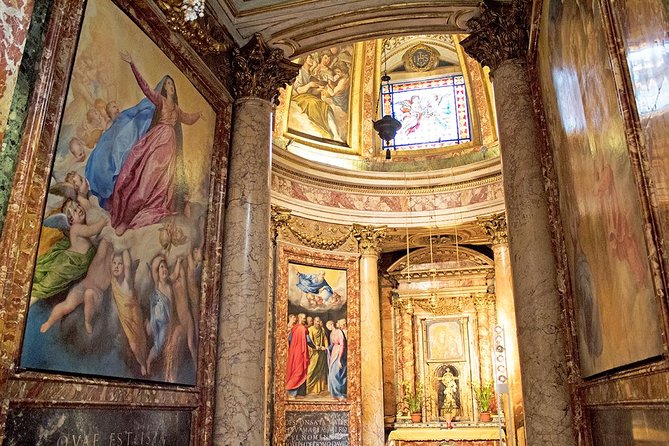
- Chiesa di Sant’Ignazio di Loyola: Pozzo’s Fake 3D-Vault Takes Center Stage
- The Short Stroll to Chiesa del Gesù: Less Than 10 Minutes, Big Payoff
- Chiesa del Gesù: The Jesuit Mother Church and St. Ignatius’s Tomb
- Who This Tour Fits Best (And Who Might Want Something Else)
- Practical Tips Before You Go
- Should You Book This Jesuit Art Treasures Tour?
- FAQ
- How long is the Jesuit Art Treasures in Rome guided tour?
- Where do I meet the guide?
- What time does the tour start?
- Is admission included for the churches?
- What dress code do I need for church entry?
- Is this tour private?
Key Highlights You’ll Notice Right Away
- Meet at Piazza Sant’Ignazio for a true Baroque “stage set” start
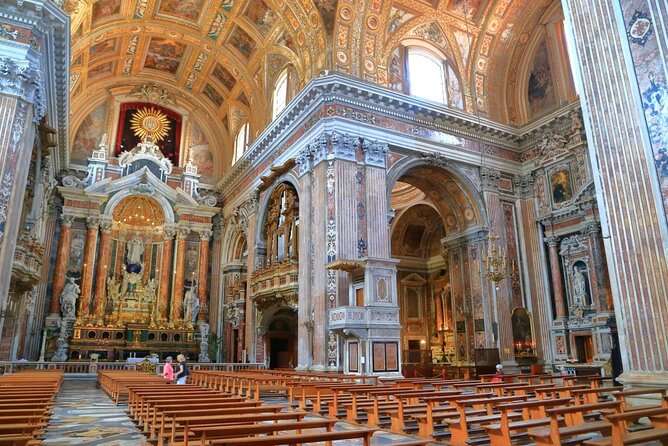
- Andrea Pozzo’s optical illusion inside St. Ignatius Church, including a fake 3D ceiling vault
- Mother church energy at Chiesa del Gesù, plus frescoes by major artists of the period
- Tomb of St. Ignatius of Loyola in the same stop, so the symbolism lands fast
- Tight walking plan: after St. Ignatius, you move to Chiesa del Gesù in under 10 minutes
- Private group format: only your group participates, with a professional art historian leading
Why Jesuit Art Feels So Purposeful in Rome
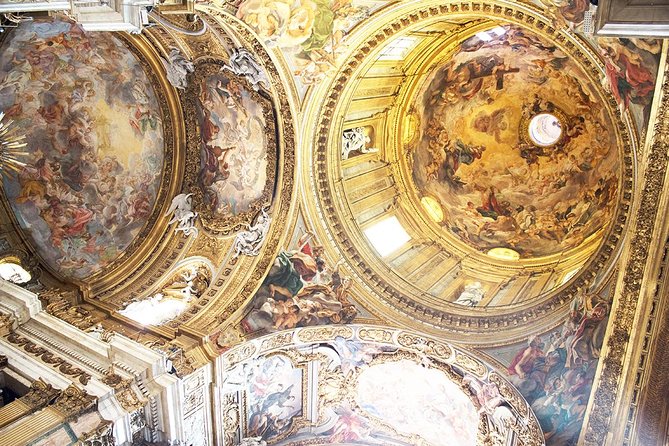
Rome can feel like a museum that never stops, but Jesuit art is different. The Jesuits used art and architecture to guide attention and make big religious ideas feel immediate and understandable. This is not about random decoration. It’s about how space directs your eyes, how paintings extend a room, and how churches become visual teaching tools.
On this guided walk, you’ll get the “why” behind the look. That matters, because Baroque churches can be visually loud when you’re on your own. With an art historian guide, you learn what to focus on, what the artists were trying to do, and why these Jesuit churches became models.
And because the tour centers on two linked sites, the experience has a clean storyline. You see the trick, then you see the bigger institutional role of the order in Rome. You’re not just collecting photos. You’re building a mental map of how Jesuit art operates.
You can also read our reviews of more guided tours in Rome
Price, Timing, and What 90 Minutes Buys You
At $194.93 per person for about 1 hour 30 minutes, this is a paid, guided experience. The good news is that your money mostly goes toward guidance, not entrance fees. The church visits are listed with admission tickets free, so you’re not paying extra at the door.
Also, this tour runs at 5:30 pm. For Rome, that’s a practical time choice. Late afternoon and early evening are often easier for walking than midday heat, and you get the churches in a calmer rhythm. You won’t be racing through a checklist.
The format is private (only your group participates), which typically improves quality. In a smaller setting, it’s easier to ask questions and get clarifications on what you’re seeing, especially with something as specific as Pozzo’s ceiling illusion.
One more detail that affects value: the tour includes both a local guide and a professional art historian guide, plus an added professional guiding component noted in the inclusions. That combination is usually what separates a general church visit from something with real interpretive value.
Piazza Sant’Ignazio: Starting in a Baroque Square Rather Than a Side Door
Your tour begins in Piazza S. Ignazio, 00186 Roma RM, right outside the area associated with St. Ignatius Church. The meeting point matters because you start with the surrounding urban space, not only the interior.
At Stop 1, you’ll spend about 10 minutes around Piazza Sant’Ignazio. This is listed as admission ticket free, and it’s a smart lead-in. In Rome, the square is often the prologue: it sets the angles, the façade drama, and the sense of ceremony before you ever step inside.
What I like about starting here is that it trains your eyes for how Baroque design wants you to behave. You start to notice lines and massing, not just icons and frescoes. It also gives you a moment to reset before you enter the main work of the evening.
If you’re the type who likes to understand a place before you photograph it, this first stop helps. If you only care about interiors, you might feel it’s short. But the short timing is actually a strength: it keeps the whole itinerary focused.
Chiesa di Sant’Ignazio di Loyola: Pozzo’s Fake 3D-Vault Takes Center Stage
The heart of this tour is Chiesa di Sant’Ignazio di Loyola, where you’ll spend about 40 minutes. Admission is listed as free, so again, the value comes from interpretation and time inside.
Here’s the key feature: this is described as the only church in Rome with a fake 3D-vault that is painted on the ceiling, created by Jesuit artist Andrea Pozzo. That’s not a vague claim you can ignore. It’s the entire point of the stop.
When you’re in the church, the optical illusion is what catches you first. But the art historian guidance is what keeps it from becoming a simple wow moment. You’ll learn what you’re looking at and why the effect works in that space.
Why that matters for you: optical illusion art can be frustrating when you’re left to guess. You might see “perspective trickery,” but not understand how it’s constructed or how the church’s interior supports the trick. A guide gives you the missing layer: what makes this kind of trompe-l’oeil persuasive.
Practical note: because this is a church interior, expect people flow and standing space limits. The tour time is 40 minutes, which is enough to settle, look, and absorb guidance without feeling rushed. Still, wear comfortable shoes. You’ll be standing and tilting your head upward.
Also, remember the dress code. No shorts or sleeveless tops, and knees and shoulders must be covered for entry. That’s not a “maybe” rule here; the information clearly warns you could be refused entry if you don’t comply.
The Short Stroll to Chiesa del Gesù: Less Than 10 Minutes, Big Payoff
After St. Ignatius, you move to the next site. The itinerary says it’s a walk of less than 10 minutes. That pacing is excellent for Rome, because you’re not spending half your paid hour in transit.
This short connector walk does two useful things:
First, it keeps you from losing your momentum after the optical illusion. Second, it transitions you from a technical artistic marvel to a broader institutional statement about the Jesuit order in Rome.
In practice, that means you’ll likely have a better frame of mind when you enter the second church. You go from “How did they paint that?” to “What did they build to carry the order’s message?”
Chiesa del Gesù: The Jesuit Mother Church and St. Ignatius’s Tomb
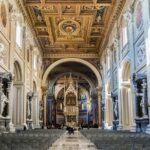
Next comes Chiesa del Gesù, where you’ll spend about 40 minutes. The tour describes it as the mother church of the Jesuit society, and it notes it was consecrated in 1584. It also explains that it became a model of church design that was exported all over the world.
That context changes how you experience the interior. You stop looking at it only as beautiful late Baroque work and start noticing it as a template—an architectural and artistic statement designed to be replicated.
Inside, you’ll also see frescoes painted by major artists of the time, plus the impressive tomb of Saint Ignatius of Loyola. Having the tomb in the same stop is powerful. You get the visual language of the church and the physical presence of the founder, tied together by the story your guide is explaining.
Another reason this stop lands well: it balances the earlier “wow” factor of Pozzo’s illusion. St. Ignatius is a ceiling trick. Chiesa del Gesù is institution, gravitas, and a full ensemble of Baroque-style decoration. Together, they create contrast, and contrast is how you remember what you learned.
The itinerary is arranged so you don’t feel stuck in one mode. In one church, your attention is pulled upward into painted architecture. In the next, your attention is distributed across ornament, frescoes, and the tomb’s significance.
Who This Tour Fits Best (And Who Might Want Something Else)
This tour is best for you if you like art explanations that go beyond pointing. The inclusion of a professional art historian guide signals that you’ll get interpretive notes tailored to what you’re seeing.
You’ll probably enjoy it most if:
- You’re curious about the Jesuit impact on Rome’s art and architecture and want the story in context
- You like Baroque design and especially enjoy optical effects and perspective tricks
- You want a compact plan that covers two major Jesuit churches in one go
It might be less ideal if:
- You’re only interested in the largest headline sights and don’t care about artistic interpretation
- You’re trying to rush through churches without following a dress code (this matters here)
- You’re hoping for a food-and-drink included outing (this tour does not include it)
Practical Tips Before You Go
A few details will make this smoother.
- Wear something that meets the dress code. No shorts, no sleeveless tops. Knees and shoulders must be covered. This is your main “make or break” item.
- Expect an evening church visit. Your start time is 5:30 pm, so plan your earlier hours accordingly and avoid getting caught in long queues elsewhere.
- Bring a mobile ticket if you have one. The experience mentions mobile ticket support, so have it ready.
- Comfortable shoes beat fashion shoes. You’ll be walking between stops and spending time standing inside.
And if you’re with kids or family: this kind of optical illusion is the sort of feature that can turn a church visit into something interactive. The tomb and institutional story may also add weight for older teens and adults who want meaning, not just decoration.
Should You Book This Jesuit Art Treasures Tour?
Yes, I’d book it if you want a focused Rome experience that’s not just crowd-chasing. The best reasons are practical: you get two major Jesuit churches in 90 minutes, you have free admission listed for the sites, and you get a professional art historian to explain what you’re seeing. Plus, the optical illusion at Chiesa di Sant’Ignazio di Loyola is a clear, specific attraction.
I’d think twice only if the dress code is a problem for you, or if you prefer self-guided sightseeing with no interpretation. If you’re the type who likes to understand the art behind the building, this is exactly the kind of guided tour that turns a church stop into a real experience.
FAQ
How long is the Jesuit Art Treasures in Rome guided tour?
It runs for about 1 hour 30 minutes.
Where do I meet the guide?
You meet at Piazza S. Ignazio, 00186 Roma RM, Italy.
What time does the tour start?
The start time is 5:30 pm.
Is admission included for the churches?
Admission is listed as free at the stops, so you don’t pay admission tickets as part of the tour.
What dress code do I need for church entry?
You need to cover knees and shoulders. No shorts or sleeveless tops are allowed, and you may be refused entry if you don’t comply.
Is this tour private?
Yes. It’s a private tour/activity, and only your group participates.