REVIEW · ROME
House of Augustus, Palatine Museum and Palatine Hill w PhD Archaeologist
Book on Viator →Operated by Tours of the Colosseum · Bookable on Viator
The Palatine Hill feels like an open-air textbook. You get the big Augustan Age story straight from a PhD archaeologist, then you move through the House of Augustus with context that makes the ruins easier to understand.
What I like most is how the guides turn stone and mosaics into something you can picture, not just facts you memorize. I also love that you’re not rushing: the tour hits three linked sites (hill, museum, house) so the buildings and artifacts make sense as one arc. A key consideration is that you’ll be climbing on Palatine Hill, so comfy shoes matter, and the stops are time-limited.
In This Review
- Key highlights worth planning around
- Palatine Hill with a PhD archaeologist: why this tour works
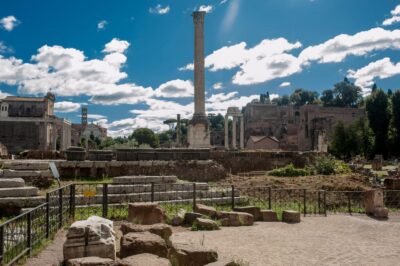
- Stop 1: Palatine Hill and the Emperors’ Palace ruins
- Stop 2: Museo Palatino and the Age of Augustus exhibits
- Stop 3: House of Augustus, the private residence
- How the pacing shapes your photos, your questions, and your brain
- Price and value: what $299.19 is really buying
- Who should book this tour (and who might not)
- Should you book the House of Augustus, Palatine Museum, and Palatine Hill?
- FAQ
- How long is the House of Augustus, Palatine Museum and Palatine Hill tour?
- Is it a private tour?
- Is the tour offered in English?
- Are admission tickets included?
- Where does the tour meet?
- Can I choose a departure time?
- What is the cancellation policy?
Key highlights worth planning around
- Archaeologist-led explanations that connect architecture, art, and the Augustan period
- Palatine Hill + Emperors’ Palace ruins as the start point for context
- Museo Palatino artifacts with exhibits tied to the Age of Augustus, including paintings and mosaics
- House of Augustus as the main stop where you see the emperor’s private residence
- Guides using reconstructions and extra visuals, like iPad-based imagery shared during the walk
- Private format so you can ask questions at your own pace
Palatine Hill with a PhD archaeologist: why this tour works
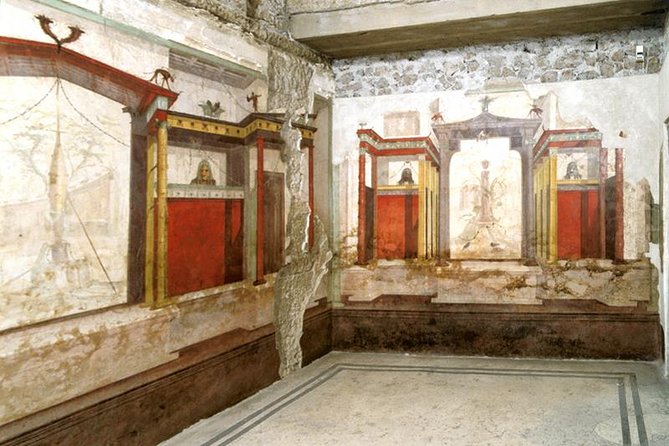
If you’ve ever stood in ancient ruins and thought, I get it, but what exactly am I looking at, this is the cure. An archaeologist guide helps you read the site like a map, not a maze. You’ll be able to connect what you’re seeing—structures, decoration, and layout—to what it meant in the Augustan era.
This tour is also built for people who want more than a quick photo stop. The pacing is tight enough to cover the highlights in about 2 hours 30 minutes, but long enough that you can ask questions and actually process what each area represents. You’re on a private tour, so it’s your group only, and that makes the explanations feel personal instead of rushed.
One more plus: you can choose morning or afternoon departures, which helps you fit Palatine Hill into your Rome plan. And since private tours can be flexible, you may be able to add other nearby interests if the guide can accommodate it.
You can also read our reviews of more museum experiences in Rome



Stop 1: Palatine Hill and the Emperors’ Palace ruins
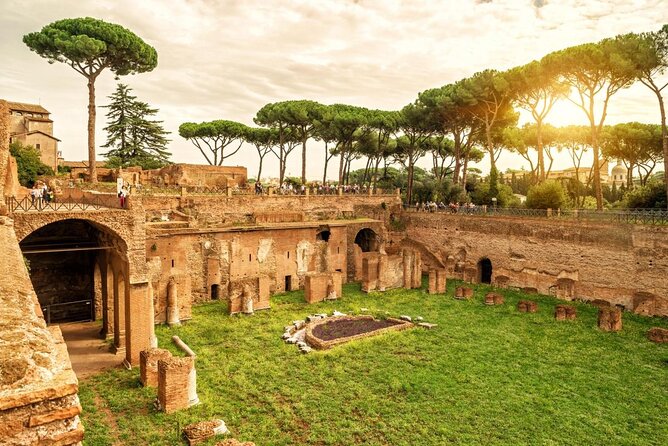
The tour starts at Via di S. Gregorio, 30 (near public transportation), then you begin climbing Palatine Hill right away. That early climb matters. It gives you a sense of the topography, and it sets you up to understand why the emperors’ palace area became such a power center.
You’ll spend about 30 minutes at this first stop, focusing on the ruins tied to the emperors’ palace complex. Even if the site looks fragmentary at first glance, the archaeologist helps you sort out what’s where and what you’re meant to notice. Guides also tend to add story-level detail, including connections to Roman mythology and how people used the space day to day—one guide (Bruno) was specifically praised for plant-and-myth facts that made the walk click.
Practical note: Palatine Hill can be uneven. Expect steps and slopes. If you’re even slightly worried about footing, plan for slow, careful steps at the start when energy is still high.
Stop 2: Museo Palatino and the Age of Augustus exhibits
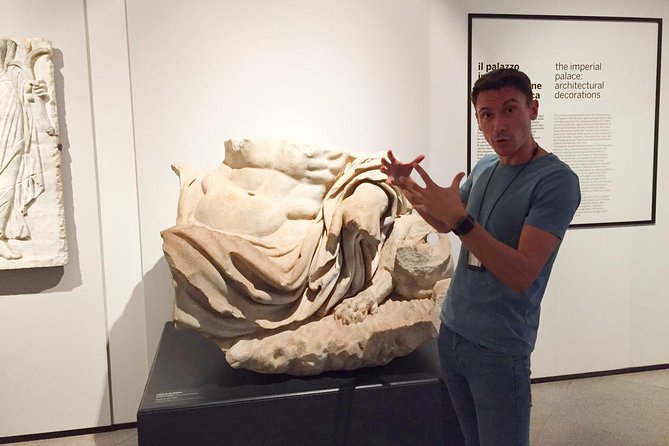
Next comes the Museo Palatino, still on Palatine Hill. This is where the tour stops being only about ruins and becomes about objects—artwork and evidence pulled from the ground. You’ll have around 30 minutes here, and that time is used for a guided pass through the museum’s exhibits tied to the days when Palatine Hill was the center of town.
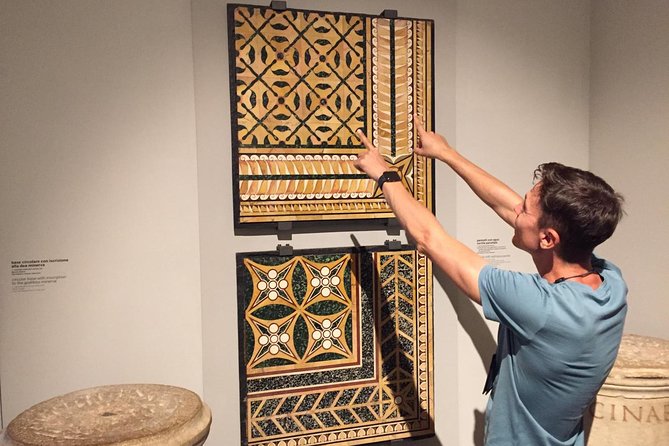
What makes this stop especially valuable is the way the museum is described: you can see pre-existing structures of the houses of nobility on the ground floor, then shift to displays on the first floor that include paintings, mosaics, and works from the Age of Augustus. That pairing matters. You don’t just hear about the era—you see its visual language.
If you like learning by comparison, you’ll probably enjoy the guide-led contrast between what remains as architecture and what was preserved as decoration. A few guides are also noted for using visual aids (for example, iPad reconstructions) to help you imagine how buildings looked when they were whole, not broken.
The only drawback: 30 minutes in a museum means you won’t have time to read every panel. You’ll get the most important themes and key highlights, but if you’re the type who likes to linger with every caption, you might wish you had more time.
Stop 3: House of Augustus, the private residence
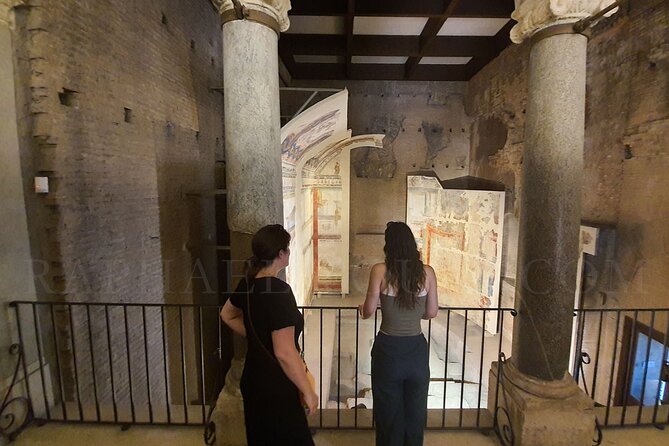
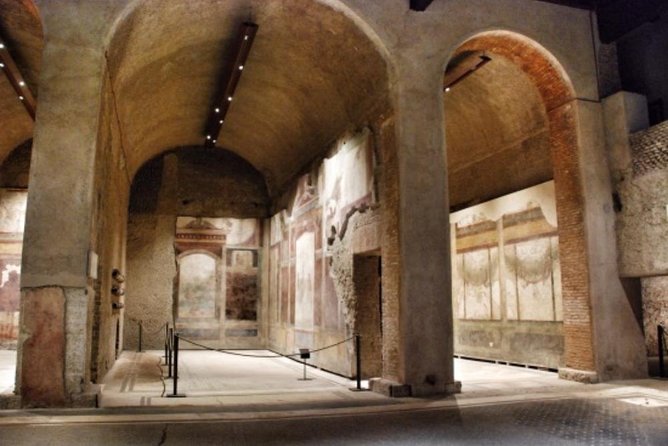
The last stop is the House of Augustus, described as the private residence of Rome’s first emperor. This is the emotional payoff for many people: you go from learning the era to standing in the spaces that belonged to the man who defined its political image.
You’ll spend about 30 minutes here, and the guide’s job is to make the layout and features make sense. This is where the tour earns strong praise. One review highlighted that going into Augustus’s house was a highlight, and another specifically praised the guide’s detailed, story-focused approach. If you care about how power shows up in domestic spaces—how authority leaves a mark outside of temples and forums—this stop is a strong match.
A few guides also connect the experience to adjacent political or public areas. One review called out the Senate house inside as part of the highlights. I can’t promise that every guide will structure it the same way, but it’s a good sign that the best archaeologists don’t treat Palatine Hill like three separate stops—they build connections.
How the pacing shapes your photos, your questions, and your brain
This tour’s rhythm is practical: three focused segments, each about half an hour. That means you leave with a clean sense of what you saw and why it matters. There’s less chance of information overload, which is common when people do Palatine Hill alone and bounce between confusing viewpoints.
It also helps for photography. One thing that came up repeatedly is that people got great photos of the ruins and enjoyed the terrace views. Even when photos aren’t perfect, the views still help you understand the site’s “big picture”—what sits above what, and why certain areas were important.
You’ll also have time for questions. Several guides were praised for being receptive and helpful, including answering questions and adapting to group needs. One guide (Thomas) was specifically noted for keeping small children interested, which tells me the best guides can adjust their style when the audience needs more interaction.
One more small tip: if you’re sensitive to crowds, aim for an earlier departure when possible. The tour offers both morning and afternoon options, so choose based on your day’s energy and where else you plan to go.




Price and value: what $299.19 is really buying
At $299.19 per person for about 2.5 hours, this isn’t a budget pick—and it shouldn’t be. You’re paying for an archaeologist-led private experience plus admission tickets included for each of the three stops.
So the real question isn’t cost alone. It’s what you gain for that money:
- You get expert interpretation tied to what you’re seeing on-site.
- You get a private pace, which means more time for questions and fewer “wait for the group” moments.
- You get tickets bundled into the price, so you don’t have to scramble with separate admissions for each component.
And if you’re traveling in a group, group discounts are offered. That can shift the math fast. If you’re two or more people who want real context (not just selfies), the value tends to improve because you’re splitting the cost of expertise.
If you’d rather wander slowly with a map and guidebook, you could do Palatine Hill on your own. But if you want the quickest path to understanding the Augustan Age through ruins plus curated museum exhibits plus the House of Augustus, this format is exactly built for that.
Who should book this tour (and who might not)
This works best for people who:
- want interpretation from a true research archaeologist rather than a basic overview
- like art-and-architecture explanations, including mosaics and paintings tied to the Age of Augustus
- enjoy asking questions while walking through a historic site
- want a private experience rather than a large group
It also seems like a decent option for families, at least when the guide can handle it. One review specifically praised a guide (Thomas) for trying to keep small children interested. That doesn’t mean every group will be the same, but it’s a good sign that the guides can adapt.
Who might hesitate? If you hate any climbing at all, Palatine Hill could feel like work. And if your ideal museum time is measured in hours (not minutes), the 30-minute museum slot might feel short.
If you fall in the middle—curious, comfortable walking, and you want the site to make sense fast—this tour is a strong fit.
Should you book the House of Augustus, Palatine Museum, and Palatine Hill?
I’d book it if you want Palatine Hill to feel clear instead of confusing. The combination of archaeologist-led context plus the museum’s Augustan-era art and the House of Augustus itself creates a full arc. You’re not just seeing ruins—you’re learning how they connect.
I’d pass or consider another option if you’re not comfortable with climbing and uneven ground, or if you want to spend a long time reading every exhibit panel at your own pace. This tour is structured and time-boxed, by design.
Bottom line: for an Augustan Age fan—or anyone who wants ancient Rome to click quickly—this is the kind of tour that earns its price through interpretation, not just access.
FAQ
How long is the House of Augustus, Palatine Museum and Palatine Hill tour?
It’s approximately 2 hours and 30 minutes.
Is it a private tour?
Yes. It’s private, with only your group participating.
Is the tour offered in English?
Yes, the tour is offered in English.
Are admission tickets included?
Yes. Admission tickets are included for Palatine Hill, Museo Palatino, and the House of Augustus.
Where does the tour meet?
The meeting point is Via di S. Gregorio, 30, 00186 Roma RM, Italy, and it ends back at the meeting point.
Can I choose a departure time?
Yes. You can choose between morning and afternoon departure options.
What is the cancellation policy?
This experience is non-refundable and cannot be changed for any reason. If you cancel or ask for an amendment, the amount paid is not refunded.