REVIEW · ROME
From Rome: Guided Tour to Pompeii with priority admission
Book on GetYourGuide →Operated by Napoli Official Tour · Bookable on GetYourGuide
Pompeii hits fast. I really like the priority admission that cuts the long ticket line, and I also like that you get a 2-hour guided walking tour instead of wandering alone. The main drawback is the early 7:40 am departure from Rome Termini, so you’ll want your morning routine dialed in.
The best part is how smooth it feels end to end: you board a fast train from Rome Termini, reach Pompeii in under 2 hours, meet your guide close to the entrance, then return to Rome the same day. In the best tours I’ve seen, guides like Livia (praised for smart routing during busy periods like Easter) and Fabio (praised for keeping the experience lively) help you stay oriented and make sense of what you’re seeing.
This is also a short, focused hit of Pompeii rather than an all-day marathon. The trade-off is that you’ll cover highlights—main street, forum, a couple major set pieces—so if you’re the type who wants to linger at every doorway, you might feel a bit rushed. Still, it’s a great fit for people who want value, structure, and less stress.
In This Review
- Key things to know before you go
- Rome to Pompeii in one smooth trip: the fast-train flow
- Priority admission at Pompeii: where your time actually goes
- Meeting your guide near the entrance: how the tour gets organized
- The 2-hour guided walking route: what you’ll actually do
- Via dell’Abbondanza: the main street you’ll picture immediately
- The forum and Temple of Jupiter: public power in stone
- Porta Sarno necropolis: when the tour shifts from daily life
- The large theatre and the House of Menander: major set pieces in limited time
- What I like about the way the guide explains Pompeii
- Practical pacing and what to wear: small choices, big payoff
- Price and value: is $283.21 a smart deal?
- Who this Pompeii-from-Rome tour suits best
- Should you book this Pompeii priority tour?
- FAQ
- How long is the Pompeii tour from Rome?
- What time does the tour depart from Rome Termini?
- Do I need to buy separate train tickets and a Pompeii entrance ticket?
- How do the priority admission and skip-the-line parts work?
- Is food included during the tour?
- What languages are available for the live guide?
Key things to know before you go
- Fast train from Rome Termini: built for a same-day return without complicated planning
- Skip-the-line priority admission: more time inside the archaeological site
- 2-hour live guided walk: a paced route that explains Pompeii’s story as you walk
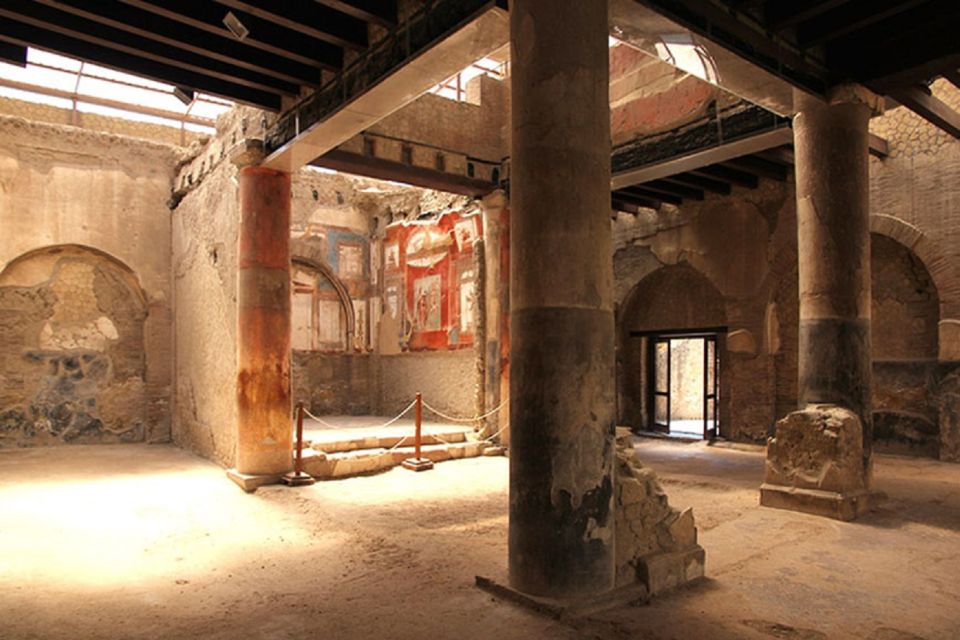
- You’ll see major landmarks: Via dell’Abbondanza, the forum, Porta Sarno, theatre areas, and famous houses
- Rain or shine: the tour runs no matter the weather
- Guides manage crowd flow: on busy days, routing can change to keep groups from bottlenecking
Rome to Pompeii in one smooth trip: the fast-train flow
For this kind of day trip, logistics can make or break the experience. This one is designed to reduce friction: you start at Rome Termini, take a fast train round-trip, and get transfer support to and from the station. That matters because Pompeii isn’t next door, and the biggest risk of a DIY plan is wasting time coordinating tickets, buses, and queues.
The schedule is built around an early start: departure is scheduled for 7:40 am from Termini, with a reminder to arrive 30 minutes early. You’re done with the bulk of the transit fast, and then you get the payoff—Pompeii—while your day is still fresh.
The total duration is about 6 hours, which tells you the pacing right away. You’re getting a half-day experience at Pompeii (plus travel), not a full-day deep slow walk. For many visitors, that’s exactly right. You spend your energy where it counts, and you’re back in Rome without needing to guess how the evening will pan out.
You can also read our reviews of more guided tours in Rome



Priority admission at Pompeii: where your time actually goes
Pompeii is famous, which means crowds are also part of the deal. That’s why I like the skip the ticket line setup here. It’s not just about saving minutes; it’s about reducing stress. Instead of standing around trying to figure out the entrance flow, you can meet your guide near the entrance and get moving with context.
Once you’re in, the guide kicks off the visit with the story of Pompeii—how the city was lost, how it was rediscovered, and why the site looks the way it does today. That intro is more than trivia. It helps you read the ruins like a snapshot of daily life, not just piles of stone.
Then the tour becomes a walking route with stops that map onto what most visitors want to understand. You’ll see major street and public spaces first, then scale down to household life through well-known structures. It’s a compact plan that helps you come away with a clear mental picture.
Meeting your guide near the entrance: how the tour gets organized
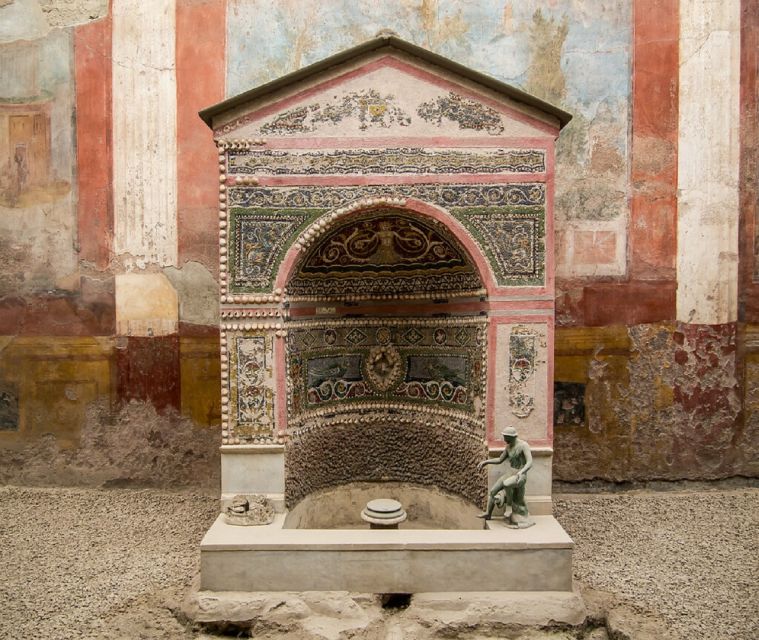
Right when you arrive, you meet the professional guide close to the entrance of Pompeii. That small detail sounds minor, but it’s practical. You avoid that awkward moment of trying to orient yourself before you even start.
This tour includes a live guide in English, Spanish, French, and Italian, so you can choose your language. If your group has mixed language needs, it’s still a smoother experience than trying to hunt for audio guides once you’re there.
What I’d watch for is pacing. Even with priority entry, Pompeii is a large site, and this is only a 2-hour guided visit. A good guide will keep you moving while still explaining what you’re seeing. From reviews, the emphasis is on organization and making history feel real—two qualities you want when time is limited.
The 2-hour guided walking route: what you’ll actually do
Your guided time is about 2 hours, and the tour is built around a sequence that makes Pompeii make sense fast. Expect an introduction, then a walk through key areas that show both public life and everyday life.
Here’s the typical rhythm you should plan for:
- A short setup on Pompeii’s destruction and preservation
- Walking along the city’s main axes, where daily commerce and routines played out
- Stops at standout structures that anchor the story
- A final wrap-up and time to grab something to eat before you head back to Rome
Even though it’s a short visit, the tour’s coverage is designed to hit the points that most help you understand how a Roman city functioned—from street life to government spaces to homes.
Also, the tour takes place rain or shine, so wear shoes that handle uneven ground and possible drizzle. Pompeii weather can change quickly, and you’ll still be walking.
Via dell’Abbondanza: the main street you’ll picture immediately
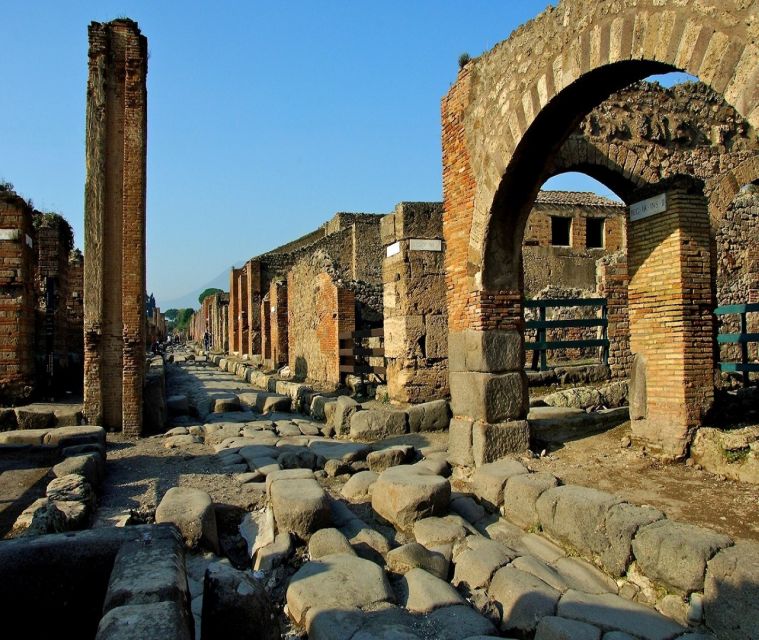
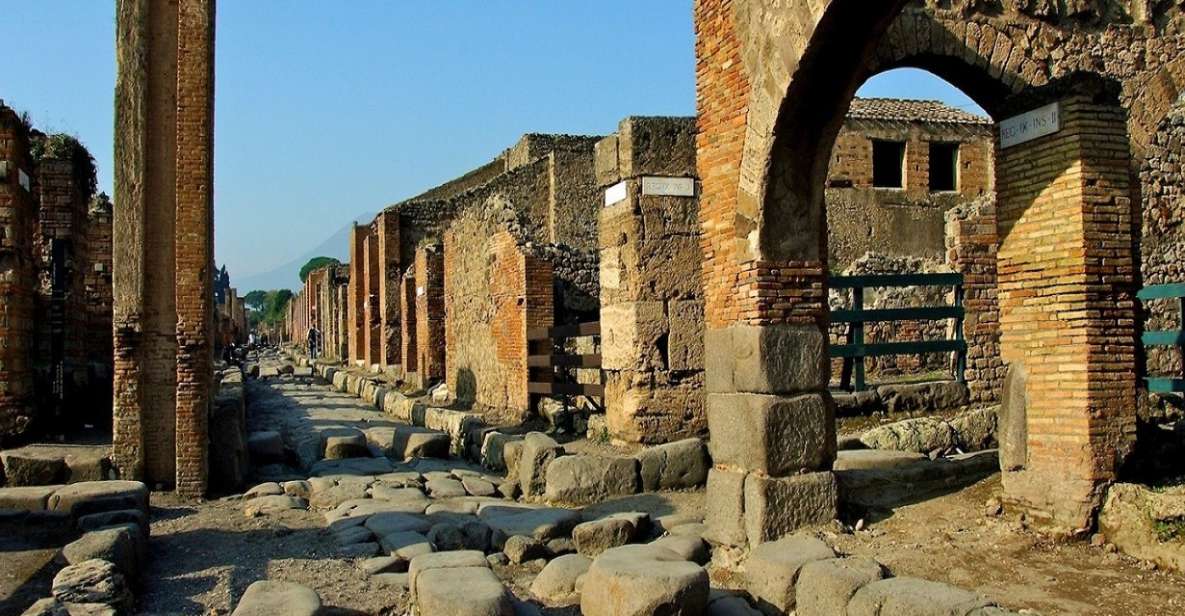
One of the best parts of this itinerary is that it starts you on Via dell’Abbondanza, Pompeii’s main street. It’s the kind of place where ruins stop being random and start looking like a working city.
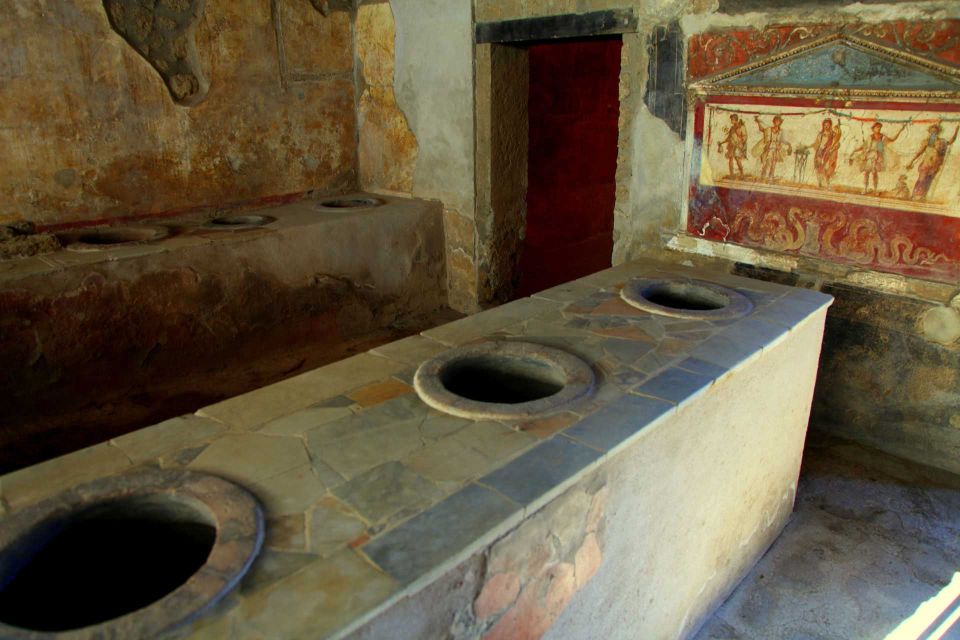
As you walk, you’ll pass ancient shops and snack bars along the street. The idea is simple but powerful: when you see the commercial storefronts and the street layout, it’s easier to imagine hustle and everyday transactions rather than just imagining damage from the eruption.
This is where a guide earns their fee. A good guide will connect the physical space to human routines—who walked where, what would have been sold, and how the street design supported movement through town. Even in a fast tour, this section is often the most memorable because it’s so relatable.






The forum and Temple of Jupiter: public power in stone
From the main street, you’ll reach the forum, and this is one of the big “wow” zones. The forum is described as as impressive as major buildings you’d see in Rome at the time, including the immense basilica, the Temple of Jupiter, and the forum baths.
This part matters because it shows the city’s public identity. Streets tell you about commerce and daily life; the forum tells you about authority, worship, and social status. Pompeii feels like a whole system when you can connect those pieces.
If you’ve ever visited Rome and wished you understood how smaller cities copied and adapted the big-city model, the forum zone is where you’ll feel that connection. A guided explanation helps you spot why these buildings were placed where they were and what they likely meant for residents.
Porta Sarno necropolis: when the tour shifts from daily life
At the other end of the route, you’ll be able to take in Porta Sarno necropolis. That’s an important tonal shift. After the public energy of the forum and the everyday rhythm of the main street, the necropolis area brings you into a different side of civic life—how people thought about the dead.
In a short tour, this stop is especially useful because it broadens your understanding beyond “entertainment and shops.” It signals that Pompeii wasn’t only a place of work and play. It also had rituals and spaces for remembrance.
The large theatre and the House of Menander: major set pieces in limited time
Pompeii is famous for its big landmarks, and this tour makes sure you see them without requiring you to plan a half-week itinerary.
You’ll encounter the large theatre, described as a 5,000-seat venue. Even if you don’t time your visit to a performance, it still helps you imagine community life. A theatre of that size suggests events were meant to draw large groups and create shared experiences.
Then the route includes a highlight house: the House of Menander. This is an important household stop because it’s described as being linked to a city’s important families and packed with details your guide explains. Houses like this help you move from street-level life to the private world—how wealth and taste showed up in architecture and decoration.
In a 2-hour guided visit, you can’t cover everything. What you can do is leave with anchors. The theatre and House of Menander are strong anchors because they represent different sides of Pompeii: public entertainment and household status.
What I like about the way the guide explains Pompeii
The best guides don’t just list buildings. They help you build a mental picture of how people lived, worked, ate, and socialized before the eruption.
In the reviews you provided, guides like Livia and Fabio are credited with making history feel alive and with good organization. I’d treat that as a clue about what you’ll likely experience: clear explanations, smart pacing, and a route that doesn’t waste time.
There’s also a practical note from one review that I think matters: on Easter weekend, Livia started the tour in a way that reduced how much you had to navigate through multiple groups. Even without promising you’ll get the exact same route, it tells you the operator understands crowd flow—and that can make a huge difference in a place like Pompeii.
Practical pacing and what to wear: small choices, big payoff
This is a walking tour through uneven, excavated ground. Wear shoes you trust. Bring layers because rain is possible, and the tour runs anyway.
Also, plan around the schedule: you meet your guide near the entrance after arriving by train, and the total day is around 6 hours. That means it’s not the best day to add extra stops in Pompeii on your own. Instead, treat this as a structured overview that gives you confidence. If you want more later, you’ll know where to go.
At the end, you’ll return to Rome quickly. There’s a helpful suggestion in the tour description: you can buy food to bring on the train. That’s a smart little tip because it prevents the classic day-trip problem—arriving hungry and spending time hunting for a meal.
Price and value: is $283.21 a smart deal?
At $283.21 per person, this tour isn’t the cheapest way to get to Pompeii. But for many people, it’s a solid value because it packages the hardest parts together:
- Fast train tickets round trip
- Transfer from/to the train station
- 2-hour guided visit inside Pompeii
- Entrance ticket with skip-the-line admission
Most DIY plans hit a snag in one of those categories: either you lose time at ticket queues, or you spend energy coordinating transport, or you don’t get the explanation that makes the ruins readable. Here, you’re paying to remove those friction points.
What’s not included is food and drinks, so budget for at least a snack or meal. Still, the tour duration and the included transit make it easier to commit without turning the day into a logistics puzzle.
If your goal is to maximize learning and minimize hassle in a limited time window, the price can feel fair. If you want to wander slowly for hours without a guide, then you may prefer a lower-cost self-guided day.
Who this Pompeii-from-Rome tour suits best
This tour fits best if you:
- Want a structured highlights route in a short window
- Prefer priority admission to reduce waiting
- Like learning from a live guide rather than reading on your own
- Are traveling from Rome and want a simple round-trip plan via fast train
It may feel less ideal if you:
- Want to spend a lot more time inside specific houses or quieter corners
- Are hoping for a very flexible schedule with extra free time
- Don’t like early starts (because the departure is scheduled for 7:40 am)
Should you book this Pompeii priority tour?
If you want a well-organized Pompeii visit with less line-waiting and a guide who helps you understand what you’re seeing, I’d say yes. The biggest strength is the combination: fast train + priority entry + a focused 2-hour guided walk. That’s the exact mix that keeps a half-day trip from becoming a stressed, stop-and-start day.
If your ideal Pompeii day is slow, quiet, and self-directed, this probably won’t match your pace. But for most people—especially first-timers in Pompeii—the setup is strong.
If you do book, the smartest move is simple: come prepared for a morning start, wear good shoes, and go in ready to learn. You’ll leave with Pompeii’s main story in your head, not just photos of stone.
FAQ
How long is the Pompeii tour from Rome?
The activity duration is 6 hours, including travel time. The guided visit in Pompeii is 2 hours.
What time does the tour depart from Rome Termini?
Departure is scheduled at 7:40 am from Rome Central Station of Termini. You’re asked to arrive 30 minutes early.
Do I need to buy separate train tickets and a Pompeii entrance ticket?
No. The tour includes fast train tickets round trip and an entrance ticket with skip-the-line admission, plus transfer from/to the station.
How do the priority admission and skip-the-line parts work?
You’ll have skip-the-line priority admission at Pompeii, which helps you avoid the long ticket queue. Your guide meets you close to the entrance to start the guided walk.
Is food included during the tour?
No. Food and drinks are not included. The tour description suggests you can buy food to take with you on the train at the end.
What languages are available for the live guide?
The live guide is offered in English, Spanish, French, and Italian.