REVIEW · ROME
E-Tuk Tour: Highlights of Rome
Book on Viator →Operated by Luxurbe · Bookable on Viator
Rome looks better when you’re not limping.
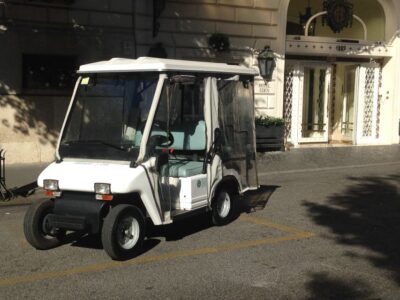
This electric E-Tuk tour is built for a “see a lot, feel okay” pace, with an English driver-guide who talks through the sights as you roll. I like the way it mixes major landmarks—like the Pantheon’s dome and the Colosseum’s arena—with quick orientation so you don’t waste your limited time wandering blind. One thing to keep in mind: some stops are mainly for viewing and photo stops because cars can’t always pull right up in busy, pedestrian-only areas.
I also like the format of a small group (maximum 15) because the guide can actually keep your attention while you’re moving. If you go with hotel pickup selected, you get that extra bit of stress relief—no hunting for the vehicle mid-walk. Still, sound can be tough on open-air carts when traffic is loud, so you’ll want to sit where you can hear clearly or ask about any audio support if it’s available.
A final consideration: a couple of the headline monuments are marked as not included for entrance (like the Pantheon and the Colosseum), so the tour is more “sight-focused” than “skip-the-lines, everything-included.” That said, the driver-guide style seems to land well when you get someone like Ernesto, Jimmy, Fabrizio, Iman, Matteo, or Nina—names that have come up in past experiences with this tour format.
In This Review
- Key points before you go
- Why an electric E-Tuk works for Rome’s biggest sights
- Tour price and time: what 3 hours buys you
- Meeting point and pickup: getting seated without stress
- How the guide teaches Rome while you roll
- The first sweep: Via dei Condotti to Piazza Venezia
- Pantheon and other ticket stops: plan for entrance costs
- Teatro di Marcello and the Fish Market Forum: ancient Rome in smaller doses
- The Jewish Ghetto: history you can feel in the streets
- Vatican City: what you’ll see in the time you have
- Trevi Fountain and Piazza Navona: the Baroque postcard stops
- Colosseum plus Imperial Fora and Circus Maximus: ancient scale on a timer
- Trinità dei Monti and the return to Via dei Condotti
- Practical tips so you hear the guide and don’t miss the key moments
- Who this tour suits best
- Should you book this Highlights of Rome E-Tuk Tour?
- FAQ
- How long is the E-Tuk Tour: Highlights of Rome?
- What does the tour cost?
- Is the tour offered in English?
- Is there hotel pickup and drop-off?
- Where does the tour start?
- Do I need tickets for the Pantheon and Colosseum?
- Does the tour include audio?
- What’s the cancellation policy?
Key points before you go
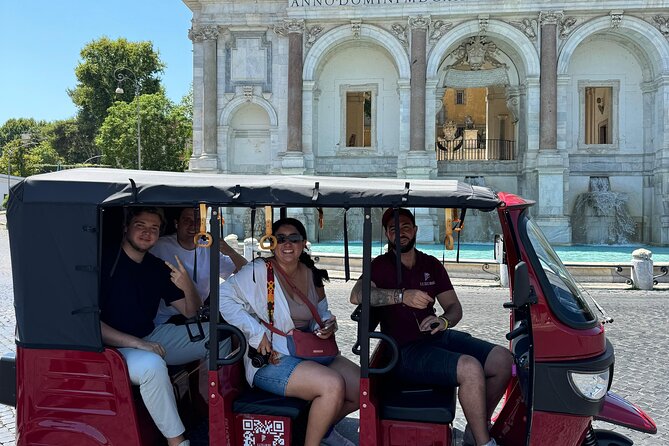
- Small group cap of 15 means less crowd pressure than big bus tours
- Photo stops at key landmarks help you map your next day’s plan
- Some monuments have separate ticket needs (Pantheon, Colosseum)
- Open-air noise can affect sound, so sit close to the guide
- Hotel pickup is optional, with a short waiting window outside your lodging
Why an electric E-Tuk works for Rome’s biggest sights
Rome punishes your feet. That’s the simple truth. This tour is designed around that reality by using an electric E-Tuk so you can cover central Rome without turning your day into a blister marathon.
The other big win is rhythm. You’re not just “passing by.” The driver-guide gives history while you go, then you get brief stops for photos and orientation. This is especially helpful if it’s your first time in Rome and you want to understand how the city layers its periods—ancient, Renaissance, Baroque, and modern—across the same streets.
And because it’s a small group (max 15), it feels more like a moving introduction than a mass departure. I like that you can ask questions without shouting at strangers.
You can also read our reviews of more tours and experiences in Rome.



Tour price and time: what 3 hours buys you
At $84.09 per person for about 3 hours, you’re paying for access to the “greatest hits” in a compact window plus a guide who keeps the story straight while you move. For a city as spread out (and as walk-heavy) as Rome, that value math often works for people who arrive with only a day or two.
Still, the pricing also comes with expectations. This is not a slow, deep archaeology session. Many stops are short—think 10 to 15 minutes—and some are view-and-learn moments rather than “go inside” moments. If your must-do list requires multiple long entrances, you’ll likely want to pair this with separate ticketed visits later.
Meeting point and pickup: getting seated without stress
The tour starts at Piazza del Popolo, 11, 00187 Roma RM. If you choose pickup, you’ll wait outside the main entrance of your hotel at street level.
The pickup process is straightforward: the driver arrives at the scheduled time or within a 10-minute waiting window, and they should be easy to recognize. My practical advice: be ready a few minutes early, because Rome’s streets and pedestrian zones can add time fast.
Once you’re done, the tour ends back at the meeting point. That’s useful if you want to regroup in the same area rather than get dropped somewhere you still have to navigate.
How the guide teaches Rome while you roll
This is an English-speaking driver-guide experience. The guide format matters here. When you’re seated in an open-air vehicle, the guide’s explanation can make or break the experience—because the sights flash by quickly.
A couple of helpful details to know:
- There are photo stops at main landmarks.
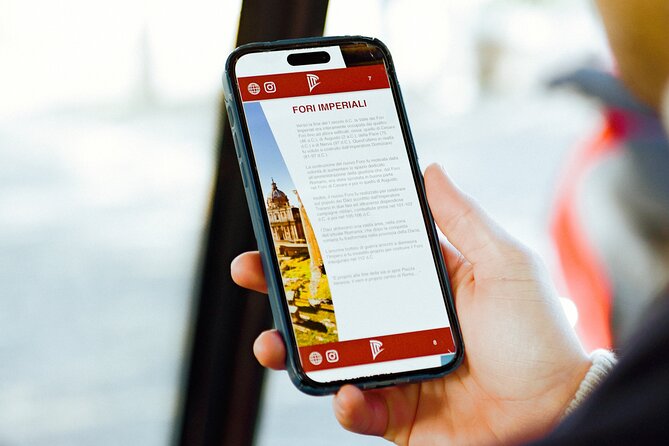
- Audio guides may be available upon request (if offered).
- The carts are open-air, so city noise can make hearing harder if you’re not positioned well.
If you’re the type who loves context—why the Pantheon looks the way it does, what Piazza Venezia signals, how the Jewish Ghetto developed—this tour’s pacing is built to give you that “story layer” without requiring you to read an entire guidebook on your feet.
The first sweep: Via dei Condotti to Piazza Venezia
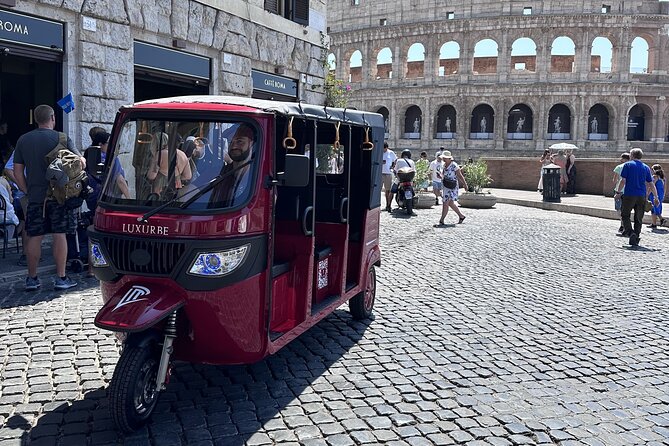
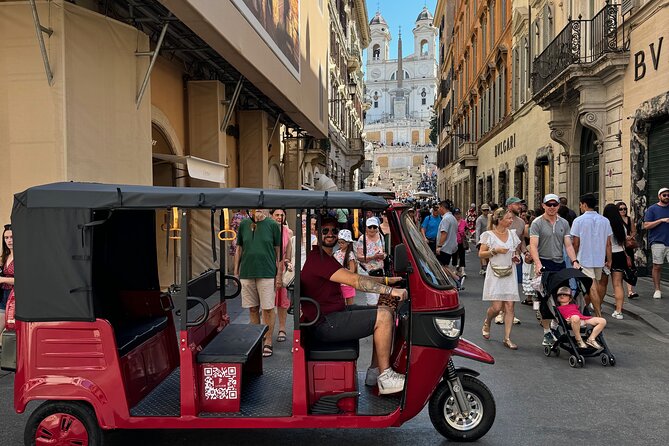
You begin around Via dei Condotti, one of Rome’s famous luxury streets. Expect a stylish stroll in spirit: designer storefronts, classic street lamps, and cobblestones underfoot—plus the Spanish Steps nearby as a visual anchor. This stop is short, and it’s more about atmosphere and orientation than shopping.
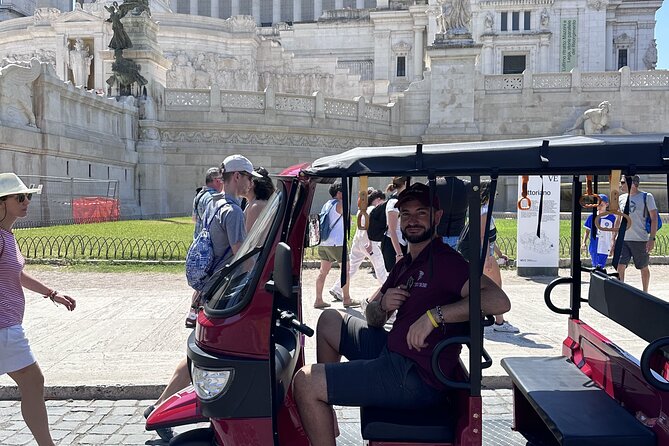
Then you move to Piazza Venezia, a key central hub dominated by the Altare della Patria (Vittoriano). This is a great “reset” point for first-timers because it sits at an intersection of what Rome does best: big monumental statements and centuries of street history around them. Ten minutes here is quick, but the payoff is understanding where the ancient core sits relative to the modern city center.






Pantheon and other ticket stops: plan for entrance costs
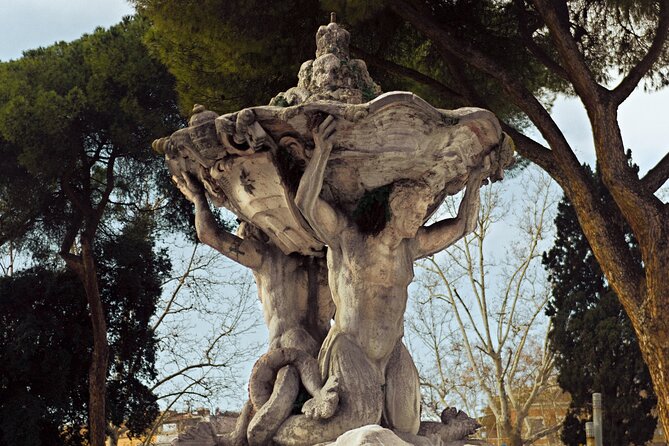
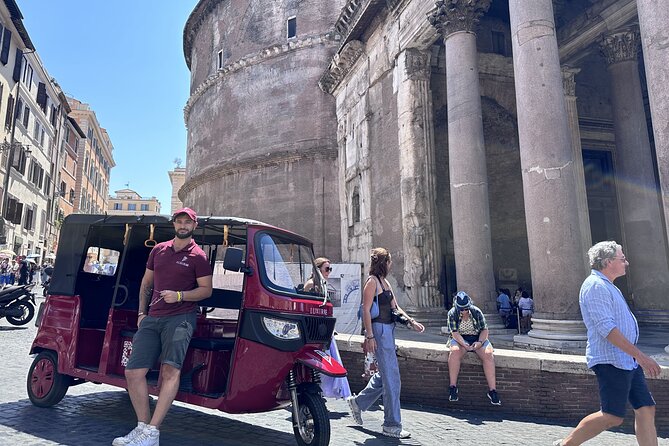
This is where you should read the fine line between seeing and entering. The tour includes stops at the Pantheon and the Colosseum, but the listed admission for both is not included.
- Pantheon (15 minutes): you’ll get the visual payoff—dome shape, the dramatic oculus light effect (even from inside, if you’re able to enter quickly), and the interior’s preserved details. If you want more than a quick look, you may need your own entry plan.
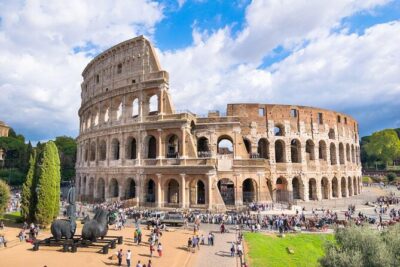
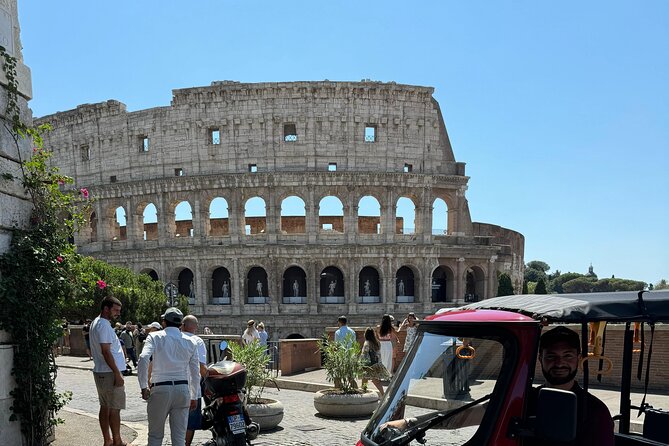
- Colosseum (15 minutes): the outside views are iconic, and the structure’s scale hits fast. But if you want to go inside for the full experience, you’ll need to handle tickets separately.
The good news: even when entrance isn’t included, having a guide point out what you’re looking at saves time. You’ll know where to focus once you return on your own.
Teatro di Marcello and the Fish Market Forum: ancient Rome in smaller doses
Not every Rome tour gives you these in-between ancient landmarks. Here you do, and it’s a smart choice.
- Teatro di Marcello (10 minutes): This ancient open-air theater links to Emperor Augustus and his family through its dedication. Even though parts are gone, the surviving structure plus the setting near the Tiber helps you picture how Roman public entertainment shaped daily life. There’s also an interesting later-era twist: the upper levels were converted into apartments during the Renaissance, which tells you how Rome reuses space across time.
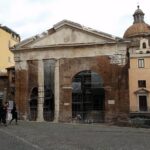
- Via del Foro Piscario (10 minutes): This is the old Fish Market Forum, associated with seafood sales near the broader Forum area. It’s not as famous as the Colosseum or Pantheon, but that’s exactly why it’s valuable. You get a sense of how commerce and daily routines sat alongside power and temples.
These stops are ideal if you like the “real city” feel—less postcard, more texture.
The Jewish Ghetto: history you can feel in the streets
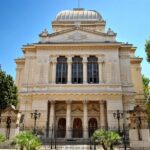
Next comes the Ghetto area, a neighborhood with a long record tied to the year 1555 when it became a confined space for Roman Jews for centuries. What you’ll notice is the street layout: narrow cobblestone lanes that create that old-world walking mood even today.
The tour frames this with a few anchors you can use to explore further:
- You can look for the Great Synagogue and the Jewish Museum as key learning stops.
- The area also includes Jewish eateries and shops, so you’re not just looking at history behind glass—you’re seeing how that community life continues in modern Rome.
Even in a short tour stop, it helps to know what you’re seeing. The guide’s context turns the neighborhood from a quick photo stop into a meaningful part of your Rome picture.
Vatican City: what you’ll see in the time you have
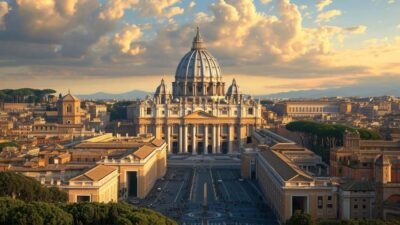
Vatican City is listed as a stop with free admission on this tour format, and it’s the spiritual and administrative center of the Catholic Church. In practice, this part of the day tends to work as a sight-and-story moment—especially because road access and parking limitations can restrict how close vehicles can get.
You’ll learn how the Vatican functions, and you’ll likely connect the dots on the major sights named in the tour: St. Peter’s Basilica, the Vatican Museums, and the Sistine Chapel. Even if your time for entry is limited, understanding the geography of these spaces makes it much easier to plan a separate timed ticket visit later.
Trevi Fountain and Piazza Navona: the Baroque postcard stops
If Rome has a “moment of magic” score, these two often lead the list.
- Trevi Fountain (15 minutes): You’ll see the Baroque masterpiece with mythical sculptures and the famous idea of tossing a coin. The fountain’s scale and detail work even when you’re standing among crowds. The sound of water adds a sensory layer that a lot of monuments can’t match.
- Piazza Navona (10 minutes): This square is known for Baroque elegance and the presence of Fontana dei Quattro Fiumi. It’s one of those places where you can people-watch, take photos, and feel how Rome treats public space as a stage for everyday life.
These stops are excellent for first-timers because they help you “place” what you’ve seen in movies, books, and calendars.
Colosseum plus Imperial Fora and Circus Maximus: ancient scale on a timer
After Navona, you head into heavier-hitter ancient territory.
- Colosseum (15 minutes, admission not included): It’s huge, even at a distance. The key value here is the quick orientation: you get the shape, the era (built in the late first century), and why it mattered as a public entertainment venue.
- Via dei Fori Imperiali / Imperial Fora (15 minutes, admission included): This is a corridor of monumental public squares built by multiple emperors across roughly the late Republic into the early Empire. The stop is listed as admission included, which is great if you want access to some on-site archaeological areas during the tour window. The important context: these were not random ruins; they were political and social centers.
- Circo Massimo (15 minutes, admission included): The ancient chariot-racing stadium was built for mass entertainment and could hold an immense crowd in its heyday. Even when only traces remain, it helps you understand Rome’s appetite for spectacles—and how those events shaped the city’s rhythms.
This is a strong sequence for anyone who wants ancient Rome without committing the whole day to walking between far-apart sites.
Trinità dei Monti and the return to Via dei Condotti
The tour includes Trinità dei Monti (10 minutes), which ties into the broader Spanish Steps area atmosphere. After that, you end with Via dei Condotti again.
That second stop can be a nice touch if you want one more look at the street’s scale and mood without rushing. It also helps you avoid that “I barely saw it” feeling you sometimes get when you only pass a famous street once.
Practical tips so you hear the guide and don’t miss the key moments
This experience is built around short stops, so small choices matter.
Sit where you’ll hear best. Because the carts are open-air, the guide’s voice can compete with traffic noise. If you’re hard of hearing or you know sound gets lost in noise, tell the guide/driver early and ask about audio support if it’s available on request.
Ask your questions at the stops, not while you’re in transit. The guide can only land the history story if you’re paying attention—so use the few minutes when you’re stopped for photos and facts.
Know the entrance reality. Pantheon and Colosseum entrance are not included, while some other areas are marked as included (like the Imperial Fora and Circus Maximus). If you’re the kind of person who plans around entrances, map your must-enter sights for a separate ticket plan.
One more note: vehicle stopping limits in pedestrian-only areas can affect how close you get for a perfect viewpoint. The guide can still point you toward what to see, but don’t treat the tour as a guarantee of the closest possible spot at every single landmark.
Who this tour suits best
This works well if you:
- Want a fast orientation to central Rome without walking nonstop
- Like history explained in plain terms while you’re moving
- Prefer a small group format
- Have limited time and want to decide later which sights deserve deeper time
It may feel less ideal if you:
- Want a lot of “go inside and linger” time at major ticketed monuments during the tour
- Really need quiet audio conditions (open-air noise is part of the setup)
- Have a strict timing plan where missed entrances would cause problems
Should you book this Highlights of Rome E-Tuk Tour?
I think it’s a smart booking for the right trip style: short on time, high on desire to see iconic Rome, and not in the mood for long walks between scattered landmarks. The small group and the guided flow help you build a mental map quickly, so your next day’s independent exploring feels easier.
If you’re excited mainly by entrances—Pantheon inside, Colosseum inside, Vatican Museums deep time—plan those separately. Treat this tour as your “Rome first pass,” not your final visit plan.
If that matches how you travel, the $84.09 price tag starts to make sense fast: you’re buying comfort, context, and a tight route that’s meant to keep your energy for the rest of your day.
FAQ
How long is the E-Tuk Tour: Highlights of Rome?
It runs for about 3 hours (approx.).
What does the tour cost?
The price listed is $84.09 per person.
Is the tour offered in English?
Yes, it’s offered in English.
Is there hotel pickup and drop-off?
Hotel pickup and drop-off are offered if you select that option. Pickup is done at street level outside the main entrance of your accommodation.
Where does the tour start?
The meeting point is Piazza del Popolo, 11, 00187 Roma RM, Italy.
Do I need tickets for the Pantheon and Colosseum?
Pantheon and Colosseum entrance tickets are not included. Other sites on the route are marked as free or included, depending on the stop.
Does the tour include audio?
Audio guides are provided upon request, if available.
What’s the cancellation policy?
Free cancellation is available. You can cancel up to 24 hours in advance for a full refund.