REVIEW · ROME
Rome: Roman Army Experience
Book on GetYourGuide →Operated by RES MILITARES SRLS · Bookable on GetYourGuide
Armor meets action in under an hour. This Roman Army Experience turns museum viewing into hands-on training, with realistic gear and a guided fight-focused lesson that ends with classic formations like Testudo. You’re in Lazio, inside the Res Militares Museum world, where artisans’ reproductions are built to match what archaeologists found.
I like how tightly the session combines facts with practice: you don’t just hear about weapons, you learn how to use a Gladius and shield during a mid-route tactics lesson outside in the internal courtyard. I also like the small-group setup (limited to 6), which makes it easier to get individual coaching as you try the equipment. One possible drawback: it’s physical in short bursts, so it’s not suitable if you have back problems or if you’re over 95.
If you want your Rome to feel like a living classroom, this is a good pick. The instructor teaches in English or Italian, and the best part is how the weapons and formations connect to real battlefield purpose, not just cool costumes.
In This Review
- Key things that make this Roman Army Experience worth your time
- Rome’s Roman soldier training, minus the museum boredom
- How the 1-hour tour flows inside Res Militares Museum
- Armor and weapons you can actually handle
- The courtyard tactics lesson: Gladius, shield, and close-clash strategy
- Testudo training: how a Roman defensive formation feels in practice
- Pilum throwing: the opening volley before the charge
- Gladiators vs legionaries: what role separation taught the Romans
- Small group size: why the limit of 6 improves your learning
- Price and value: what $41 buys you in one hour
- Who should book this Roman Army Experience, and who should skip
- What to bring so you don’t feel miserable mid-training
- Should you book the Roman Army Experience in Rome?
- FAQ
- How long is the Roman Army Experience?
- Where does the tour take place?
- What can I do during the tour?
- Is food or drink included?
- What languages is the instructor available in?
- What should I bring?
- Is it suitable for everyone?
Key things that make this Roman Army Experience worth your time
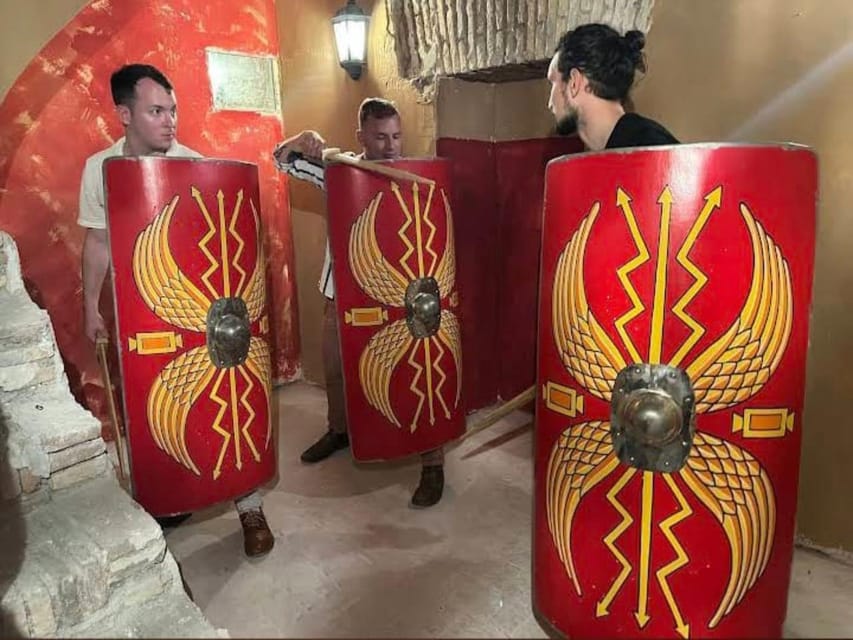
- Realistic reproduction gear made by artisans, following archaeological finds from key excavation sites
- Gladius + shield coaching in a courtyard lesson, not just photos in a museum room
- Testudo training with a practical formation test (max 4 people per formation)
- Pilum (Roman javelin) throwing to understand why the opening volley mattered
- Battle tactics for close clashes explained while you’re actively doing the drill
- Small group energy with up to 6 participants and an instructor who can keep it lively
Rome’s Roman soldier training, minus the museum boredom
Rome has plenty of history tours where you stand, listen, and take notes that feel like they evaporate five minutes later. This one works because it flips the usual order: you start with the museum setting, but you end up participating.
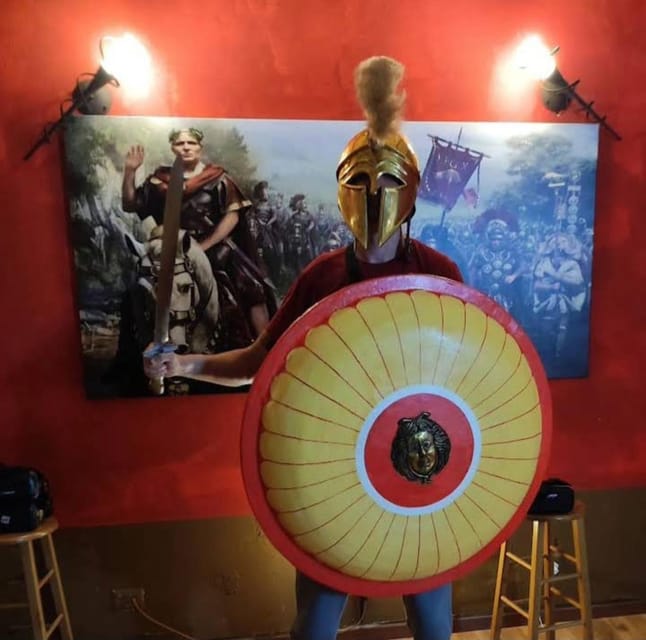
From the start, you’re shown faithful reproductions of armor and weapons—Helmets, swords, and shields—created by artisans and based on archaeological evidence. Then the session moves into the part that most people remember: learning the mechanics of Roman combat with coached drills. Think posture, spacing, and how formations change what an enemy can do.
What really sold me is the clear connection between gear and tactics. The Roman soldier story here isn’t just about armor as a fashion statement. It’s about how different equipment and battlefield decisions fit together: close clash tactics, defensive formations, and a javelin opening designed to disrupt before the charge.
You can also read our reviews of more tours and experiences in Rome.



How the 1-hour tour flows inside Res Militares Museum
You’re looking at a compact 1 hour experience. That matters because it keeps the pace brisk and the focus tight. It’s long enough to cover multiple weapons and one major formation, but short enough that you won’t feel stuck in a lecture.
Here’s the shape of the session:
- A half-hour historical overview of Roman military life and warfare
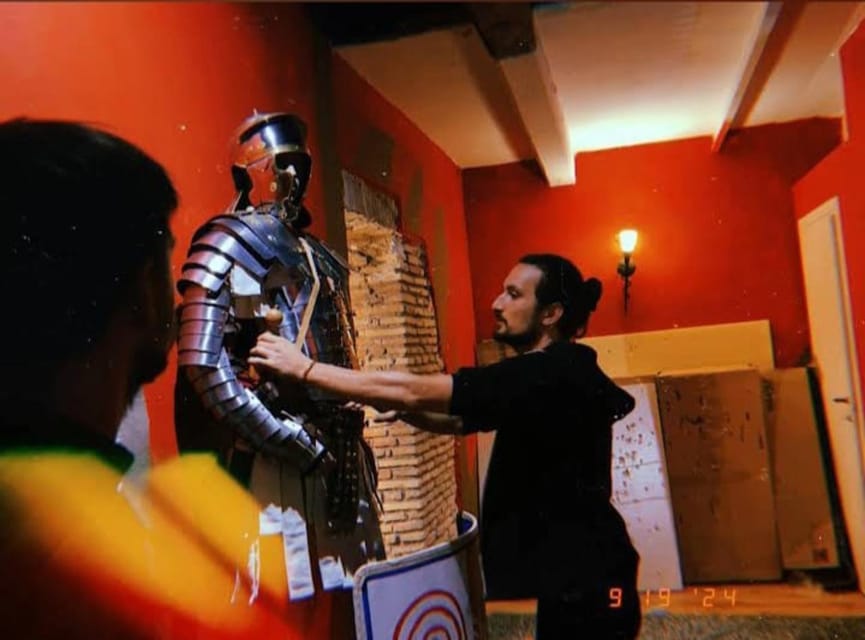
- A tour through faithful armor and weapon reproductions, organized by period focus
- A break in the route where you move outside to an internal courtyard for hands-on drills
- A practical portion where you learn and try combat tactics and formations
- A final stretch focused on weapon use, including a pilum throw and Gladius/shield work again in context
The museum part is built to give you an overview in one place: different kinds of armor and weapons, plus the “why” behind the kit. That’s a big value point for people who love history but don’t want to spend a full day chasing artifacts across Rome.
Armor and weapons you can actually handle
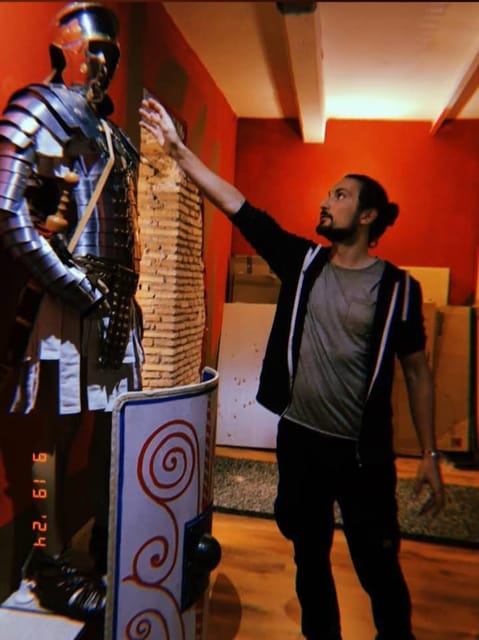
A big part of the appeal is that you’re not just looking at replicas behind glass. You get to try on the armor and helmets, and you can handle the sword and shield during the training segment.
You’ll see equipment across historical periods, and the guide explains how the gear changes. That’s useful because Roman military history isn’t one uniform template. Armor styles, weapons, and battlefield roles evolved, and this tour tries to keep that straight without overwhelming you.
If you’re a tactile learner, this is a win. Felt weight and fit change how you understand the story. Even if you’ve never studied Roman warfare, trying on a helmet or holding a shield makes the tactics feel more real. It also helps you understand why certain formations work: you can’t argue with physics once you’ve got the gear on.
The courtyard tactics lesson: Gladius, shield, and close-clash strategy
The session’s middle jump—the move to the internal courtyard—turns theory into muscle memory. This is where you learn the practical basics of using a Gladius and a shield and where the guide explains tactics for a close clash between two armies.
This segment matters for two reasons:
First, close combat is where Roman infantry tactics become specific. It’s not “stand and swing.” It’s about coordinated movement and positioning, and how the shield changes your ability to advance, hold ground, or close distance.
Second, the courtyard format keeps the lesson active. The group isn’t packed in like a classroom. You’re in a space designed for doing the drill, not just watching it.
The instructor teaching style is also a strong point. In the experiences I’m drawing from, the teaching was described as engaging and funny, and even in moments where language might feel like a speed bump, the instructions still landed clearly. One name you may hear associated with the experience is Davide, who is mentioned in connection with making the whole thing feel more realistic through reenactment-style presentation.
Testudo training: how a Roman defensive formation feels in practice
The Testudo part is the headliner. You learn how to do the formation, then you test it. That’s the difference between reading about a formation and understanding it.
A few practical details matter here:
- Maximum 4 people per Testudo formation
- The activity is designed so you gather as many people as possible and give it a try
- Your formation gets tested while the group follows the drill
Why this is valuable: Testudo is a defensive tactic built on cooperation. You’re not just learning moves; you’re learning coordination. Once you’re in it, you start to feel the strengths and limits—how it protects, how it slows movement, and why teamwork is non-negotiable.
It also helps you connect tactics to the equipment you handled earlier. Shields aren’t just props. In a formation, they become architecture. That’s what makes the Testudo segment so memorable.






Pilum throwing: the opening volley before the charge
After you work with the sword and shield tactics, you switch gears to the pilum, the Roman javelin. You’ll be taught how to throw it and you learn why it was used before the two lines of armies charged.
This is one of the most satisfying parts because it connects action to strategy. The idea is simple but important: throw first to disrupt, then close distance with infantry momentum. If you’ve ever wondered how Romans combined ranged pressure and close fighting without modern tech, this gives you a direct feel for the concept.
The instructor also explains the effectiveness of each weapon as you try to use them. That turns the session into a learning loop: you attempt the action, then you understand what it’s supposed to accomplish.
And yes, this is also the part where you’ll likely hear people react the most—because throwing a pilum feels like doing something directly tied to Roman battlefield behavior, not just holding a sword for a photo.
Gladiators vs legionaries: what role separation taught the Romans
One extra layer that makes the tour more interesting is how it frames Roman roles. You learn the difference between gladiators and legionaries.
The key takeaway is contrast:
- Gladiators were entertainers (often slaves) who fought for glory and freedom
- Legionaries were the soldiers who protected Rome’s borders and, in most cases, were Roman citizens fighting for Rome and their homeland
That’s a helpful clarification for anyone who lumps all ancient fighters into one bucket. It also gives you context for why weapons and formations varied—different roles meant different objectives.
Small group size: why the limit of 6 improves your learning
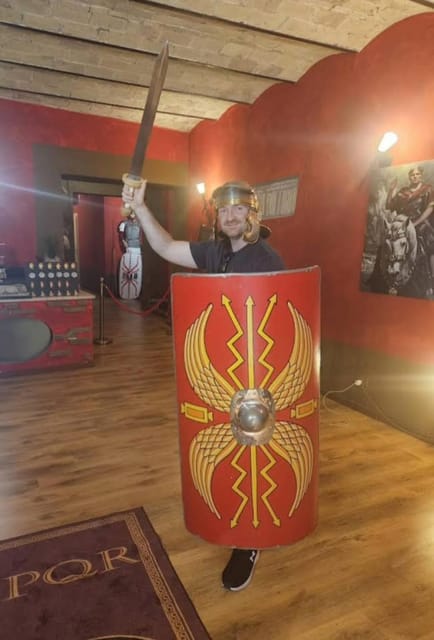
This isn’t a big bus-tour style experience. It’s limited to 6 participants, and that changes how the training feels.
With a smaller group:
- You’re more likely to get corrected on how you hold and move with the equipment
- The instructor can keep pace without leaving anyone behind
- You get more chances to actually participate rather than wait your turn
This is also where the “hands-on” promise becomes real. A tour can say interactive and still be mostly watching. Here, the setup is designed for short drills where everyone matters.
Price and value: what $41 buys you in one hour
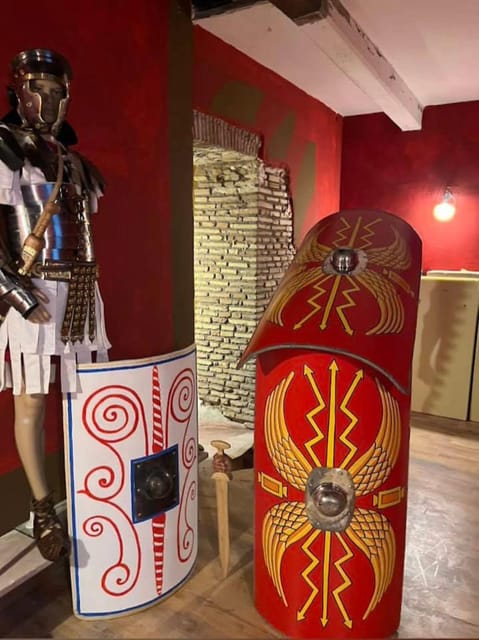
At about $41 per person for a 1-hour session, you’re paying for instruction plus equipment time plus a guided museum-style overview. You’re not paying for a long “Roman history lecture marathon.”
What you’re getting for the money:
- A half-hour historical overview of Roman military life and tactics
- Hands-on training with reproduction armor and weapons
- Practical participation in formations like Testudo
- Weapon attempts including the pilum throw, plus Gladius and shield drills
It’s also value-rich because there’s no need to add a separate activity to get “real experience.” One ticket delivers multiple parts: museum viewing, tactical coaching, and active participation. For families especially, it’s a way to spend an hour that doesn’t feel like a compromise between history and fun.
Who should book this Roman Army Experience, and who should skip
This tour is well-suited for history enthusiasts and families. It’s designed to be engaging, active, and easy to follow in English or Italian.
You’ll likely enjoy it most if you:
- Like hands-on learning and practical demos
- Want something different from the usual big monuments route
- Enjoy short, focused activities that fit into a day of sightseeing
You should skip it if:
- You have back problems (it’s not suitable)
- You’re over 95 (there’s an age limit)
If you’re bringing kids, note that people have enjoyed it with teen sons alongside other Roman highlights. Still, treat it as light-to-moderate physical activity. It involves standing, moving into formation, and participating in throws and drills.
What to bring so you don’t feel miserable mid-training
This activity is practical. Bring items that keep you comfortable, especially since part of it happens outdoors in the courtyard.
Bring:
- Comfortable shoes
- A hat
- Sunscreen
- Water
The combination of shoes and water is non-negotiable. Even if the tour is only an hour, you’ll be moving with gear and concentrating hard. Also, there’s a no-smoking rule during the experience.
If you have sensitive skin or burn easily, sunscreen matters. Rome’s sun can turn a fun drill into a stressful distraction fast.
Should you book the Roman Army Experience in Rome?
I’d book it if you want one hour in Rome that’s about doing, not just looking. The real win is the blend: museum reproductions grounded in archaeological accuracy, a practical tactics lesson in a courtyard, and direct participation with Gladius, shield, Testudo, and the pilum throw.
It’s also a strong pick when you’re traveling with teens or mixed ages. Even if your travel style is monuments-first, this can break up the day with a memorable activity that still teaches something concrete about how Roman soldiers fought and trained.
Skip it if you’re looking for purely passive sightseeing or if physical participation could be a problem for you. With back concerns or the age limit, it’s better to choose a different Roman history format.
FAQ
How long is the Roman Army Experience?
It lasts 1 hour, including a half-hour historical overview and practical participation.
Where does the tour take place?
It’s in Lazio, Italy, at the Res Militares Museum in Rome.
What can I do during the tour?
You’ll see armor and weapons made as faithful historical reproductions, then you’ll participate in tactics training. You can try using a Gladius and shield, learn Testudo, and throw the pilum.
Is food or drink included?
No. Food and drinks are not included.
What languages is the instructor available in?
The instructor speaks English and Italian.
What should I bring?
Bring comfortable shoes, a hat, sunscreen, and water. Wear clothing suitable for physical activity.
Is it suitable for everyone?
It’s not suitable for people with back problems and people over 95 years. Also, there’s a Testudo formation limit of 4 people per formation.