REVIEW · ROME
Domus Tiberiana, Palatine Hill and Roman Forum Guided Tour
Book on GetYourGuide →Operated by italy in love tours & ontario srls · Bookable on GetYourGuide
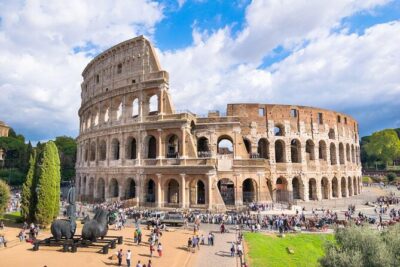
You can see ancient Rome, then suddenly see it again, in full context. This short guided tour strings Palatine Hill, the Roman Forum, and the newly reopened Domus Tiberiana into one smart route.
I especially love how the Domus Tiberiana visit turns Tiberius-era power into something you can picture, not just read about. I also like the eco-friendly golf-cart ride that helps you cover more without spending your whole time dragging your feet. The one watch-out: this isn’t for people who need wheelchair access, and the site involves walking on uneven ancient surfaces.
If you want a guided hit of the Eternal City in just 2 to 2.5 hours, this works. You’ll get entrance tickets, a licensed guide, and skip-the-ticket-line entry, so you can spend your energy on what’s actually there.
In This Review
- Key highlights worth planning for
- Palatine Hill: start at Rome’s legend, not its ruins
- Domus Tiberiana: Tiberius’s palace, reopened after half a century
- Getting around by eco-friendly golf-cart (and why it’s worth it)
- Roman Forum: the heart of daily politics, markets, and power
- A “your pace” moment inside a guided flow
- Church stop: Santa Maria Antiqua can add another layer
- What you’ll learn (and what you’ll notice after)
- Price and value: what $111.02 really covers
- Logistics you’ll want to get right before you go
- Who should book this Palatine + Forum + Domus tour
- Should you book this tour?
- FAQ
- How long is the Domus Tiberiana, Palatine Hill and Roman Forum guided tour?
- Is the Domus Tiberiana ticket included?
- Does the tour include a guide?
- What languages are the tours offered in?
- Where do I meet the tour?
- Is hotel pickup or drop-off included?
- Is food or drink included?
- What do I need to bring?
- Is the tour suitable for wheelchair users?
- What’s not allowed during the tour?
Key highlights worth planning for
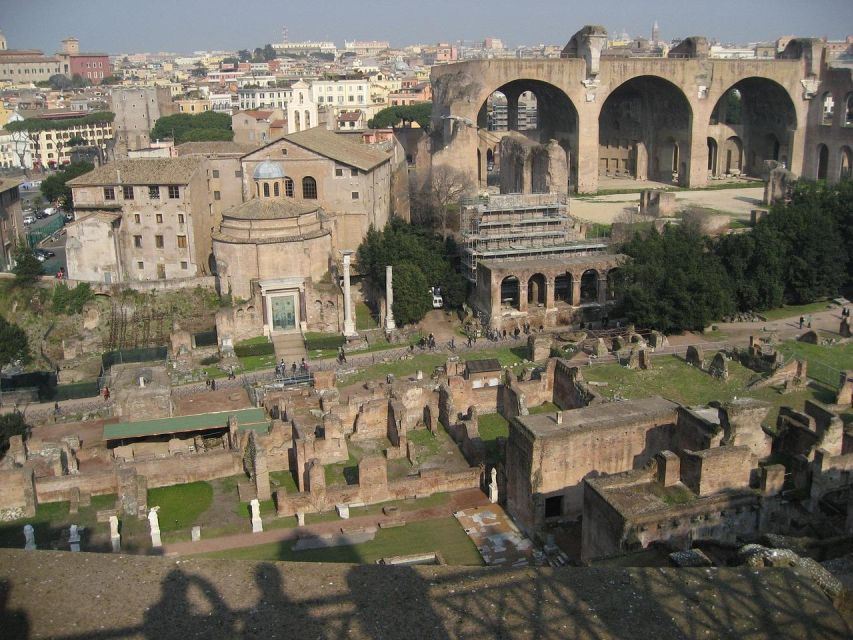
- Domus Tiberiana reopened after nearly 50 years and now part of the visitor circuit
- Licensed professional guide who explains what you’re looking at, in plain human terms
- Palatine Hill first, then the Roman Forum, so the story builds in the right order
- Eco-friendly golf-cart transport to keep transfers sane
- You get some “at your own pace” time to slow down and look carefully
- English or Italian live guide, with guides like Dino and Elaine bringing the layers to life
Palatine Hill: start at Rome’s legend, not its ruins
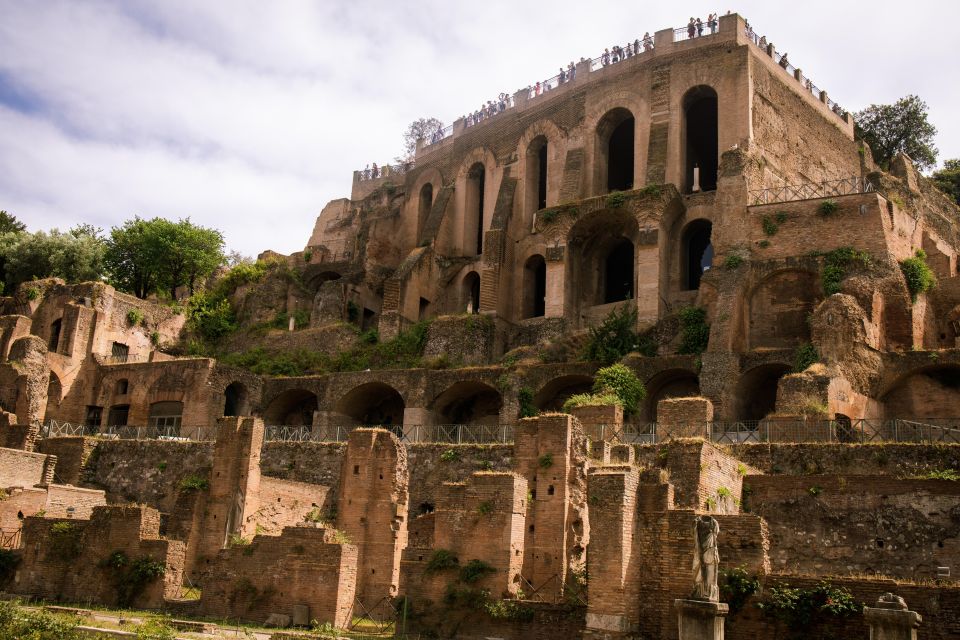
I like tours that begin where the story starts. Here, you meet and then head to Palatine Hill, tied to the legendary birthplace of Rome. That matters because Palatine sets the tone: you’re not just walking through stone. You’re stepping into the place Romans themselves believed had meaning.
With a licensed guide, you’ll move through major remains and learn how the hill shaped power and prestige. The guide’s job is to translate “random columns and broken walls” into “this is where people stood when they made decisions.” If you’ve ever felt Rome looks like a lot of disconnected sights, this beginning helps you get your bearings fast.
Also, since Palatine is one of the busiest zones, a guided start helps you avoid wandering in circles. You’ll likely follow a route that makes practical sense and keeps you moving toward the highlights instead of spending your energy choosing where to look next.
You can also read our reviews of more guided tours in Rome



Domus Tiberiana: Tiberius’s palace, reopened after half a century
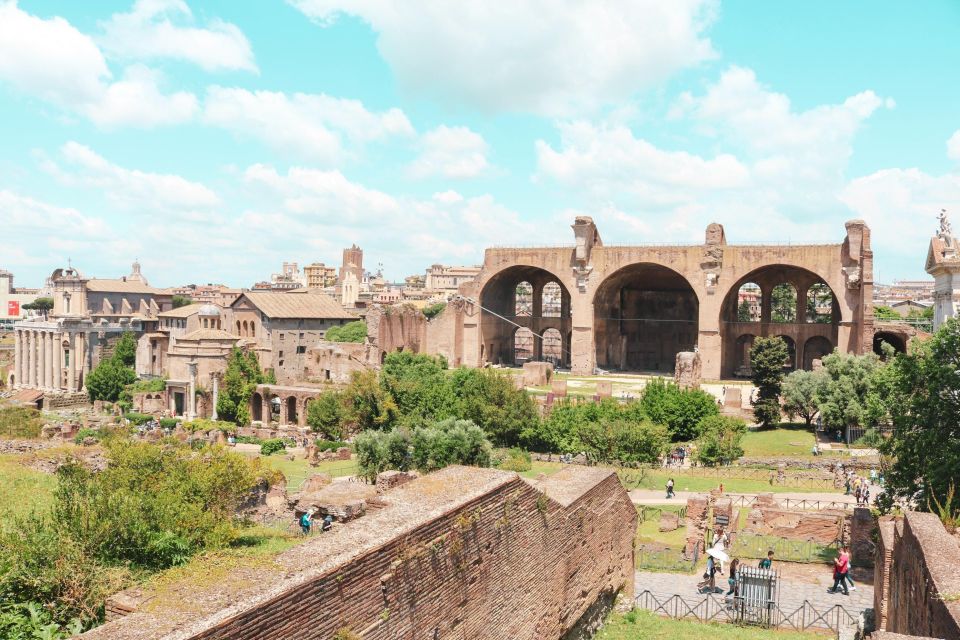
The main reason to book is Domus Tiberiana, the imperial residence complex built for Emperor Tiberius. This is described as the first imperial residence for the Julio-Claudian dynasty, which is exactly the kind of detail that clicks when you’re standing among the remains.
What you’ll feel here is scale and intention. Imperial Rome wasn’t built for casual visitors; it was built for control, ceremony, and access. Even if you don’t know every Roman family name, the space speaks. The guide helps you connect the dots between architecture and the people using it.
And yes, it’s newly back on the public schedule after nearly 50 years, which makes your timing special. For many people, this is one of those moments where a “why didn’t we do this sooner?” thought shows up. You’re not just seeing an old site; you’re seeing one that has been absent from visitors for a long time and has now returned.
One of the nicest touches from past tours is how guides bring the palace down to real life. Dino, for example, is praised for making the people and lifestyle of the era feel present, not distant. That kind of storytelling turns Domus Tiberiana from an archaeological stop into a place you can mentally inhabit.
Getting around by eco-friendly golf-cart (and why it’s worth it)
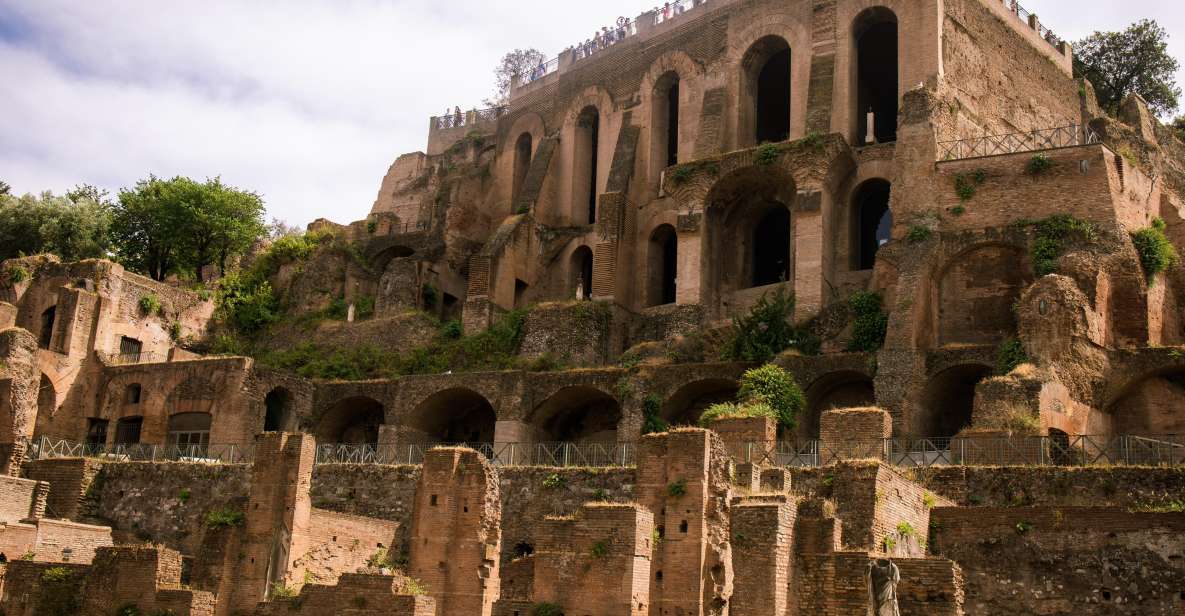
Rome’s ruins are spread out, and walking everywhere would eat your full day. This tour uses an eco-friendly golf-cart to help you cover the route efficiently. For a 2 to 2.5 hour experience, that is not a small detail.
I like it because it changes how you experience the tour. Instead of spending half your time moving between sights and half your time staring at maps, you stay focused on the sites. You also avoid the common problem of arriving at the biggest points already tired and distracted.
It also helps the flow. You start on Palatine Hill, then you progress toward the Roman Forum. That sequencing keeps the narrative clear: imperial power first, then public life.
Roman Forum: the heart of daily politics, markets, and power
After Palatine, you head to the Roman Forum, the “heart” of ancient Roman life. This is where Rome stopped being legend and started being routine. You’ll see iconic remains, and your guide will connect them to what happened there: decisions, announcements, debates, and the constant movement of people.
If you’ve visited Rome without a guide, you may remember feeling like you were looking at a photograph-sized scene. With a guide, you start seeing cause and effect. The guide’s job here is especially important because the Forum is layered—lots of eras piled on top of each other.
Dino gets specifically praised for knowing the layers of history across Palatine Hill and beyond, with stories that make the place feel logical instead of chaotic. That’s the ideal outcome: you look at the remains and understand why they mattered in the moment.
A “your pace” moment inside a guided flow
One thing I appreciate is that you get time to explore at your own pace, even though the tour is guided. That’s smart because some parts reward lingering. Columns, arches, and building lines aren’t always obvious until you pause and look from multiple angles.
This isn’t about wandering aimlessly. It’s about using your own eyes when the guide has already given you the key to the place. You’ll come away remembering specific viewpoints and details instead of just a blur of names.
Practical note: the Forum and Palatine areas can feel hot and intense in peak seasons. If you have any flexibility, use your at-your-own-pace time to take breaks where you can, while you’re still in the zone and not rushing to catch the rest of the group.





Church stop: Santa Maria Antiqua can add another layer
In some runs of this experience, guides include a stop connected with Santa Maria Antiqua. The point is simple: it shows Rome’s long life beyond the Roman Empire.
If you see it on your schedule, don’t treat it like a detour. It helps you understand that these sites weren’t frozen in time. People kept building, adapting, and preserving parts of the story, long after the ancient political world ended.
If it isn’t included on your specific departure, the core value stays the same: Domus Tiberiana plus Palatine Hill and the Roman Forum with expert interpretation.
What you’ll learn (and what you’ll notice after)
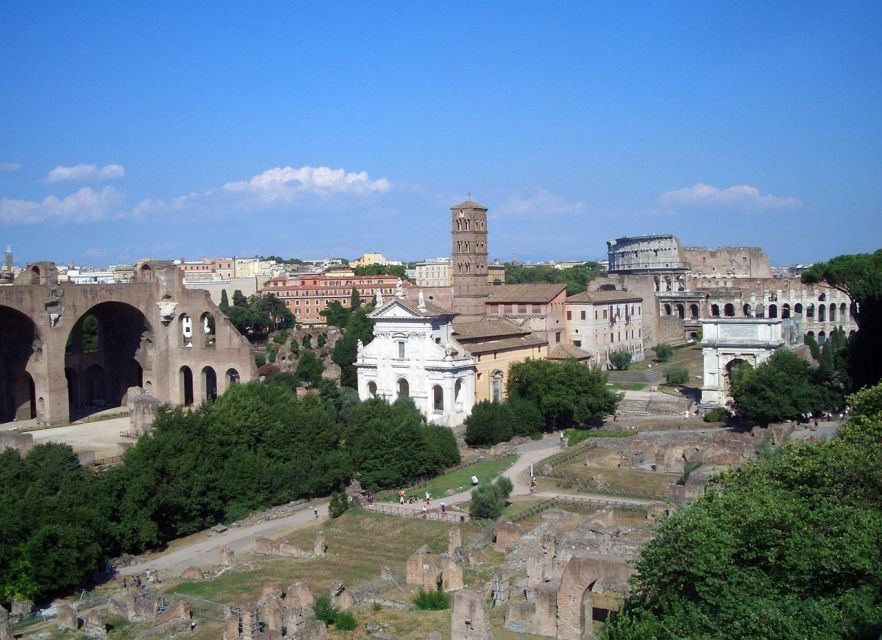
The best tours change how you look. This one tends to give you a set of mental labels fast: imperial residence, public forum, ceremonial space, political stage, and the everyday flow in between.
Here’s what you’ll likely start noticing during the visit:
- How architecture suggests status and access (who could move where, and why)
- How the Forum’s layout supports crowd life and public speech
- How Palatine’s position relates to power and prestige
- How the Julio-Claudian story fits into the larger idea of Roman rule
Guides matter a lot here. Elaine, another guide mentioned in feedback, is praised for making the material accessible to different ages, including two teenage daughters. That’s a good sign if you want clear explanations instead of a lecture that only works for Rome experts.
Price and value: what $111.02 really covers
At $111.02 per person, you’re paying for a short, high-impact route in one of the most time-sensitive areas in Rome. The key value is what’s included: a professional licensed guide, guided tour, entrance tickets, and all fees and taxes, plus skip-the-ticket-line entry.
That bundle often matters more than it sounds. Rome’s ticket lines can eat your time, and entrance costs add up quickly when you’re booking multiple sites. Here, your money is tied to a route that hits major highlights in limited hours.
You’ll still need to plan for what isn’t included. Food and drinks aren’t part of the ticket, and there’s no hotel pickup or drop-off. But for a 2 to 2.5 hour experience, that’s normal, and it keeps the tour focused.
If you want maximum return per hour—Domus Tiberiana plus two of the biggest Roman areas—this is a practical choice. If you prefer slow, solo exploration with no guiding, you might find it less satisfying. But for most first-timers and many repeat visitors, it’s a clean way to get context without losing your entire day.
Logistics you’ll want to get right before you go
This is not a “show up and wander” situation. You exchange your voucher at the ticket counter before the tour begins. Meeting point is at the provider’s office, and the activity ends back at the meeting point.
Bring a passport or ID card, since identification is required. Also note that names are required at booking, so check your details before you go.
Because this tour operates in sensitive areas, there are restrictions. Pets aren’t allowed. Luggage or large bags aren’t allowed, and mobility scooters are also listed as not allowed. The tour also prohibits alcohol and drugs, plus plastic bottles and glass objects. If you’re traveling with a bigger day bag, plan ahead so you’re not stuck at the start.
Finally, the language options are English and Italian, with a live guide. If your group needs one language, confirm your tour language when booking so you don’t end up translating the whole time.
Who should book this Palatine + Forum + Domus tour
This is a good fit if:
- You want a guided introduction to Palatine Hill and the Roman Forum
- You care about seeing Domus Tiberiana reopened after nearly 50 years
- You’re short on time and want smart movement via eco-friendly golf-cart
- You like explanations that connect ruins to real Roman life
It may not be the best fit if:
- You require wheelchair access, since the tour is listed as not suitable for wheelchair users
- You strongly prefer self-guided wandering, with no schedule at all
- You have trouble with walking over uneven outdoor surfaces
If you’re a history buff, you’ll enjoy the layered storytelling. If you’re traveling with teens or family members who get bored by long lectures, guides like Elaine are specifically noted for keeping it accessible.
Should you book this tour?
I’d book it if you want the “big three” in a tight window: Palatine Hill, the Roman Forum, and Domus Tiberiana with real interpretation. The price feels fair when you factor in licensed guiding, skip-the-ticket-line entry, and the entrance tickets bundled into the cost.
The decision comes down to one thing: do you want context? If yes, this tour is built for you. You’ll see ancient Rome, and you’ll understand what you’re looking at while you’re looking at it. If you want total freedom with no structure, consider a slower self-guided plan instead.
If you want my simple rule: time-poor, first-time (or near-first-time) Rome visitors should book this. Rome lovers who already know the basics may enjoy it most if they’re excited specifically about Domus Tiberiana’s return to the public.
FAQ
How long is the Domus Tiberiana, Palatine Hill and Roman Forum guided tour?
The duration is listed as 2 to 2.5 hours. Starting times depend on availability.
Is the Domus Tiberiana ticket included?
Yes. Entrance tickets are included in the tour price.
Does the tour include a guide?
Yes. You’ll have a professional licensed guide for the guided tour.
What languages are the tours offered in?
The live guide is available in English and Italian.
Where do I meet the tour?
You meet at the provider’s office. Before the tour starts, you must exchange your voucher at the ticket counter.
Is hotel pickup or drop-off included?
No. Hotel pickup and drop-off are not included.
Is food or drink included?
No. Food and drinks are not included.
What do I need to bring?
Bring a passport or ID card.
Is the tour suitable for wheelchair users?
No. The tour is listed as not suitable for wheelchair users.
What’s not allowed during the tour?
Pets aren’t allowed. Luggage or large bags, mobility scooters, alcohol and drugs, plastic bottles, glass objects, and unaccompanied minors are also not allowed.