REVIEW · ROME
Colosseum Roman Forum & Palatine Hill Tour with a Local Guide
Book on Viator →Operated by Sistine Chapel Tours · Bookable on Viator
Roman ruins feel personal on this tour. You’ll meet in the heart of the ancient way-stuff-happened area and join a local historian who helps you see the Colosseum, Palatine Hill, and Roman Forum as real places, not just photos. The biggest practical win is skipping the long lines, so your time stays focused on what you actually came to see.
I love how you get inside the Colosseum—you’re not just staring at the outside façade. I also love the way guides bring the politics and pageantry of Rome to life; Sarah’s calm, smart handling of rainy moments (and Tommaso’s easy enthusiasm) makes the stories feel tied to what you’re standing on.
One drawback to think about: you have to be on time and your details must match perfectly. If you arrive late, you might lose entry, and the Colosseum requires ID/passport name matching—so double-check your booking names.
In This Review
- Key points to know before you go
- Starting at Via dei Fori Imperiali: You’re already in the action
- Tickets, timing, and why being punctual affects everything
- Inside the Colosseum: arena access plus smart context
- Palatine Hill after the Colosseum: power stories on a smaller scale
- The Roman Forum: Senate, Caesar, arches, and the stuff of daily politics
- Price and value: what $325.30 covers, and what you still need to plan
- Guide quality matters here: Sarah and Tommaso set the tone
- How the 3 stops work together (and where the tour might not fit)
- Should you book this Colosseum, Roman Forum & Palatine Hill tour?
- FAQ
- Is the tour offered in English?
- How long is the Colosseum, Roman Forum & Palatine Hill tour?
- What sites are included in the tour?
- Is the Colosseum ticket included?
- Do the other stops include admission tickets?
- What is the meeting point for the tour?
- Is transportation included?
- Is this a group tour with many people?
- Do I need to provide names and documents in advance?
- What happens if I arrive late?
Key points to know before you go
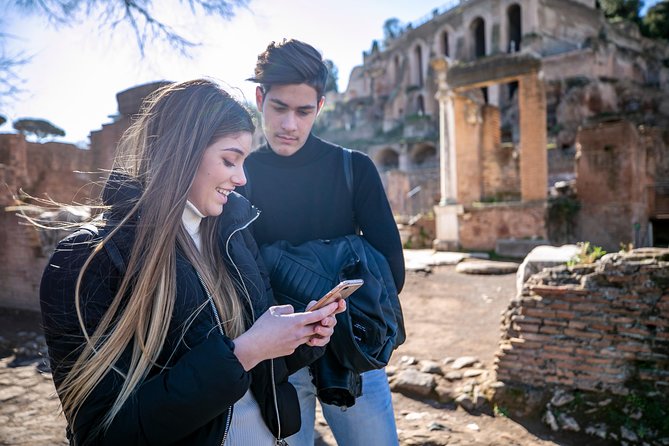
- Skip-the-line timing: fewer delays means more minutes looking at the right spots
- Full inside access at the Colosseum: arena area plus seating levels, not just exterior views
- Palatine Hill storytelling: palaces and gardens explained through leaders, heroines, and tyrants
- Roman Forum sights with context: Senate House, Julius Caesar temple, arches, Vestal Virgins, more
- Private-group feel: only your group participates, with an English-speaking local historian
- Guide flexibility in bad weather: Sarah adjusted when rain hit without turning it into a wasted hour
Starting at Via dei Fori Imperiali: You’re already in the action
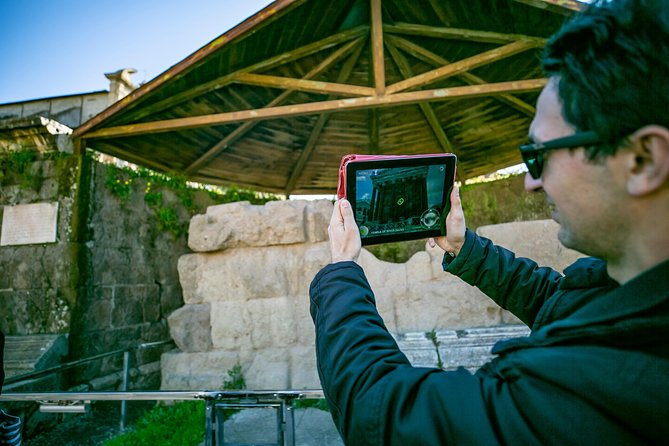
Most Rome tours start far away from where the magic happens. This one starts at Via dei Fori Imperiali, which is exactly where you want to be if your goal is to connect the dots between the Colosseum, the Palatine, and the Roman Forum. Even before the tour begins, the area has that “ancient city spine” feeling—major ruins are close enough that the walk between stops feels logical.
It ends back at the same meeting point. That matters more than you’d think. You don’t have to re-navigate Rome or guess where you’ll pop out. It’s also near public transportation, so you can plan an efficient day around it.
One more thing: because this is a private tour/activity with only your group, the experience feels less like “share the facts and move along” and more like “pause where questions matter.” If you like a guided conversation, that’s a good sign.
You can also read our reviews of more guided tours in Rome

Tickets, timing, and why being punctual affects everything
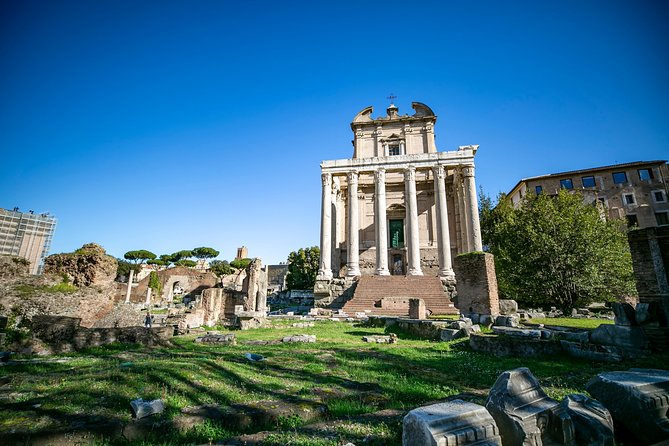
The tour runs about 3 hours and includes tickets for each main site stop. You’re looking at roughly one hour at the Colosseum, one hour on Palatine Hill, and one hour in the Roman Forum, with admission ticket coverage built into the plan.
Here’s the practical catch: entry is time-sensitive. The important note is that if you arrive late you might lose the entrance. That’s not the operator being dramatic—it’s how high-demand venues work. So plan for real-world Rome timing: a metro exit that takes longer than you expect, a last-minute espresso, or a quick wrong turn.
You also need to take the document rules seriously. The Colosseum and Roman Forum require a valid passport or ID document that matches the name provided at booking, and you must present a voucher with all travelers’ full names prior to entry. If any name doesn’t match, entry can be denied. This is easy to avoid—just make sure the names on your booking are exact.
Finally, you get a mobile ticket, which is handy. Still, don’t rely on a weak phone signal at the last second. If your phone battery is low, bring a charger or keep an eye on it.
Inside the Colosseum: arena access plus smart context
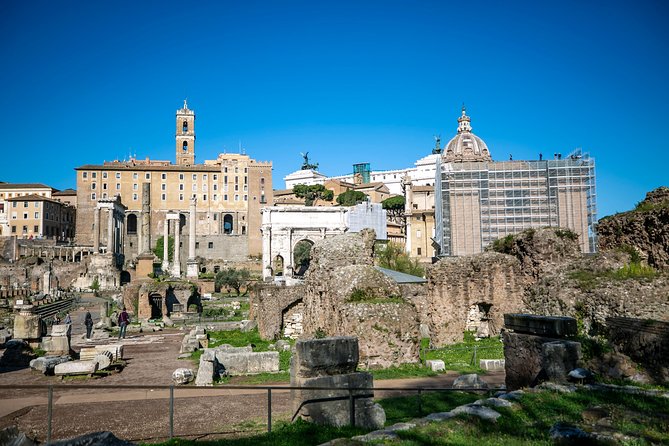
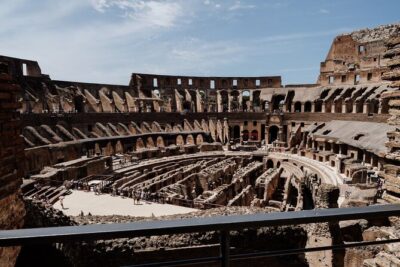
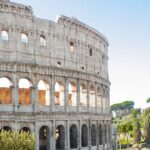
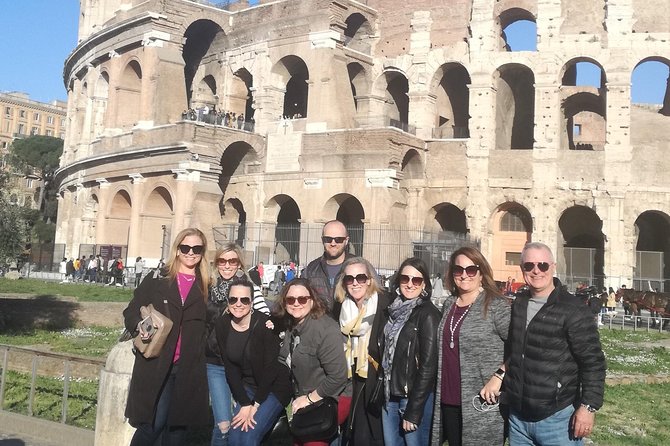
The Colosseum is the obvious headline. What makes this tour practical is what happens once you’re actually inside. You’re taken into the Colosseum itself, including the arena area and views that help you understand the seating levels.
That matters because the Colosseum can feel like a big, confusing bowl if you’re just sightseeing. A good guide turns it into a working machine. You’ll hear about spectators’ past-times, what gladiator combats meant to the crowd, and how spectacles were managed—so the building stops being a monument and becomes a system with people, rules, and expectations.
You also get time to notice details you’d otherwise miss. Think about sight lines, how the space would have felt during events, and why certain parts mattered more than others. With a tight schedule, this is the kind of attention you can’t replicate with a quick self-guided stroll.
This is also where the “skip lines” idea pays off. The Colosseum’s queues can eat your day. Reducing that friction means you’re less rushed once you’re in, and you can spend your energy looking at the right things.
Palatine Hill after the Colosseum: power stories on a smaller scale
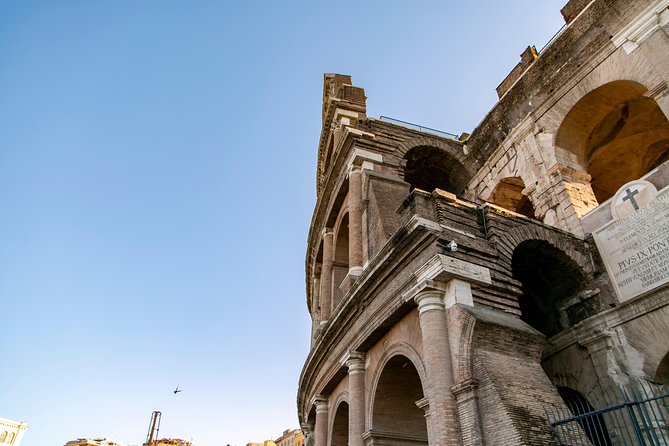
After the Colosseum’s crowd-energy, Palatine Hill feels like Rome switching from spectacle to control. You’ll walk through palaces and gardens while your historian connects the architecture to people—fearless leaders, epic heroines, and infamous tyrants—and explains what the site meant politically and socially.
Why this stop works: Palatine Hill isn’t just another scenic ruin. It’s part of the story of who held power and how that power was displayed. You’re seeing spaces built for status, comfort, and influence, not just stone leftovers.
The one-hour pacing helps too. Palatine Hill can sprawl if you wander freely. With a guide, you get a coherent path so you’re not constantly asking yourself, What am I looking at, and why should I care?
Potential consideration: comfort. Palatine Hill is a walking experience with outdoor sections. Wear comfortable shoes and plan for Rome weather changes. (One of the standout moments from the experience reviews was Sarah handling rain without breaking the flow of information, which is a strong sign the guide adapts rather than vanishes into the first covered corner.)
The Roman Forum: Senate, Caesar, arches, and the stuff of daily politics
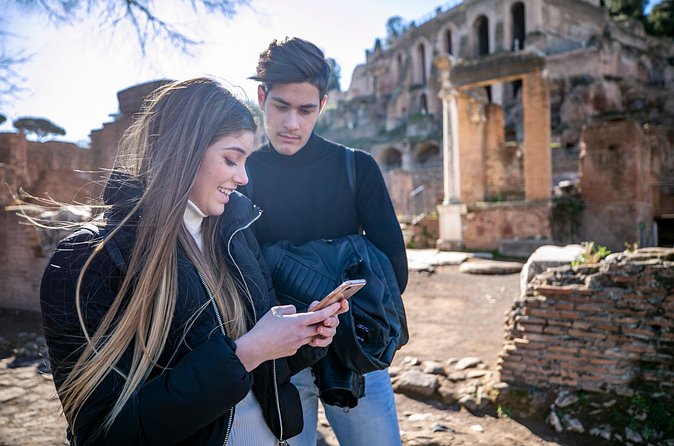
The Roman Forum is where Rome stops being “ancient theater” and starts becoming “ancient government.” You’ll get a detailed visit of the Forum as the main square and assembly location for the Roman population.
The best part is the way the key sites are laid out conceptually. You’ll see major landmarks tied to civic life and ceremony, including:
- the Senate House
- the Temple of Julius Caesar
- triumphal arches
- the House of the Vestal Virgins
- basilicas
- the Golden Mile
- the Temples of Saturn and Concord
- and other religious and political buildings
Without guidance, the Forum can be a puzzle of columns and foundations. With the right story, it becomes a map of how Romans organized public life. You start to understand the mix of religion and politics, the ceremonial rhythm of power, and how the city communicated authority to everyday people.
This stop is also a timing advantage. Since you’ve already seen the Colosseum and Palatine, the Forum hits harder. You’re building a fuller picture of Rome’s world: spectacle, elite residence, then the civic stage where the state ran.

Price and value: what $325.30 covers, and what you still need to plan
At $325.30 per person, this isn’t a budget throwaway. So you should ask: what does the money actually buy?
The tour includes admission tickets and reservation costs. The Colosseum entrance ticket is valued at €18 per person, plus a Colosseum reservation fee valued at €2 per person. Tickets are not the full price by any means, but they confirm you’re not paying mostly for “standing near the gate.” You’re paying for the guide time and the timed access that prevents wasted hours.
What you’re not getting is private transportation. So if you’re coming from another part of town, budget your own transit costs and time. The start point is near public transportation, which helps.
Also consider the format. This is described as a private tour/activity with only your group participating. That kind of attention often justifies the price, especially in places like the Colosseum where timing and logistics matter.
If you’re traveling with others and want a smoother, more guided experience than a large group circuit, this can be good value for your time.
Guide quality matters here: Sarah and Tommaso set the tone
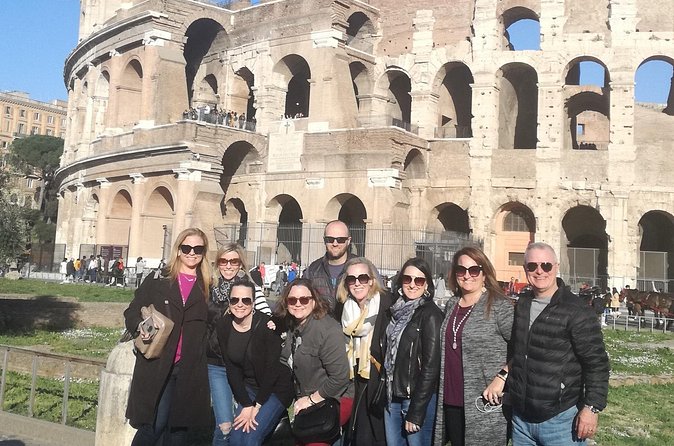
This experience lives or dies by the guide. In the accounts tied to this tour, Sarah stood out for quick thinking when rain hit. She made sure the group stayed as dry as possible while keeping the information moving. That’s not just nice—it’s what you want in Rome, where weather changes fast and ruins don’t close just because you’re soaked.
Tommaso also comes through as a strong communicator. The theme in his guidance is how he brings the Colosseum and Forum to life and keeps the tone friendly and energetic. That matters because you’ll see a lot in three hours. A guide who can explain clearly without turning it into a lecture is the difference between a “cool visit” and a “now I get it” visit.
If you want facts, you’ll get them. If you want perspective, you’ll likely get that too.
How the 3 stops work together (and where the tour might not fit)
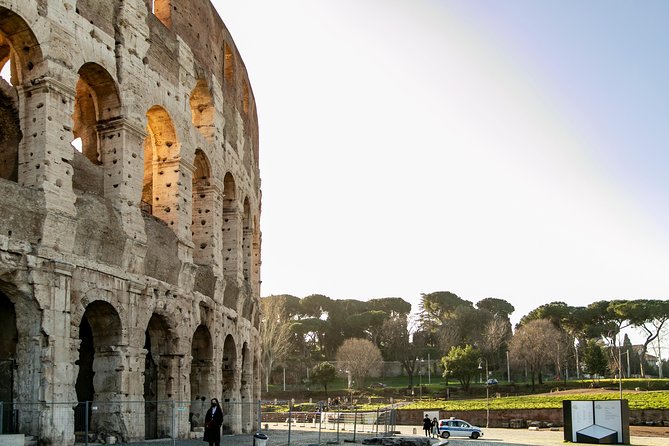
This is a smart sequence. The Colosseum gives you spectacle and crowd mechanics. Palatine Hill shifts you to power and residence. The Roman Forum ties the state together—senate, religious authority, and political spaces you can’t fully grasp without context.
So who should book this tour?
- You want a guided experience with real site access, not a quick exterior tour.
- You like history that explains what you’re physically seeing.
- You prefer a smaller, private-group feel instead of a large herd moving on a schedule.
Where might it be a mismatch?
- If you hate being on a schedule, the timed entry and hour-based stops may feel tight.
- If your travel day is unpredictable and you’re likely to arrive late, the entry risk is real.
- If you’re hoping for lots of free roaming time, this format is more structured than that.
Should you book this Colosseum, Roman Forum & Palatine Hill tour?
I think you should book it if your priority is time-efficient access and clear storytelling in the exact places that define ancient Rome. The combination of Colosseum inside access, Palatine Hill walking context, and a Forum route that hits the big civic and religious anchors makes this a strong “Rome in one sweep” day.
I’d only hesitate if you’re the type who plans poorly on timing or you can’t guarantee document accuracy. This tour demands punctuality and name matching, and it’s not the kind of situation where you can casually shrug off paperwork.
If you can handle that, this is a good way to turn three of Rome’s biggest sites into one coherent story—with a guide who actually keeps the experience moving.
FAQ
Is the tour offered in English?
Yes. The tour is offered in English.
How long is the Colosseum, Roman Forum & Palatine Hill tour?
It’s about 3 hours.
What sites are included in the tour?
You’ll visit the Colosseum, Palatine Hill, and the Roman Forum.
Is the Colosseum ticket included?
Yes. The Colosseum entrance ticket is included, along with a reservation fee.
Do the other stops include admission tickets?
Yes. Admission tickets are included for Palatine Hill and the Roman Forum as part of the tour.
What is the meeting point for the tour?
The tour starts at Via dei Fori Imperiali, Roma RM, Italy.
Is transportation included?
No. Private transportation is not included.
Is this a group tour with many people?
This is a private tour/activity. Only your group will participate.
Do I need to provide names and documents in advance?
Yes. You need to provide the full names of all travelers when booking, and each traveler must present a valid passport or ID document that matches those names.
What happens if I arrive late?
If you arrive late, you might lose the entrance.