REVIEW · ROME
Colosseum Guided Tour: Hotel Transport included
Book on GetYourGuide →Operated by Gray Line I Love Rome · Bookable on GetYourGuide
Roman legends start at the Colosseum gate. I like the hotel transport setup and the licensed guide who keeps the story clear while you move from the Colosseum to the Roman Forum and up to Palatine Hill. You also get a smaller group, so you’re not lost in a sea of shoulders.
The trade-off is time. With just 3 hours, you’ll cover a lot, and the Colosseum visit can feel like a sprint if you’re hoping for a long, wandering look at every corner. Also, pickup only works from select central hotels, so you’ll want to know your exact hotel zone ahead of time.
In This Review
- Key things to know before you go
- Hotel pickup to the Colosseum: the comfort win
- Getting oriented at Colle Oppio Park (before the ruins)
- Entering the Colosseum on levels 1 and 2
- Roman Forum: where the empire ran on ideas
- Palatine Hill panoramas and Rome’s origin story
- Group size, headsets, and guide pace
- Price check: what $123.48 covers (and what it doesn’t)
- What to bring and how to handle security
- Who this tour suits best
- Should you book this Colosseum guided tour with transport?
- FAQ
- How long is the Colosseum guided tour?
- Where is the meeting point if I’m not picked up?
- Is hotel transport included?
- Does the tour include entrance fees?
- Which parts of the Colosseum are included?
- Are headsets provided?
- How many people are in the group?
- Is it wheelchair accessible?
- Do I need an ID?
Key things to know before you go
- Hotel pickup from select central hotels for an easier start (and less hassle in traffic and crowds)
- Headsets included, so you can hear your guide over the noise
- Guided access to the Colosseum’s first and second levels (not the underground or upper/audience areas)
- Limited to 20 participants, which helps the guide keep control of timing and attention
- Roman Forum walking + Palatine Hill views as a matched set, not a rushed checklist
- Colle Oppio Park timing built in before you enter the main sights
Hotel pickup to the Colosseum: the comfort win
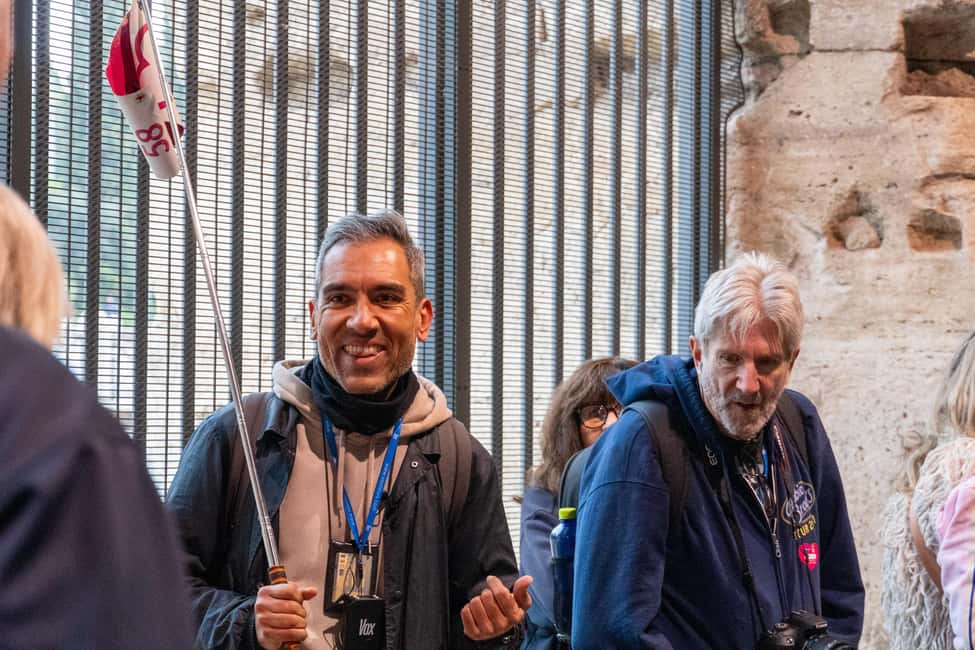
The biggest practical advantage here is that hotel pickup is included from select city-centre accommodations. Rome can be a maze for drop-offs, so being collected and taken to the area near the Colosseum saves real energy.
Your pickup is tied to the tour’s central logistics (including a stop at Municipio I). If your hotel is outside the selected area, pickup won’t happen, and you’ll need to make your own way to the meeting point in Colle Oppio Park. That’s not a deal-breaker, but it’s the kind of detail that matters if you hate last-minute problem-solving.
Also note what’s not included: there is no drop-off service at the end. You should plan your return on your own (public transport, taxi, walking, or whatever fits your day).
You can also read our reviews of more guided tours in Rome



Getting oriented at Colle Oppio Park (before the ruins)
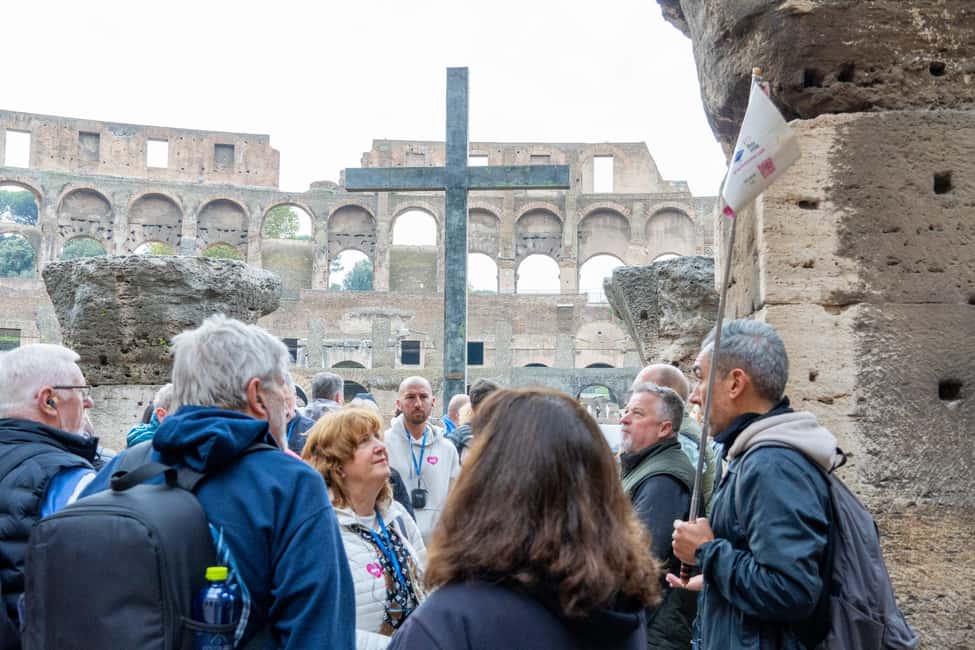
Before the main walking starts, you spend time at Parco del Colle Oppio. Practically, this helps you meet your guide, get sorted with your headset, and settle into the pace of the tour before entering the big-ticket sites.
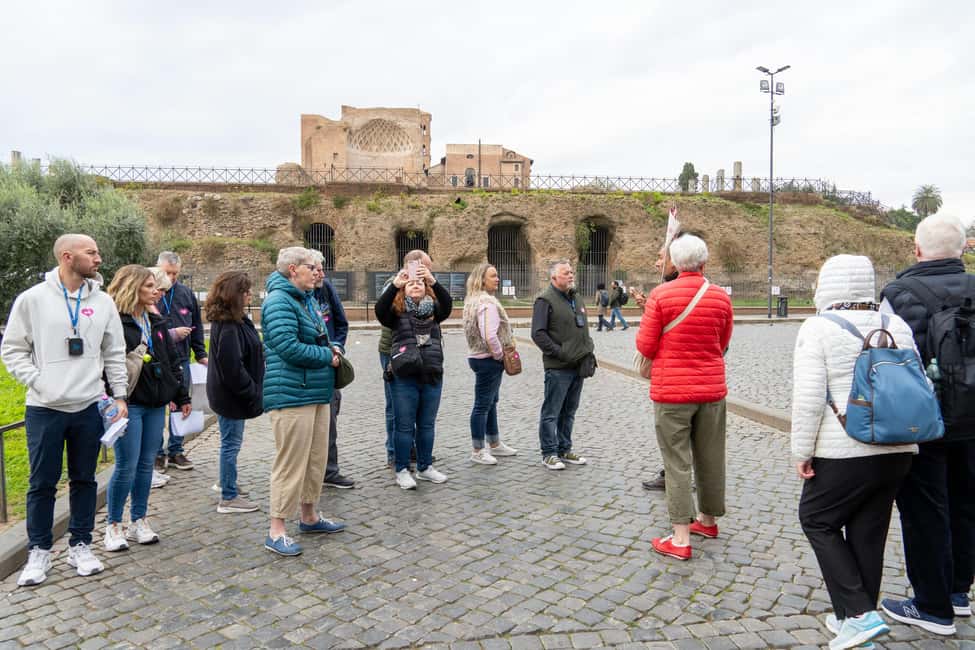
The meeting point is specific: Colle Oppio Park at Via delle Terme di Tito, corner of Via Nicola Salvi, inside the park. You’re instructed to arrive 15 minutes early and look for staff carrying the I Love Rome logo. That early buffer is smart, especially with the security pace in this part of town.
One small tip: wear shoes you can walk in for a while. There’s a decent amount of standing and uphill/uneven-ground movement once you’re out at Palatine Hill.
Entering the Colosseum on levels 1 and 2
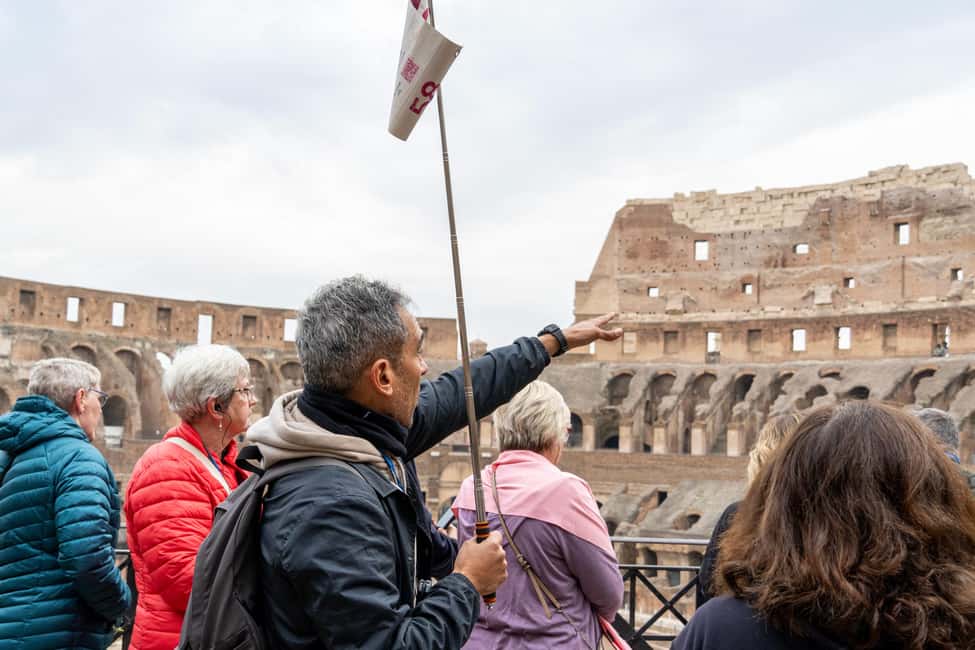
You’ll visit the Colosseum with guided access to the first and second levels. That’s a useful scope: you get the core views most people want, plus enough elevation to understand the structure without paying for the more specialized access options.
Just be aware of what’s excluded. This tour does not include access to the Colosseum underground, the upper levels, or the Arena floor. If you’re the type who wants to see every layer of the building, you’ll need a different option.
Also, skip-the-line is not the same as zero lines. Even when you’re guided, you may still wait at security or within the general entry flow. This is normal here, and it’s one reason the tour’s 3-hour timing can feel tight.
What I like about the way this tour is framed is that it gives you structure: you’re not just wandering the corridors. The guide’s job is to connect what you see—engineering, spectacle, and Roman ambition—so the ruins feel like a place, not just stone.
Roman Forum: where the empire ran on ideas
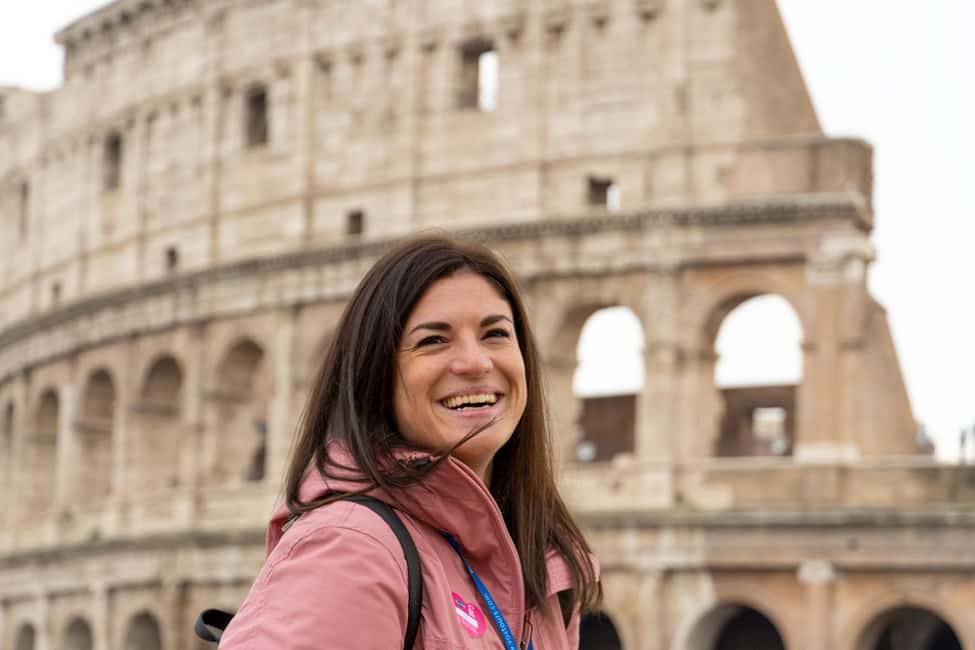
After the Colosseum, you move to the Roman Forum for a guided walk. The Forum is where Rome’s big stories were played out: politics, religion, announcements, and the daily power theatre of an empire that loved public life.
Your guide walks you through the key zones while you listen via individual headsets. That headset detail matters more than people expect. The Forum area can get loud, and without headsets you’d spend part of the tour playing catch-up.
This isn’t a museum-style stop where you stand still. You’re moving through the ruins, and the value comes from the narration matching the geography. Temples, triumphal arches, and political stages can look like rubble until someone explains what you’re looking at and why it mattered.
One more practical note: the Forum walking plus Palatine Hill means moderate fitness helps. You don’t need to be an athlete, but you should expect some steady walking and uneven footing.
Palatine Hill panoramas and Rome’s origin story
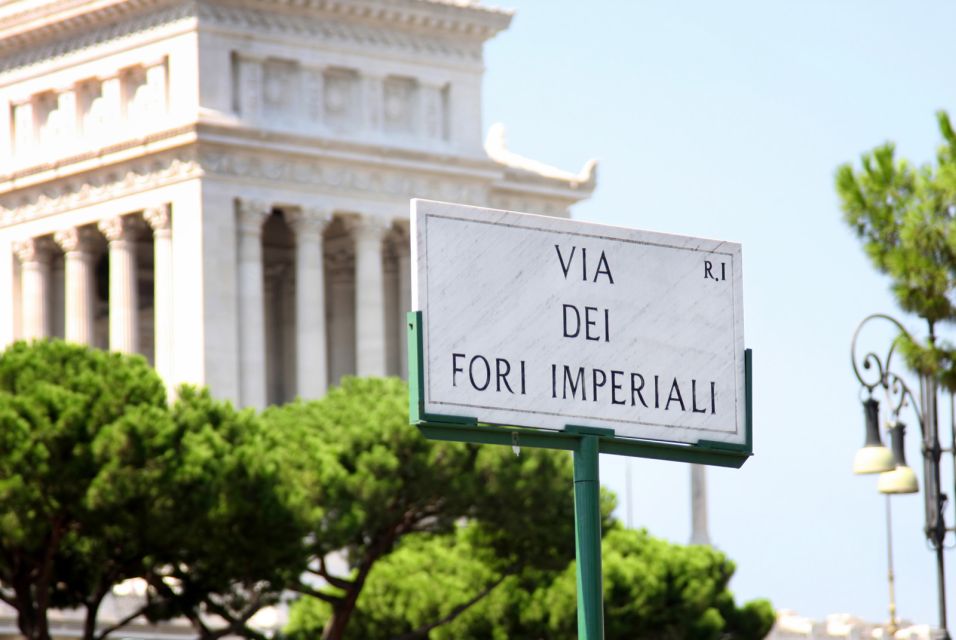
Then you head up to Palatine Hill, the place people associate with the start of Rome’s legend and the feel of “imperial power” up on the heights. The tour highlights the panoramic views, and you’ll understand why once you’re there: Rome spreads out under you, and you can connect the dots between ancient centers and today’s city.
The Palatine visit is a guided experience, not just a photo stop. Your guide’s role is to tie the myths and historical context together with what you can actually see from that vantage point.
If you’re choosing between doing Palatine Hill on your own or with a guide, this is one of the best reasons to pick a guided format. The views are great either way, but a good guide helps you read the hill—what these spaces were meant for and how they fit the bigger Roman story.





Group size, headsets, and guide pace
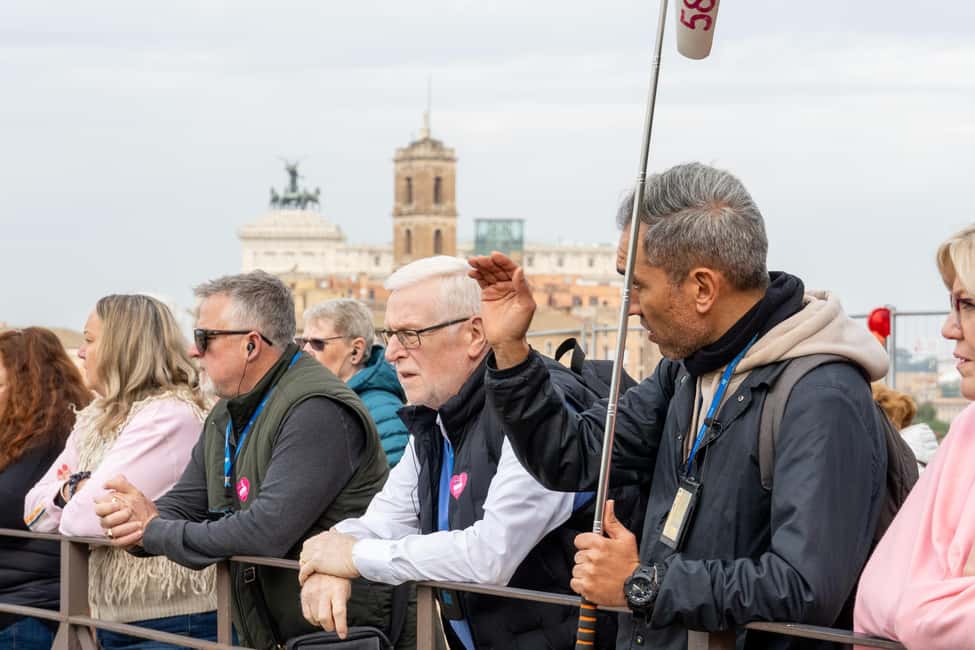
The group is limited to 20 participants, which is a big quality lever. Smaller groups tend to mean better pacing, fewer “wait while someone reappears” moments, and it’s easier for the guide to keep everyone together.
You’ll also have individual headsets, which is included. That’s a strong “value per minute” add-on here. When you’re paying attention to details, hearing your guide clearly keeps you from constantly stepping off-track to look for context.
Now the balanced part: the tour is only 3 hours end to end. That means the guide has to keep momentum. One of the less positive experiences people report is that the pace can feel rushed, especially if your priority is spending extra minutes inside the Colosseum. If you prefer slow travel, you may want to budget extra time for a second visit on a different day.
Price check: what $123.48 covers (and what it doesn’t)
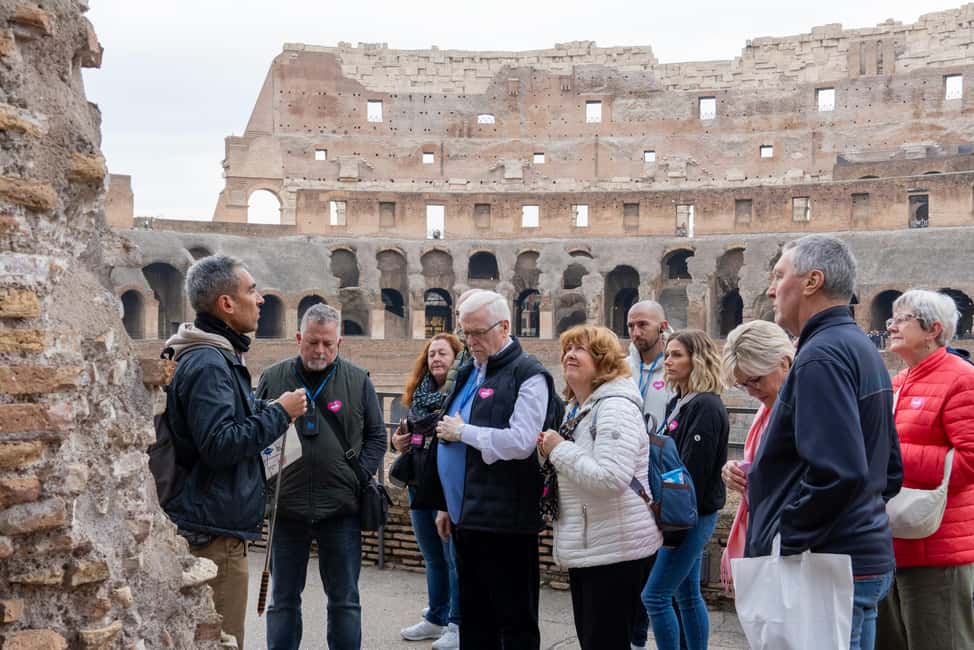
At $123.48 per person, you’re paying for more than a “talking tour.” The included cost items are doing real work for your budget:
- Entrance fees to the Colosseum, Roman Forum, and Palatine Hill
- Guided access to the Colosseum’s first and second levels
- A professional licensed guide throughout
- Headsets for clearer listening
- Hotel pickup from selected central hotels
That bundle is why the price can make sense for many visitors. If you were to buy tickets plus a guided experience separately, you’d likely spend similar money once you add the time savings from pickup and the clarity from headsets.
What you’re not getting: food and beverages, drop-off, and any special access like the underground, upper sections, or Arena floor. So if you’re planning a long day around the site, keep snacks and water in mind outside the tour.
The other value question is time. Three hours is a good “core highlights” window, but it’s not a slow, deep-study format. If your travel style is more about absorption than ticking boxes, plan extra time before or after.
What to bring and how to handle security
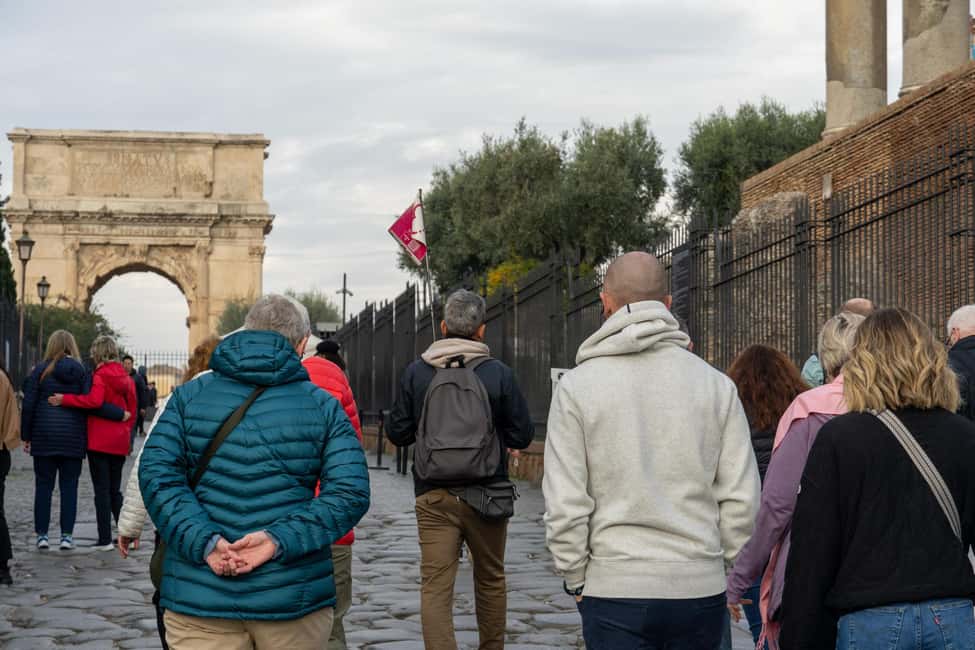
This tour asks you to bring passport or ID card. You’ll need it for entry and screening.
Security can add delays in this area, so don’t build your whole day on the assumption that everything will run instantly. You’re told to expect potential delays due to heightened security, and that’s normal for major Roman sites.
If you have a pacemaker, you’ll need a certificate to bypass screening. If you’re traveling with medications or medical devices, it’s smart to bring documentation even if you’re not sure how it will be handled.
Packing rules are simple: no bulky bags, trolleys, or glass bottles. Also, there’s no cloakroom, so think light.
And for mobility: it’s not wheelchair accessible and may be challenging for people with mobility impairments. It’s also listed as not suitable for people with heart problems. If any of those apply to you, it’s worth choosing a different format.
Who this tour suits best
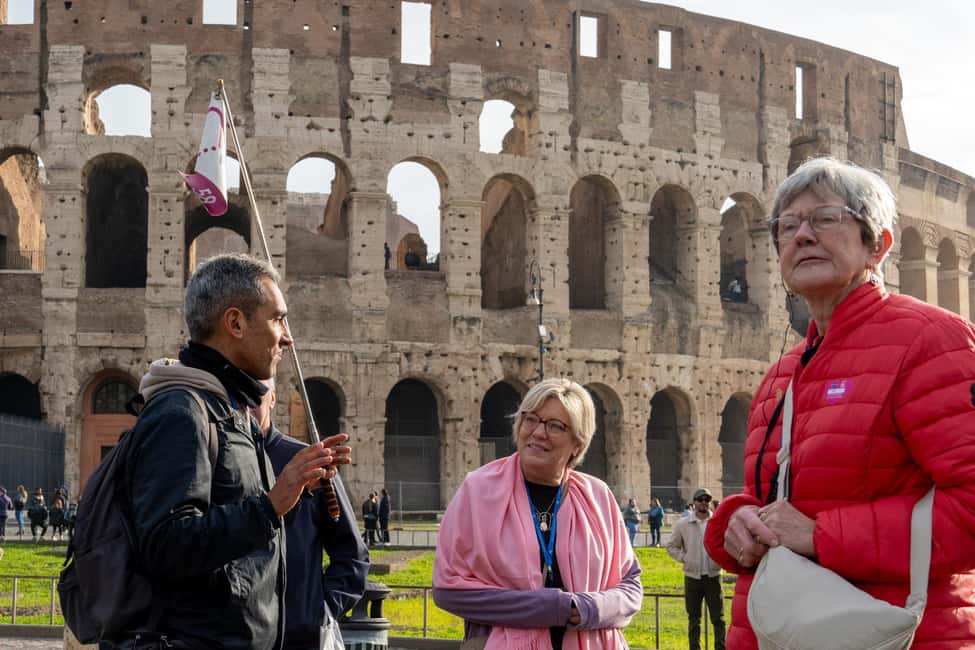
I think this tour fits best if you want:
- a single guided block that covers the Colosseum + Forum + Palatine Hill
- hotel pickup so you can spend your morning using your feet inside the sights, not searching for them
- clear explanations with headsets
- a smaller group pace (up to 20)
It may not fit as well if you:
- want to linger in the Colosseum longer than the tour timing allows
- need wheelchair access or specialized mobility support
- prefer to control the pace completely on your own
Language options are English, Spanish, and Portuguese, so you can match your comfort level.
Should you book this Colosseum guided tour with transport?
Book it if you want the efficient “big three” Roman icons with a guided narrative and hotel pickup from a central location. The inclusion of entrance fees, headsets, and guided access to the first and second levels makes the price easier to justify.
Skip or rethink it if pickup logistics are uncertain for your exact hotel area, or if your style is slow and detail-obsessed. The timing can feel rushed in a 3-hour window, and you’ll want more flexibility than this schedule provides.
If you do book, I’d treat your first task like a good travel habit: confirm whether your hotel is in the pickup area, and be at Colle Oppio Park early just in case you need to start from the meeting point.
FAQ
How long is the Colosseum guided tour?
The tour lasts 3 hours. Starting times vary, so you’ll need to check availability.
Where is the meeting point if I’m not picked up?
The meeting point is Colle Oppio Park, Via delle Terme di Tito (corner of Via Nicola Salvi), inside the park. Arrive 15 minutes before the start and look for staff with the I Love Rome logo.
Is hotel transport included?
Yes. Hotel pickup is included from select centrally located hotels in Rome. Pickup is not available from B&Bs, guesthouses, or apartments, and if your accommodation isn’t served you’ll need to go to the meeting point.
Does the tour include entrance fees?
Yes. Entrance fees are included for the Colosseum, Roman Forum, and Palatine Hill.
Which parts of the Colosseum are included?
The tour includes guided access to the Colosseum’s first and second levels. It does not include access to the Colosseum underground, the upper levels, or the Arena.
Are headsets provided?
Yes. You’ll receive individual headsets so you can hear your guide clearly.
How many people are in the group?
This experience is limited to 20 participants for a more intimate group size.
Is it wheelchair accessible?
No. The tour is listed as not wheelchair accessible and may pose challenges for people with mobility impairments.
Do I need an ID?
Yes. You should bring a passport or ID card on tour day.
If you cancel, is there a refund?
The tour offers free cancellation up to 24 hours in advance for a full refund.