REVIEW · ROME
Colosseum Arena, Palatine Hill & Roman Forum max 6 visitors Tour
Book on Viator →Operated by Italy Wonders SRLS · Bookable on Viator
One place in Rome turns drama into history: the Colosseum. This small-group tour guides you through the Colosseum Arena floor and then connects the story to the Roman Forum and Palatine Hill, without you having to map a route or decode ruins on your own. You also get a licensed expert guide leading the way, which is the difference between seeing buildings and understanding what you’re looking at.
I especially like the semi-private group size capped at 6, which keeps the pace human and makes it easier to ask real questions. I also like that tickets are pre-purchased with your name, so you’re not stuck at the ticket counter. One thing to consider: the tour is tightly timed—arriving late can cost you your Colosseum entrance, and in summer it may run closer to 2 hours instead of 2.5.
Quick hits before you go
- Arena-floor access to areas many standard tours don’t reach
- Small group of up to 6 for smoother pacing and more interaction
- Three sites in one go: Colosseum, Roman Forum, Palatine Hill
- Pre-booked tickets with your name helps you avoid ticket-counter lines
- Licensed guide experience with story-focused explanations (and names like Mircea Marciu, Giulio, Azzurra, Renate, and Dennis show up in past groups)
In This Review
- Colosseum Arena floor access: what makes it worth your time
- The Roman Forum: the daily-life core of ancient Rome
- Palatine Hill: where Roman elites lived (and why it mattered)
- Guide-led storytelling: the difference between facts and meaning
- What the itinerary order really means for your day
- Value for money: what you’re really paying for
- Meeting point, ID, and the timing rules that matter
- Who this tour fits best (and who might want something else)
- Should you book the Colosseum Arena, Palatine Hill & Roman Forum max 6 tour?
- FAQ
- How long is the tour?
- How many people are in the group?
- What language is the tour in?
- Are tickets included, and what sites do they cover?
- Do I need photo ID?
- Where do I meet the tour, and where does it end?
- Will the order of the stops always be the same?
Colosseum Arena floor access: what makes it worth your time
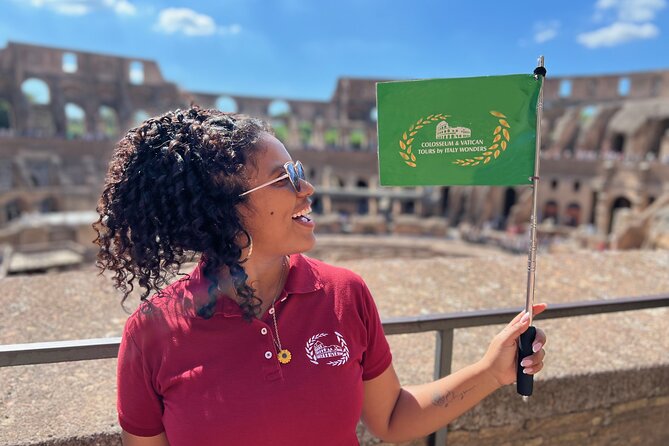
The big headline here is the Colosseum Arena floor. Standing in the central space where events unfolded gives you a different mental picture than viewing the structure only from the outside edges. Even if you’ve seen photos before, being down at the level of the action helps you understand proportions—how high the seating rises, how the architecture funnels movement, and why the Colosseum felt engineered for spectacle.
This tour also promises access to parts of the Colosseum that standard options often skip. That matters because it turns the visit from a checklist into something more like stepping into how the building worked. You’ll get about 1 hour at the Colosseum, led by a licensed guide, which is a good amount of time to slow down without losing momentum for the Forum and Palatine Hill.
One practical note: you’ll still need to be ready with a valid photo ID that matches your booking name. The Colosseum and Roman Forum require this for entry, and the tour is built around pre-purchased tickets—so if your documents don’t match, you’re the one who gets stuck at the end of the line, not the tour operator.
The Roman Forum: the daily-life core of ancient Rome
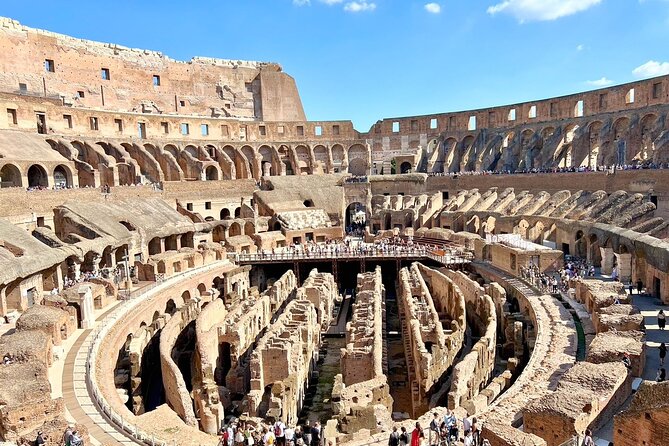
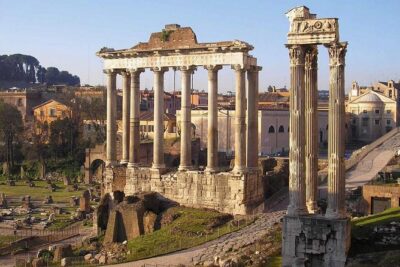
After the Colosseum, the tour shifts from major entertainment to the Roman Forum, described as the heart of everyday Roman life—legal, religious, and legislative affairs all mixed together in the same spaces. That’s the key idea: the Forum wasn’t just a scenic set of ruins. It was where people argued cases, conducted ceremonies, and shaped public life.
You’ll have about 30 minutes here with your guide. That’s not long, but it’s enough if the guide is doing what this tour is designed for: connecting visible stones to what happened in them. If you’ve ever walked the Forum solo and felt like everything blurred together, the guided structure helps you spot patterns—where the center of civic activity likely concentrated and how the Forum’s role fed into Rome’s power.
The value of this stop is that it turns the Colosseum story into a bigger system. Entertainment didn’t exist in a vacuum; it belonged to a city that ran on law, ritual, and political messaging. The Forum is where those everyday mechanics show up.
You can also read our reviews of more tours and experiences in Rome.



Palatine Hill: where Roman elites lived (and why it mattered)
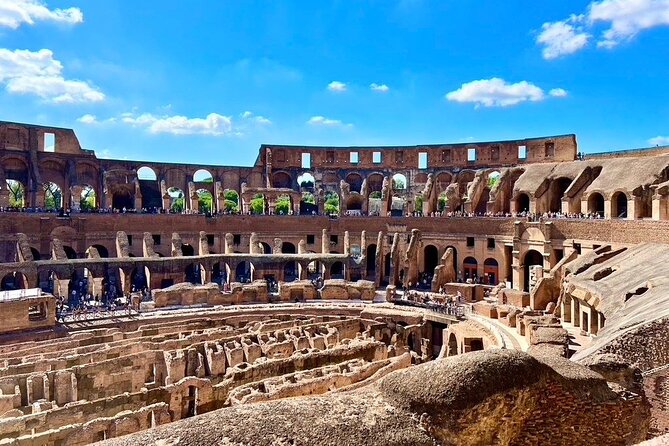
Then it’s on to Palatine Hill, about 30 minutes. This is where Roman nobility chose their homes, and that one detail changes how you read the hill. You’re not looking at random ruins on a skyline—you’re looking at a place tied to status, proximity, and the prestige of being close to Rome’s centers of power.
Palatine Hill is often sold as a view stop. Here, it’s presented as a story stop: as you walk, the guide helps you understand why the nobility picked this spot in the first place. That framing is what makes the time feel efficient. You don’t just look outward over Rome; you connect the vantage and the location to the lifestyle it served.
Because you only get around half an hour, I’d treat this as a focused sampling. You’ll get the main picture, not every last detail. If you love long wandering and want to linger, you might later return on your own to explore more slowly—especially since Palatine is where your instincts as a visitor start to build connections between what you’ve just seen at the Colosseum and what you’re now understanding about elite life.
Guide-led storytelling: the difference between facts and meaning
A strong guide can do two things at once: keep you oriented and explain why the buildings look the way they do. This tour leans hard into that, since the Colosseum portion is led by a licensed expert and the rest of the route is also guided.
In past groups, names like Mircea Marciu, Giulio, Azzurra, Renate, and Dennis have come up with consistently positive feedback about organization, passion, and the ability to keep questions from getting brushed aside. That lines up with what you want in a “three sites in one” format—someone who can maintain pace while still giving you time to absorb.
One practical perk: a few guides bring visual aids (at least some have used folders with pictures to help you imagine how things may have looked). Even if you’re not relying on images, visuals help your brain stop treating ruins as disconnected blocks. Instead, you start seeing structure—where sightlines might have been, how levels relate, and what features were meant to impress.
I’d also keep expectations realistic about audio. In at least one experience, the earphones didn’t work well, which can make it harder to catch every sentence. If you’re sensitive to that, it’s worth coming prepared to manage sound in busy, echoing spaces. At minimum, plan to face the guide when you can.
What the itinerary order really means for your day
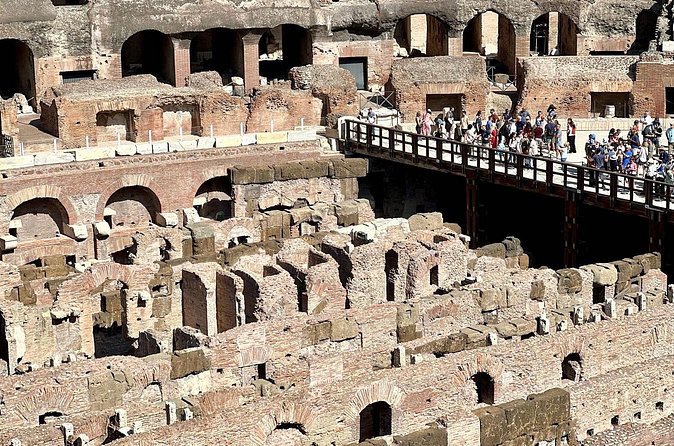
The tour is built as Colosseum first, then the Roman Forum, then Palatine Hill. But there’s an important flexibility detail: the order can change. You might visit the Forum first and then Palatine Hill, depending on timing and Colosseum availability.
That matters because it affects your brain’s “story flow.” Colosseum-first naturally sets up the big spectacle theme, then you pivot into the civic machinery of the Forum, then you end on the homes of elites. If the order flips, you still get the full loop, but you may feel the narrative rhythm shift a bit. Either way, the tour is designed to cover all three.
Also watch the day-length reality. The tour duration is listed at about 2 hours 30 minutes, but in summer it might run closer to 2 hours due to heat. That’s not a deal-breaker, but it does mean you should pack your patience and hydration instincts. The route is compact by design, and heat squeezes schedules.
Value for money: what you’re really paying for
At $120.02 per person, this isn’t a budget stroll. But it’s also not just paying for entry tickets and a wandering guide. Here’s what’s included that justifies the price:
- Colosseum Arena access (ticket value listed at €24 per person)
- Colosseum reservation fee (listed €2 per person)
- Entrance tickets for the Roman Forum and Palatine Hill
- A local guide
- A semi-private group size up to 6
When tickets are bundled like this, the value often comes from time saved. The tour notes that tickets are pre-purchased with your name and last name, and that you won’t stay in line at the ticket counter. In Rome, that matters. A guided schedule with pre-arranged entry reduces the chance your morning gets eaten by lines and confusion.
The remaining cost beyond the ticket and reservation fees covers the guide and the “three sites in one” structure. That’s the part you can’t buy by yourself at the same ease. Yes, you can absolutely learn the sites on your own. But this design is for people who want the sites connected, explained clearly, and handled in a way that keeps you moving without stress.
In other words, I’d think of this as paying for arena access + guided interpretation + reduced friction, not just paying for a place you can technically walk into.






Meeting point, ID, and the timing rules that matter
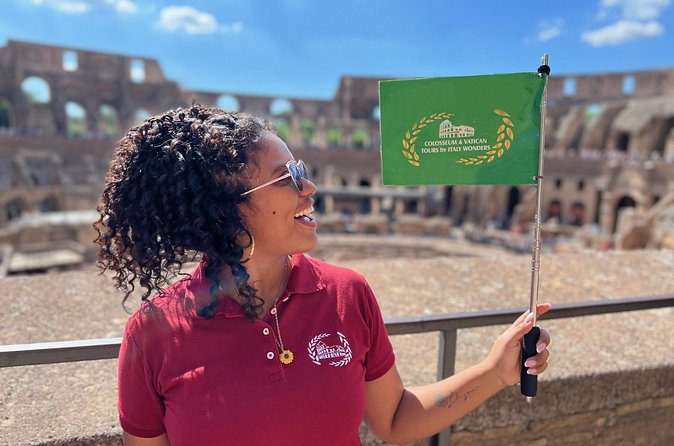
This tour starts at Santi Cosma e Damiano, Via dei Fori Imperiali, 1 (00186 Roma RM, Italy) and ends at Piazza del Colosseo, P.za del Colosseo (00184 Roma RM, Italy). You should plan to arrive at least 15 minutes early for check-in.
The ID rule is not optional: all visitors must present a valid photo ID (passport or equivalent) and the document name must match the name used at booking. Because tickets are pre-purchased with names, if your ID doesn’t match, you may be denied entry by site officials. That’s a big deal for a tour like this, where you’re expected to go straight through.
Also take the lateness warning seriously. If you arrive late, you might lose your entrance at the Colosseum. That’s not meant to be dramatic—it’s simply how tightly timed entry windows work.
Finally, your tour’s internal timing can shift slightly due to Colosseum availability, and the operator may call or text you if the meeting time changes. If you’re traveling with a local SIM plan or roaming, make sure your phone is set up to receive messages.
Who this tour fits best (and who might want something else)
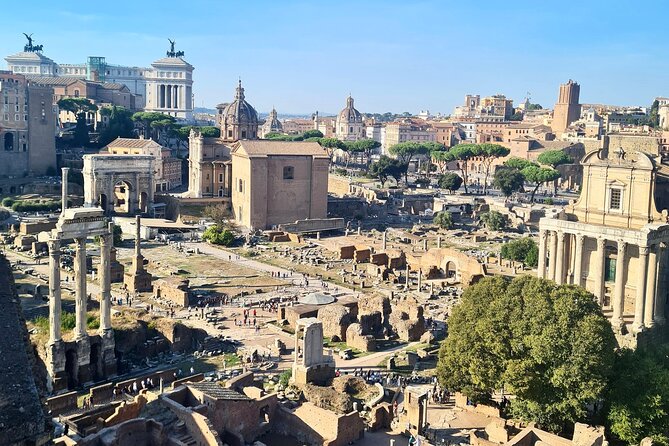
This is a great fit if you want maximum learning per minute without spending your day planning and re-planning. It also suits travelers who appreciate small-group pacing and the ability to ask questions.
It’s also a solid choice for first-time Rome visitors who want a coherent ancient-Rome arc in one morning block: entertainment power (Colosseum), civic power (Forum), and social power (Palatine Hill).
Where I’d hesitate is if you’re the type who hates being on a schedule. The stops are timeboxed—about an hour, then 30 minutes, then 30 minutes—so you’ll have to accept that this tour gives you the big story rather than the slow, wandering version.
And if earphone/audio quality is a dealbreaker for you, keep an eye on that possible issue. A single bad audio experience shouldn’t ruin your day, but it’s worth knowing before you expect everything to sound perfect.
Should you book the Colosseum Arena, Palatine Hill & Roman Forum max 6 tour?
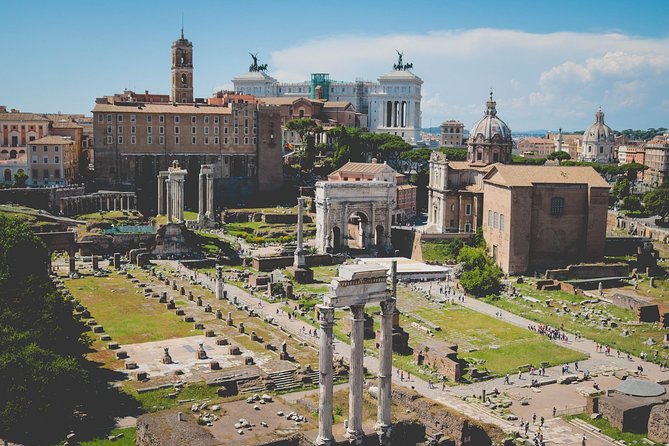
I’d book it if you want arena-floor access and a guide who connects the Colosseum to the Forum and Palatine Hill in a way that makes the ruins feel legible. The small-group size, the pre-arranged tickets, and the focused 2.5-hour format make it especially good value for time-pressed visitors.
Skip it or consider alternatives if you’re very sensitive to tight timing, if you know you might arrive late, or if heat can quickly drain your stamina. In summer, the tour may shorten to around 2 hours, so plan your day with that in mind.
If you’re going to spend money for one “important” ancient-Rome experience, this is the kind of tour that turns the Colosseum from an impressive photo into a real understanding of how Rome staged power and daily life—one guided step at a time.
FAQ
How long is the tour?
It runs for about 2 hours 30 minutes. In summer, it might last closer to 2 hours due to heat.
How many people are in the group?
The tour is designed for a maximum of 6 travelers per guide, though occasionally one or two additional guests may be included to keep families or friends together.
What language is the tour in?
The tour is offered in English.
Are tickets included, and what sites do they cover?
Yes. Admission tickets are included for the Colosseum (with arena access), the Roman Forum, and Palatine Hill.
Do I need photo ID?
Yes. You must present valid photo ID (passport or equivalent) that matches the name used at booking for successful entry to the Colosseum and Roman Forum.
Where do I meet the tour, and where does it end?
Meet at Santi Cosma e Damiano, Via dei Fori Imperiali, 1, 00186 Roma RM. The tour ends at Piazza del Colosseo, P.za del Colosseo, 00184 Roma RM.
Will the order of the stops always be the same?
Not always. The order can change, and it’s possible the tour visits the Roman Forum first and then Palatine Hill.