REVIEW · ROME
Caravaggio Rome Tour: With Exclusive Access to Top Restoration Lab
Book on Viator →Operated by RomaExperience Tours · Bookable on Viator
Caravaggio feels different when you see it being repaired. This Rome tour takes you from Caravaggio’s churches to an exclusive restoration lab where an all-female team worked on multiple masterpieces, including a newly restored Madonna of Loreto. Two things I really like: you get close to the paintings in their real church settings, and you finish with a complimentary aperitif where artisans explain the nuts and bolts of art conservation.
The one thing to keep in mind is the price. At $1,241.53 per person, it’s a premium outing, and there’s no hotel pickup—so you’ll want to plan how you’ll get to the start point near Piazza di Sant’Agostino.
In This Review
- Key highlights worth planning for
- Caravaggio Rome, Up Close: Why Restoration Changes Everything
- Meeting Point, Timing, and How to Make the 4:00 pm Start Work
- Basilica S. Agostino: St Mary of the Pilgrims and the Power of a Fixed Gaze
- Church of St. Louis of the French: St Matthew’s Story in Full Dramatic Motion
- Roma Experience Tours Restoration Lab: Where the “How” Becomes the Show
- The Aperitif Workshop Finish: Listening to Art in Human Terms
- Where the Pantheon Fits Into This Route
- Price and Value: Is $1,241.53 Worth It?
- Who This Tour Suits Best (and Who Might Prefer Something Else)
- Should You Book This Caravaggio Rome Restoration-Lab Tour?
- FAQ
- What’s the approximate duration of the tour?
- What time does the tour start?
- Where does the tour meet and end?
- Is hotel pickup included?
- What’s included in the price?
- Is this a private tour?
- Are children allowed?
- How does confirmation work after booking?
- Can I change or cancel after booking?
Key highlights worth planning for
- Exclusive restoration-lab access with hands-on, behind-the-scenes viewing of how paintings are saved
- Caravaggio in multiple churches so you see how his style hits in different spaces and lighting
- Meet master restorers and learn the tricky decisions behind cleaning, stabilizing, and preserving
- The newly restored Madonna of Loreto is part of what the lab team helped bring forward
- Aperitif with the artisans so the science and craftsmanship turn into an easy conversation
- A small, private-group format with your group only, and a start time set for a 4:00 pm rhythm
Caravaggio Rome, Up Close: Why Restoration Changes Everything
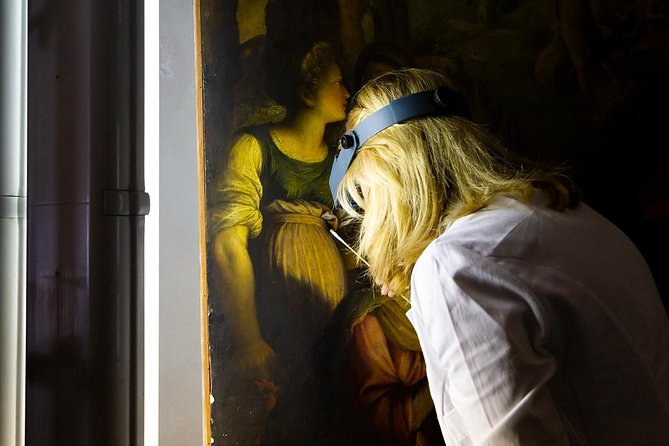
Caravaggio is famous for drama—dark shadows, bright faces, and that sharp, human look that grabs you from across a church. But the restoration part is what makes this tour feel truly practical. When you see conservators at work, you start noticing how much skill goes into keeping those effects intact.
I love how this tour frames Caravaggio not as a distant “old master,” but as something fragile and real. Paintings are materials: pigments, varnishes, canvas, and time. A good restoration doesn’t just fix damage—it protects what makes the work work in the first place. That’s why visiting the restoration lab after you’ve already seen the paintings in churches hits harder than it would the other way around.
One more thing: your guide may bring extra clarity. In one set of experiences connected with this tour, Susanna was specifically noted for clear English explanations. Even if your guide is someone else, you should expect an informed walkthrough that connects technique to what you’re seeing on the walls.
You can also read our reviews of more tours and experiences in Rome.



Meeting Point, Timing, and How to Make the 4:00 pm Start Work
The tour starts at Piazza di Sant’Agostino (00186 Rome), with a 4:00 pm start time. It’s near public transportation, which matters because there’s no hotel pickup. If you’re trying to save time, pick a route that gets you there without fuss—this tour’s rhythm is built around getting into churches and then transitioning to the workshop.
You’ll likely feel the schedule is “tight but not rushed.” The walking and entry times are set up so you can actually look. Two stops are timed at 45 minutes each, then the lab visit runs about 1 hour 30 minutes. That pacing gives you time to read details, not just pose for photos and move on.
If you’re traveling with limited mobility, note that the information provided says most travelers can participate. Still, you should expect you’ll be on your feet through churches and the workshop visit. The upside is that the group format is private—so it’s easier for your guide to slow things down when needed.
Basilica S. Agostino: St Mary of the Pilgrims and the Power of a Fixed Gaze
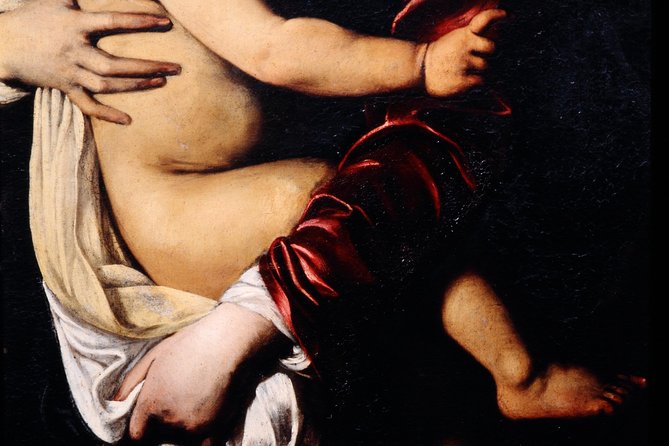
Your first stop is Basilica S. Agostino for about 45 minutes. This is where you stand before Caravaggio’s St Mary of the pilgrims, a painting that’s described as both especially loved by Romans and especially admired by visitors. That love makes sense once you’re there: Caravaggio’s figures aren’t decorative. They’re present, like someone you could meet in the next pew.
What I’d pay attention to here is the “face-to-face” effect. Caravaggio often uses lighting like a spotlight, and when you’re standing in the church space, you start reading emotion first—then the brushwork. Even if you’ve seen reproductions before, you can’t replicate the scale and the way the paint sits in real light.
Importantly, this stop includes admission ticket access. And the bigger payoff is the follow-through: this painting is connected to the restoration lab you’ll visit at the end of the tour. So when you notice certain passages later—say, the way skin tones look more coherent or how contrast feels controlled—it won’t feel like guesswork. You’ll connect it to what the conservators actually worked on.
A small consideration: churches can vary in how comfortable it is to linger. Plan to stand, look, and let the guide direct your attention. If you want a slow, café-style art viewing experience, this isn’t that kind of tour. It’s structured and focused.
Church of St. Louis of the French: St Matthew’s Story in Full Dramatic Motion
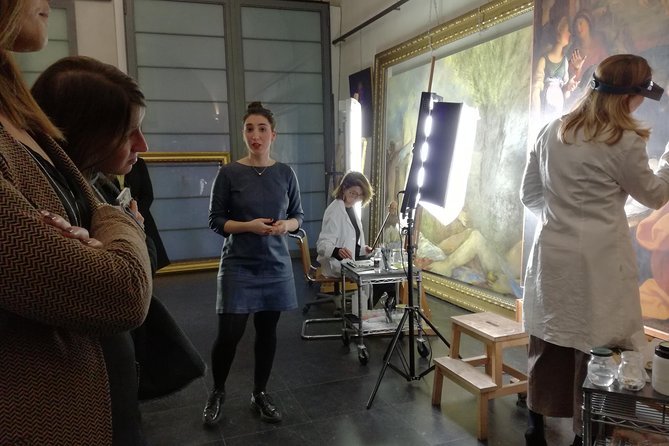
Next you head to the Church of St. Louis of the French for another 45 minutes, with admission included. This stop is about Caravaggio’s sequence from the life of St. Matthew—works where age, youth, poetry, and pity are meant to feel like they’re moving together.
Even if you’ve only heard “Caravaggio’s drama” as a phrase, you’ll understand it here. The paintings are set up to be read emotionally. You’ll likely find yourself tracking gestures—hands, shoulders, faces—because Caravaggio paints people like they’re mid-decision. It’s not a freeze-frame. It’s more like a scene you can sense still happening.
Here’s how to get more value from your limited time: don’t try to see everything at once. Pick one character and follow what the painting is trying to make you feel. Then let your guide show you what to look for in the technique. When your guide points out details, the time moves faster and your attention gets sharper.
The main drawback at this kind of church stop is timing. Forty-five minutes is enough for meaningful looking if you don’t constantly reposition. If you’re the type who needs lots of walking around for every view, you might feel constrained. The tradeoff is that the tour structure keeps you focused on the key works.
Roma Experience Tours Restoration Lab: Where the “How” Becomes the Show
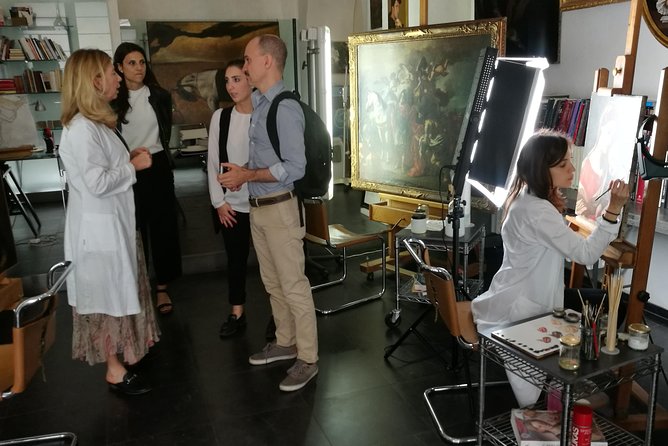
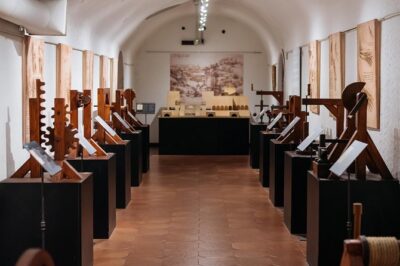
The heart of the tour is the Roma Experience Tours restoration lab visit, timed at about 1 hour 30 minutes. This is where you get VIP access and meet the master artisan/scientists who restored three Caravaggio paintings.
This is the part I’d call the big differentiator. Most art tours take you to finished masterpieces. This one takes you to the transformation process. Conservation is slow work. It often means careful decisions about cleaning, stabilizing, and reversibility—choices you can’t guess just by staring at a painting.
You’re also told the restoration team is all-female, and that detail matters in a practical way: it changes the feel of the room. This isn’t a dusty backroom. It’s a working studio where you’re learning from people doing the job every day. You’ll likely hear explanations of what makes restoration “tricky business,” not in a dramatic way, but in a technical one: materials behave differently, and what looks good today has to remain stable in the future.
And yes, one of the key paintings mentioned in the restoration narrative is the newly restored Madonna of Loreto. That’s important for you because it gives the lab time a storyline: you’re not only learning general conservation. You’re seeing conservation connected to specific Caravaggio works.
What you should do beforehand (if you’re the prep type): read a little about Caravaggio’s reputation for realism and dramatic light. Then, when the conservators explain their methods, you’ll be able to connect technique to why the paintings look the way they do.





The Aperitif Workshop Finish: Listening to Art in Human Terms
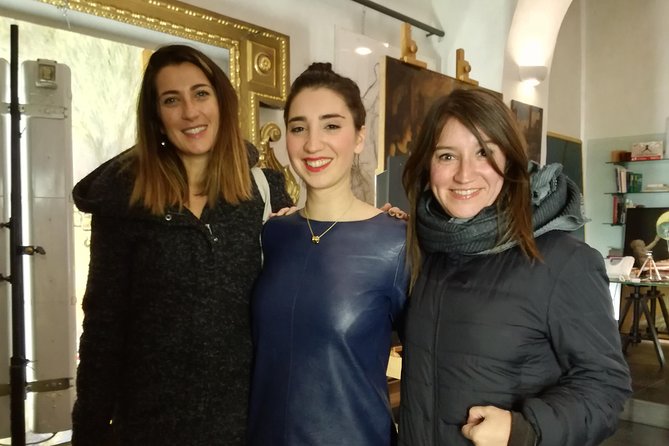
The tour ends with a relaxed aperitif with the artisans. This is included, and it’s not just a nice add-on. It turns the experience from a lecture into a real conversation.
After seeing churches and then watching restoration work, it’s easy to feel overloaded by “information.” The aperitif gives your brain a breather. More importantly, you get the chance to ask questions that don’t fit in a formal guided timeline. If you’re the type who wonders why a certain spot is handled one way and not another, this is where you can ask.
A bonus here is the tour format: it’s described as private, with only your group participating. That generally makes questions easier, because you’re not trying to get heard in a crowd.
One practical note: because the aperitif is part of the timed experience, don’t plan a strict, late reservation right after. Give yourself a little buffer.
Where the Pantheon Fits Into This Route
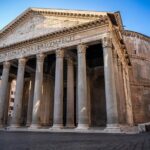
The tour information also mentions The Pantheon as part of the experience. It’s described as the world’s best-preserved Roman Temple, a unique monument then and now.
What that means for you is simple: you’re not only doing art in churches and a studio. You’re also getting a major Roman “anchor” on the route. The Pantheon is one of those places where your brain automatically switches modes. You stop thinking about brushwork and start noticing geometry, light, and materials.
The only real consideration is time and pacing. Because the main time blocks already cover two church stops plus the restoration lab, expect the Pantheon component to be shorter or more flexible than a standalone Pantheon tour. If you specifically want deep Pantheon commentary, you may need to pair this with extra sightseeing later.
Price and Value: Is $1,241.53 Worth It?
Let’s talk money, without pretending this is cheap. At $1,241.53 per person, this is firmly in premium territory. So the value question isn’t just “is it a good tour?” It’s “does it give you access you can’t get on your own?”
Here’s where the math starts making sense. Your ticket is positioned to include:
- Exclusive, behind-the-scenes access to a top restoration lab
- A full guided tour
- Admission ticket access for the first church stop and the second church stop
- A complimentary aperitif with the artisans
You also get a mobile ticket, and there are mentions of group discounts. But the private-group setup matters most: your experience isn’t diluted by strangers.
If you’re a casual art fan, the price will feel steep because you’re paying for access and interpretation, not just sightseeing. If you’re an art lover who cares how things are made and maintained, this is different. Restoration access is rare. Seeing Caravaggio’s works discussed alongside the lab’s methods is the kind of experience that makes your brain store the trip in a deeper way.
A reasonable rule of thumb: if you can see yourself spending an hour watching careful work—tools, surfaces, materials—this price is more justifiable. If you mainly want big-name monuments with low effort, you might prefer a more standard Rome highlights plan.
Who This Tour Suits Best (and Who Might Prefer Something Else)
This tour is built for people who like to understand the art, not just photograph it. You’ll enjoy it most if you:
- Love Caravaggio and want more than poster-level knowledge
- Are curious about conservation, restoration, and the science behind it
- Want a structured route through churches that actually centers on specific works
- Value a calm, high-touch experience with a private group and a conversation-friendly finish
You might reconsider if:
- You’re strongly price-sensitive
- You dislike walking through churches and studios on a timed schedule
- You prefer self-guided Rome exploring rather than a fixed plan
Also, this is a group experience with your group only, so it’s a great fit for couples or small groups who want a specialist angle.
Should You Book This Caravaggio Rome Restoration-Lab Tour?
If your dream trip includes Caravaggio plus the behind-the-scenes side of how paintings survive, I’d say this tour is an easy yes. The best part isn’t just seeing famous works—it’s connecting the paintings in Basilica S. Agostino and St. Louis of the French to what the conservators actually did in the restoration lab. That storyline gives you a stronger, more lasting understanding than a classic church-to-church sprint.
If you’re on the fence because of the price, do this quick test: ask yourself whether you’d pay extra to watch careful restoration work and talk technique with artisans. If the answer is yes, book it. If the answer is “maybe I’d rather spend that money on more sightseeing,” then you may be happier with a less specialized tour and free time afterward.
Either way, plan to arrive ready to look closely and ask questions—this experience rewards that mindset.
FAQ
What’s the approximate duration of the tour?
The tour is listed at about 2 hours 30 minutes.
What time does the tour start?
The start time is 4:00 pm.
Where does the tour meet and end?
It starts at Piazza di Sant’Agostino, 00186 Rome, and ends at Piazza del Gesù, 00186 Rome.
Is hotel pickup included?
No. Hotel pickup and return are not included.
What’s included in the price?
The tour includes a full tour with an expert guide, exclusive behind-the-scenes access to a restoration lab, and a complimentary aperitif. Admission ticket access is included for the first two church stops.
Is this a private tour?
Yes. It’s described as private, with only your group participating.
Are children allowed?
Children must be accompanied by an adult.
How does confirmation work after booking?
You receive confirmation at the time of booking. The tour also uses a mobile ticket.
Can I change or cancel after booking?
This experience is non-refundable and cannot be changed for any reason.