REVIEW · ROME
Between Catacombs and ancient Quarries in Rome
Book on GetYourGuide →Operated by Sotterranei di Roma · Bookable on GetYourGuide
Rome’s real story is underground.
This small-group visit takes you into the city under the city, starting in the Appian Way area and moving into long stretches of ancient underground workspaces and passages. Two things I liked right away: you get the full explorer setup—headlamp and helmet—and you’re not just watching history; you’re seeing how people lived and labored down there.
I also really enjoyed how the guide brings the place to life. On my visit, Giuseppe stood out for story-telling that stays clear (even when the details get technical), and the tour includes hands-on moments like touching and lighting a Roman lamp. That mix of practical info and real atmosphere is what makes this feel different from standard museum tours.
One note to keep in mind: this isn’t for everyone. You’ll walk about 2 kilometers and you’ll be in close, dark underground spaces, so it’s not recommended for claustrophobia or for people with mobility limitations.
In This Review
- Key things to know before you go
- Stepping into Rome’s underground world (and why it feels special)
- Meeting at Cancelliere and getting your bearings
- The Caffarella Park walk: a smoother start than you’d expect
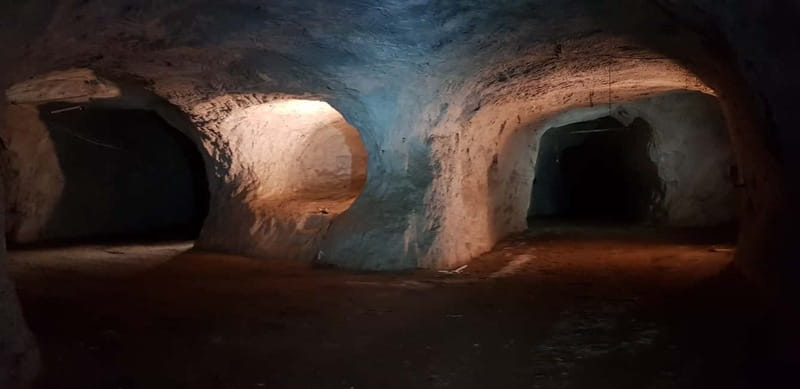
- Entering Il Labirinto di Roma: helmets, headlamps, and real underground scale
- Roman quarries: where the city’s building materials came from
- Catacombs and the Roman-lamp moment
- Underground mushroom cultivation: the later chapter you didn’t expect
- The Mithraeum: a forgotten worship space tied to early Christianity
- Roman wine at the end: a calm landing after helmets and darkness
- Price and value: what $113.29 really buys you
- Who this tour suits best (and who should skip it)
- If you’re planning your Rome days around it
- Should you book Between Catacombs and Ancient Quarries?
- FAQ
- How long is the experience?
- What is included in the price?
- Where do you meet the guide?
- Is this tour available in languages other than English?
- Is it suitable for people with claustrophobia or limited mobility?
- Can I get a refund if my plans change?
Key things to know before you go
- You’re kitted out like an explorer with a headlamp and helmet for the underground sections
- Caffarella Park and the Appian Way setting set the tone before you enter the tunnels
- Ancient quarries under Rome stretch for miles and connect to the working life below
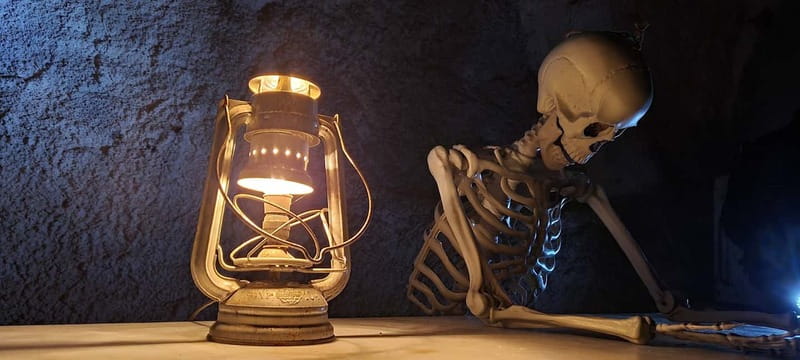
- Catacombs with a Roman-lamp moment where you can actually see how light worked
- Underground mushroom cultivation adds a later chapter to the underground story
- Mithraeum + Roman wine at the end turns the underground walk into a full experience
Stepping into Rome’s underground world (and why it feels special)
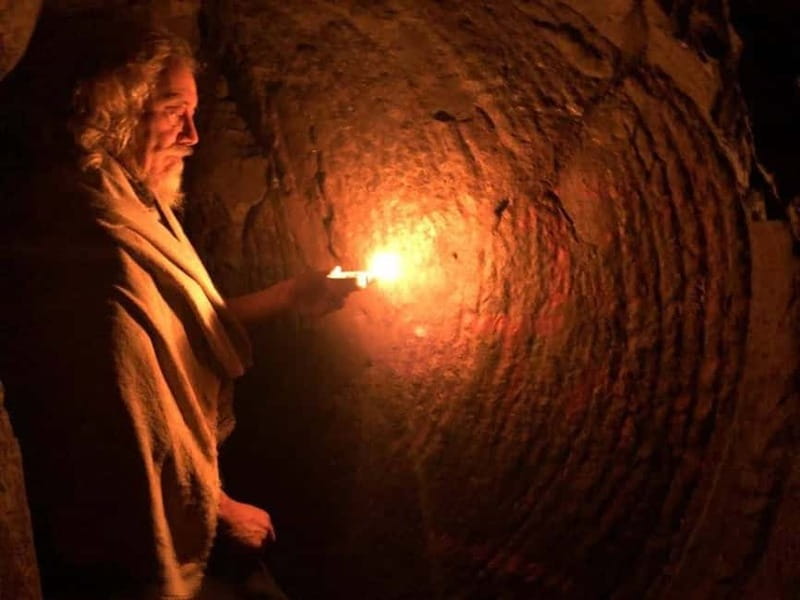
Rome is famous for crowds, lines, and polished stone. This experience flips the script. Instead of standing above ground and guessing what life looked like, you move through a working underground network where the setting does the teaching.
You’ll follow the path from the Appian Way park into the “labyrinth” underground. The route focuses on the people who shaped this space—slaves and laborers—and how later communities repurposed those tunnels. That angle matters because it turns the underground from scary mystery into a human story: hands working, lives lived, and spaces reused over centuries.
The guide sets expectations early and keeps things moving at a steady pace. And because the group is limited to 10 participants, you’re less likely to feel like you’re getting lost inside a conga line of strangers.
You can also read our reviews of more tours and experiences in Rome.



Meeting at Cancelliere and getting your bearings
You start at Via Amedeo Crivellucci, 8. The meeting point is outside the bar coffee called Cancelliere, where your guide waits for you.
If you’re the kind of traveler who likes to arrive calmly, do yourself a favor and get there a few minutes early. This tour doesn’t include hotel pickup, so you’ll want to plan your walk or short ride to the meeting area and then start on time.
Once the group gathers, you’ll head to Caffarella Park, where there’s a walk of about 25 minutes before you reach the underground part. That means you’ll be able to adjust to the pace, meet your small group, and get in the right mindset before helmets go on.
The Caffarella Park walk: a smoother start than you’d expect
That 25-minute stroll isn’t just filler. It gives you a transition from Rome’s daylight noise to the quiet focus of the underground. You also get a chance to check your shoes, tighten straps, and make sure you’re comfortable before you enter darker, tighter sections.
It’s a good setup if you like guided context. You’re not just handed headlamps and told to go. You get a sense of why you’re there—because the underground access is tied to this part of Rome’s landscape and the Appian Way setting.
What to watch: you’ll be on your feet for the day’s total walking time. The tour notes you’ll walk around 2 kilometers (more or less), so comfortable shoes are not optional.
Entering Il Labirinto di Roma: helmets, headlamps, and real underground scale
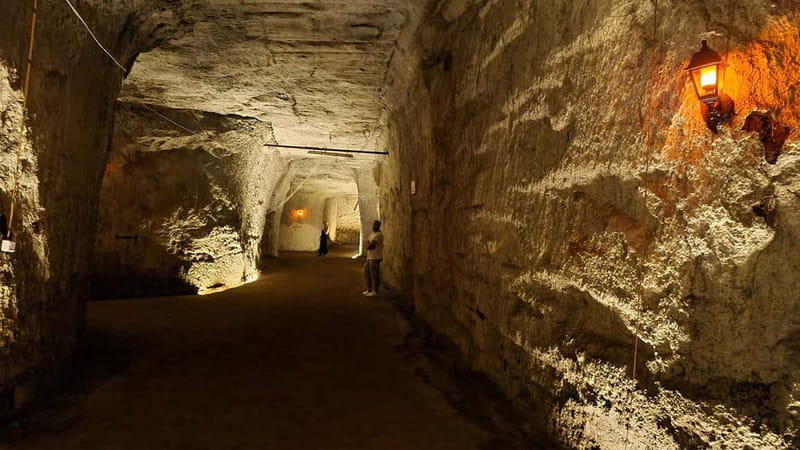
When you finally reach Il Labirinto di Roma, the “wow” hits fast. The tour describes it as the largest underground in Rome that you can visit, and it absolutely feels like it.
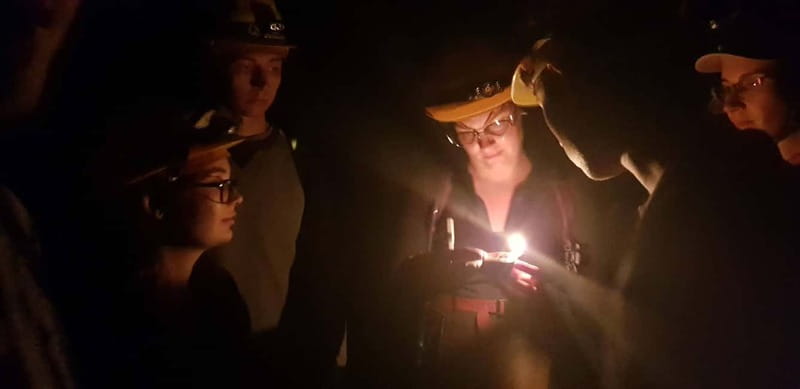
You’ll be treated like part of the exploration team. You’ll get headlights and a helmet, then follow the guide into passages that were carved out over a long time. The tour style is practical and visual: the guide points out how spaces were excavated and used, and you move at a pace that helps you actually understand what you’re seeing.
This part matters because it reframes what an underground site usually means. Instead of only “tombs” or only “ruins,” you see a network tied to building materials, labor, and how a city expands downward as it grows.
And yes, there’s a bit of theatrical fun in it—being told you’ll try for a day to be an explorer is not just marketing. It’s how the experience is staged, so you feel engaged rather than passive.
Roman quarries: where the city’s building materials came from
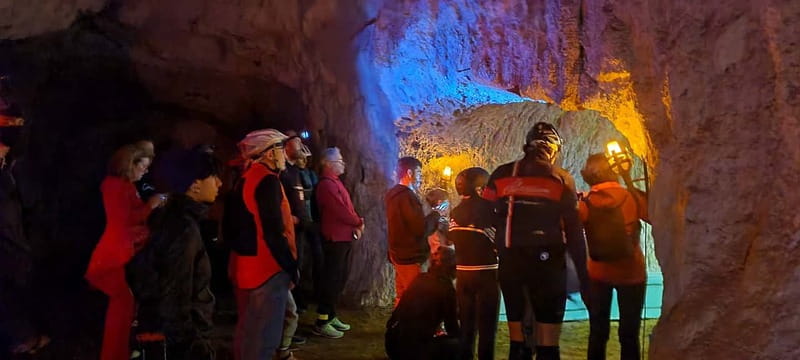
One of the best parts is the quarry chapter. The experience is centered on a Roman quarry system that extends underground for over 5 miles.
That detail changes how you think about ancient Rome. It’s not just the Colosseum and big monuments that required resources; this tour shows you where the material came from and what that kind of work implies for the people doing it.
You’ll get explanations about excavations and the underground realities of a thousand-year-old city. The guide’s goal here isn’t to overwhelm you with names and dates. It’s to give you a feel for the labor involved—how digging created the space you’re now walking through.
Potential drawback in this section: because it’s underground and you’ll be moving with a helmet on, you need to be comfortable with darker areas and uneven footing. The tour is doable for many people, but it’s not a gentle stroll.






Catacombs and the Roman-lamp moment
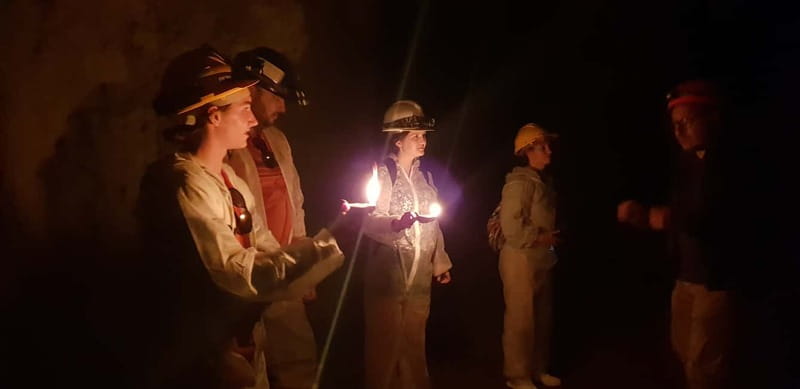
If you’re curious about how darkness worked before electricity, this stop delivers. You’ll visit catacombs that date back thousands of years, and you’ll experience what the light was like using a Roman lamp.
The tour includes a hands-on moment: you’ll be able to touch a Roman lamp and light it so you can see how ancients went through the catacomb world. That’s the kind of practical detail that stays with you, because you can’t fake it. One lamp can teach you more about atmosphere than a hundred photos.
This is also where the small group matters again. In a crowded setting, it’s hard to focus on a lighting moment. Here, you can actually look, pause, and notice how the space responds to light.
Underground mushroom cultivation: the later chapter you didn’t expect
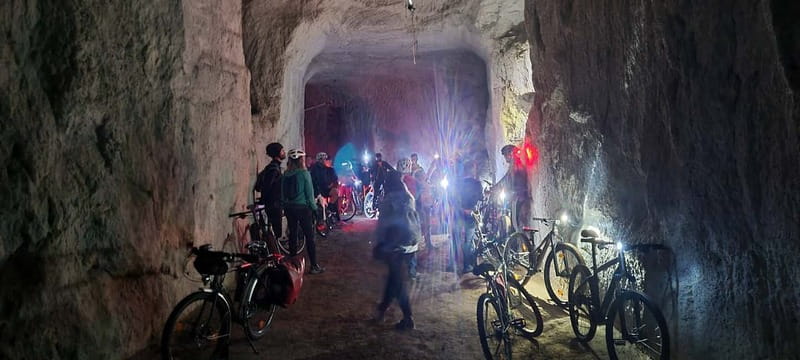
Not every underground tour includes what happens after the original purpose fades. This one does.
Between the earlier quarry and the catacomb sections, you’ll reach underground mushroom cultivations—a later reuse of the underground environment. It’s a smart stop because it connects history to a real human need: controlled conditions, stable environments, and the ability to keep production going below ground.
Even if you already know Rome has layered history, seeing how these spaces were repurposed in a practical way gives you a new respect for the ingenuity involved. It’s not just archaeology. It’s adaptation.
The mood stays adventurous, but the information becomes more grounded. You’re moving through tunnels, yes—but you’re also learning how people found value in what was already carved into the earth.
The Mithraeum: a forgotten worship space tied to early Christianity
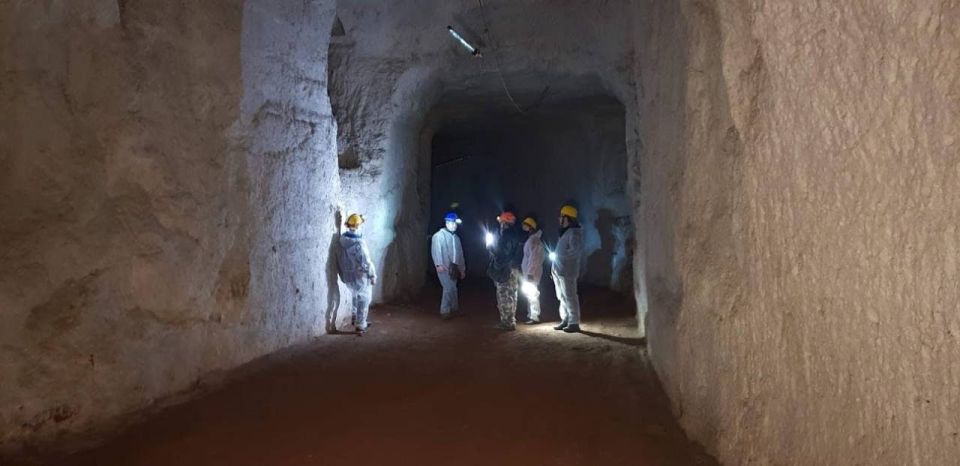
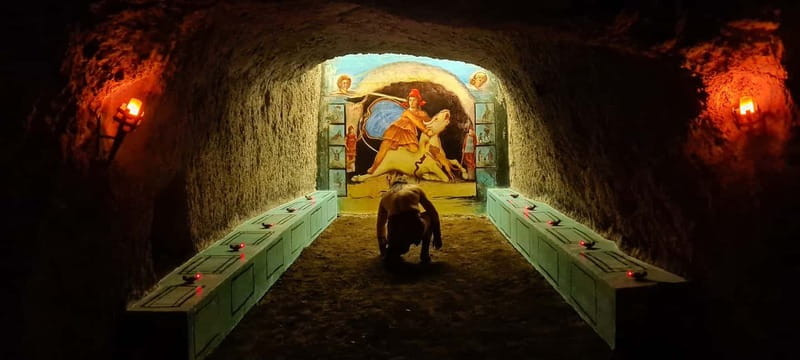
Then you reach the mithraeum, described as an ancient place of worship of a religion that’s now mostly forgotten—along with the note that Christianity has its roots in that world.
This stop is one of the most thought-provoking elements of the tour because it shifts from labor and daily underground use to spiritual life. You’ll be guided through the significance of the space and why it matters in the broader story of Rome.
If you enjoy religion-and-history intersections, this is the moment where the tour stops feeling like an underground walk and starts feeling like a cultural map. The guide’s explanations keep it understandable, and you’ll leave with a clearer sense that religions don’t appear in a vacuum; they evolve where people already gather and believe.
One practical note: underground rooms can feel tight. If you’re someone who struggles in enclosed spaces, this is exactly the kind of stop to think twice about.
Roman wine at the end: a calm landing after helmets and darkness
The experience closes with a chance to taste Roman wine, made according to ancient recipes as presented by the tour.
This final touch is more than a snack. After dark tunnels, helmets, and focused walking, a tasting becomes a reset. It gives you something pleasant to do while the adrenaline fades, and it also rounds out the “experience” theme so you’re not leaving with only photos.
It’s also part of the value for the price: you’re getting guide expertise plus included gear and more than one kind of underground stop, and the wine is the friendly finish line.
Price and value: what $113.29 really buys you
At $113.29 per person, the cost might look steep at first glance—especially for a 2-hour experience. But the pricing starts making sense when you break it down.
You’re paying for:
- A guided route through multiple underground settings (quarries, catacombs, mushroom cultivation, and a mithraeum)
- Safety and experience gear (headlights and a helmet)
- A group size capped at 10, which helps you actually get answers, not just watch
- A hands-on Roman-lamp moment and a wine tasting at the end
There’s also no hotel pickup included, so you’re responsible for getting to the meeting point yourself. That means the price is focused on the experience time and the specialized underground access—not transportation logistics.
If you like history you can physically feel, this price can be a good value. If you prefer big, polished surfaces and minimal walking, you might decide it’s not the right match.
Who this tour suits best (and who should skip it)
This works best for you if you enjoy:
- active, guided exploring
- hands-on or sensory moments (like lighting the Roman lamp)
- seeing how Rome’s underground wasn’t just a tomb space, but also a quarry workplace and later production zone
- learning with a guide who can explain clearly across English, Italian, and Spanish
You might enjoy it even more if you’re traveling with kids who like adventure. One of the strongest signals from the experience’s reputation is that families can have a great time here, because it’s more playful than a typical underground lecture.
Who should probably skip:
- Pregnant women (not suitable per tour notes)
- Anyone with claustrophobia (not suitable)
- People with mobility impairments (not suitable)
And one careful reality check: even though the tour is marked wheelchair accessible, the notes also say it’s not recommended for people with limited mobility. If that includes you, treat the underground and the about-2-kilometers walking note as the real-world guide.
If you’re planning your Rome days around it
Pick a day where you won’t feel rushed afterward. Underground experiences can be tiring in a way that’s different from walking in daylight. Even when you’re only gone for around two hours, you’re wearing a helmet and moving through uneven underground spaces.
Also, bring yourself back to the surface gracefully. After the wine tasting, you’ll probably feel good. But don’t stack another intense tour immediately. Give yourself a little breathing time to recover your sense of direction above ground.
Most importantly: pack for the shoes. Comfortable sneakers or walking shoes will make everything easier.
Should you book Between Catacombs and Ancient Quarries?
Book it if you want Rome in a form most visitors never see: a guided walk through quarries, catacombs, mushroom farms, and a mithraeum, with the explorer gear and a hands-on Roman-lamp moment.
Don’t book it if you hate confined spaces, need fully accessible routes, or you’re not comfortable with dark underground environments. The tour’s appeal is exactly what can be difficult for some people.
If you’re the kind of traveler who enjoys the “how did they live and work down there” question, this is a strong choice. The combo of practical details, clear guiding, and that final wine tasting gives you a complete experience, not just a quick look.
FAQ
How long is the experience?
The tour lasts about 2 hours.
What is included in the price?
It includes a guide, head lights, and a helmet. The experience also includes a Roman wine tasting at the end. Hotel pickup and drop-off are not included.
Where do you meet the guide?
The meeting point is outside the bar coffee called Cancelliere. The tour starts at Via Amedeo Crivellucci, 8 and ends back at the same place.
Is this tour available in languages other than English?
Yes. The live guide speaks English, Italian, and Spanish.
Is it suitable for people with claustrophobia or limited mobility?
No for claustrophobia. It also notes that it is not suitable for people with mobility impairments and not recommended for people with limited mobility. You should also expect about a 2-kilometer walk and underground spaces.
Can I get a refund if my plans change?
Yes. You can cancel up to 24 hours in advance for a full refund.