REVIEW · ROME
Best of Rome With Local Guide
Book on Viator →Operated by E & D Guided Tours · Bookable on Viator
Rome snaps into focus fast. This 90-minute walk threads together classic sights—Spanish Steps, Trevi Fountain, the Pantheon, and Piazza Navona—so you get the big symbols plus a few smarter side stops that most first-timers miss. With a local guide, the route becomes a simple story you can remember later when you wander on your own.
What I like most is the small-group cap of 10, which makes it easier to ask questions and get answers without shouting. I also like the energy of the guide style—upbeat, fun, and tuned to helping you see Rome with context, like when Sarah’s approach included navigation tips and extra pointers for after the tour.
One thing to plan around: Pantheon entry isn’t included. That ticket can add cost and a little time, so build in a buffer and don’t expect every stop to be completely hands-off.
In This Review
- Key things to know before you lace up
- A fast way to learn Rome’s main story in 90 minutes
- Meet at Babington’s Tea Room and why the starting location matters
- Spanish Steps: the La Dolce Vita postcard with real context
- Column of Immaculate Conception: an easy detour with surprising annual tradition
- Trevi Fountain: the coin toss plus the story you’ll actually remember
- Sant’Ignazio di Loyola: church ceiling details you’d miss on your own
- Pantheon: the 1900-year-old dome stop—and why the ticket matters
- Piazza della Rotonda coffee break: use it to reset and plan your next move
- Santa Maria Sopra Minerva and the elephant statue fact
- St. Louis of the French: Caravaggio paintings in a quick art hit
- Piazza Navona: end strong with fountains, history, and a dinner-friendly finish
- Price and value: is $40 a good deal for this route?
- Who this tour suits best (and who should skip it)
- Should you book Best of Rome With Local Guide?
- FAQ
- How long is the tour?
- What’s the group size limit?
- Where do I meet the guide?
- Where does the tour end?
- What time does the tour start?
- Is the Pantheon ticket included?
- Is there a coffee stop?
- Is pick-up or drop-off provided?
- Are refunds available if I cancel?
- Are service animals allowed?
Key things to know before you lace up
- Max 10 people keeps the walk from turning into a crowd-control exercise
- Mobile ticket makes check-in easier the day of
- Pantheon ticket not included, so expect an extra step (and cost) there
- Coffee break is part of the schedule, with drinks at your own expense
- Route ends in Piazza Navona, a great place to pick a dinner spot right away
- Jubilee restoration updates may affect stops, so watch for messages before you go
A fast way to learn Rome’s main story in 90 minutes
This tour works because it’s built like an orientation walk. You don’t just stand in front of famous spots and take photos. You connect them with who built them, why they matter, and what changed over centuries. That’s the difference between seeing Rome and actually getting your bearings.
The format is also practical: roughly 10 minutes per stop, plus time to move between them. That pace is ideal if you want a highlight reel without losing the day to slow-moving lines. It’s also eco-friendly in the literal sense: you’re on foot the whole time, so you’re trading transportation hassle for street-level Rome.
You can also read our reviews of more guided tours in Rome



Meet at Babington’s Tea Room and why the starting location matters
You meet at Babington’s tea room at Piazza di Spagna, 23 (near Piazza di Spagna). This is a strong starting choice because you’re already in the center of the action. You can reach the area via public transport, and you won’t burn time crossing the city.
You also get a useful contact detail: you’ll receive your guide’s name and number. That matters in Rome, where meeting points can be busy and sidewalks can be chaotic. Having that info helps you find the group faster and reduces the stress of showing up a few minutes early.
Spanish Steps: the La Dolce Vita postcard with real context
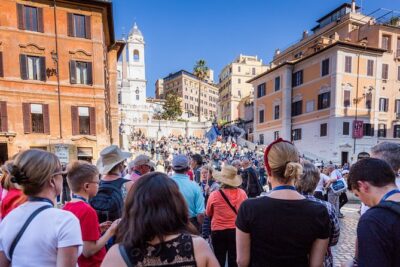
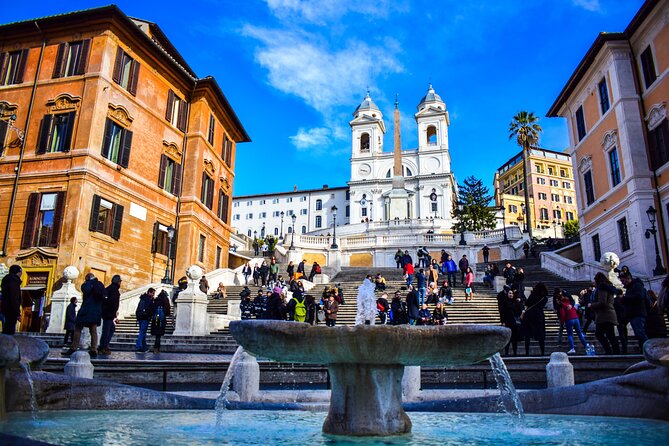
The walk starts at the Spanish Steps. These aren’t just famous stairs. They’re a symbol tied to that classic Roman idea of style, strolling, and social life. Your guide meets you at the bottom, so you get straight into the viewpoint and the story without a long scramble upward.
What you’ll love here: the immediacy. In a short stop window, the guide can point out the cultural meaning behind the monument, not just its location. You’ll also get a chance to set your visual compass for the rest of the route.
A small consideration: this area can be busy, and your time is brief. If you want a slower look, come back later. For the tour purpose, the key value is that you leave knowing what the Spanish Steps represent.
Column of Immaculate Conception: an easy detour with surprising annual tradition
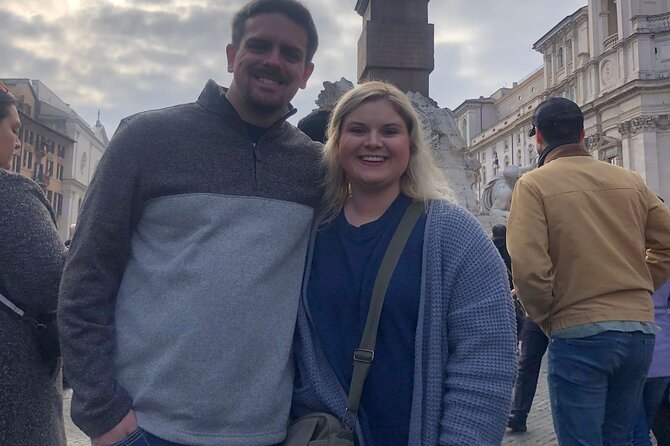
Next you pass the Column of Immaculate Conception in the Piazza di Spagna area. This is the kind of landmark that many people walk right past because it’s not the headline attraction. But it has its own role in the city’s calendar—your guide shares that Pope opens the Christmas festivities here each year.
Why this stop is worth your minute: it trains your eye. After the tour, you’ll be more likely to notice smaller monuments and understand they often connect to traditions, not just aesthetics.
Trade-off: it’s a pass-by and photo moment, not a long inspection. If you’re hoping for detailed close-up explanations, save that curiosity for later on your own walk.
Trevi Fountain: the coin toss plus the story you’ll actually remember
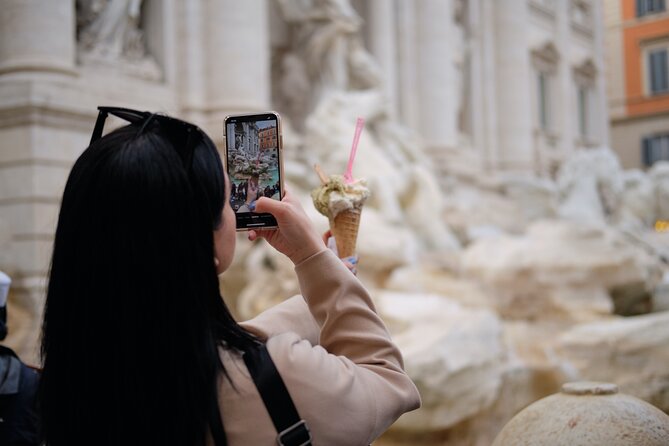
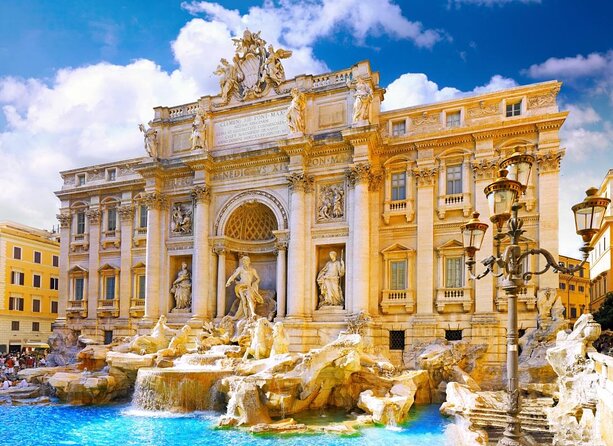
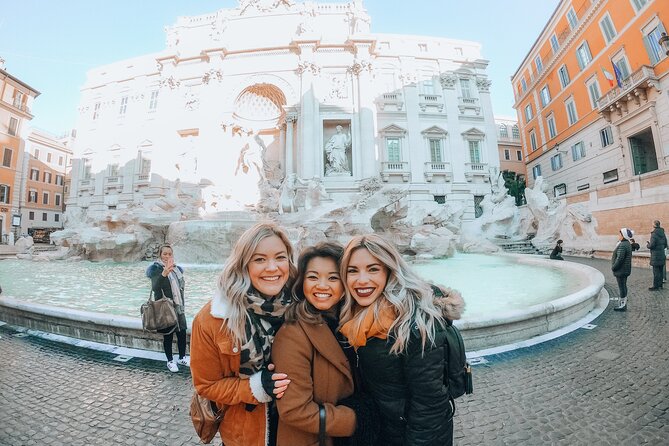
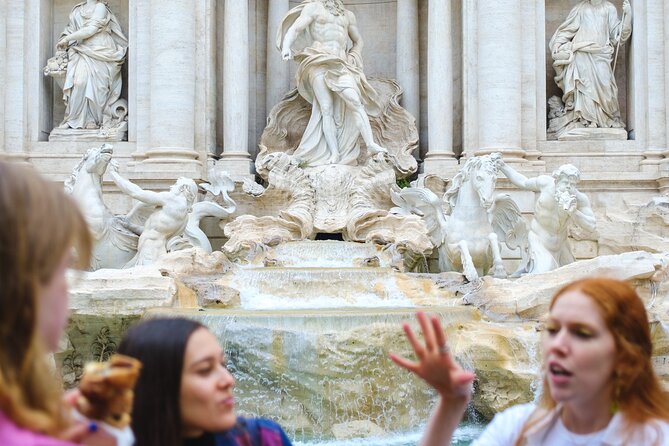
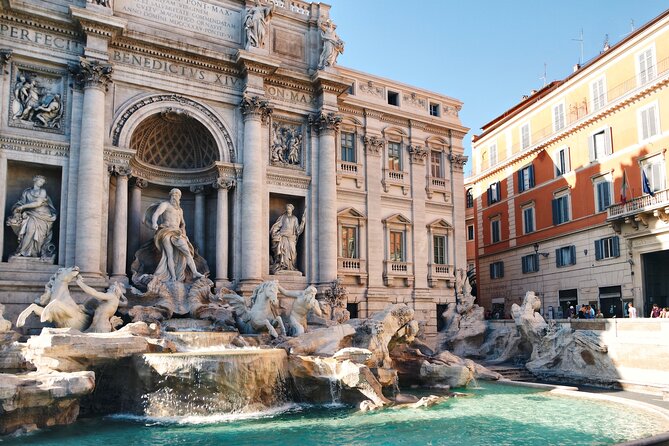
Then comes Fontana di Trevi, the iconic Baroque fountain. You’ll be guided through why it’s so famous and what makes it special, and you’ll do the classic ritual—make a wish and throw the lucky coin into the fountain.
What makes this stop work on a guided walk: Trevi can be pure photo chaos if you’re there without context. With a guide, you start to see structure and symbolism instead of only chasing the perfect angle.
A quick caution: time is tight. Ten minutes is enough for understanding and a couple of photos, but not for lingering. If you want more, you can return after the tour when the pacing is all yours.






Sant’Ignazio di Loyola: church ceiling details you’d miss on your own
From Trevi, you head to Chiesa di Sant’Ignazio di Loyola. This is the oldest Jesuit church in Rome, and your guide points out an interesting secret on the ceiling. Even if you’re not a church person, the pitch here is smart: the guide helps you look up and notice what’s hidden in plain sight.
Why I think this is a highlight-worthy inclusion: it’s not one of the usual checklist churches. You get a quick culture moment that feels different from the outdoor classics.
Possible drawback: if you prefer only the biggest household-name attractions, this can feel like a short detour. But if you’re the type who likes learning how Rome’s art and religion mix, it’s exactly the kind of stop that makes the tour feel like more than the standard route.
Pantheon: the 1900-year-old dome stop—and why the ticket matters
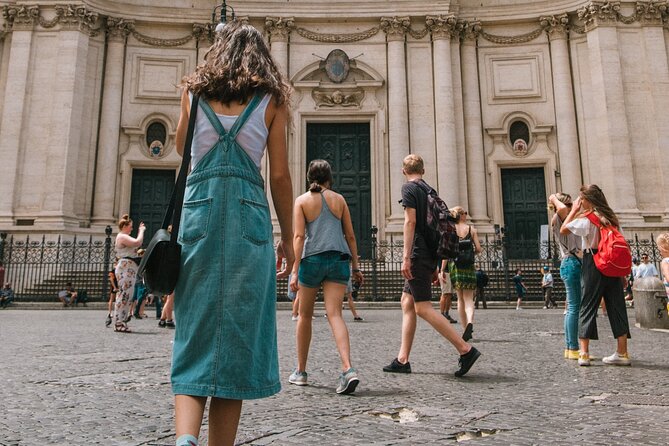
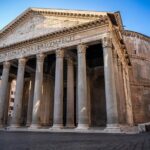
The Pantheon is where the tour flexes its star power. It’s over 1900 years old, and it still holds a major record: the largest concrete dome, built with no support. Your guide’s job here is to make those facts feel real—turning technical achievement into something you can appreciate in your body, standing inside.
Big practical note: Pantheon admission isn’t included. That means you should plan for an extra ticket purchase and possibly extra time at entry. If your schedule is tight, check the timing so you’re not rushing in a way that ruins the experience.
Why you should still make this stop count: the Pantheon is one of those Rome sights that changes how you look at the city’s architecture afterward. Even a quick stop becomes a useful anchor point for everything else you see.
Piazza della Rotonda coffee break: use it to reset and plan your next move
After the Pantheon area, you reach Piazza della Rotonda for a coffee break. Your guide takes you to one of the oldest and best coffee spots in Rome. You also get a mini lesson on how to order and drink coffee like a local.
Restrooms are available here, and that alone is worth a scheduled break on a walking day. Drinks are at your expense, so this isn’t a free meal stop—just a built-in pause where you can breathe and refuel.
Who will enjoy this most: people who like the small, everyday sides of travel, not only monuments. This is also a great moment to ask your guide what to do next in the neighborhoods you’re about to explore.
Santa Maria Sopra Minerva and the elephant statue fact
Next is Chiesa di Santa Maria Sopra Minerva. You’ll see an amazing square and a gothic church. One detail your guide will likely highlight sticks in your head: in all the talk of animal statues around Rome, there’s only one elephant statue.
Why it matters: it’s an example of how the tour teaches you to look for specifics. Those small odd facts make your mental map richer later when you spot statues in unexpected places.
What to keep in mind: like many church stops on a short tour, the time window is limited. Expect an introduction and visual highlights, not a slow, detailed museum-style experience.
St. Louis of the French: Caravaggio paintings in a quick art hit
Then you reach the Church of St. Louis of the French, aimed squarely at art lovers. This church houses three paintings by Michelangelo Merisi, better known as Caravaggio.
Why this is a smart addition: it breaks up the walk with something different—less landmark sightseeing, more direct art exposure. Even if you’re not a hardcore art fan, seeing Caravaggio’s work in a Roman setting is the kind of memory that sticks.
Possible consideration: if your priority is strictly outdoors and photos, a church stop can feel slower. The upside is that your guide keeps it moving and ties the art to the larger Rome story.
Piazza Navona: end strong with fountains, history, and a dinner-friendly finish
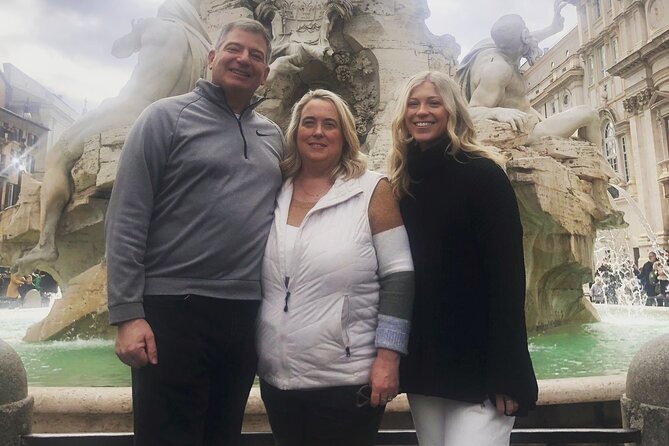
The tour ends at Piazza Navona, one of the best places to land after a walk. The square is built over an ancient stadium, and it features one of Rome’s most impressive Baroque fountains: the Fountain of Four Rivers.
This is the payoff moment where everything feels connected—your tour route leads you into a lively, pedestrian-friendly area that’s great for continuing your day. Your guide is available at the end for questions and suggests restaurants and other nearby landmarks.
Why this ending location is a value: you don’t have to think hard about logistics right away. You can simply choose where to eat and keep exploring in the old city right after the tour.
Price and value: is $40 a good deal for this route?
At $40 for about 1.5 hours, the value is all about what’s included and how you’ll use it. You’re paying for a local guide, a small group (up to 10), and time that would otherwise take you longer to piece together on your own.
Here’s how I see the math:
- Most stops are free in the sense that you’re not paying an admission fee for them within the schedule.
- Pantheon admission is not included, so you should budget for that separately.
- The coffee break is part of the timing, but drinks are still at your expense.
In other words: the tour price covers the guided route and the “how to look at Rome” value. If you already plan to pay for Pantheon anyway, the $40 makes more sense. If Pantheon isn’t on your list, ask yourself whether you’d still enjoy the church and fountain mix.
Who this tour suits best (and who should skip it)
This is a strong fit for:
- First-time visitors who want Rome’s major highlights with explanations
- People who like walking and don’t want to spend the day mapping their own route
- Anyone who appreciates small side stops, like Jesuit ceiling details or the Caravaggio church
It may be less ideal for:
- People who want long, slow stays at each site
- Anyone who hates the idea of paying extra for Pantheon entry
- Travelers who don’t like coffee, since there’s a dedicated coffee break in the middle of the route
Should you book Best of Rome With Local Guide?
I’d book it if you want a simple plan that gets you oriented and keeps you moving through the city’s best-known sights without turning the day into a checklist stress-fest. The small group matters. The pacing matters. And the guide style—upbeat, fun, and tuned to history in plain language—can make a big difference when you’re surrounded by crowds.
I would think twice if you’re counting on Pantheon to be fully covered by the price, or if you need lots of unstructured time at each stop. Since Pantheon entry isn’t included, you’ll want to budget and plan. Also, pay attention to any messages about monuments under restoration during the Jubilee season, because the exact experience can shift.
If you want a clean first pass at Rome’s core sights—then a second day where you wander freely—this is a very solid way to start.
FAQ
How long is the tour?
It lasts about 1 hour 30 minutes.
What’s the group size limit?
The tour has a maximum of 10 travelers.
Where do I meet the guide?
You meet at Babington’s tea room, Piazza di Spagna 23, 00187 Rome.
Where does the tour end?
The tour ends in Piazza Navona, 00186 Rome.
What time does the tour start?
The start time listed is 10:30 am.
Is the Pantheon ticket included?
No. Pantheon admission is not included.
Is there a coffee stop?
Yes. There is a coffee break in Piazza della Rotonda, and you’ll go to a coffee shop with a guide. Drinks are at your expense.
Is pick-up or drop-off provided?
No pick-up or drop-off is offered.
Are refunds available if I cancel?
Cancellation is free up to 24 hours in advance for a full refund. If you cancel less than 24 hours before the experience starts, you won’t get a refund.
Are service animals allowed?
Yes, service animals are allowed.