REVIEW · ROME
Audio guide in Vatican Museums and Sistine Chapel
Book on Viator →Operated by Rome Tour · Bookable on Viator
The Vatican Museums can feel like a marathon. This setup helps you manage the time with skip-the-line entry plus an English audio guide. You move at your own speed through the big-ticket rooms, then head to Michelangelo’s Sistine Chapel without the usual waiting spiral.
I like two things right away. First, you’re not stuck in the long entry lines. Second, the self-guided format means you can linger on what grabs you—without getting pulled along at someone else’s pace.
One consideration: the museum route is basically a one-way system, so there’s no easy way to leave early or change direction midstream. If you start feeling museum-fatigue, that long walk can wear you down.
In This Review
- Key Points Before You Go
- Meeting at Bar L’Ottagonocentro: where the day starts
- What “Skip the Line” really does for your schedule
- The one-way museum route: freedom with limits
- Vatican Museums: how to enjoy the major rooms without rushing
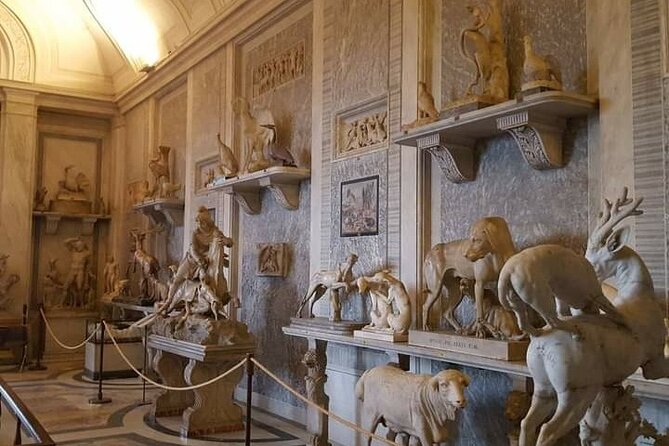
- Pio Clement Museum and classic sculpture focus
- Gallery of the Candelabras: drama in the details
- Gallery of the Geographical Maps: why it’s more than scenery
- Gallery of the Tapestries and the Raphael Rooms
- A reality check: the museum can fatigue you
- Sistine Chapel in 10 minutes: the smartest way to see it
- Ceiling: Genesis and Michelangelo’s icon moments
- Walls: other Renaissance masters beside Michelangelo
- Last Judgment at the altar
- Audio guide radios: great when they work well
- Duration and walking: plan your body, not just your calendar
- Who should book this Vatican Museums and Sistine Chapel option
- Price and value: is $78.27 worth it?
- Should you book? My honest recommendation
- FAQ
- What’s the duration of this Vatican Museums and Sistine Chapel audio guide experience?
- Is this tour guided, or is it self-guided with audio?
- What language is the audioguide available in?
- Does the ticket for the Vatican Museums and Sistine Chapel cost extra?
- Where do I meet, and do I return to the same place?
- How many people are in each group?
- Is transportation included?
- What should I bring or know about comfort and fitness?
- What if I cancel?
Key Points Before You Go
- Skip the line to enter the Vatican Museums and reduce wasted time
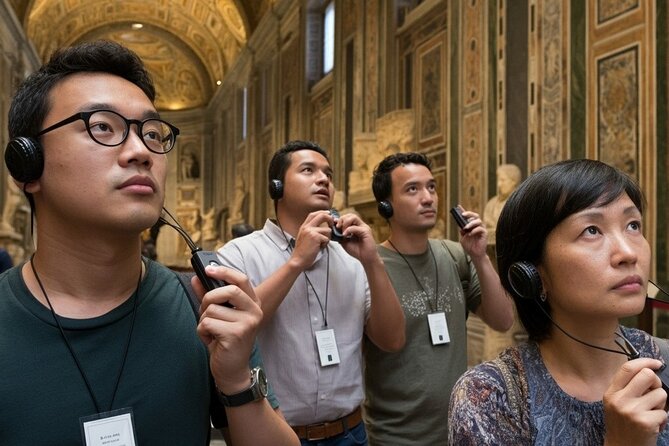
- Audio guide radios in English so you can learn while you wander
- Pick your pace across major museum rooms, then go to the Sistine Chapel
- Michelangelo ceiling + key wall frescoes inside a tight 10-minute slot
- Small group (max 10) and a host to hand you tickets and get you started
- Plan for lots of walking; the route keeps you moving for hours
Meeting at Bar L’Ottagonocentro: where the day starts
The experience begins at Bar L’Ottagonocentro, Piazza del Risorgimento, 00193 Roma RM. I like this kind of meeting point because it’s easy to find in a real neighborhood setting, and you can grab a drink or a pastry before you enter the Vatican area.
A host is there to guide you from the meeting point to where your tickets are handled. From the way this works in practice, it’s helpful to assume the ticket collection point is about 10 minutes from the entrance area—so you shouldn’t panic if you walk a bit before the museum doors.
The entry plan is built for a smooth start. The host shows up on time and explains the Vatican rules at the beginning, which helps you avoid the common stress of fumbling while everyone else is funneling into lines.
You finish back at the meeting point. That’s a nice touch if you want to keep your afternoon flexible without worrying about a confusing drop-off elsewhere.
You can also read our reviews of more guided tours in Rome



What “Skip the Line” really does for your schedule
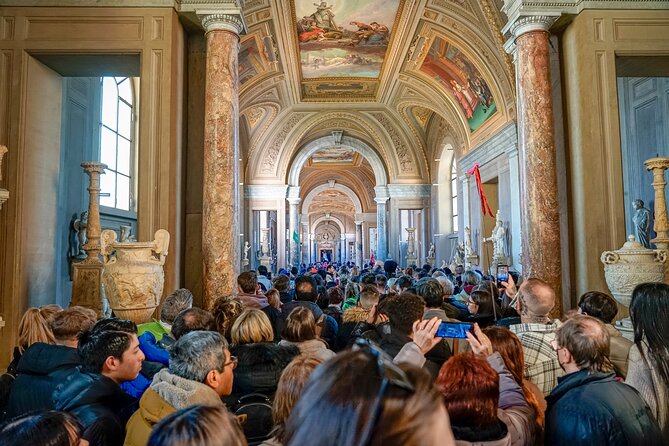
This is priced at $78.27 per person, and for me the value comes from the time savings. Vatican Museums are among the most crowded sights in Europe, and the big win here is that your entry is handled so you can avoid the worst of the waiting.
The total time estimate is 3 to 4 hours, with about 2 hours in the Vatican Museums section and around 10 minutes for the Sistine Chapel. In other words: you’re not going for an all-day museum immersion. You’re going for a focused hit—plus enough flexibility to steer your own viewing.
Because it’s an audio-guided, self-paced visit (not a guided tour), you also avoid the “stop-and-go” feeling that can happen with full group guidance. You can pause when something catches your eye, then catch back up with the crowd flow.
The small group size (maximum 10 travelers) also matters. Even though the Vatican is crowded no matter what, smaller numbers reduce the chaos factor at the start and help you get inside with fewer bottlenecks.
The one-way museum route: freedom with limits
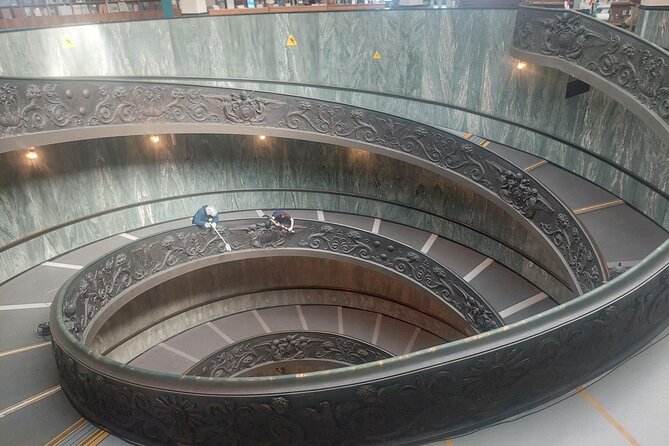
Here’s the honest reality: once you enter, the museum layout is not built for detours. The route follows the Vatican’s one-way system, so you generally can’t exit early or shorten your path on the fly.
This is the biggest reason some people feel the day is too long for comfort. After you’ve seen enough sculptures, maps, and galleries, your brain starts to negotiate with you: Do I really need to keep walking? The route doesn’t let you “shop the highlights” and then head out early.
So the best strategy is to use the audio guide actively at the start. Think of it as a filter: use it to pick out what matters most, then switch to a more relaxed listening style once you know what you want to linger on.
Also, be ready for the fact that rest areas and seating are limited by museum operations. If you take breaks only when you pass them, you’ll manage the one-way flow better than if you plan to stop whenever your energy dips.
Good fit if you like big art rooms and can handle 2 hours of steady walking. Less ideal if you know you dislike long museum circuits or you’re hoping to pop in and out quickly.
Vatican Museums: how to enjoy the major rooms without rushing
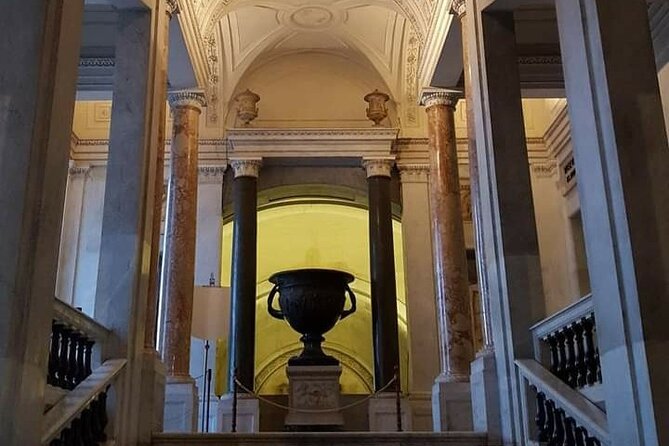
The Vatican Museums are a huge collection associated with the Popes, spanning classic sculptures and masterpieces across many time periods. What you’ll like about this format is that you’re not forced into a strict pace—you can move through the Pio Clement Museum, major galleries, and the Raphael Rooms on your own terms.
Stop 1 is where your 2-hour museum time goes. You’ll explore highlights such as the Pio Clement Museum, the Gallery of the Candelabras, the Gallery of the Geographical Maps, the Gallery of the Tapestries, the Raphael Rooms, and then you’ll end up at the path toward the Sistine Chapel.
Pio Clement Museum and classic sculpture focus
This part works well if you enjoy sculpture and the kind of art that rewards slow looking. The rooms are built so you can stand close to pieces, then take a step back to see how the spaces frame the works.
Even if you’re not a hardcore art person, this is where many visitors get their first “oh, wow” moment. The point isn’t just the objects—it’s the scale and the setting of the museum itself.
You can also read our reviews of more museum experiences in Rome



Gallery of the Candelabras: drama in the details
The Gallery of the Candelabras is a strong choice for audio-guided visitors because it gives you something to track beyond the main room visuals. It’s the kind of space where architecture and ornamentation add to the experience.
If you’re easily overwhelmed, I’d treat this room as a “reset.” Let the audio help you find the story cues, then let your eyes do the rest.
Gallery of the Geographical Maps: why it’s more than scenery
The Geographical Maps gallery is one of those stops that surprises people who expect only ancient objects. You’re looking at a visual way of understanding the world as it was imagined—so it mixes art, knowledge, and design.
If you like art that connects to ideas (not just aesthetics), this is a great place to spend an extra few minutes. Use your audio time here to sharpen what you’re seeing, then don’t be afraid to stand and stare a bit.
Gallery of the Tapestries and the Raphael Rooms
The Gallery of the Tapestries offers a different texture and craft level than you get from statues or frescoes. It’s a good mid-route change of pace when your feet start to feel the day.
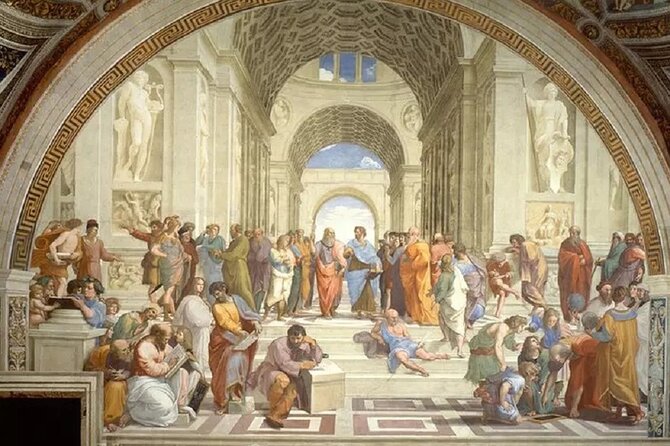
The Raphael Rooms are also a must for many visitors because they’re tied to Raphael’s work. If you’re the type who likes to compare how an artist thinks across multiple rooms, this is where your brain finally gets something cohesive.
In this self-paced format, you can stop longer on the room that hits you hardest. That flexibility is one of the real benefits compared with a strict guided schedule.
A reality check: the museum can fatigue you
Some visitors find the museum too long once the excitement wears off. I think that’s normal. The Vatican Museums are massive, and even the best audio guide can’t change the fact that there’s a lot to see.
My advice: don’t try to “finish everything.” Pick your priorities early, then let the route carry you. If you spend your first 30 minutes in smart mode—audio-on, eyes open—you’ll enjoy the later rooms more even if you slow down.
Sistine Chapel in 10 minutes: the smartest way to see it
Stop 2 is the Sistine Chapel, with an approximate 10-minute visit. That short time is both a blessing and a constraint.
It’s a blessing because you get there without feeling like you still have half a museum left to face. It’s a constraint because the Sistine Chapel rewards time, and 10 minutes can fly by if you spend too long figuring out where to look.
Ceiling: Genesis and Michelangelo’s icon moments
The ceiling is the headline, painted by Michelangelo. You’ll see stories from the Book of Genesis, including the famous Creation of Adam.
Here’s a practical move: when you enter, lift your gaze immediately and let the ceiling take over first. Don’t waste the first minute scanning the walls or getting your bearings. The ceiling is where your emotional reaction will kick in fastest.
Walls: other Renaissance masters beside Michelangelo
The walls are decorated with major frescoes by other Renaissance artists. Expect scenes connected to Moses and Jesus, with names including Botticelli, Perugino, and Ghirlandaio.
Because this visit is short, I suggest choosing a handful of wall panels you care about most rather than trying to inventory everything. Your eyes will remember a few powerful scenes better than a dozen half-seen moments.
Last Judgment at the altar
At the front, Michelangelo’s Last Judgment covers the altar wall. This is the part that often changes the mood of the whole room—intense, dramatic, and impossible to ignore.
If you can only focus on two things in the chapel, make them the Creation of Adam ceiling moment and the Last Judgment. Everything else becomes a bonus.
Audio guide radios: great when they work well
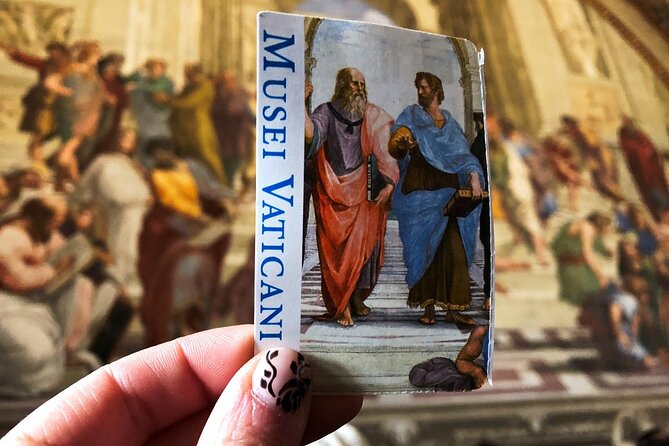
This experience includes an audioguide in English. You receive audio guide radios after you enter, and you use them at your own pace. I like this setup because it removes the guesswork: you don’t need to be an art historian to understand what you’re looking at.
The audio also helps you build a personal itinerary. Since you’re not stuck listening to a live guide constantly, you can treat each gallery like a menu: listen when you want context, then look quietly when you want your own reaction.
One watch-out: audio doesn’t always run perfectly. One past experience noted that the audio didn’t work consistently. My practical advice is to check the radio early and confirm it’s working as you start, then flag an issue quickly if it goes quiet later.
If you’re the type who depends on audio for clarity, I’d still arrive mentally prepared for a few minutes where you just look and infer, then restart the audio when it’s back.
Duration and walking: plan your body, not just your calendar
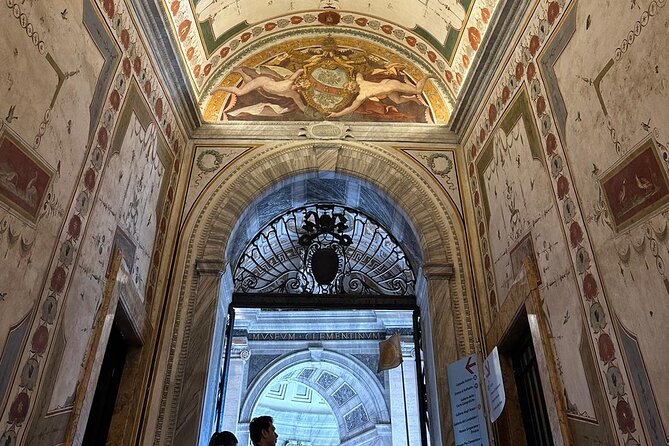
You’re looking at moderate physical fitness needs. That doesn’t mean it’s extreme, but it does mean the Vatican route will keep you walking.
With about 2 hours in the museum circuit plus travel between the meeting point and entrance area, you’ll want comfortable shoes and a steady pace. Don’t assume you can “pace yourself” by stopping constantly, because the route keeps you flowing.
If you’re traveling with kids or anyone who gets tired easily, this format can work only if everyone is okay with movement and line-free entry once you start.
If you love museums but hate feeling trapped, this one can feel frustrating—again, because you can’t really exit early. But if you’re a steady marcher who enjoys art at a relaxed-but-forward rhythm, it’s a very workable plan.
Who should book this Vatican Museums and Sistine Chapel option
This fits best if you want a blend of structure and freedom.
Book it if:
- You want skip-the-line entry and don’t want the stress of figuring out timing on your own
- You prefer exploring at your own pace rather than following a live group
- You like using an English audio guide to make sense of big rooms
- You want to see the key museum sections and still make it to the Sistine Chapel that day
Consider another option if:
- You need a fully guided, step-by-step narrative tour
- You struggle with long, one-way museum routes
- You’re only interested in a tiny slice of the art and hope to spend less than the typical museum time
The experience is capped at 10 travelers, which is great for keeping things calmer at the start. It’s also helpful if you dislike big groups that bunch up around bottlenecks.
Price and value: is $78.27 worth it?
At $78.27 per person, the value depends on what you’re trying to buy: time, convenience, or information.
This price includes admission ticket(s), a host at the meeting point, and an audioguide. That means you’re not paying separately for entry or audio narration. You’re also paying for the skip-the-line advantage, which can be the difference between a fun visit and a day where your energy disappears before you even reach the galleries.
If you were planning to do this independently, you’d still need to buy tickets and manage timing through a crowded entrance process. Even if you enjoy DIY, the time saved here is real.
I’d think of it this way: you’re paying to reduce friction so you can spend more of your limited time looking at art, not waiting in lines or negotiating logistics.
Should you book? My honest recommendation
If you want a practical Vatican day that gets you inside quickly and lets you explore on your own, I’d book it. The combination of skip-the-line entry, audio guide in English, and the chance to experience the Sistine Chapel after major museum rooms is a strong use of 3 to 4 hours.
The main reason not to book is simple: you hate long one-way museum walking or you feel drained after about 2 hours of concentrated art viewing. If that’s you, the route can feel too long and you won’t have an easy way to leave early.
If you’re someone who likes to roam with a plan—listen first, linger where you want, then glide into the Sistine Chapel—this is a smart way to do it without overcomplicating your day.
FAQ
What’s the duration of this Vatican Museums and Sistine Chapel audio guide experience?
It’s approximately 3 to 4 hours, with about 2 hours in the Vatican Museums and about 10 minutes in the Sistine Chapel.
Is this tour guided, or is it self-guided with audio?
It’s not a guided tour. You’ll have a host at the meeting point, and then you explore with an audioguide.
What language is the audioguide available in?
The experience is offered in English.
Does the ticket for the Vatican Museums and Sistine Chapel cost extra?
No. Admission ticket is included as part of the experience.
Where do I meet, and do I return to the same place?
You start at Bar L’Ottagonocentro, Piazza del Risorgimento, 00193 Roma RM, Italy, and the experience ends back at the same meeting point.
How many people are in each group?
This activity has a maximum of 10 travelers.
Is transportation included?
No. Private transportation is not included.
What should I bring or know about comfort and fitness?
The experience is described as suitable for travelers with moderate physical fitness level, so comfortable walking shoes are a good idea.
What if I cancel?
This experience is non-refundable and cannot be changed for any reason.